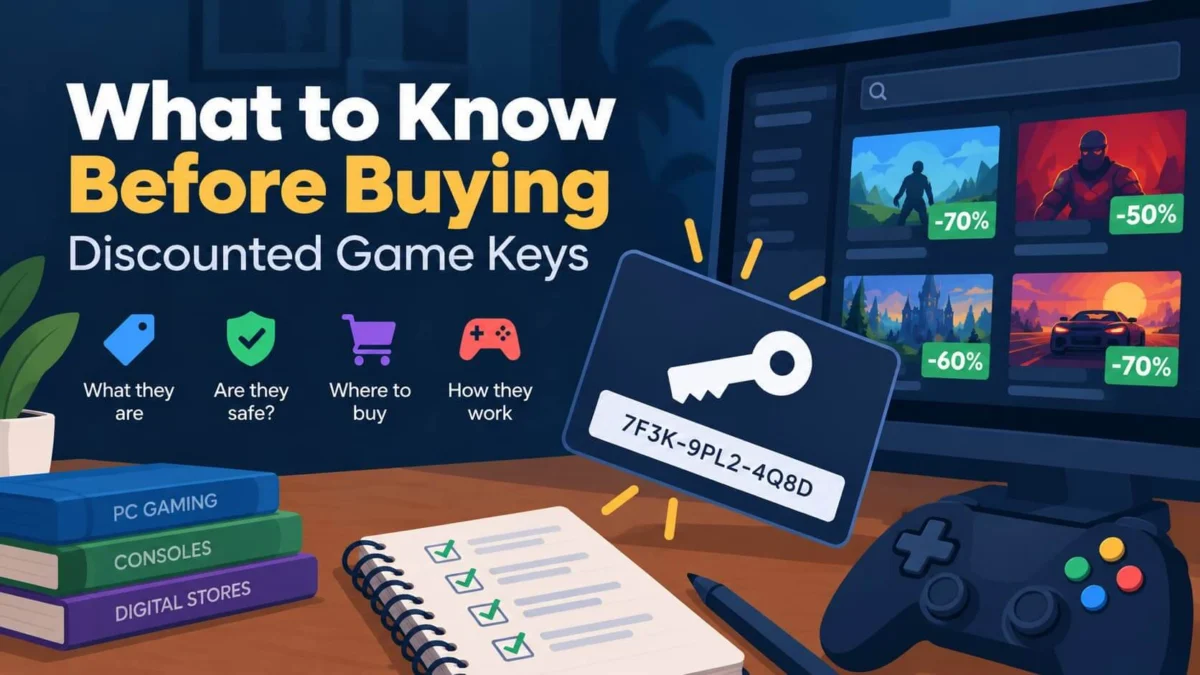
Buying digital game keys has become a popular method for players to expand their gaming libraries, often leveraging attractive price points unavailable through official channels. Alongside established official storefronts such as Steam, PlayStation Store, and Xbox Marketplace, online marketplaces have emerged as significant platforms, providing shoppers access to a broad selection of game codes offered by various sellers, frequently at competitive prices. This shift reflects a broader trend in digital commerce, where aggregated listings and peer-to-peer (P2P) or business-to-consumer (B2C) reselling models offer alternatives to direct vendor purchases.
Platforms like G2A.COM exemplify this marketplace model, enabling users to compare available offers from multiple vendors in one centralized location. Buyers can filter and select game keys based on crucial criteria including price, seller reputation, regional activation compatibility, and specific game editions. While these platforms offer undeniable benefits in terms of choice and cost-efficiency, understanding the operational mechanics and adopting informed purchasing practices are paramount for a smooth and secure transaction experience.
The Rise of Digital Game Distribution and Key Resellers
The gaming industry has undergone a profound transformation, moving predominantly from physical media to digital distribution. This shift, accelerated by broadband internet penetration and the convenience of direct downloads, has been spearheaded by platforms like Valve’s Steam, which revolutionized PC gaming distribution in the early 2000s. Console manufacturers soon followed suit, establishing their own digital storefronts. By 2023, the global digital games market was estimated to be a multi-billion dollar industry, with projections for continued growth, underscoring the dominance of digital sales.
This digital pivot, while streamlining distribution for publishers, also inadvertently created new market dynamics. Regional pricing disparities, driven by economic conditions and purchasing power in different territories, meant that a game key purchased legitimately in one region could be significantly cheaper than in another. Furthermore, game bundles, promotional giveaways, and publisher overstock often resulted in a surplus of legitimate digital keys. This environment fostered the emergence of third-party marketplaces, which capitalize on these discrepancies to offer keys at discounted rates. These platforms act as intermediaries, connecting sellers (who might be individuals with spare keys, smaller retailers, or even larger distributors) with buyers seeking better deals. The allure of saving anywhere from 10% to 70% on a game often draws consumers to these alternative marketplaces.
Understanding the Marketplace Model: A Comparative Analysis
A fundamental distinction exists between purchasing directly from an official digital store and acquiring a key through an online marketplace. This difference lies primarily in the distribution model and pricing structure, which in turn impacts buyer choice and the nature of transaction oversight.
| Feature | Official Digital Stores (e.g., Steam, Epic Games Store) | Online Game Key Marketplaces (e.g., G2A.COM) |
|---|---|---|
| How Games Are Sold | Games are purchased directly from the store/publisher. | Different independent sellers offer digital game keys through a centralized platform. |
| Pricing | Prices are set by the store or the game publisher. | Prices are determined by individual sellers, leading to competitive, fluctuating rates. |
| Choice of Offers | Typically one main offer per game edition. | Buyers can compare multiple sellers, prices, editions, and regional availability. |
| Seller Information | The store is the direct seller; no third-party vendors. | Marketplaces provide seller ratings, transaction history, and feedback for evaluation. |
| Regional Availability | Determined by the store’s licensing agreements. | Listings typically include explicit activation-region information and compatibility. |
| Buying Experience | Simple, direct purchase from a single retailer. | Allows users to review and select from diverse offers based on specific criteria. |
| Buyer Protection | Direct customer support from the platform/publisher. | Marketplace-specific buyer protection programs and dispute resolution processes. |
For buyers, this marketplace model introduces a significant degree of flexibility and consumer choice. Rather than being limited to a single, publisher-set price, users gain the ability to shop around, compare offers, and potentially secure a game at a more advantageous price point. This competition among sellers inherently drives prices down, benefiting the end consumer.
G2A.COM, for instance, functions as a hub where hundreds, if not thousands, of independent sellers list their digital game keys. The platform aggregates these listings, presenting buyers with a comprehensive overview of available options. This transparency allows users to make informed decisions by evaluating not just the price, but also the seller’s track record, the specific edition of the game, and critical regional activation details.
Ensuring Transactional Integrity: Buyer Protection Frameworks
The question of safety is paramount for any online transaction, especially when dealing with third-party sellers. Established game key marketplaces have invested significantly in developing structured environments and robust buyer protection systems designed to mitigate risks and enhance transparency. These systems are crucial for building consumer trust and differentiating legitimate platforms from less scrupulous operations.
Before committing to a purchase, buyers on reputable marketplaces can typically access a wealth of information to aid their decision-making. This includes:
- Seller Ratings and Reviews: A cumulative score and detailed feedback from previous buyers, often highlighting aspects like delivery speed, key validity, and customer service.
- Number of Completed Transactions: An indicator of a seller’s experience and volume of business.
- Product Description Clarity: Comprehensive details on the game version, platform (e.g., Steam, Epic Games Store, Xbox), supported languages, activation method, and any specific system requirements.
- Regional Activation Information: Explicit labeling of whether a key is "Global," "EU," "US," or region-locked to specific countries.
- Return/Refund Policies: Information regarding what recourse buyers have if a key is faulty or incorrectly described.
Beyond pre-purchase transparency, marketplaces also provide crucial customer support and formalized resolution processes for situations where a buyer encounters an issue with an order. If a digital code does not activate as expected, is invalid, or does not match the product description, users can typically report the problem through the platform’s dedicated support channels. This usually initiates a dispute resolution procedure, where the marketplace acts as an intermediary between the buyer and seller, often leading to a replacement key or a refund. This structured approach helps ensure that buyers are not left without recourse in the event of a problem.
For example, platforms like G2A.COM combine a vast selection of offers with an array of tools specifically designed to help buyers identify experienced and reliable sellers, thereby increasing the likelihood of a successful purchase. Their internal support systems are designed to manage disputes and ensure compliance with their terms of service, adding a layer of security that independent, unregulated transactions would lack.
Addressing Concerns: Discounted Keys and Account Security
A common misconception is that a lower price automatically signals an unsafe game key or that its activation could lead to account restrictions or bans. This is not inherently true. Discounted prices in the digital key market can arise from a multitude of legitimate factors:
- Seller Competition: The sheer number of sellers on a marketplace creates intense competition, driving prices down.
- Regional Pricing Arbitrage: Keys purchased legally in regions with lower standard pricing are resold in regions with higher pricing, still at a discount compared to local official stores.
- Promotional Sales and Bundles: Sellers may acquire keys during large sales events (e.g., Steam Summer Sale) or through game bundles (e.g., Humble Bundle) at significantly reduced costs, which they then resell for a profit, still below market value.
- Currency Fluctuations: Favorable exchange rates can allow sellers to acquire keys more cheaply.
- Overstock: Retailers or distributors may offload excess inventory of keys at reduced rates.
For the vast majority of buyers, the primary consideration should be the compatibility of the item with their existing gaming account, platform, and intended activation region. A lower price alone does not indicate fraudulent origin; rather, it often reflects the dynamic and competitive nature of the key resale market.
Before purchasing any key for platforms like Steam, Epic Games Store, or others, a diligent buyer should verify several basic details:
- Platform Compatibility: Ensure the key is for the correct gaming platform (e.g., a Steam key for a Steam account, not an Xbox account).
- Game Edition: Confirm the key corresponds to the desired edition (Standard, Deluxe, Ultimate, DLC, etc.).
- Activation Region: Crucially, check if the key has geographical restrictions that prevent activation in the buyer’s region.
- Activation Method: Understand if it’s a direct code, a gift link, or requires a VPN (though the latter is generally discouraged and can violate platform terms).
Simply purchasing a game key at a lower price, provided it is compatible and activated according to the platform’s standard rules, does not automatically put an account at risk of suspension or banning. Account restrictions are typically enforced for violations of terms of service such as fraud, unauthorized access, or abusive behavior, not for activating a legitimately purchased key, regardless of its original price point. The critical factor is the legitimacy of the key itself and its adherence to regional restrictions.
Best Practices for Confident Game Code Purchases
To maximize the benefits and minimize the risks associated with buying game keys from online marketplaces, buyers should adopt a systematic approach grounded in due diligence. These practices are not only about security but also about ensuring a smooth and satisfactory purchasing experience.
-
Scrutinize Seller Ratings and Feedback: This is the cornerstone of marketplace trust. Beyond a high overall rating, examine the volume of transactions a seller has completed and read recent customer comments. Look for consistency in positive feedback, especially concerning key validity and quick delivery. A seller with thousands of positive reviews over a long period is generally more reliable than a new seller with only a few transactions.
-
Thoroughly Read the Product Description: A lower price is only advantageous if the product perfectly matches your needs. Before clicking "buy," meticulously review every detail:
- Platform: Is it a Steam key, an Xbox key, a PlayStation key, etc.?
- Edition: Is it the standard game, a deluxe edition, a season pass, or DLC?
- Supported Languages: Does it include your preferred language?
- Activation Method: Is it a direct code, a redeemable link, or something else?
- Additional Requirements: Are there any specific operating system, hardware, or software prerequisites?
-
Verify the Activation Region: Digital game keys frequently carry geographical restrictions imposed by publishers for pricing and licensing reasons. Reputable marketplaces prominently display this information. Look for labels such as "Global" (activates worldwide), "EU" (European Union), "NA" (North America), or specific country designations (e.g., "Russia/CIS"). Attempting to activate a region-locked key outside its designated area can result in an invalid key or, in some cases, account issues. Always ensure the key’s region matches your own or the region where you intend to activate it.
-
Utilize Secure Payment Methods: Always complete transactions through the marketplace’s integrated payment system. Established platforms offer recognized and secure payment options, including credit/debit cards, PayPal, and sometimes local payment gateways or cryptocurrencies. Avoid any seller who attempts to redirect you to an off-platform payment method, as this circumvents marketplace buyer protection and significantly increases the risk of fraud.
-
Engage Marketplace Support When Necessary: If any aspect of the purchase does not meet expectations – a key is invalid, incorrectly delivered, or mislabeled – immediately use the marketplace’s official support channels and dispute resolution process. Provide clear documentation, such as screenshots of error messages or proof of purchase. Keeping all communication and transactions within the platform’s ecosystem is crucial for effective problem resolution, as it provides a verifiable record of the issue.
Economic and Industry Implications
The proliferation of game key marketplaces has had multifaceted implications for the broader gaming ecosystem. For consumers, the primary benefit is undeniable: access to games at lower prices, which democratizes access to gaming and allows players to expand their libraries more affordably. This competitive pricing can also indirectly influence official storefronts, sometimes prompting publishers to offer more frequent or deeper discounts to compete.
However, the model is not without its controversies. Game publishers and developers often express concerns about revenue leakage due to regional pricing arbitrage. They argue that when a key intended for a lower-priced region is sold in a higher-priced one, it diverts potential full-price sales, impacting their profit margins. While established marketplaces implement stringent fraud prevention measures, there have been historical instances where keys obtained illicitly (e.g., via stolen credit cards) found their way onto these platforms, though reputable marketplaces actively combat such activities. This ongoing tension highlights the complex relationship between consumer demand for affordability and publisher efforts to maintain revenue streams and pricing integrity.
Conclusion: Navigating the Digital Frontier
Buying discounted game keys from online marketplaces can be an exceptionally convenient and cost-effective strategy for gamers looking to expand their digital libraries. A lower price, when understood within the context of market dynamics and seller competition, does not inherently signify a problem with the key or a risk to a buyer’s gaming account.
Marketplaces like G2A.COM provide users with unparalleled access to a diverse array of offers, competitive pricing, and critical information that empowers them to compare available options before making a purchase. However, the onus remains on the buyer to exercise diligence. Prioritizing checks on seller ratings, meticulously reviewing product descriptions for platform and edition compatibility, and critically verifying activation regions are simple yet effective steps that can prevent common purchasing errors and ensure a seamless activation experience.
For gamers who understand these nuances and commit to informed purchasing practices, digital marketplaces represent a powerful, flexible, and often more economical avenue for acquiring games, ultimately enriching their gaming experience and maximizing their entertainment budget. As the digital gaming landscape continues to evolve, these platforms are poised to remain a significant and influential part of how players access their favorite titles.
About the Author