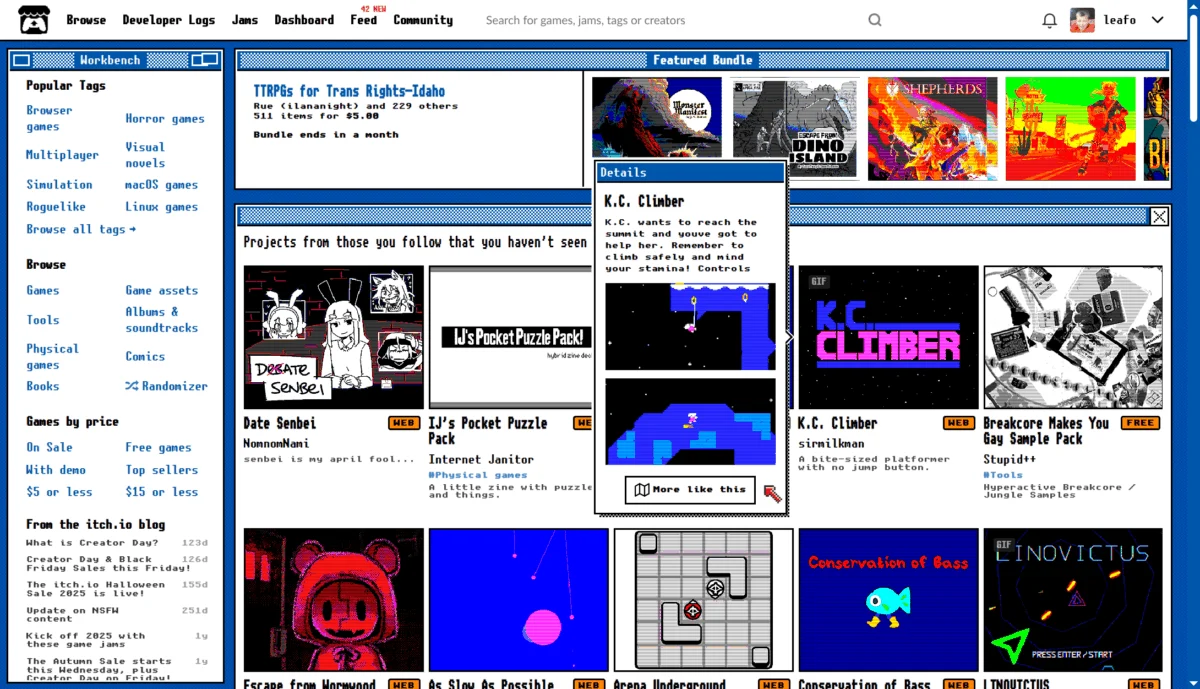
San Francisco, CA – Itch.io, the prominent digital storefront for independent video games, recently concluded its "Ameyega mode" April Fools’ Day prank, which temporarily transformed its homepage into a retro-inspired, ASCII art aesthetic. While the whimsical change was intended as a lighthearted seasonal jest, its implementation sparked a wide range of reactions from the platform’s diverse user base, highlighting the complex interplay between nostalgic design, modern user experience, and accessibility. The experimental interface, launched on April 1st, was extended for several days beyond the traditional prank window before being officially retired, though a persistent link allows logged-in users to revisit the distinctive look for a limited time.
The ‘Ameyega Mode’ Explained: A Journey into Digital Nostalgia
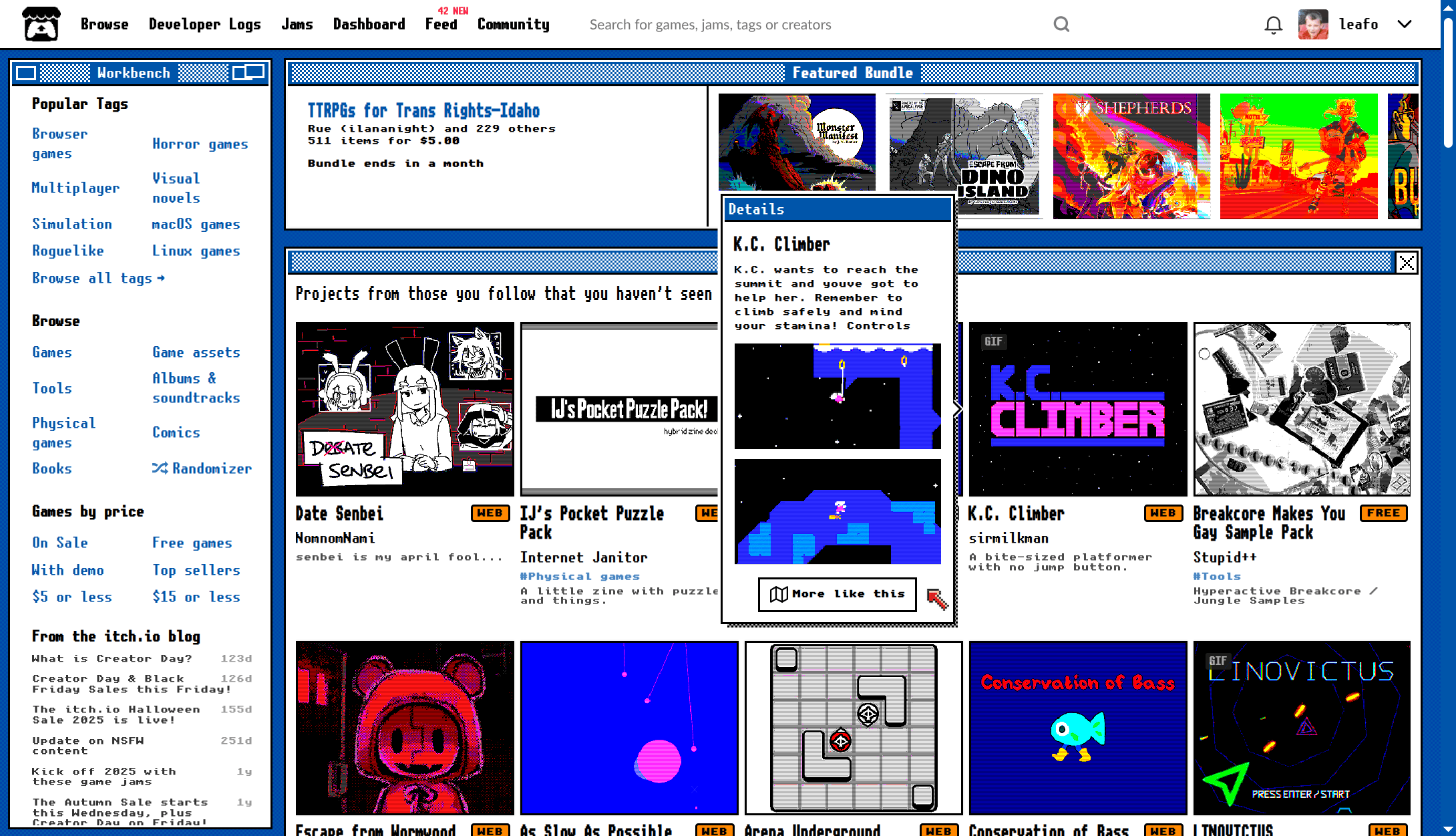
The "Ameyega mode" was a striking visual overhaul that reimagined the contemporary itch.io homepage through the lens of early computing graphics. The name itself, "Ameyega," is a clear nod to the Commodore Amiga line of personal computers, celebrated for their pioneering graphics and sound capabilities in the 1980s and early 1990s. This retro inspiration manifested as a complete conversion of the site’s interface into a blocky, monospace, ASCII art style. Text, images, and navigational elements were rendered using characters from the ASCII character set, often limited to a sparse color palette, mimicking the display capabilities of vintage terminals or classic computer systems.
For users accustomed to the sleek, modern web design prevalent today, the Ameyega mode presented a stark contrast. The vibrant game thumbnails and clear typography were replaced with pixelated interpretations, creating a unique, almost artifact-like experience. This design choice was intended to evoke a powerful sense of nostalgia for those who grew up with or appreciate the aesthetics of early digital culture. The official announcement credited http://viznut.fi/unscii/ for the fonts used on the homepage, a notable detail that points to the specific lineage of the ASCII art style, often associated with demoscene culture and early computing art. The visual impact was significant, transforming a familiar digital space into a digital time capsule, albeit one designed for a fleeting moment of April Fools’ amusement.
A Brief History of Digital Pranks: Tech’s April Fools’ Tradition
April Fools’ Day has long been a tradition embraced by technology companies worldwide, often serving as an opportunity to showcase creativity, humor, and occasionally, a self-aware poke at their own brand or industry trends. From Google’s elaborate product announcements like "Google Nose" or "Gmail Paper" to various game developers introducing absurd patch notes or temporary in-game events, these pranks often aim to engage users in a playful manner. For platforms like itch.io, which prides itself on its independent spirit and community focus, an April Fools’ joke can also reinforce its brand identity as unconventional and user-centric.
These digital pranks, while often harmless and entertaining, walk a fine line between amusement and potential user frustration. The most successful ones are typically those that are clearly distinguishable as jokes, easily reversible, and don’t significantly impede core functionality. However, the sheer scale of modern platforms means that even minor temporary changes can have a disproportionate impact on a diverse global user base, raising questions about accessibility, user experience, and the unintended consequences of even well-meaning humor. The Ameyega mode, in its stark visual transformation, tested these boundaries for itch.io.
The Prank’s Unfolding: A Chronology of ‘Ameyega Mode’
The "Ameyega mode" officially debuted on itch.io’s homepage on April 1st. The initial announcement indicated that the feature was rolled out "late" on the traditional day for pranks, prompting the decision to extend its availability beyond April 1st itself. This extension meant that many users encountered the retro interface not just on the designated day of jokes, but for several subsequent days, intensifying its impact and the volume of community feedback.
During its active period, the Ameyega mode was the default visual experience for all visitors to the itch.io homepage. The platform’s standard, modern interface was temporarily supplanted by the ASCII art rendition. Following its extended run, itch.io formally announced the conclusion of the Ameyega mode. However, in a gesture acknowledging its unique appeal, the platform provided a specific URL (https://itch.io/?ameyega) that logged-in users could visit to re-enable the retro theme. This link was stated to remain active "until the next time we make substantial changes to the homepage," suggesting a temporary reprieve for fans of the aesthetic and a potential internal consideration for optional themes in the future. The transition back to the standard interface was not entirely seamless for all users, leading to a period of minor technical disruptions for some.
Community Reactions: A Divided Digital Audience
The response from the itch.io community to the "Ameyega mode" was, by almost all accounts, sharply polarized. The comments section of the official announcement quickly filled with a torrent of feedback, reflecting a significant divide between those who embraced the nostalgia and novelty, and those who found it disruptive and unworkable.
On one side, a segment of users lauded the initiative, expressing delight at the "delightful throwback" and "charming" nature of the ASCII art homepage. Many found it genuinely amusing, referring to it as a "top tier jump scare" for its initial surprise factor. For some, the retro aesthetic resonated deeply, evoking fond memories of earlier computing eras. Interestingly, a notable subset of users reported that the Ameyega mode was actually easier for them to read. Comments indicated that the simplified, high-contrast, monospace text provided better legibility for individuals with certain visual impairments or reading difficulties, leading to earnest pleas for the mode to be made a permanent, optional theme. This unexpected feedback underscored the potential for alternative display modes to inadvertently serve accessibility needs.
Conversely, a substantial portion of the community reacted with frustration, confusion, and even anger. Numerous users found the Ameyega mode "so hard to navigate," citing difficulties in discerning elements and locating familiar features. The blocky graphics and unconventional layout were described as "hurting my eyes" and creating a "pixellated mess." For these users, the prank transcended lighthearted fun and became a significant impediment to their ability to use the platform effectively. Concerns were raised about the site’s "professional home page" appearance, with some arguing that while humorous temporarily, it detracted from the platform’s image as a serious marketplace for indie games. The sentiment was often encapsulated in direct appeals for the site to "put it back to how it was before" and admonitions to "never do it again, please." This negative feedback highlighted how a temporary aesthetic change, even for comedic effect, can alienate users who prioritize functionality and accessibility over novelty.
Technical Hiccups and Swift Resolutions
Beyond the aesthetic preferences, the Ameyega mode also introduced a few unexpected technical complications, primarily concerning itch.io’s "Dark mode" feature. Several users reported that after the Ameyega mode was activated, or even after it was supposed to have concluded, their Dark mode setting for the homepage was no longer respected. This meant that even if the site had reverted to its standard interface, the background remained bright white for some, overriding their preferred display setting. This issue caused additional frustration for users who rely on Dark mode for comfort, particularly during extended browsing sessions or in low-light environments.
One user’s comment specifically tracked the resolution: "Adding my two cents: while Dark mode seems to work fine for the rest of the site, the front page (the one that got turned into a pixellated mess for April Fools) does not respect that setting anymore. EDIT: four hours after posting this, the front page is showing Dark mode correctly. Apparently they’re paying attention!" This swift resolution, likely prompted by widespread user reports, demonstrated itch.io’s responsiveness to critical user experience issues. While the Dark mode problem was addressed, another user raised a broader, seemingly unrelated concern in the comments about a "huge portion of the community cannot post anything on anyones game pages," indicating that while the Ameyega mode was the immediate topic, other underlying platform issues were also on users’ minds.
Itch.io’s Ethos and Brand Identity
The "Ameyega mode" prank, with its mixed reception, offers insights into itch.io’s brand identity and its relationship with its community. Itch.io has carved out a unique niche in the digital game distribution landscape, standing apart from larger, more corporate platforms like Steam. It is renowned for its indie-friendly policies, its support for experimental and unconventional games, and its strong emphasis on community engagement. This ethos often manifests in a more relaxed, playful, and less corporate tone, which the April Fools’ prank certainly embodied.
The decision to implement such a visually disruptive prank, and then extend it, aligns with itch.io’s willingness to experiment and its slightly rebellious spirit. It reinforces the idea that itch.io is not just a storefront but a community space that can be quirky and fun. However, the divided reactions underscore the challenge of balancing this distinctive brand identity with the fundamental need for a user-friendly and accessible platform. While some users appreciated the humor and originality, others viewed it as a lapse in professional presentation and a hindrance to functionality, suggesting that even for a platform celebrated for its unconventionality, there are limits to how far user experience can be temporarily altered without consequence. The event served as a litmus test for the community’s tolerance for such playful disruptions.
Broader Implications for Platform Design and User Experience
The "Ameyega mode" experience on itch.io carries several broader implications for platform design, user experience, and accessibility in the digital age. Firstly, it highlighted the inherent tension between novelty and usability. While retro aesthetics hold significant appeal for a segment of the user base, particularly those with a nostalgic connection to early computing, they can simultaneously create significant barriers for others who prioritize modern interface conventions, efficiency, or require specific accessibility features.
Secondly, the unexpected feedback regarding the mode’s improved readability for some users with disabilities is a crucial takeaway. It suggests that alternative visual themes, even those initially conceived as jokes, can inadvertently offer accessibility benefits. This could prompt platforms to consider offering a wider array of optional display modes, beyond just light and dark themes, to cater to diverse visual preferences and accessibility needs. Such options could empower users to tailor their experience, ensuring that nostalgic or experimental designs can be enjoyed by those who appreciate them without hindering the experience for others.
Finally, the technical issues, such as the temporary disruption of Dark mode, serve as a reminder that even seemingly minor, temporary aesthetic changes can have cascading effects on a complex web platform. Thorough testing and a robust rollback strategy are essential for any such modifications, even those intended for a brief period of fun. The itch.io community’s swift and vocal response, coupled with the platform’s prompt resolution of the Dark mode issue, underscores the vital role of active user feedback in maintaining a healthy and functional digital ecosystem. The "Ameyega mode" ultimately became more than just an April Fools’ joke; it became a case study in digital community engagement, user experience design, and the evolving considerations of accessibility in an ever-diversifying online world.
About the Author