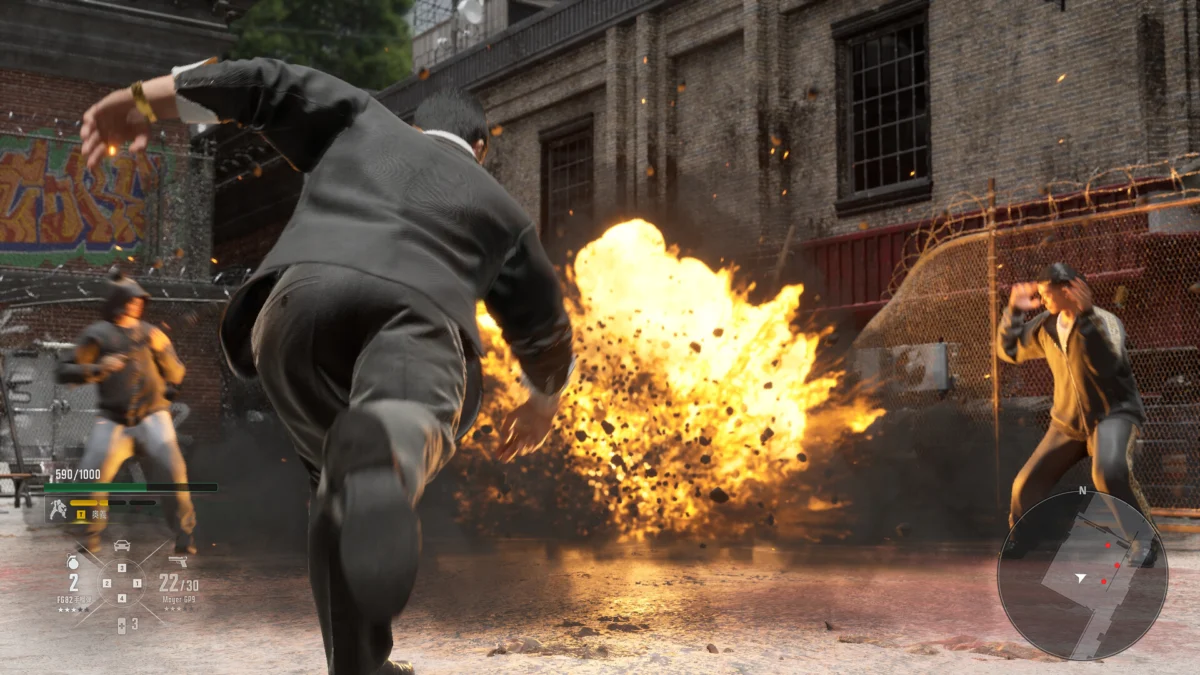
Less than a year after its highly anticipated reveal at The Game Awards, Nagoshi Studio, founded by legendary Yakuza creator Toshihiro Nagoshi, has reportedly been dissolved, casting a pall over the future of its ambitious debut title, Gang of Dragon. The news, confirmed by an official notice of company dissolutions published in Japan’s government gazette, Kanpo, on November 2, 2026, follows earlier reports of Chinese tech giant NetEase cutting funding for the project. This abrupt closure marks a significant downturn for one of the most high-profile Japanese game development ventures under a Chinese publisher and underscores a broader, unsettling trend of consolidation and strategic re-evaluation within the global gaming industry, particularly affecting NetEase’s international portfolio.
The Genesis of a Dream: Nagoshi’s Departure and New Beginnings
Toshihiro Nagoshi’s departure from Sega in 2021 sent ripples throughout the video game world. For decades, Nagoshi had been an instrumental figure at the Japanese publisher, most notably as the driving force behind the critically acclaimed and commercially successful Yakuza series (now known as Like a Dragon). Under his leadership, Ryu Ga Gotoku Studio crafted a unique blend of gritty crime drama, over-the-top humor, and engaging RPG mechanics, cultivating a dedicated global fanbase. Titles like Yakuza 0, Yakuza: Like a Dragon, and the recent Like a Dragon: Infinite Wealth consistently garnered high praise for their immersive worlds, compelling narratives, and innovative gameplay. Nagoshi’s creative vision was synonymous with the series’ distinctive identity, making his decision to leave Sega, where he also held the esteemed position of Chief Creative Officer, a momentous event.
His move to establish Nagoshi Studio under the wing of NetEase in the same year was seen as a bold new chapter. NetEase, a titan in the Chinese gaming market primarily known for its mobile offerings and partnerships with Blizzard Entertainment (though that relationship has also seen significant shifts), had been aggressively expanding its global footprint. The company sought to attract top-tier talent from established gaming markets, particularly Japan, offering substantial financial backing and creative freedom to veteran developers. This strategy aimed to diversify its portfolio, enhance its console and PC game development capabilities, and compete more effectively with rivals like Tencent. Nagoshi Studio, with a creative luminary like Toshihiro Nagoshi at its helm, was envisioned as a cornerstone of this international expansion, promising a new intellectual property (IP) that would leverage Nagoshi’s proven expertise in character-driven action-adventure games.
The Unveiling of Gang of Dragon and Soaring Expectations
The culmination of four years of development and anticipation arrived in December 2025 at The Game Awards in Los Angeles. Against the backdrop of the industry’s premier annual celebration, Nagoshi Studio proudly unveiled Gang of Dragon. The reveal trailer, showcased to a global audience of millions, hinted at a vibrant, action-packed world echoing the distinctive style and narrative depth that fans associated with Nagoshi’s previous work. While details were sparse, the game was immediately touted as a "spiritual successor" to the Yakuza/Like a Dragon series, promising a fresh take on urban crime, intricate character relationships, and intense combat. The announcement generated significant buzz across social media and gaming news outlets, with many eagerly anticipating the opportunity to experience Nagoshi’s unique creative vision unconstrained by his former publisher’s existing IP. Industry analysts at the time projected Gang of Dragon to be a major release, potentially broadening NetEase’s appeal in Western and Japanese console markets, and solidifying its reputation as a serious contender beyond mobile gaming.
A Swift Decline: Funding Cuts and Dissolution
However, the euphoria surrounding Gang of Dragon‘s announcement proved tragically short-lived. Just three months later, in March 2026, Bloomberg reported that NetEase had significantly scaled back its funding for the game’s development. The report indicated that Nagoshi Studio had requested an additional ¥7 billion (approximately $44.5 million USD at the time) to complete the ambitious project. This substantial sum, representing a significant increase over initial budgets, apparently triggered a re-evaluation from NetEase’s leadership. While specific reasons for the cost overrun were not publicly disclosed, common challenges in large-scale game development such as scope creep, technical hurdles, engine difficulties, and rising talent costs could have contributed to the inflated budget.
The decision to cut funding coincided with a broader strategic shift within NetEase. As Bloomberg noted, the company was reportedly pulling back from its aggressive global gaming expansion, reassessing its investments in non-core areas and focusing more on projects with quicker returns or proven market success. This pivot reflected a changing economic landscape, increased competition, and potentially a more cautious approach to risk in the wake of global economic uncertainties and a post-pandemic correction in the gaming market.
The subsequent developments painted an increasingly grim picture for Nagoshi Studio. Throughout the summer of 2026, subtle yet telling signs of trouble emerged. The official Nagoshi Studio YouTube channel, which had hosted the reveal trailer for Gang of Dragon, was temporarily deleted. While it was later restored, all previously public videos, including the much-hyped Gang of Dragon trailer, were made private. This digital disappearance and subsequent limited restoration served as an unofficial yet potent indicator of internal turmoil and a project in distress, fueling speculation among fans and industry observers about the game’s viability.
The speculation reached its unfortunate conclusion on November 2, 2026, with the official announcement in Kanpo, Japan’s government gazette, confirming the dissolution of Nagoshi Studio. While NetEase itself has not issued a formal statement regarding the cancellation of Gang of Dragon or the studio’s closure, the report from Kanpo, which serves as the official publication for government announcements, laws, and corporate actions in Japan, leaves little room for doubt regarding the studio’s fate. The lack of a public statement from Nagoshi Studio or Toshihiro Nagoshi himself since the game’s reveal further underscores the sudden and perhaps contentious nature of the events.
NetEase’s Shifting Sands: A Broader Industry Trend
The closure of Nagoshi Studio and the apparent shelving of Gang of Dragon are not isolated incidents but rather symptomatic of a larger pattern observed within NetEase’s international gaming operations. Over the past year, the Chinese publisher has undergone a significant strategic re-evaluation, leading to a series of divestitures, layoffs, and studio closures across its global portfolio.
Previously, NetEase had been on an aggressive acquisition and investment spree, particularly in North America and Europe, and famously, in Japan. Its strategy involved attracting established developers with strong creative visions, offering them the resources to pursue ambitious new IPs. This included high-profile ventures such as Suda51’s Grasshopper Manufacture, which NetEase acquired in 2021 but from which it recently divested, allowing the studio to regain independence. Similarly, Anchor Point Studios, another internal NetEase studio, also transitioned to independence, indicating a desire from NetEase to streamline its operations.
The restructuring has also impacted its Western studios. Reports surfaced earlier in 2026 of significant layoffs at NetEase’s Montreal operations, and another subsidiary, Bad Brain Game Studios, was entirely shut down. These actions collectively paint a clear picture: NetEase is recalibrating its global gaming strategy, likely prioritizing projects with clearer paths to profitability, established franchises, or a stronger strategic alignment with its core business model. The investment in high-budget, console-focused new IPs, particularly those requiring substantial additional funding, appears to be an area of reduced appetite. This shift aligns with broader industry trends where investors are increasingly scrutinizing the profitability and sustainability of ambitious, expensive game projects, leading to a wave of layoffs and studio closures across the industry in 2025 and 2026. Data from industry tracking firms indicates a notable increase in project cancellations and development studio closures this year compared to the preceding two years, with hundreds of millions of dollars in investment being pulled from speculative ventures.
The Future in Limbo: Gang of Dragon and Toshihiro Nagoshi
With Nagoshi Studio dissolved, the immediate future of Gang of Dragon remains highly uncertain. While NetEase has not officially "canceled" the game, the cessation of funding and the closure of its development studio effectively put the project into an indefinite limbo. It is highly improbable that NetEase would continue funding development without the core team that conceived and built the game, especially given its current strategy.
The intellectual property rights for Gang of Dragon likely reside with NetEase, as is common in publisher-funded studio agreements. This means that even if Nagoshi were to find new backing, he would likely not be able to continue Gang of Dragon without acquiring the IP from NetEase, a complex and often costly endeavor. It is conceivable, though unlikely, that NetEase might attempt to salvage the project by assigning it to another internal studio or selling the IP to a third party. However, unfinished games, especially those from dissolved studios, often prove difficult to transfer and complete successfully, as much of the creative vision and institutional knowledge departs with the original team. The significant additional funding request also suggests that the project may have been further from completion than initially anticipated, making a takeover even less appealing.
For Toshihiro Nagoshi, this represents a significant professional setback. His silence since the game’s reveal suggests a period of reflection or, perhaps, contractual obligations preventing him from speaking publicly about the situation. His reputation as a visionary creator remains intact, but the failure of his independent venture under NetEase will undoubtedly be a challenging chapter. The question now becomes where Nagoshi, a developer with a distinct creative voice and a proven track record, will go next. He could potentially return to a major Japanese publisher, explore independent development with different funding models, or even take a hiatus from the industry. The incident may also serve as a cautionary tale for other veteran Japanese developers considering similar partnerships with large Chinese publishers, highlighting the inherent risks involved in such ventures amidst volatile market conditions and shifting corporate strategies.
Broader Implications for the Industry
The Nagoshi Studio dissolution serves as a stark reminder of the volatile nature of the video game industry, particularly for new IPs and ambitious projects. It underscores several critical implications:
- Risk Aversion in Major Publishers: The incident highlights a growing trend among large publishers, both Western and Eastern, towards greater risk aversion. The era of limitless budgets for unproven IPs may be waning, replaced by a focus on established franchises, live-service models, and more conservative investment strategies.
- Challenges for New IP: Creating a successful new IP is inherently risky and expensive. Gang of Dragon‘s fate illustrates the immense pressure on new studios to deliver within budget and on time, especially when dealing with high expectations and a demanding market.
- The Evolving Role of Chinese Publishers: While Chinese tech giants like NetEase and Tencent have been pivotal in funding global game development, their strategies are clearly dynamic. This incident suggests a potential recalibration, moving away from broad-stroke acquisitions and towards more targeted, strategically aligned investments, or even a return to focus on their core domestic markets and mobile-first approach.
- Talent Mobility and Independence: While creative freedom is a major draw for developers leaving established companies, the financial stability offered by large publishers remains a critical factor. The experience of Nagoshi Studio may lead some developers to reconsider the full independence offered by non-traditional funding sources, or to seek more robust contractual protections.
- Market Correction: The gaming industry is currently undergoing a significant market correction after the boom years of the pandemic. This has led to widespread layoffs, project cancellations, and studio closures across the globe, with Nagoshi Studio unfortunately joining a growing list of casualties.
The closure of Nagoshi Studio and the uncertain future of Gang of Dragon represent a significant loss for the gaming community and a sobering moment for the industry. It not only marks the end of a highly anticipated project from a beloved creator but also serves as a poignant illustration of the increasingly complex and challenging landscape facing game developers and publishers in a rapidly evolving global market. The reverberations of this event will likely be felt as other studios and developers navigate their own paths in an industry where ambition, talent, and financial backing no longer guarantee success.
About the Author