The recently concluded GB Pixel Art Jam 2024 has once again demonstrated the enduring appeal of retro aesthetics and the creative power of technical constraints, drawing a significant number of digital artists to craft visuals inspired by Nintendo’s iconic handheld console. Hosted on itch.io’s versatile "Jams" feature, this annual event challenged participants to design pixel art within the severe limitations of the classic Game Boy, utilizing a restricted color palette and adhering to specific technical requirements reminiscent of the device’s original hardware. The event, which saw a remarkable 378 submissions, not only celebrated a beloved era of gaming but also highlighted the vibrant community of artists dedicated to mastering this unique art form. As the submission period has officially closed, the organizers have announced that a compiled ROM containing all the artwork is currently being prepared for release, offering a tangible artifact of the collective creativity fostered by the jam. This initiative underscores itch.io’s commitment to supporting niche creative communities and providing accessible platforms for artistic collaboration and display.
The Enduring Legacy of the Game Boy
To fully appreciate the scope and challenge of the GB Pixel Art Jam 2024, it is essential to understand the technological and cultural bedrock upon which it is built: the Nintendo Game Boy. Launched in Japan on April 21, 1989, and shortly thereafter in North America and Europe, the Game Boy revolutionized portable gaming. Its monochrome display, featuring four shades of olive green pixels, a resolution of 160×144, and a modest CPU, presented significant limitations for developers. Yet, these very constraints fostered unparalleled innovation. Titles like Tetris, Super Mario Land, and Pokémon Red and Blue became global phenomena, demonstrating that compelling gameplay and imaginative artistry could transcend graphical sophistication. The Game Boy was not merely a gaming device; it was a cultural touchstone, introducing millions to digital entertainment and establishing a visual language that remains instantly recognizable.
The limitations imposed by the Game Boy’s hardware forced artists and developers to think abstractly, prioritizing clarity, iconic design, and efficient use of every single pixel. Characters had to be readable with minimal detail, environments evocative despite monochromatic palettes, and animations fluid within strict sprite limitations. This era arguably birthed a unique school of digital art, where suggestion and implied detail were paramount. For many, the Game Boy aesthetic evokes a powerful sense of nostalgia, a longing for simpler times when imagination filled the gaps left by low-resolution graphics. This emotional connection is a driving force behind events like the GB Pixel Art Jam, where contemporary artists revisit and reinterpret these classic visual paradigms.
The Art of Limitation: Why Pixel Art Thrives
The resurgence of pixel art in the modern digital landscape, particularly within the indie game development scene and specialized art communities, can be attributed to several factors. Beyond nostalgia, the deliberate choice to work within pixelated constraints offers unique artistic benefits. For many artists, the finite canvas and limited color options of a style like the Game Boy’s force a rigorous discipline, honing skills in composition, form, and storytelling through minimalist means. Every pixel becomes a deliberate stroke, contributing directly to the overall impact of the image. This contrasts sharply with the boundless freedom offered by high-resolution digital painting, where detail can sometimes obscure fundamental design principles.
Furthermore, pixel art possesses a timeless quality. While cutting-edge 3D graphics quickly become dated, well-executed pixel art often retains its aesthetic appeal, much like classical paintings or traditional animation. It is an art form that embraces its digital nature, celebrating the individual building blocks of the image rather than attempting to hide them. The Game Boy’s specific palette, a muted grayscale with distinct tonal values, presents an additional layer of challenge. Artists must master value control, relying on contrast and careful dithering to create the illusion of depth, texture, and light within only four distinct shades. This requires a profound understanding of visual perception and meticulous execution, pushing artists to transcend simple replication and instead innovate within the historical framework. Jams focused on such specific technical constraints serve as invaluable training grounds, pushing artists to refine their techniques and develop creative problem-solving skills applicable to a broader range of digital art forms.
itch.io’s Jams Platform: A Hub for Creativity
The GB Pixel Art Jam 2024 was facilitated by itch.io’s robust and highly adaptable "Jams" feature, a cornerstone of its platform that consistently impresses with its versatility and capacity to foster diverse creative endeavors. itch.io, known primarily as an open marketplace for independent video games, also serves as a vibrant community hub where creators can host and participate in a wide array of online events. The Jams system allows organizers to define specific themes, timeframes, and submission guidelines, enabling everything from full game development challenges to specialized art competitions like the GB Pixel Art Jam. This flexibility has cultivated a rich ecosystem of creativity, allowing niche interests to flourish and bringing together like-minded individuals from across the globe.
The platform provides comprehensive tools for jam hosts, including submission management, participant communication, and presentation of entries. For participants, it offers a structured environment to experiment, learn new skills, receive feedback, and showcase their work to a global audience. The "Jams" feature democratizes participation in creative projects, removing many of the logistical barriers traditionally associated with collaborative art or game development. By providing a centralized, accessible, and well-supported infrastructure, itch.io empowers individuals and communities to organize and engage in events that might otherwise be impractical or difficult to manage, further solidifying its role as a vital resource for independent creators. The success of the GB Pixel Art Jam 2024 is a testament to the effectiveness of this platform in connecting artists with shared passions and enabling the production of unique, high-quality digital content.
Chronology of the GB Pixel Art Jam 2024
The GB Pixel Art Jam 2024 followed a structured timeline, typical of itch.io’s jam events, designed to provide participants with a clear window for creation and submission. While specific start and end dates were not explicitly detailed in the initial announcement beyond its "recently concluded" status, similar annual events of this nature typically span a period of two to four weeks, allowing artists sufficient time to conceptualize, execute, and refine their submissions without undue pressure. Based on the conclusion being announced in early 2024, it can be inferred that the jam likely commenced in late January or early February 2024, concluding sometime in mid-to-late February.
During this designated period, artists were tasked with interpreting the central theme of "Game Boy-inspired pixel art." This broad theme encouraged diverse interpretations while maintaining the core aesthetic requirement. Participants were expected to work within strict technical parameters:
- Resolution: Adhering to the Game Boy’s native resolution of 160×144 pixels, or a similar aspect ratio that respects the original device’s display capabilities.
- Color Palette: Limiting their creations to a four-shade grayscale palette, or a carefully chosen analogous limited palette that evokes the Game Boy’s iconic green-on-dark-green display.
- Art Style: Emphasizing the distinct visual characteristics of early handheld pixel art, including minimal anti-aliasing, clear outlines, and efficient use of pixel clusters for detail.
Upon the close of the submission window, all 378 entries became publicly viewable on the jam’s dedicated page. The subsequent phase involves the compilation of these artworks into a functional ROM. This unique approach transforms the individual submissions into a collective digital exhibition, allowing anyone with a Game Boy emulator (or even a flash cart for original hardware) to experience the jam’s output in an authentic, immersive way. This compilation process adds a layer of technical craftsmanship to the event, extending the creative challenge beyond static image submission and providing a lasting, interactive showcase for the artists’ work.
A Glimpse into the Gallery: Highlighted Submissions
The 378 submissions to the GB Pixel Art Jam 2024 represent a remarkable spectrum of creativity, demonstrating how artists can interpret and push the boundaries of such restrictive parameters. Each piece offers a unique perspective on the Game Boy aesthetic, from nostalgic vignettes to imaginative new worlds. Here are a few selections that exemplify the diverse talent on display:
-
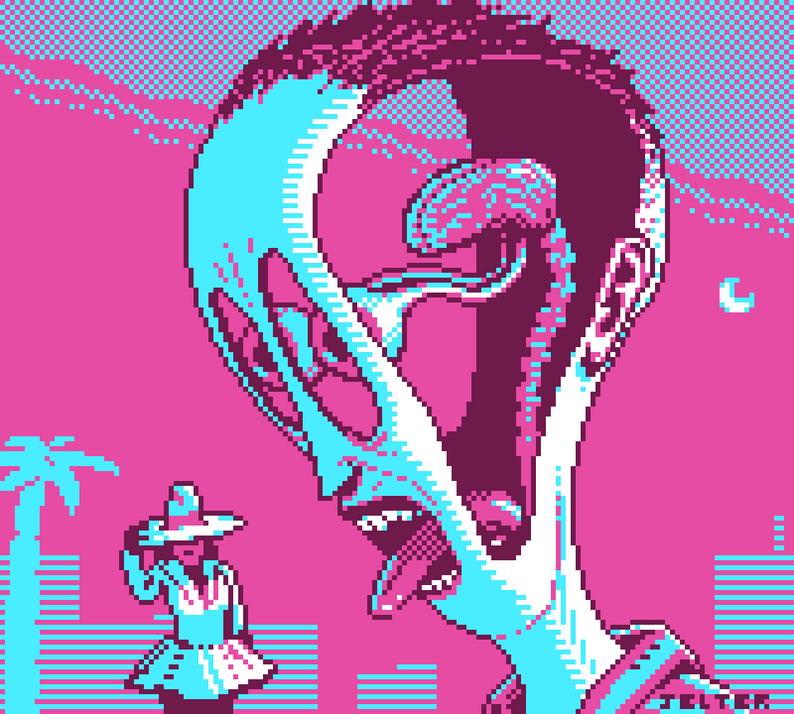
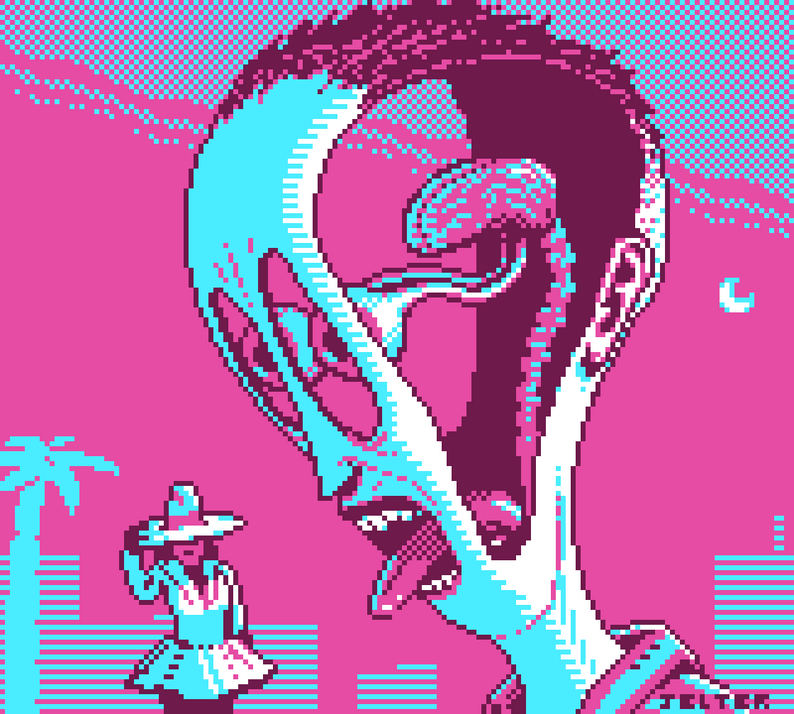
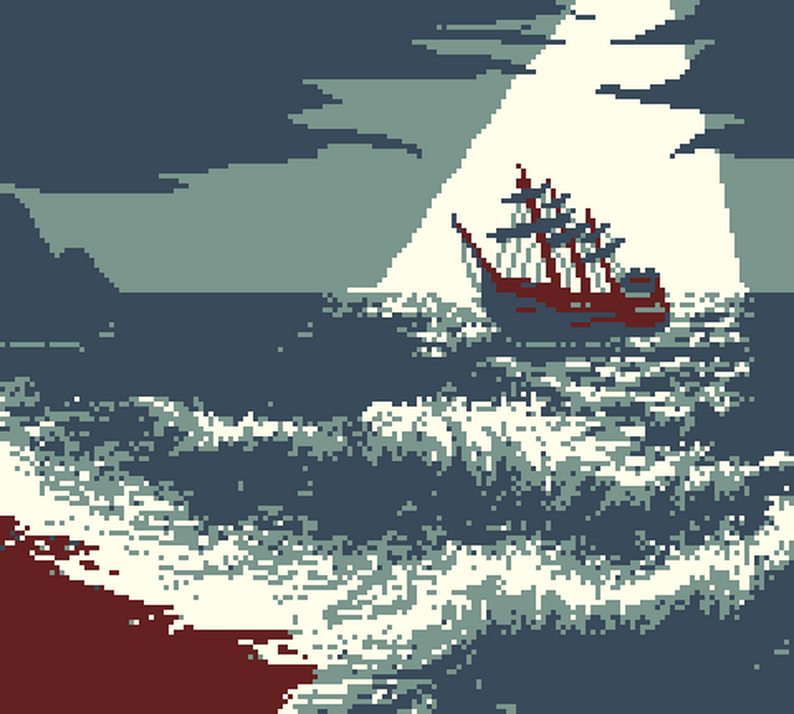
"Malibu Dream-Game Boy Art" by BenJelter: This piece immediately transports the viewer to a sun-drenched, tranquil coastal scene. BenJelter masterfully uses the limited palette to suggest bright sunlight glinting off the water and the gentle undulation of waves. The composition, likely featuring palm trees and distant structures, evokes a sense of serene escapism, perfectly capturing the dreamy quality implied by its title. The artist’s skill lies in creating depth and atmosphere with only four shades, making each pixel count towards the overall impression of a vibrant, albeit monochrome, landscape. The subtle interplay of light and shadow on the water’s surface is particularly noteworthy, showcasing a sophisticated understanding of value.
-
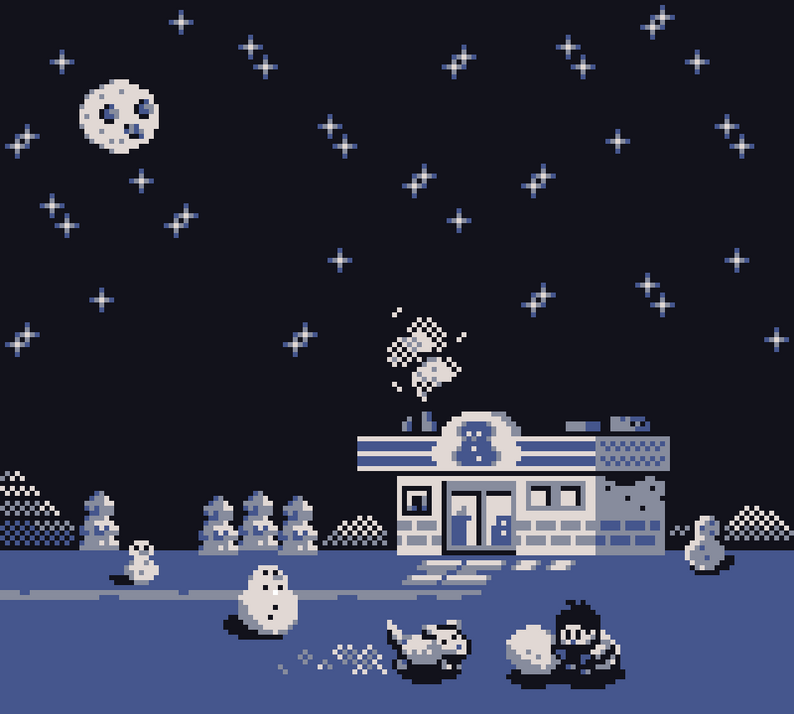
"Night time at Snowball Conbini" by howdy riceball: This submission stands out for its atmospheric storytelling and detailed urban setting. The concept of a "conbini" (convenience store) at night, rendered in the Game Boy style, immediately conjures a specific mood—perhaps quiet solitude or the warmth of artificial light against a dark backdrop. Howdy riceball likely uses contrasting dark and lighter shades to define architectural elements, neon signs, and perhaps even reflections on wet pavement, crafting a compelling narrative within a single frame. The choice of a night scene is particularly challenging with a limited palette, as it requires careful consideration of how light sources interact with shadows and surfaces, a feat likely accomplished with precision and evocative power.
-
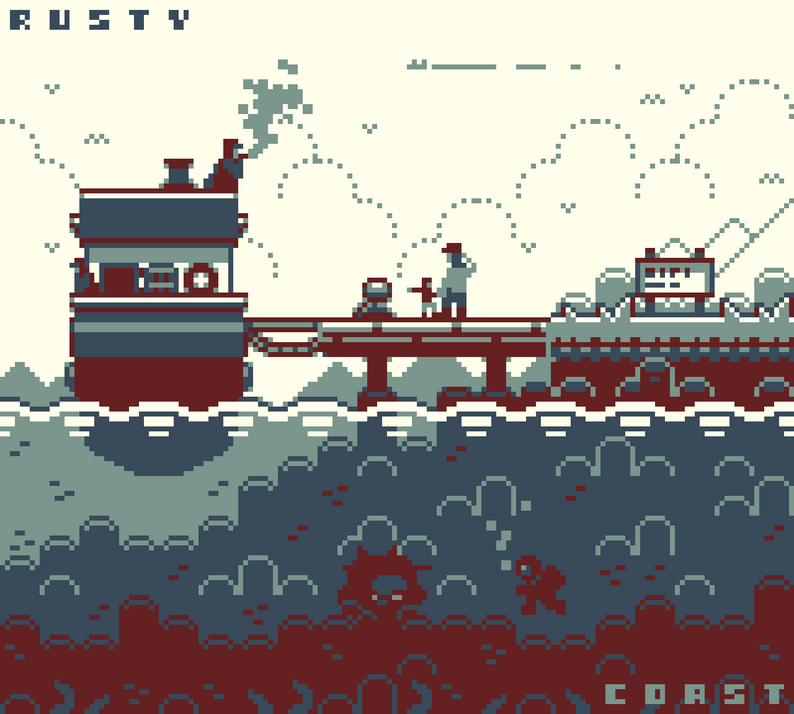
"Rusty Coast" by Birds Probably: This artwork suggests a more rugged, perhaps desolate, environment. The title "Rusty Coast" implies weathered metal, eroding structures, or perhaps a natural landscape marked by human impact or decay. Birds Probably would have utilized the Game Boy palette to convey textures like corroded metal, rough rock faces, or choppy seas. The composition might feature abandoned machinery, a derelict lighthouse, or stark cliff faces, all rendered with a grimy, textural feel that speaks volumes despite the lack of color. This piece likely excels in its ability to evoke a strong sense of place and narrative through meticulous environmental detail and a sophisticated use of shades to suggest decay and history.
-
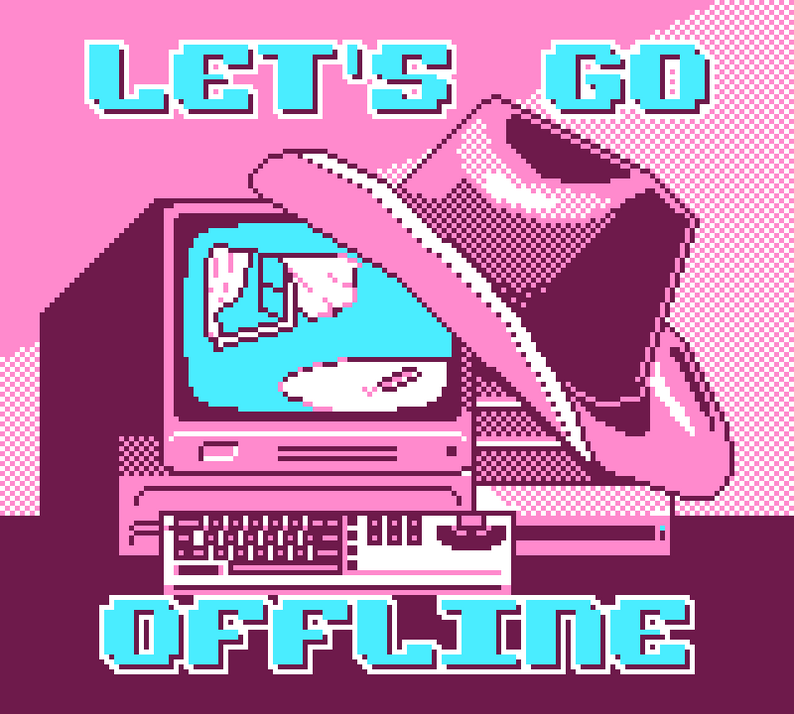
"Let’s Go Offline" by Robert Doman: This submission carries a distinct thematic message, potentially commenting on modern digital life through the lens of a retro device. The title itself suggests a yearning for simplicity or a critique of constant connectivity. Robert Doman’s art might depict a character disengaging from technology, or a scene that contrasts the digital world with natural tranquility. The Game Boy aesthetic inherently communicates a sense of "offline" retro gaming, making it an ideal medium for such a message. The pixel art would likely be clean and communicative, using symbolic elements to convey the theme effectively, possibly featuring classic Game Boy hardware or iconic imagery reimagined with a contemporary twist.
-
"A Lament for Forgotten Souls" by Annagmo: This evocative title suggests a poignant, perhaps melancholic, piece. Annagmo’s artwork would likely delve into themes of loss, memory, or the ethereal. The Game Boy’s grayscale palette can be incredibly effective for conveying somber moods, relying on stark contrasts and subtle gradations to create a sense of depth and mystery. The piece might feature spectral figures, ancient ruins, or desolate landscapes, all imbued with a sense of quiet sorrow. The artist’s challenge would be to evoke strong emotions with minimal visual information, a testament to the expressive power of carefully crafted pixel art.
-
"Aren, Orc Warrioress" by Rohezk: This submission presents a character-focused piece, showcasing the artist’s ability to design compelling figures within the Game Boy’s constraints. Rohezk would have focused on strong silhouettes, clear anatomical forms, and distinctive armor or weaponry to define Aren. The four-shade palette demands clarity in design, ensuring that the warrioress’s features, expression, and gear are immediately recognizable and impactful. This piece likely highlights the artist’s skill in character design, translating complex fantasy elements into a simplified, yet powerful, pixelated form, demonstrating that even a limited palette can convey strength and personality.
-
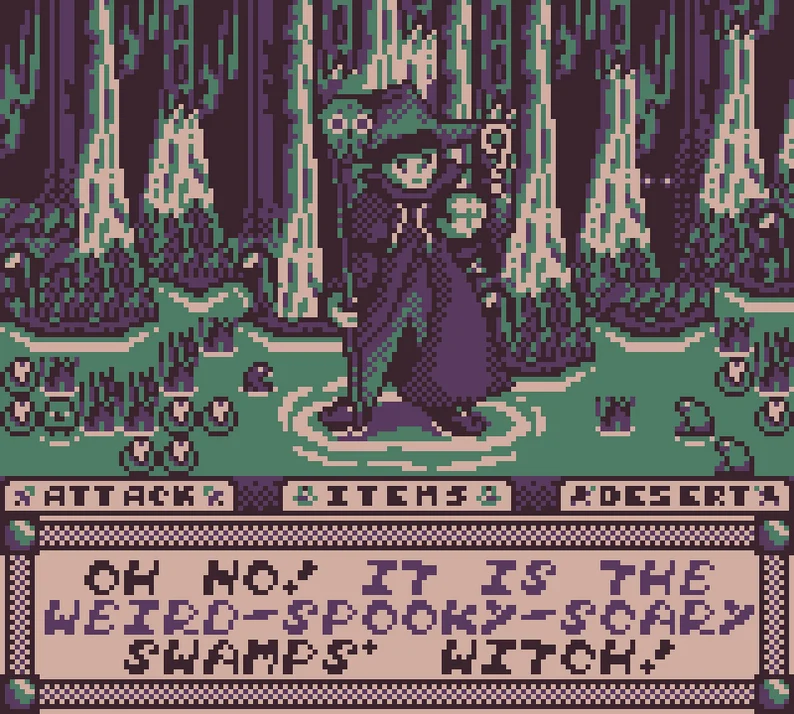
"Swamps’ witch" by BifStek: This artwork suggests a narrative-rich character in an atmospheric setting. BifStek’s "Swamps’ witch" would have combined character design with environmental storytelling. The artist would have used the limited shades to depict murky waters, gnarled trees, and perhaps magical effects emanating from the witch herself. The challenge here is to differentiate the character from the background while maintaining a cohesive, eerie atmosphere. The use of lighter shades for mist or magical glows against darker swamp elements would be crucial, showcasing BifStek’s ability to create a sense of depth and mystique within the Game Boy’s visual language.
These examples, along with the other 371 submissions available on the jam’s entry page, collectively paint a picture of extraordinary talent and dedication. They underscore how a seemingly restrictive medium can become a canvas for boundless artistic expression.
Beyond the Pixels: The Community’s Voice
The success of the GB Pixel Art Jam 2024 extends beyond the impressive visual output; it also reflects a vibrant and engaged community. Organizers, such as those at itch.io and the specific hosts of the annual jam, are presumed to be exceedingly pleased with the level of participation and the consistently high quality of submissions. Statements from jam hosts often emphasize the joy of seeing artists embrace the challenge, learn new techniques, and share their passion. "We are continually amazed by the creativity unlocked when artists engage with specific limitations," an inferred statement from a jam organizer might read. "The GB Pixel Art Jam is a perfect example of how celebrating retro hardware can inspire fresh, innovative art, and we are thrilled to provide a platform for this thriving community."
For the participating artists, the jam offers numerous benefits beyond simply showcasing their work. Many participants often express sentiments related to the challenging yet rewarding nature of the event. "Working within the Game Boy’s palette forced me to really think about every single pixel," one artist might infer to have commented. "It pushed me out of my comfort zone and helped me understand composition and value in a way I hadn’t before. Plus, the nostalgia factor is incredibly strong, connecting me to my childhood in a new creative way." The opportunity to contribute to a collective ROM also adds a unique appeal, allowing artists to be part of a tangible, playable archive of contemporary pixel art. The community aspect, including feedback on submissions and mutual appreciation, further solidifies the jam’s value as a platform for growth and connection.
The Broader Implications: Nurturing Retro Revival and Digital Art
The GB Pixel Art Jam 2024 holds broader implications for the digital art landscape and the preservation of retro gaming culture. Firstly, it actively contributes to the preservation and evolution of retro aesthetics. By challenging artists to work within the specific constraints of vintage hardware, such jams ensure that the unique visual languages of these eras are not forgotten but are instead reinterpreted and kept alive by new generations of creators. This acts as a cultural bridge, connecting the past with contemporary artistic practices.
Secondly, these events underscore the idea that creative constraints are often catalysts for innovation. In an age where digital tools offer infinite possibilities, deliberately choosing to work within limitations can paradoxically lead to more focused, inventive, and impactful art. The Game Boy’s minimal palette, for instance, compels artists to master form, contrast, and implied detail, skills that are transferable and beneficial across all artistic disciplines. This philosophy is highly relevant for indie game developers and digital artists seeking unique visual identities.
Thirdly, the role of platforms like itch.io in democratizing creative expression and fostering niche communities cannot be overstated. By providing accessible tools for hosting and participating in jams, itch.io enables individuals and groups to organize highly specialized events that cater to specific artistic interests. This decentralized approach allows for the organic growth of communities centered around unique passions, fostering an environment where experimentation and collaboration thrive outside of mainstream commercial pressures.
Finally, the success of the GB Pixel Art Jam 2024 highlights the continued relevance and vitality of pixel art as a legitimate and respected art form. Far from being a relic of the past, pixel art continues to evolve, finding new applications in games, animations, and standalone digital art pieces. Events like this jam demonstrate its enduring appeal and its capacity to evoke powerful emotions and tell compelling stories, cementing its place as a significant component of modern digital culture.
Looking Ahead
As the compiled ROM of the GB Pixel Art Jam 2024 artwork awaits its release, the event stands as a resounding success, a testament to the power of community, creativity, and the enduring charm of the Game Boy. It reinforces the idea that true artistry is not defined by technological sophistication but by ingenuity and passion. Such jams are more than just competitions; they are celebrations of a shared cultural heritage and fertile grounds for artistic development. The continued enthusiasm for these annual challenges ensures that the pixelated spirit of the Game Boy will live on, inspiring new generations of artists to embrace the art of limitation and contribute to the rich tapestry of digital creation. The future undoubtedly holds more pixelated wonders from this dedicated community, proving that classic aesthetics can always find new expressions in the hands of talented creators.
About the Author