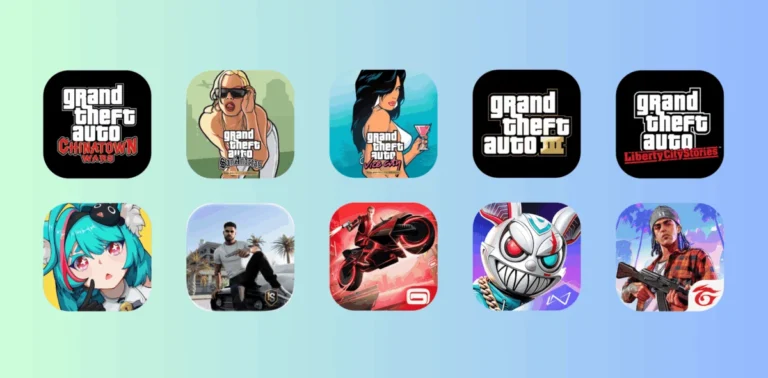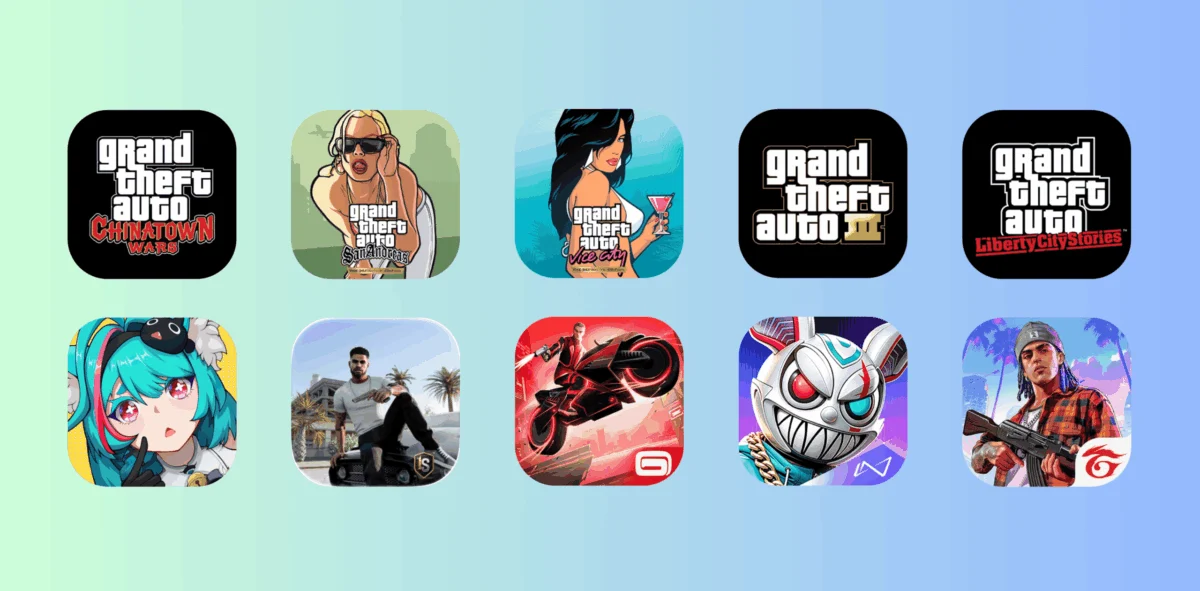
The global gaming industry is currently standing on the precipice of one of the most significant releases in entertainment history as Grand Theft Auto 6 prepares for its official debut. This monumental launch has prompted a comprehensive retrospective on the performance of the franchise’s existing mobile portfolio and an analysis of the burgeoning "GTA-alike" market on iOS and Android. Data provided by market intelligence firm AppMagic indicates that Rockstar Games has carved out a substantial niche in the mobile sector, generating an estimated $109 million in combined lifetime revenue across its mobile catalog. Within this figure, the Grand Theft Auto series stands as the primary driver, accounting for $95.5 million of the total earnings. These figures reflect a cumulative journey that began in 2010 with the release of Grand Theft Auto: Chinatown Wars, highlighting a decade-long strategy of bringing high-fidelity, open-world experiences to handheld devices.

The Financial Performance of Rockstar’s Mobile Catalog
Rockstar’s approach to mobile gaming has historically centered on premium ports of its legacy console titles. Grand Theft Auto: San Andreas remains the undisputed titan of this portfolio, boasting $56 million in lifetime revenue from approximately 7.9 million downloads. Its enduring popularity is a testament to the game’s cultural impact and the technical feat of porting a massive PlayStation 2-era open world to mobile architecture. Following San Andreas is the recently released GTA: Vice City – The Definitive Edition, which has secured $16.6 million in revenue from 12.5 million downloads.
The disparity between revenue and downloads across the portfolio reveals the varying monetization strategies and market receptions of each title. For instance, GTA: Liberty City Stories has achieved a staggering 42 million downloads but has generated a relatively modest $5 million in revenue, suggesting a high volume of acquisition through promotional periods or lower price points. Conversely, specialized titles like Bully: Anniversary Edition have maintained a strong presence, earning $8.8 million from 10.8 million downloads.

The full breakdown of Rockstar’s mobile performance includes:
- Grand Theft Auto: San Andreas: $56m revenue / 7.9m downloads
- GTA: Vice City – Definitive: $16.6m revenue / 12.5m downloads
- Bully: Anniversary Edition: $8.8m revenue / 10.8m downloads
- Grand Theft Auto III: $7.5m revenue / 1.3m downloads
- GTA: Liberty City Stories: $5m revenue / 42m downloads
- Grand Theft Auto: The Trilogy: $4.4m revenue / 315k downloads
- GTA: Chinatown Wars: $3.7m revenue / 16.5m downloads
- Max Payne Mobile: $2.3m revenue / 669k downloads
- GTA: San Andreas – Definitive: $1.9m revenue / 209k downloads
- Red Dead Redemption: $1.1m revenue / 74k downloads
- GTA III – Definitive: $477k revenue / 3.5m downloads
While these figures represent direct-to-consumer sales on the App Store and Google Play, industry analysts suggest that Rockstar’s actual mobile footprint is significantly larger. A pivotal 2023 agreement with Netflix brought the remastered Grand Theft Auto trilogy to the streaming service’s gaming wing. Unconfirmed industry reports estimate the value of this licensing deal at approximately $50 million. This partnership not only expanded the series’ reach to a non-traditional gaming audience but also served as a strategic marketing vehicle, culminating in the reveal of the first Grand Theft Auto VI gameplay footage via the Netflix platform earlier this year.

The Evolution of the GTA-Alike Category
The success of the Grand Theft Auto franchise has inevitably inspired a wave of competitors seeking to capture the "open-world crime" audience, particularly through free-to-play (F2P) models. Unlike Rockstar’s premium-priced offerings, these contenders utilize in-app purchases (IAPs) to drive revenue, often achieving financial milestones that rival or exceed the lifetime earnings of individual Rockstar ports in a fraction of the time.
One of the most prominent recent entries is Neverness to Everness (NTE), developed by Hotta Studio and published by Perfect World Games. Frequently referred to by the gaming community as "anime GTA," NTE has generated an estimated $46.4 million on mobile since its global launch in April 2026. However, its true scale is revealed in cross-platform data; Perfect World’s first-half results indicated a lifetime revenue of $298 million across PC, PS5, and mobile. The game’s success is heavily concentrated in Asian markets, with Japan and China accounting for 33% and 26% of revenue, respectively. Its recognition as the "Best Cross-Device Game" in several Google Play Best of 2026 categories underscores the shift toward high-production, multi-platform open worlds.

Another significant player is OneState RP: Role Play Online by Chillbase. Released in April 2022, the title has quietly amassed $90.2 million in revenue, nearly matching the entire mobile earnings of the official Grand Theft Auto series. This success is driven by the "Role Play" (RP) phenomenon, which has seen massive engagement on PC platforms like FiveM. By bringing a dedicated RP experience to mobile, Chillbase has tapped into a highly engaged demographic, particularly in the United States, which accounts for 43% of its earnings.
Strategic Moves by Industry Giants: Tencent and Garena
The potential of the open-world crime genre has attracted the attention of the world’s largest gaming conglomerates. Tencent, through its Level Infinite publishing label, has entered the fray with Gangstar Mirage City. Officially licensed from Gameloft, the game blends traditional GTA mechanics with a cyberpunk aesthetic. Since its soft launch in August 2026, it has focused on emerging markets such as Malaysia, India, and the MENA region. While it has currently earned $1.25 million from 16.7 million downloads, analysts view it as a significant threat should Tencent pursue a full-scale launch in Western markets.

Garena, the powerhouse behind the battle royale hit Free Fire, is also developing Garena Free City. Currently in soft launch across markets like the Philippines and Argentina, the game has seen 1.4 million downloads. While its initial revenue of $41.7k is modest, Garena’s proven ability to scale mobile titles in Southeast Asia and Latin America makes it a contender to watch. Similarly, Miniclip’s Derby studio is testing Pure Crime: Gangster City RP, which leans heavily into the aesthetics of the PlayStation 2-era Grand Theft Auto titles, signaling a continued interest in nostalgic, urban-sandbox gameplay.
Historical Context and Technical Shifts
The history of GTA-alikes on mobile is incomplete without mentioning Gameloft’s Gangstar Vegas. Launched in 2013, it was for years the primary alternative for players seeking a free open-world experience. With 201 million lifetime downloads and $28 million in revenue, it set the blueprint for the genre. However, the shift toward live-service "Role Play" and high-fidelity anime-style worlds has begun to eclipse these older models.

The technical evolution of mobile hardware has been a critical catalyst for this market expansion. In 2010, porting Chinatown Wars was a feat of optimization for the limited processing power of early smartphones. Today, the arrival of titles like Neverness to Everness and the GTA: Definitive Edition reflects a world where mobile GPUs can handle complex lighting, physics, and sprawling environments once reserved for dedicated gaming consoles.
Market Implications and Future Outlook
The launch of Grand Theft Auto 6 is expected to create a "rising tide" effect for the entire genre. Historically, major franchise releases trigger a surge in search traffic for related terms on app stores. Currently, titles like OneState RP are aggressively utilizing search engine marketing to capture users looking for "GTA" on the App Store.

For Take-Two Interactive, Rockstar’s parent company, the mobile strategy appears to be evolving. While premium ports remain a steady source of revenue and brand preservation, the licensing deal with Netflix suggests a move toward subscription-based distribution. This allows Rockstar to maintain the "premium" integrity of its games while benefiting from the massive reach and guaranteed licensing fees provided by streaming giants.
Conversely, the success of F2P titles like OneState RP and Neverness to Everness highlights a missed opportunity for a native, free-to-play mobile Grand Theft Auto experience. While Grand Theft Auto Online continues to be a juggernaut on console and PC, its absence from the mobile market has allowed third-party studios to fill the void.

As the industry moves beyond the launch of GTA 6, the mobile landscape will likely be defined by a battle between official legacy content and innovative, live-service clones. With Tencent and Garena waiting in the wings, the competition for the digital streets has never been more intense. The $95.5 million earned by Rockstar on mobile is a significant milestone, but in a market where a single F2P contender can generate $300 million in six months, the future of the genre may lie in the transition from one-time purchases to persistent, evolving virtual worlds.
About the Author