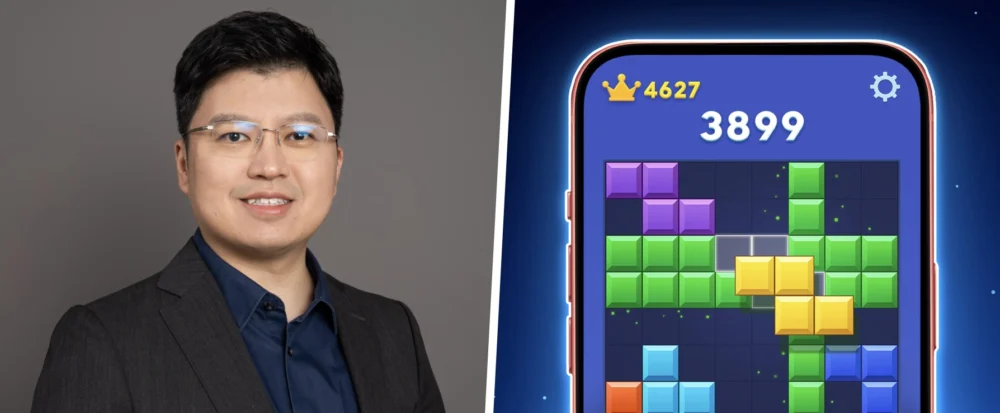
Tencent Holdings Ltd. is currently in advanced negotiations to acquire a minority stake in Hungry Studio, the Hong Kong-based developer behind the globally successful mobile puzzle game Block Blast. According to reports first surfaced by Bloomberg on February 26, 2026, the discussions have been progressing for several months, suggesting a deliberate and calculated approach by the Chinese technology conglomerate to integrate the high-growth casual gaming entity into its sprawling investment portfolio. While the specific financial terms and the exact percentage of the "small stake" remain undisclosed, industry insiders suggest that a formal announcement could be imminent. As of the time of reporting, neither Tencent nor Hungry Studio has provided an official comment regarding the transaction, maintaining a standard of corporate silence common during sensitive late-stage negotiations.
The move marks a significant development in the mobile gaming landscape, as Tencent, traditionally known for its dominance in hardcore and midcore sectors through massive investments in entities like Riot Games and Supercell, appears to be intensifying its focus on the casual gaming market. Hungry Studio has emerged as a powerhouse in this segment, driven by the meteoric rise of its flagship title, Block Blast, which has consistently outperformed established competitors in terms of user acquisition and retention over the past two fiscal years.
The Meteoric Rise of Block Blast and Hungry Studio
Hungry Studio’s ascent to the top of the mobile gaming charts is a testament to the enduring appeal of well-executed puzzle mechanics combined with data-driven optimization. Originally released in 2021, Block Blast did not immediately capture the world’s attention. However, through a relentless commitment to iterative improvement and aggressive user acquisition strategies, the game began a steep upward trajectory in late 2023 that carried through the entirety of 2024 and 2025.
Data provided by industry analysts at Appmagic highlights the scale of this success. In 2024, Block Blast secured an estimated 216 million installs, positioning it as one of the most downloaded titles of the year. This momentum did not plateau; rather, it accelerated. By the end of 2025, Block Blast was crowned the top-downloaded mobile game globally, racking up a staggering 368 million installs within a single calendar year.
The studio’s internal metrics further underscore this growth. In December 2024, Hungry Studio reported a daily active user (DAU) count of 40 million and a monthly active user (MAU) count of 160 million. By early 2026, these figures had nearly doubled. The studio recently confirmed that its flagship title has reached 70 million DAU and 300 million MAU. Such a massive, engaged user base presents a lucrative opportunity for a company like Tencent, which excels at scaling platforms and maximizing monetization through sophisticated advertising and in-game ecosystems.
A Strategy Built on Data: The A/B Testing Obsession
The success of Block Blast is not merely a result of luck or viral trends; it is the product of a highly scientific approach to game design. Jason Wang, Vice President of Brand and Marketing at Hungry Studio, articulated the company’s philosophy in early 2025, describing the team as "obsessed" with A/B testing. According to Wang, the studio conducted over 10,000 individual A/B tests within Block Blast throughout 2024 alone.
This rigorous testing framework allows the developer to fine-tune every aspect of the user experience, from the difficulty curve of the puzzles and the vibrancy of the visual effects to the timing and frequency of advertisements. In the hyper-competitive casual gaming market, where player churn rates can be high, this level of optimization is critical for maintaining long-term engagement. By constantly iterating on player feedback and behavioral data, Hungry Studio has managed to transform a simple block-matching mechanic into a daily habit for tens of millions of users worldwide.
For Tencent, acquiring a stake in a company with such a robust data-driven culture offers more than just a financial return. It provides a window into the methodologies that drive success in the casual puzzle genre—a category that Tencent has historically approached with less aggression than its "triple-A" mobile efforts like PUBG Mobile or Honor of Kings.
Tencent’s Strategic Pivot and Investment Philosophy
Tencent’s interest in Hungry Studio reflects a broader evolution in its global investment strategy. For over a decade, the Shenzhen-based giant has built its gaming empire on the pillars of competitive multiplayer and high-fidelity mobile experiences. Its ownership of Riot Games (League of Legends) and a majority stake in Supercell (Clash of Clans) established it as the premier player in midcore and hardcore gaming. Furthermore, its internal studios, Timi and Lightspeed, have set the industry standard for bringing major PC and console franchises to mobile devices, as seen with Call of Duty: Mobile and PUBG Mobile.

However, the casual gaming market represents a different, yet equally vital, revenue stream. Casual games often boast lower development costs and wider demographic appeal compared to hardcore titles. They are also less susceptible to the shifting meta-narratives and balance issues that can plague competitive esports titles. By securing a stake in Hungry Studio, Tencent is diversifying its portfolio, ensuring it has a foothold in the high-volume, ad-revenue-heavy world of puzzle games.
This potential deal also aligns with Tencent’s history of "minority stake" investing. Rather than pursuing full acquisitions that might stifle the creative independence of a studio, Tencent often prefers to act as a strategic partner. This allows the target company to continue its internal operations autonomously while benefiting from Tencent’s immense resources, including its cloud infrastructure, global distribution networks, and cross-promotional capabilities.
The Global Context: Hong Kong as a Gaming Hub
Hungry Studio’s location in Hong Kong is also a factor of strategic relevance. Hong Kong has increasingly become a bridge between the Chinese mainland’s development prowess and the global gaming market. For Tencent, investing in a Hong Kong-based studio offers a degree of geographical and cultural proximity while tapping into a firm that has already proven its ability to resonate with Western audiences. Block Blast’s dominance in Western app stores is a key asset, providing Tencent with a reliable channel to reach international users outside of its primary domestic market in China.
The timing of these talks is also noteworthy. The global mobile gaming market in 2025 and early 2026 has seen a stabilization following the post-pandemic correction. Advertisers are once again spending heavily on mobile platforms, and the "hybrid-casual" model—which blends simple gameplay with deeper meta-progression and mixed monetization—has become the industry’s new gold standard. Hungry Studio’s mastery of this model makes it a prime candidate for a strategic partnership.
Industry Implications and Future Outlook
If the deal is finalized, the implications for the mobile gaming industry will be far-reaching. First, it signals to other independent developers that the "casual" space remains a high-value target for major conglomerates, potentially sparking a new wave of consolidations and investments. Competitors such as Playrix, King (owned by Microsoft/Activision), and Peak Games (owned by Zynga/Take-Two) will likely view Tencent’s entry into the puzzle space with a watchful eye.
Second, the partnership could accelerate Hungry Studio’s expansion. With Tencent’s backing, the studio could potentially scale its operations, explore new titles beyond the "Block Blast" IP, or leverage Tencent’s advanced AI and machine learning tools to further refine its A/B testing capabilities. There is also the possibility of integrating Block Blast or future Hungry Studio titles into Tencent’s social platforms, such as WeChat, though the primary focus is expected to remain on the global standalone app market.
Analysts suggest that Tencent’s move may also be a defensive play. As ByteDance and other Chinese tech rivals continue to expand their gaming divisions, Tencent must ensure it occupies every profitable niche of the ecosystem. By capturing a piece of the most-downloaded game of 2025, Tencent reinforces its status as the undisputed leader in the global gaming industry.
Conclusion
The ongoing talks between Tencent and Hungry Studio represent a collision of two different but highly successful philosophies: the massive-scale, multi-genre dominance of a global tech titan and the hyper-focused, data-obsessed agility of a modern mobile developer. As Block Blast continues to dominate the charts with 300 million monthly users, a partnership with Tencent could provide the fuel necessary for Hungry Studio to transition from a "one-hit wonder" to a multi-title powerhouse.
For the broader market, this deal serves as a reminder that in the world of mobile gaming, data is king. The ability to run 10,000 A/B tests and turn a simple puzzle game into a global phenomenon is a capability that even the world’s largest gaming company finds worth pursuing. As the industry awaits an official announcement, the eyes of the gaming world remain fixed on Hong Kong and Shenzhen, watching the next move in a strategy that could redefine the casual gaming landscape for years to come.
About the Author