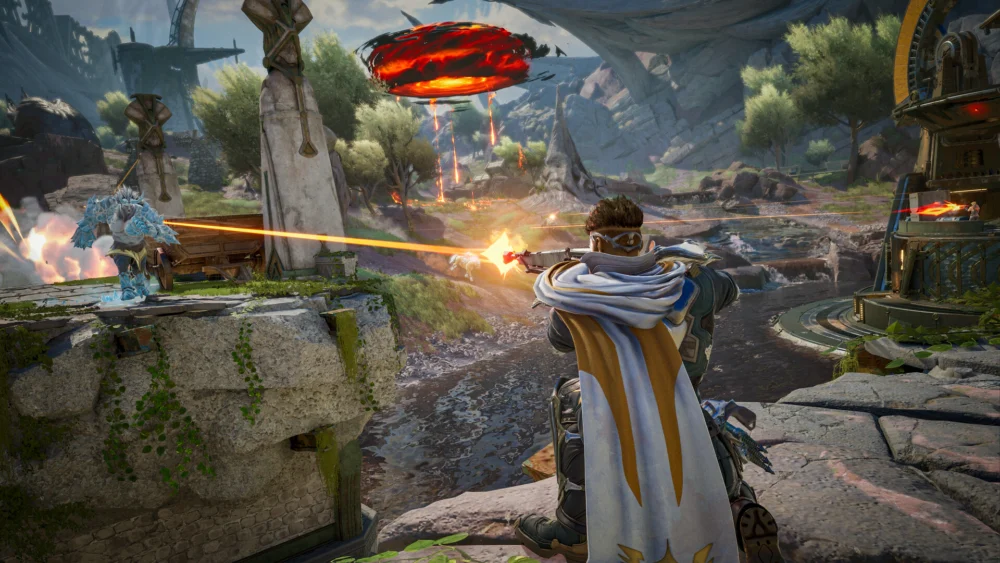
Wildlight Entertainment’s debut live-service hero shooter, Highguard, initially showed signs of promise but experienced a catastrophic loss of its player base and the studio itself effectively imploded mere weeks after its highly anticipated launch. The rapid demise of a venture backed by significant talent and substantial investment has prompted scrutiny, with a detailed report by Bloomberg’s Jason Schreier shedding light on the internal dynamics and strategic missteps that led to this swift collapse. Schreier’s investigation, based on interviews with numerous former developers, paints a picture of a studio that, despite its pedigree, failed to adapt to the realities of the modern gaming market, prioritizing a secretive development cycle over essential community engagement.
Wildlight’s Genesis and Grand Ambitions
The origins of Wildlight Entertainment trace back to the impressive success of Apex Legends, the battle royale phenomenon developed by Respawn Entertainment. Following Apex Legends‘ groundbreaking launch and sustained popularity, several key veterans, including Wildlight Cofounder Dusty Welch, departed Respawn to establish the new studio. This exodus of seasoned professionals from a high-profile, successful project immediately imbued Wildlight with a significant degree of industry credibility and attracted a strong pool of talent. The allure of building a new studio with such an experienced core team was undeniable, promising an environment where innovation and proven expertise could coalesce.
Crucially, this promising venture secured substantial financial backing, albeit initially undisclosed, from Tencent, the Chinese technology and entertainment conglomerate. Tencent’s involvement, later revealed by reports, underscored the high expectations placed upon Wildlight. Tencent is known for its strategic investments in promising game studios globally, often providing the capital necessary to bring ambitious projects to fruition. This financial muscle, combined with the development acumen of the Wildlight team, seemed to lay a robust foundation for success in the competitive live-service market.
Initially, Wildlight embarked on a significantly different path for its debut title. The team’s early vision revolved around a live-service game incorporating Rust-style survival mechanics. This concept aimed to blend the persistent world and crafting elements of survival games with a dynamic, evolving online experience. Such a design choice suggested an ambition to carve out a unique niche within the multiplayer landscape, moving beyond the more conventional hero shooter formula that would eventually define Highguard. This initial direction highlights a period of creative exploration, attempting to leverage the team’s expertise in online multiplayer while experimenting with emergent gameplay systems.
The Shifting Vision: From Survival to Hero Shooter
However, as development progressed, Wildlight made a substantial pivot, altering the game’s core design to what would ultimately become Highguard. This mid-development shift, common in the iterative process of game creation, transformed the project from a survival-oriented experience into a hero shooter. While the exact reasons for this dramatic change are multifaceted and not fully detailed in public reports, such pivots often occur due to internal feedback, market analysis, or a realization that the initial concept is not aligning with production realities or target audience appeal. The hero shooter genre, popularized by titles like Overwatch and Apex Legends itself, offered a more defined structure and a proven path to engagement, potentially appearing as a safer or more marketable option to the leadership.
The transition to a hero shooter meant designing distinct characters with unique abilities, focusing on competitive team-based combat, and building an ecosystem for continuous content updates—a hallmark of the live-service model. While the team had considerable experience in this domain from their Respawn days, this pivot also meant discarding significant work on the previous survival mechanics and potentially rushing the development of new systems and content to meet deadlines. The complexity of such a change, even for an experienced team, can introduce unforeseen challenges and strain resources, potentially leading to compromises in other areas of development.
A Strategy of Secrecy: The "Apex Legends" Blueprint Misapplied
One of the most critical factors identified in Highguard‘s downfall was Wildlight’s staunch commitment to a highly secretive development and launch strategy. Leadership, as noted in Schreier’s report, "wanted to recreate what had worked with Apex Legends, which had been kept secret until it was announced and launched at the same time." This approach, while spectacularly successful for Apex Legends, proved to be a fatal miscalculation for Highguard.
The success of Apex Legends‘ surprise launch was attributable to several unique factors: it was developed by an established, critically acclaimed studio (Respawn Entertainment) with a strong reputation for polished gameplay (Titanfall series). It also leveraged the then-booming battle royale genre, offered a highly refined gameplay experience from day one, and crucially, was a new entry in a familiar universe. These elements combined to create an immediate impact, generating massive player interest and positive word-of-mouth that sustained its initial growth.
Wildlight, despite its pedigree, did not possess the same foundational advantages. It was a new studio launching a new intellectual property (IP) in an increasingly saturated and competitive market. For Highguard, testing remained largely confined to internal staff and a select group of external testers, including personnel from Tencent’s TiMi Studio Group. This limited feedback loop, while ensuring secrecy, deprived the development team of broader player insights essential for balancing complex game mechanics, optimizing onboarding experiences, and identifying potential engagement issues.
The gaming industry has long understood the value of public betas, early access programs, and open testing phases. These stages are not merely for bug hunting; they are crucial for community building, gathering diverse player feedback on gameplay systems, economy, and progression, and stress-testing server infrastructure. Successful live-service titles like Fortnite, Valorant, and Paladins have extensively utilized these methods to refine their games based on actual player behavior and preferences before or shortly after launch. By eschewing this approach, Wildlight forfeited the opportunity to build a pre-existing community, generate organic hype, and fine-tune Highguard in response to real-world player interactions.
Launch, Exodus, and Collapse
The first major public reveal of Highguard came at The Game Awards in December, an industry event known for showcasing upcoming titles. This brief spotlight provided a glimpse of the game but maintained the veil of secrecy, offering little opportunity for players to learn more or engage with the developers. The actual launch date was set for January 26, a mere few weeks after its Game Awards debut, giving the game minimal time to build anticipation or explain its unique features to a broader audience.
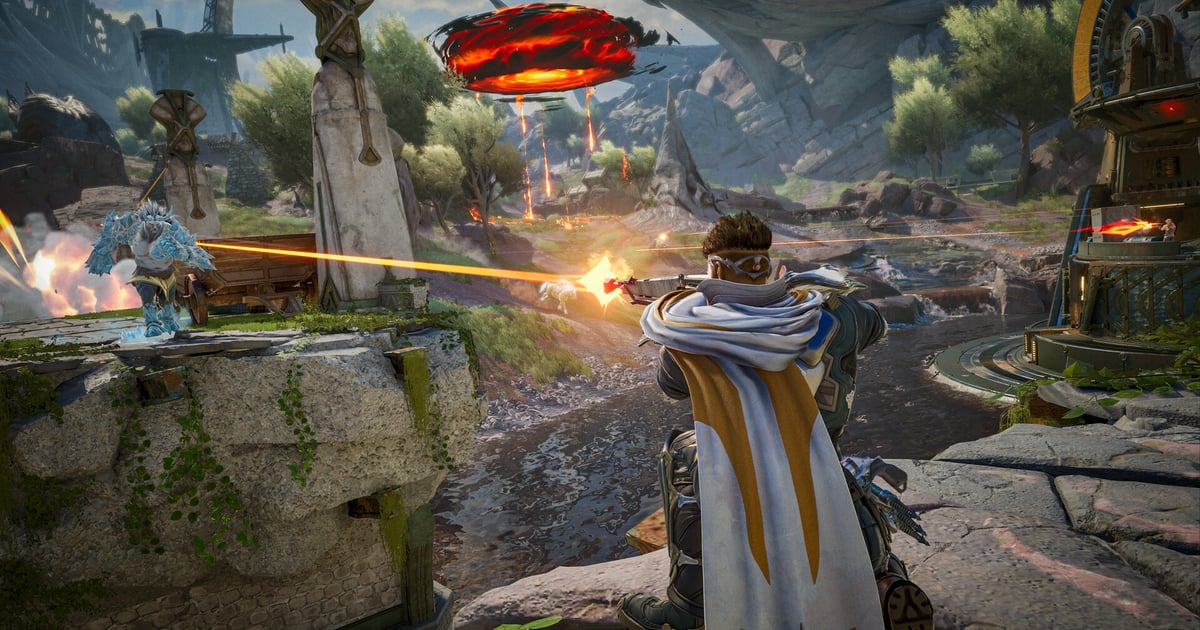
Upon its quiet launch, Highguard experienced an initial surge of players, likely drawn by the promise of a new hero shooter from a studio founded by Apex Legends veterans. However, this early enthusiasm proved fleeting. Players quickly dropped off, signaling a fundamental disconnect between the game’s offering and player expectations or retention mechanics. Reports from former developers suggested that while early internal testing had been "mostly positive," the game was perceived as "fairly complicated to get into." This complexity, coupled with the absence of developers on hand to guide new players or a smooth in-game communication system, made the initial experience daunting for many. In the live-service world, a difficult onboarding process or a lack of immediate gratification can be a death knell, as players have countless other options readily available.
The rapid decline in player numbers had immediate and devastating financial consequences. The undisclosed Tencent funding, which had sustained Wildlight throughout its development, was reportedly withdrawn within a short period after launch. Without this critical financial lifeline and with the game failing to generate sufficient revenue or player engagement, Wildlight Entertainment was left in an untenable position. The studio’s implosion was swift: most workers were laid off just two weeks after Highguard‘s launch. This brutal outcome highlights the volatile nature of game development, especially in the live-service sector, where sustained success is paramount to survival.
The Perilous Live-Service Landscape
Highguard‘s failure serves as a stark reminder of the incredibly brutal and unforgiving nature of the live-service game space. This segment of the industry, characterized by games designed for continuous engagement, updates, and monetization over long periods, demands an extremely high bar for entry and sustained performance. The market is saturated with established giants like Fortnite, Apex Legends, Call of Duty: Warzone, Valorant, and Genshin Impact, all vying for player time and spending. New entrants face immense challenges:
- High Development Costs: Live-service games require significant upfront investment in technology, content creation, and infrastructure, with the expectation of continuous post-launch development.
- Player Retention: Attracting players is one thing; retaining them is another. Games must offer compelling gameplay loops, regular content updates, balanced meta-games, and a strong sense of community to keep players engaged over months and years.
- Monetization Strategy: Finding the right balance between free-to-play accessibility and effective monetization (e.g., battle passes, cosmetics) without alienating the player base is crucial.
- Bug-Free Experience: While perfection is impossible, live-service games are expected to be relatively stable and free of major game-breaking bugs from launch, as early technical issues can quickly erode player trust.
The landscape is littered with ambitious titles that have struggled or failed despite significant backing and talent. Examples include Anthem, Babylon’s Fall, and even more recent titles that failed to gain traction. This trend underscores that pedigree alone is not enough; a deep understanding of the market, player psychology, and a flexible, responsive development approach are equally vital.
The Critical Role of Community Engagement
The lack of public testing and community engagement emerged as a major sticking point in Highguard‘s post-mortem. While secrecy can generate hype for certain titles, particularly those with an existing fanbase or from renowned franchises, for a new IP, it often hinders the organic growth of a player base and the invaluable feedback loop necessary for refinement. Public betas and early access programs serve multiple critical functions:
- Feedback and Iteration: Real players expose issues and provide insights that internal teams might miss, leading to crucial balance adjustments, quality-of-life improvements, and feature prioritization.
- Stress Testing: Public tests rigorously stress servers and network infrastructure under real-world conditions, identifying bottlenecks and scalability issues before launch.
- Community Building: Engaging with players early fosters a sense of ownership and loyalty. Players who feel heard are more likely to become advocates and long-term supporters. Forums, Discord servers, and developer-player interactions become vital channels.
- Marketing and Hype: A well-executed public beta can generate significant word-of-mouth marketing, build anticipation, and attract content creators and streamers who can amplify visibility.
Highguard‘s reported complexity for new players, exacerbated by the absence of readily available guidance, highlights a fundamental flaw that extensive public testing could have identified and addressed. If players struggled to understand core mechanics or navigate the game without developers "on-hand to answer questions and offer guidance," it suggests a failure in intuitive design or comprehensive tutorials. These are precisely the kinds of issues that surface rapidly and repeatedly during large-scale public testing, allowing developers to iterate and simplify before a wider release. The "hubris" cited by some workers likely stemmed from a belief that their internal expertise was sufficient to bypass these conventional, but vital, steps.
Tencent’s Backing and Withdrawal
Tencent’s role in Wildlight Entertainment’s saga is noteworthy. As one of the largest video game companies globally, Tencent’s investment signifies a strong belief in the studio’s potential and the project itself. Their TiMi Studio Group’s involvement in external testing suggests a degree of oversight and input, yet even their internal assessment seemingly did not fully predict the post-launch player exodus.
Tencent’s strategy often involves acquiring significant stakes in promising studios and intellectual properties worldwide. While they provide substantial capital and sometimes operational support, they are also known for their pragmatic business approach. Investments are typically tied to performance metrics, and a rapid decline in player engagement, coupled with an inability to secure future revenue streams, would logically trigger a re-evaluation of funding. The swift withdrawal of their financial support after Highguard‘s poor performance underscores the high-stakes, performance-driven nature of their investments and the broader gaming industry. For Tencent, Highguard‘s failure represents a lost investment, but likely a relatively minor setback within their vast portfolio of successful ventures.
Lessons from the Ashes: Hubris and the High Stakes of Game Development
The story of Wildlight Entertainment and Highguard serves as a potent cautionary tale for the video game industry, particularly for those venturing into the fiercely competitive live-service genre. It encapsulates several critical lessons:
- Pedigree is Not a Guarantee of Success: While an experienced team is invaluable, past successes do not automatically translate to future triumphs, especially with new IPs and evolving market dynamics.
- The Perils of Secrecy for New IPs: While a surprise launch can work in specific, highly favorable circumstances, for most new games, particularly live-service titles, transparent development and robust community engagement are indispensable.
- Player Feedback is Paramount: Isolating development from the wider player community denies access to critical data and insights needed to refine gameplay, onboarding, and long-term retention strategies.
- Market Awareness and Adaptability: The live-service landscape is dynamic. Developers must continuously analyze market trends, understand player expectations, and be willing to adapt their vision based on feedback.
- Onboarding Complexity: For a live-service game, ease of entry and intuitive mechanics are crucial. If a game is too complicated for new players to grasp quickly, it risks losing them before they invest significant time.
The "hubris" cited by developers points to a potential overconfidence in their ability to dictate terms to the market, rather than responding to its demands. In an era where players are more vocal and connected than ever, ignoring their collective voice, even in its nascent stages, can be a fatal flaw.
Conclusion: A Cautionary Tale
The rapid rise and fall of Wildlight Entertainment and Highguard within mere weeks of launch is a stark reminder of the immense challenges inherent in modern game development, particularly within the live-service sector. From the initial ambition fueled by Apex Legends‘ success and Tencent’s backing, to the decisive pivot in design, and ultimately, the adherence to a secretive launch strategy, the studio’s journey was marked by both promise and critical missteps. The outcome – a rapid player exodus, withdrawn funding, and mass layoffs – underscores the unforgiving nature of a market that demands not just innovation and polish, but also an open dialogue with its players. Highguard‘s implosion will undoubtedly be studied as a case study in the vital importance of community engagement, iterative development, and humility in the face of an ever-evolving and demanding global gaming audience.
About the Author