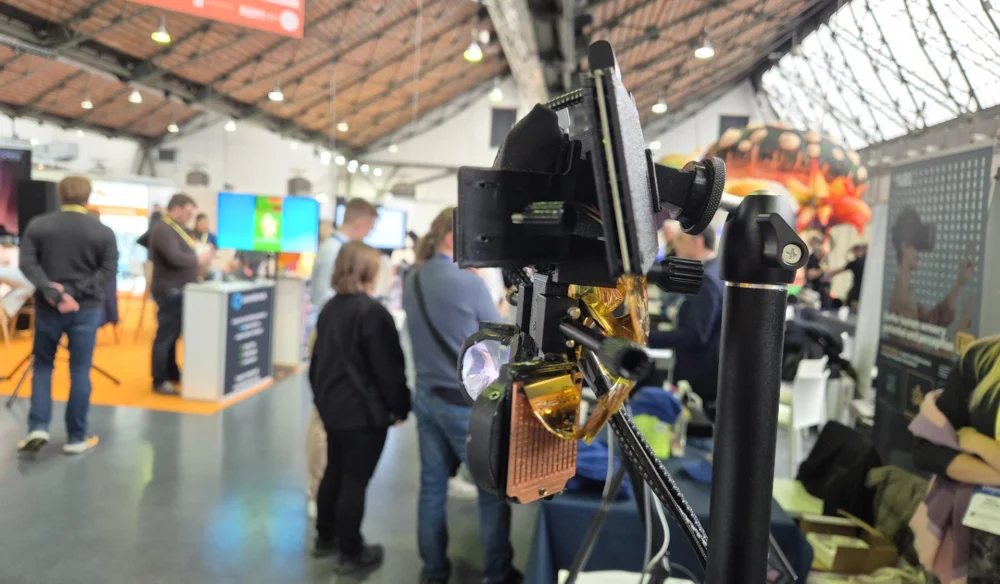
Hypervision, a specialized startup focused on high-performance optical architectures, has demonstrated its latest breakthroughs in wide field-of-view (FOV) technology at the United XR Europe event. The exhibition highlighted a series of optical prototypes designed to overcome the stagnancy in immersion levels that has characterized much of the consumer virtual reality (VR) market over the past decade. Among the systems showcased was a high-fidelity micro-OLED prototype capable of delivering a horizontal field of view exceeding 220 degrees, a specification that closely aligns with the natural peripheral limits of human vision. This development marks a significant shift in optical design, moving away from traditional single-lens architectures toward sophisticated multi-display and hybrid-lens configurations.

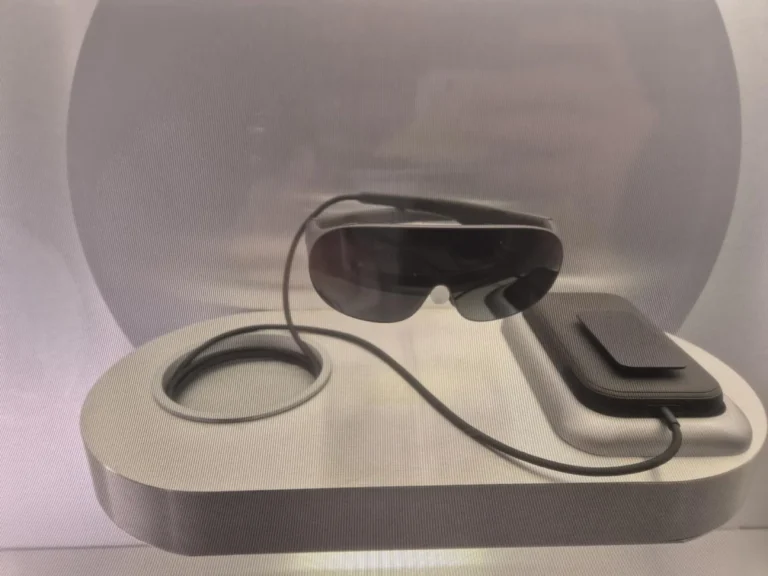
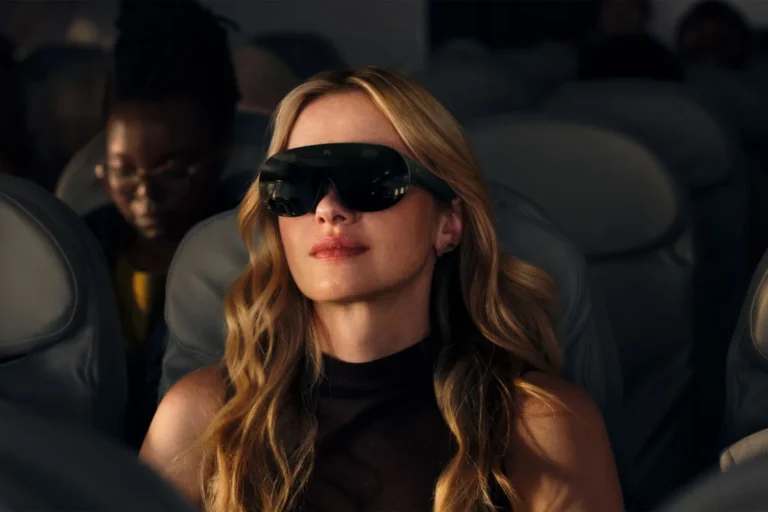
The importance of Hypervision’s contributions to the XR ecosystem was underscored by the recent announcement of the Lynx R2 mixed reality (MR) headset. The Lynx R2, which currently claims the widest FOV among standalone MR devices, utilizes lenses engineered by Hypervision. While the Lynx R2 employs a version of the technology optimized for open-periphery mixed reality, the prototypes showcased at United XR Europe represent the extreme edge of what is possible for fully immersive VR environments.
The Evolution of Hypervision’s Optical Prototypes
The demonstrations at United XR Europe provided a chronological perspective on the evolution of Hypervision’s technology. The earliest prototype on display, developed approximately 18 months ago, utilized Fast-LCD displays manufactured by BOE. This system featured a resolution of 2.1K per eye and a field of view measuring 160 degrees horizontally by 120 degrees vertically. By employing large-format lenses, Hypervision was able to achieve high levels of immersion and color vibrance, effectively filling the user’s peripheral vision with virtual imagery.

Building upon this foundation, Hypervision introduced a second iteration utilizing 2.73K per-eye displays sourced from TCL. This model integrated local dimming technology to enhance contrast ratios and achieve deeper black levels, addressing a common criticism of standard LCD panels. However, technical analysis during the event noted a trade-off: while the TCL-based system offered superior contrast and resolution, it exhibited lower overall brightness compared to its BOE predecessor. Despite this, the 160×120 FOV remained a benchmark for high-immersion displays, maintaining a central pixel density of 28 pixels per degree (PPD) and a stereo overlap of 80 degrees.
The VRDom Architecture: A Paradigm Shift in Immersion
The centerpiece of the Hypervision exhibit was the debut of a new micro-OLED prototype utilizing a patented technology known as VRDom (Virtual Reality Dome Projection Room). Unlike traditional VR headsets that utilize a single display and lens per eye, the VRDom system employs a dual-display configuration for each eye. By canting two micro-OLED panels and pairing them with a specialized optical unit—which resembles two high-precision lenses seamlessly fused together—Hypervision has managed to expand the horizontal FOV to an unprecedented 220 to 240 degrees.

For context, the stationary horizontal field of view of the human eye is approximately 210 degrees. When accounting for natural eye movement, the total human FOV can reach 270 degrees. Hypervision’s 220-degree system effectively accommodates the entire stationary range of human sight, providing a level of presence previously unattainable in compact head-mounted displays. The use of 1.3 to 1.35-inch micro-OLED displays allows the system to maintain a slim profile while delivering high resolution, vivid color reproduction, and a complete absence of the "screen door effect."
However, this horizontal expansion necessitates a trade-off in vertical coverage. The current VRDom prototype offers a vertical FOV of 94 degrees. While this is slightly lower than the vertical FOV found in consumer devices like the Meta Quest 3, the massive gains in horizontal peripheral vision are intended to prioritize situational awareness and the psychological sense of "being there."

Technical Challenges and the "Seam" Problem
One of the primary engineering hurdles in multi-lens and multi-display VR systems is the "seam"—the visual artifact created where two images or optical paths meet. Previous attempts at multi-lens designs often suffered from visible distortions or dark lines that broke immersion when the user’s gaze shifted.
Arthur Rabner, CEO of Hypervision, confirmed that the latest prototype has made significant strides in resolving this issue. Through a combination of increased mechanical precision in lens manufacturing and sophisticated software-based image stitching, the seam in the 220-degree prototype is nearly invisible to the naked eye. In its current state, the seam only occasionally manifests as a subtle vertical darkening during rapid eye movement. Hypervision is reportedly refining the software calibration and lens geometry to eliminate these artifacts entirely before the technology reaches the reference design stage.

Commercial Viability and Market Positioning
While the technical achievements of the VRDom system are substantial, the current Bill of Materials (BOM) presents a barrier to entry for the general consumer market. The prototype requires four high-resolution micro-OLED displays; the cost of the displays alone is estimated at $1,500 USD per unit. This pricing structure positions Hypervision’s ultra-wide FOV technology for high-end sectors, including:
- Enterprise and Industrial Simulation: Training environments where peripheral vision is critical for safety and realism.
- Military Applications: Flight simulators and tactical training where a full field of regard is necessary.
- Prosumer and Luxury VR: High-fidelity enthusiasts willing to invest in the highest possible tier of immersion.
Rabner clarified that the version of Hypervision’s technology used in the Lynx R2 is distinct from the 220-degree prototype. Because the Lynx R2 is designed as an open-periphery device, users naturally perceive their physical surroundings in their peripheral vision, making an ultra-wide virtual FOV less critical than it is for a fully enclosed VR headset.

Future Roadmap and Industry Collaboration
Looking toward 2026, Hypervision’s strategic objective is the transition from hand-assembled prototypes to mass-producible reference designs. The company aims to provide standardized optical modules that other hardware manufacturers can integrate into their own headsets, similar to the partnership established with Lynx.
To ensure these designs meet the diverse needs of the XR industry, Hypervision has launched a community outreach initiative. The company is actively soliciting feedback from VR developers and hardware engineers through its official website to help shape the specifications of its upcoming reference platforms. This collaborative approach is intended to accelerate the adoption of wide-FOV optics across the broader ecosystem.

Broader Impact on the VR Industry
The work being done by Hypervision addresses one of the most persistent bottlenecks in VR hardware. While processing power, tracking accuracy, and display resolution have improved exponentially over the last decade, the field of view in consumer devices has remained largely static, hovering between 90 and 110 degrees. This "scuba mask" effect is often cited as a primary factor that limits long-term engagement and immersion.
By proving that a 220-degree FOV can be achieved without a prohibitively bulky form factor, Hypervision is setting a new benchmark for the industry. While it may take several years for the cost of micro-OLED components to decrease sufficiently for mainstream consumer use, the existence of these prototypes provides a clear roadmap for the future of immersive computing. The move toward 2026 as a year for mass production readiness suggests that the next generation of professional and enterprise headsets will likely prioritize peripheral vision as a standard feature rather than a luxury.
About the Author