The extended reality (XR) industry is currently navigating a period of significant recalibration, characterized by a shift in hardware strategies, a refocusing of social platform priorities, and a burgeoning tension between independent content creators and major intellectual property holders. Recent public statements from Meta’s Chief Technology Officer, Andrew Bosworth, alongside the unveiling of new hardware from European competitors and fluctuating market data, provide a comprehensive picture of an ecosystem transitioning from speculative hype to a more pragmatic, albeit challenging, phase of growth.
Meta’s Strategic Realignment and the Pivot to Mobile Social Platforms
In a series of recent public addresses, Meta CTO Andrew Bosworth provided clarity on the company’s recent internal restructuring and its outlook on the virtual reality (VR) market. Bosworth acknowledged that the rate of VR adoption has been slower than the company’s internal projections. While the Meta Quest 2 experienced a surge in sales during the global pandemic, the subsequent performance of the Quest 3 has indicated that the consumer market for high-end VR remains a specialized niche rather than a mass-market certainty.
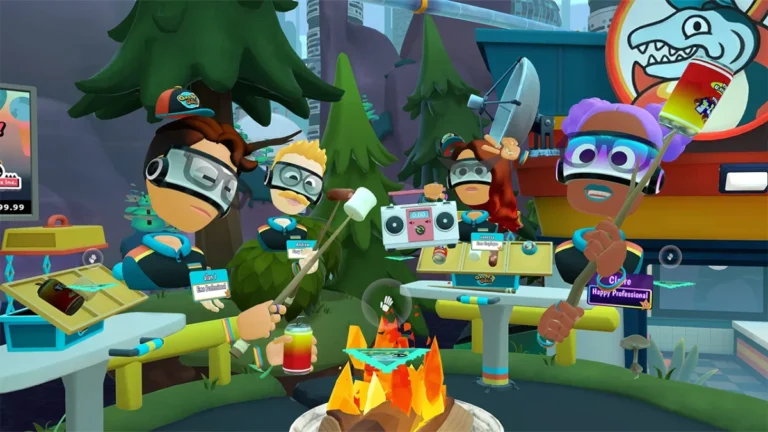
A primary consequence of this slower growth is a fundamental shift in the development of Horizon Worlds, Meta’s flagship social metaverse platform. Bosworth revealed that the platform will now prioritize mobile accessibility over its original VR-first mandate. This pivot is driven by internal data showing significant user engagement on mobile devices. However, industry analysts note that by moving toward mobile, Horizon Worlds enters a highly saturated market dominated by established giants such as Roblox, Fortnite, and Zepeto.
This strategic shift is already manifesting in the Meta Quest user interface. The "Horizon Feed," which many users found intrusive, is slated for removal and will be replaced by a more utility-focused "Navigator" interface. Furthermore, Meta appears to be stepping back from its role as a primary financier of high-budget internal VR gaming, with Bosworth suggesting that the company will increasingly rely on the third-party indie ecosystem to populate its content library. While this empowers independent developers, it raises questions regarding the level of future investment Meta will provide to sustain these studios in a market that remains relatively small.

Diversification into Wearable AI and Smartglasses
While VR growth has tempered, Meta is aggressively expanding its footprint in the smartglasses sector. The company recently announced the "AI Glasses Impact Grants," a $2 million funding initiative designed to spur innovation in wearable AI technology. These grants, offering up to $200,000 per project, are currently restricted to United States-based developers. This move signals a broader industry trend where "lightweight" XR—specifically augmented reality (AR) and AI-integrated eyewear—is viewed as a more immediate path to mainstream consumer adoption than fully immersive VR headsets.
The Lynx R2: A European Alternative for Mixed Reality
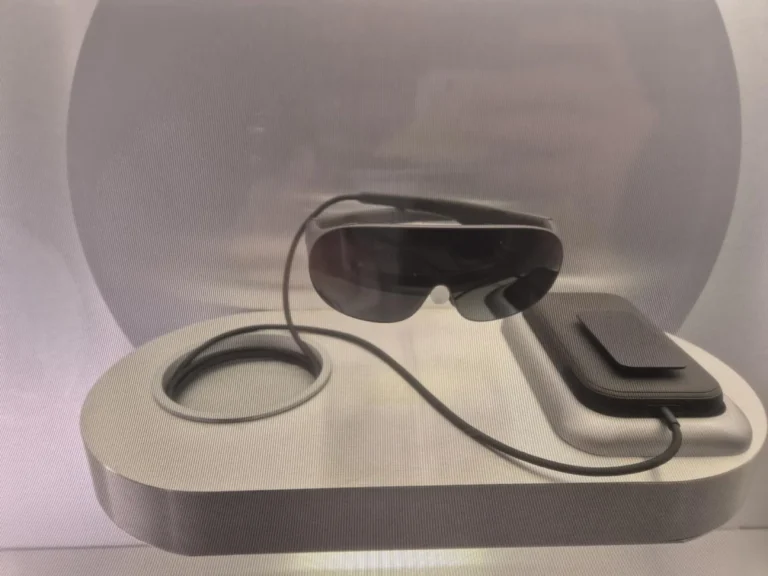
As Meta recalibrates, the French startup Lynx has unveiled the Lynx R2, a standalone mixed reality (MR) headset positioned as a versatile alternative to mainstream offerings. The R2 is designed with a specific focus on an "open ecosystem," contrasting with the closed-platform nature of Meta and Apple.
The device features a wide field of view (FOV) of 120 degrees horizontally and 100 degrees vertically, utilizing a unique optical design to maintain a compact form factor. Key specifications include:
- Resolution: 2480 x 2480 pixels per eye.
- Optics: 4-fold catadioptric prisms.
- Refresh Rate: 90Hz.
- Transparency: High-fidelity color passthrough for mixed reality applications.
A distinguishing feature of the Lynx R2 is its commitment to transparency for researchers and enthusiasts. The company intends to release hardware schematics and provide raw sensor access, allowing for deep customization and data analysis that is typically blocked on consumer-grade hardware. While the price and launch date remain unconfirmed, the R2 represents a growing demand for hardware that serves the professional, industrial, and "prosumer" sectors.
The Paradox of VR Software: Success Amidst Studio Instability
The current state of the VR software market presents a paradoxical narrative of record-breaking sales and sudden studio contractions. Recent data highlights several major milestones:

- Job Simulator: Owlchemy Labs reported that its seminal title has surpassed 6 million installs over its lifetime.
- Real VR Fishing: Devs United Games announced the title has sold over one million copies since its 2019 launch.
- Dimensional Double Shift: This newer title achieved one million distributed copies within its first year.
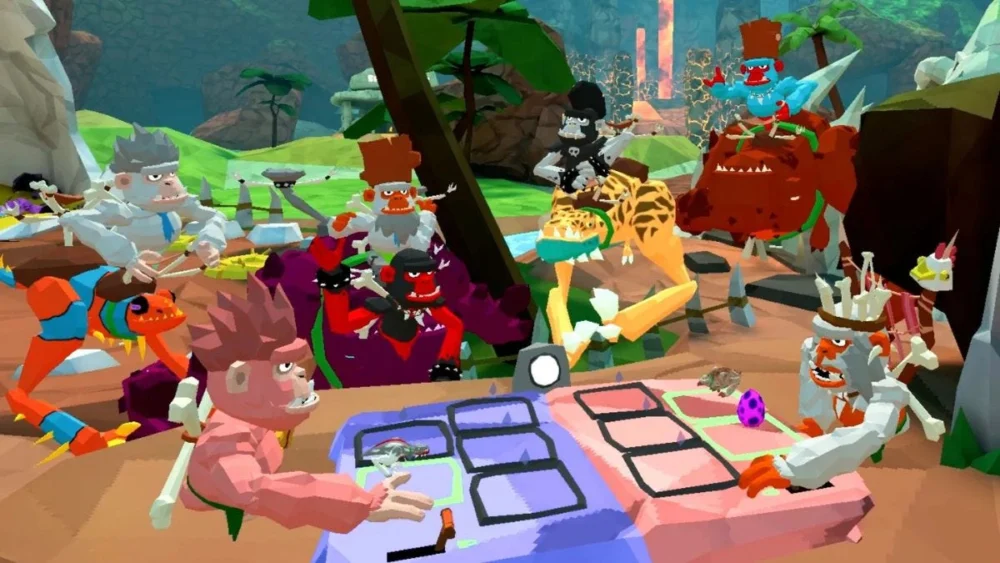
- UG: A breakout success on the Meta Quest Store, this dinosaur management game has amassed over 245,000 reviews with a near-perfect 4.9-star rating.
Despite these success stories, the industry is facing a wave of layoffs. Mighty Coconut, the developer of the critically acclaimed and commercially successful Walkabout Mini Golf, recently announced a 25% reduction in staff. The studio also confirmed that future downloadable content (DLC) prices will increase by $1, and development on its mobile companion app has been paused. This development serves as a stark reminder that even the most successful developers are vulnerable to the rising costs of production and the unpredictable nature of VR hardware adoption rates.
Military and Industrial Applications: The Field Operator HUD
Beyond consumer entertainment, XR technology is seeing rapid integration into the defense sector. The Finnish startup Distance Technologies has introduced the Field Operator HUD (FOH), an XR system designed for military vehicle operators. Unlike consumer headsets, the FOH is engineered to aggregate data from external sensors—such as thermal imaging and night vision—and project it directly into the operator’s field of vision. This allows personnel within armored vehicles to maintain "situational awareness" through the vehicle’s hull, effectively making the walls of the tank transparent through digital overlays.
Legal Friction in the Modding Community
The VR ecosystem recently experienced a significant legal confrontation involving the modding community and major game publishers. Luke Ross, a prominent developer known for creating VR mods for high-profile PC games, was served a Digital Millennium Copyright Act (DMCA) notice by CD Projekt Red regarding his VR mod for Cyberpunk 2077.
The publisher requested that the mod be made available for free, rather than behind Ross’s Patreon paywall. Ross, citing the immense labor required to maintain such complex software, initially resisted but eventually opted to remove all his mods from the platform to avoid a permanent ban. This incident has reignited a debate within the community regarding the ethics of "paywalling" mods for existing intellectual property versus the right of developers to be compensated for their technical expertise. In the wake of this controversy, other modders, such as Nomoreflat, have transitioned their libraries to a free-to-access model.
Immersive Media and the Apple Vision Pro
The launch of the Apple Vision Pro has provided a testing ground for high-fidelity immersive media, particularly in professional sports. Recent broadcasts of NBA games in "Apple Immersive Video" have garnered praise for their realism and the sense of scale they provide. However, technical and ergonomic hurdles remain.

Viewers have noted that the weight of the Vision Pro makes watching a full-length sporting event uncomfortable. Furthermore, the high-resolution immersive format requires significant head movement to track action across the court, leading to viewer fatigue. Analysts suggest that while the visual technology is ready for "prime time," the hardware must become lighter and the directorial techniques for 180-degree video must be refined before it can replace traditional television broadcasts.
Long-term Market Projections and Industry Maturity
Historical data and shipment predictions from firms like IDC illustrate a significant cooling of the "hype cycle" for VR. Ten years ago, analyst predictions for headset shipments were extremely bullish, often projecting hundreds of millions of units within a decade. Current projections are far more conservative, reflecting a realization that XR is currently a niche market.
This maturation is viewed by many as a necessary step for the industry. By moving away from unrealistic expectations, companies can focus on sustainable growth, specialized hardware for industrial use, and software that provides genuine utility or unique entertainment value. The transition from "the next big thing" to a stable, specialized technology sector is well underway, marked by both the pain of consolidation and the promise of more refined, purposeful innovation.
About the Author