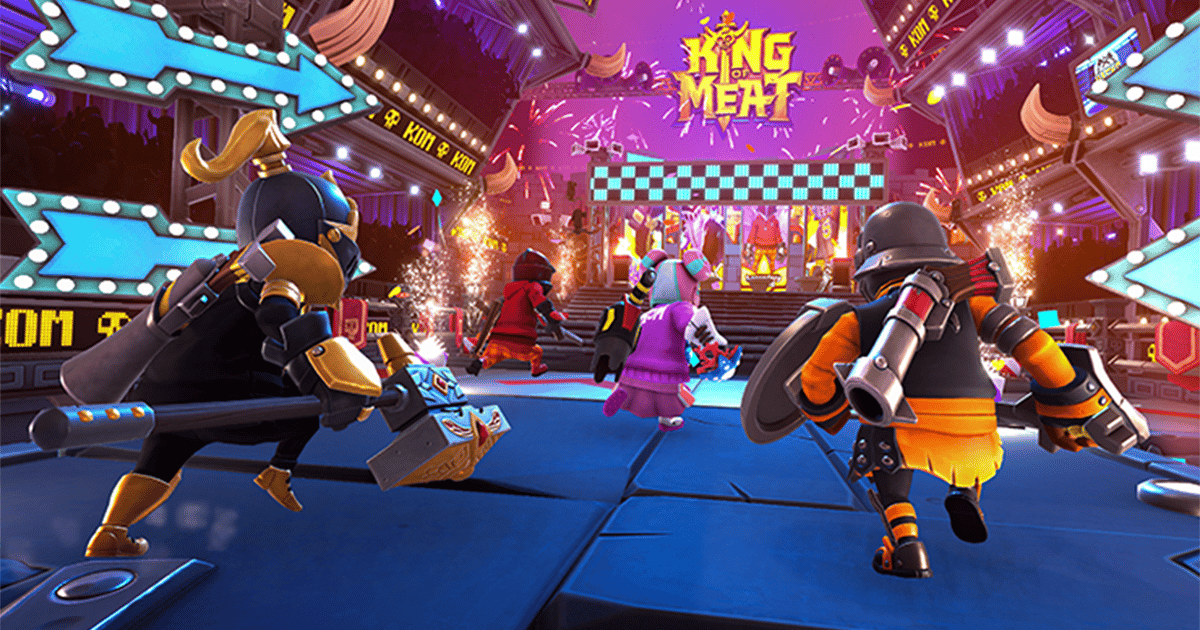
Guildford, UK & Seattle, WA – In a stark reminder of the intense competition and often brutal realities of the live-service gaming market, King of Meat, the co-operative platformer developed by UK-based studio Glowmade and published by Amazon Game Studios, is being shut down after a mere six months of operation. Launched globally on October 2, 2025, the unique user-generated content (UGC) title, which challenged players to craft and complete "barmy dungeons," will cease all server operations on April 9, 2026. This swift closure underscores the significant hurdles new intellectual properties face in establishing a sustainable player base, even with the backing of a major publisher.
The decision to terminate King of Meat‘s services was announced on February 24, 2026, marking an exceptionally short lifecycle for a game intended to thrive on ongoing player engagement and content creation. According to statements from Glowmade, the game "failed to find an audience," leading the Guildford-based studio to conclude its investment in the project. This abrupt end signals not only a significant setback for the creative vision behind King of Meat but also prompts broader discussions within the industry about the viability of ambitious new online experiences.
The Brief Reign of King of Meat
From its initial unveiling, King of Meat aimed to carve a niche within the burgeoning UGC and co-op platformer genres. The game promised players an expansive toolkit to design imaginative and challenging levels, fostering a community-driven ecosystem where creativity and collaboration were paramount. The concept, which resonated with a segment of players eager for fresh takes on player-generated content, saw its global launch across multiple platforms, including PC via Steam, PlayStation 5, and Xbox Series X|S, on October 2, 2025.
Despite the initial fanfare and marketing push, the game struggled to gain significant traction. The period between its launch and the shutdown announcement on February 24, 2026, saw a gradual decline in player engagement, a critical metric for any live-service title. For a game built around the premise of player-generated content, a robust and active community is not merely a bonus but the very lifeblood of its long-term success. Without a consistent influx of players creating, sharing, and experiencing new content, the ecosystem intended to sustain King of Meat could not flourish.
As of the shutdown announcement, in-app purchases have been immediately disabled, and the title has been pulled from sale across all digital storefronts. To mitigate the impact on its player base, Amazon Game Studios and Glowmade have committed to providing full refunds to all players who purchased King of Meat. This refund process is expected to be automatic, with payments processed by platform providers between February 24 and April 9, ensuring that early adopters are not left out of pocket by the game’s premature demise. Players will still be able to access and play all existing content until the final server shutdown on April 9, 2026, offering a brief window for those who invested in the game to revisit its worlds before they vanish.
Glowmade’s Vision and the Challenge of Audience Acquisition
Glowmade, the developer behind King of Meat, articulated the core reason for the shutdown with candor: the game "failed to find an audience." This statement, while succinct, encapsulates a multitude of challenges inherent in the modern gaming landscape. In a public post on the Glowmade website, the studio expressed profound gratitude to its players and the community that briefly formed around the game. "We want to sincerely thank every player who supported King of Meat and the wonderful community that formed around it," the statement reads. "Your enthusiasm, imagination, and feedback have meant the world to us and to the team at Glowmade. We’re grateful for Glowmade’s partnership and passion throughout this journey and wish them continued success in the future."
For a UGC-focused game, attracting and retaining a critical mass of players is paramount. The initial investment in development, marketing, and server infrastructure is significant, with the expectation that ongoing player engagement will generate revenue through optional purchases or subscriptions, thereby sustaining the live operations. When a game fails to reach this critical mass, the financial model becomes unsustainable. The cost of maintaining servers, providing community support, and developing new content or features quickly outweighs the revenue generated, forcing difficult decisions.
Glowmade, a studio known for its creative approach and distinct visual styles, likely poured considerable resources into King of Meat. The studio’s previous work, often characterized by charm and innovation, might have suggested a strong foundation for a game relying on player creativity. However, even compelling mechanics and a clear vision can struggle to penetrate a market saturated with established titles and new releases. The "barmy dungeons" concept, while unique, faced stiff competition from behemoths like Roblox, Minecraft, and Fortnite‘s creative modes, which already command vast, entrenched user bases for UGC experiences.
Amazon Game Studios: A Publisher’s Ongoing Quest in Gaming
The involvement of Amazon Game Studios as the publisher adds another layer of complexity to the narrative. Amazon’s foray into the gaming industry has been marked by significant ambition and substantial investment, yet also by a mixed track record. The company has publicly declared its long-term commitment to gaming, aiming to establish itself as a major player in development and publishing. However, its journey has seen high-profile setbacks.
Prior to King of Meat, Amazon’s internally developed titles like Crucible, a team-based shooter, faced a similar fate, launching in May 2020 and being shut down by November of the same year after failing to resonate with players. While New World, their ambitious MMORPG, initially garnered considerable attention and player numbers, it too faced significant post-launch challenges before finding a more stable, albeit smaller, audience. On the publishing front, Amazon has seen success with titles like Smilegate RPG’s Lost Ark, which performed strongly in Western markets under Amazon’s publishing umbrella. These varied experiences highlight the unpredictable nature of the game industry, even for a tech giant with seemingly limitless resources.
The shutdown of King of Meat represents another data point in Amazon’s evolving gaming strategy. For a publisher seeking to build a diverse portfolio of successful titles, the early termination of a project signifies a calculated, albeit painful, business decision. It reflects a willingness to cut losses on ventures that aren’t meeting performance targets, allowing resources to be reallocated to more promising projects. This approach, while financially prudent, can also carry reputational risks, potentially impacting developer confidence and player perception of future Amazon-published titles. The official statement from Amazon Game Studios, embedded within Glowmade’s announcement, acknowledged the partnership: "We’re grateful for Glowmade’s partnership and passion throughout this journey and wish them continued success in the future." This boilerplate message reflects the standard corporate response to such closures, focusing on professionalism and future well-wishes.
Behind the Numbers: The Player Engagement Metric
The challenge of "finding an audience" can be quantified, at least partially, through player engagement data. SteamDB, a reputable third-party database tracking Steam statistics, estimated that King of Meat peaked at just 320 concurrent players on Steam approximately three months prior to the shutdown announcement. This figure, for a live-service game designed for ongoing multiplayer interaction, is critically low. Industry analysts often consider sustained concurrent player counts in the thousands, if not tens of thousands, as a minimum threshold for a new multiplayer title to be considered commercially viable and capable of fostering a self-sustaining community.
A peak of 320 concurrent players suggests that even at its most popular moment on the largest PC gaming platform, King of Meat struggled significantly to attract and retain users. For a game predicated on player-generated content, such low numbers create a vicious cycle: fewer players mean fewer content creators, which in turn means less fresh content to attract new players, and longer queue times for co-op matchmaking, further deterring engagement.
While data for PlayStation 5 and Xbox Series X|S player counts were not publicly available, it is common for multi-platform releases, especially new IPs, to see similar proportional trends across platforms unless there’s a specific console-exclusive marketing push or community. Without a substantial player base on any single platform, the overall health of the game’s ecosystem would have been severely compromised. The combined low engagement likely presented an insurmountable challenge to both Glowmade and Amazon Game Studios in justifying continued investment.
Financial Implications and Player Recourse
The decision to offer full refunds to all purchasers of King of Meat is a standard practice for publishers shutting down games shortly after launch, aiming to preserve goodwill among the player base. This process, expected to be automatic through platform providers like Steam, PlayStation Store, and Xbox Marketplace, ensures that consumers who bought the game are financially compensated for its premature closure. While this cushions the blow for players, the financial implications for the developer and publisher are substantial.
Developing and launching a game like King of Meat involves significant upfront investment in salaries for developers, artists, designers, and quality assurance testers, alongside expenses for marketing, server infrastructure, and licensing. Industry estimates for mid-sized game development range from millions to tens of millions of dollars, depending on scope and team size. For a game that only lasted six months, the return on investment would have been minimal, if not negative. The decision to shut down implies that the projected future revenue streams were insufficient to cover the ongoing operational costs and justify further development. This represents a considerable financial loss for Amazon Game Studios, which funded the project, and a painful end to a creative endeavor for Glowmade.
The cost of maintaining live servers, even for a game with low player counts, is not negligible. Coupled with the absence of ongoing revenue from sales or in-app purchases, the financial argument for an early shutdown becomes compelling. The refunds, while a positive gesture to players, add another layer to the publisher’s expenses, effectively reversing any revenue generated from initial sales.
The Developer’s Future: Glowmade’s Next Chapter
For Glowmade, the shutdown of King of Meat marks a significant pivot point. Based in Guildford, a prominent hub for game development in the UK, the studio now faces the challenge of re-strategizing and potentially re-tooling its operations. While the original article did not provide explicit details on whether the studio itself would be impacted by the shutdown – a question Game Developer reached out to Glowmade to clarify – such events often lead to difficult decisions regarding staffing and future projects.
Studios in this position typically explore several avenues:
- Pivot to a New Project: Leverage existing talent and lessons learned from King of Meat to begin development on a new intellectual property or explore different genres.
- Work-for-Hire: Secure contracts with other publishers or developers to provide specialized services, helping to stabilize finances and retain staff.
- Restructuring: In more severe cases, a studio might need to undergo restructuring, which could unfortunately involve layoffs, to align its size with its current project pipeline and financial realities.
Given Glowmade’s stated gratitude for Amazon’s partnership, it’s possible that the relationship remains amicable, potentially opening doors for future collaborations, though perhaps with a different project scope or model. The resilience and adaptability of independent studios are often tested in such circumstances, and the ability to learn from commercial failures is crucial for long-term survival in the competitive industry.
Broader Industry Implications: The Volatility of Live-Service Gaming
The swift closure of King of Meat is not an isolated incident but rather a recurring theme in the contemporary video game industry, particularly within the live-service sector. The market is increasingly saturated with games vying for player attention and disposable income, making it exceptionally difficult for new entries to establish a foothold. This trend highlights several critical implications for developers, publishers, and players:
- High Stakes for New IPs: Launching a new live-service IP is inherently risky. Publishers and developers invest heavily, often over several years, with no guarantee of success. The "hit-driven" nature of the industry means that only a small percentage of titles achieve commercial viability, let alone breakout success.
- Importance of Early Engagement: The first few weeks and months post-launch are crucial for live-service games. If a game fails to attract and retain a significant player base early on, the momentum is difficult to regain, and the path to profitability quickly narrows.
- The UGC Challenge: While UGC offers immense potential for player creativity and long-term engagement, it also presents unique challenges. Building the tools, fostering a community, and moderating content requires significant resources. More importantly, it relies on players wanting to create and engage, which requires a strong core gameplay loop and a vibrant community from day one.
- Publisher Strategy: Major publishers like Amazon continue to experiment with different genres and business models. Failures like King of Meat inform future strategies, potentially leading to more cautious approaches, greater emphasis on established IPs, or a refinement of their market entry tactics.
- Player Trust and Investment: While refunds mitigate direct financial loss, repeated instances of games shutting down can erode player trust in new live-service titles. Players become more hesitant to invest time and money into games that might disappear within months, making it even harder for new titles to gain traction.
The story of King of Meat serves as a poignant reminder of the dynamic and unforgiving nature of the video game industry. Its rapid rise and fall encapsulate the dreams of innovation, the challenges of market penetration, and the harsh realities of commercial viability in a fiercely competitive digital landscape. As the industry continues to evolve, the lessons learned from such experiences will undoubtedly shape the future strategies of both aspiring developers and established publishers alike.
About the Author