Ubisoft’s newly established Vantage Studios, one of the company’s strategic "creative houses," has announced a significant leadership overhaul for its crown jewel, the Assassin’s Creed franchise. While Vantage Studios is tasked with overseeing some of Ubisoft’s most prominent intellectual properties, including Rainbow Six and Far Cry, the recent executive appointments are singularly focused on guiding the future trajectory of the historical action-adventure series. This move signals Ubisoft’s commitment to revitalizing and strategically steering its most valuable brand amidst a period of widespread corporate restructuring, substantial investment, and significant internal challenges.
Strategic Appointments for Assassin’s Creed’s Future
The leadership changes, confirmed in a news release published on a recent Monday, see three seasoned Ubisoft veterans stepping into pivotal roles specifically dedicated to Assassin’s Creed. Martin Schelling has been appointed as the brand lead for Assassin’s Creed, taking on the crucial responsibility for its "overall strategy and long-term vision." Schelling’s extensive background within Ubisoft includes a tenure as the company’s chief production officer, and he brings direct experience with the franchise, having worked on critically acclaimed titles such as Assassin’s Creed: Black Flag and the more recent Assassin’s Creed: Valhalla. His mandate will be to ensure the series maintains its relevance and appeal in an increasingly competitive gaming landscape, charting a course that respects its legacy while embracing future innovations.
Joining Schelling in this dedicated leadership structure is Jean Guesdon, who assumes the role of Assassin’s Creed content head. Guesdon’s primary directive will be to lead the franchise’s "overall creative direction," a role that involves "support[ing] individual games" and "guid[ing] the future of Assassin’s Creed while staying true to its core DNA." His qualifications are deeply rooted in the series’ history, having contributed to Ubisoft games since the inaugural Assassin’s Creed title released in 2007. Notably, Guesdon served as creative director on fan-favorite entries like Assassin’s Creed Origins and Assassin’s Creed: Black Flag, demonstrating a profound understanding of the series’ narrative and gameplay evolution. His appointment underscores a clear intent to maintain the franchise’s distinct identity and storytelling prowess.
Completing this trio of dedicated leaders is François de Billy, who steps into the position of Assassin’s Creed production excellence head. His role is specifically defined as strengthening "the production practices and execution across the brand," according to the official news release. De Billy’s recent experience includes serving as production director on both Assassin’s Creed: Valhalla and Assassin’s Creed: Origins, giving him firsthand insight into the complexities of large-scale open-world game development within the franchise. His focus on production excellence suggests a push for greater efficiency, quality control, and streamlined development processes, crucial for a series known for its ambitious scope and often multi-studio development cycles.
These three executives are expected to transition into their new roles over the coming weeks. They will join an existing leadership team that includes Andrée-Anne Boisvert, who oversees Assassin’s Creed‘s "cross-brand initiatives," and Lionel Hiller, Vice President of Brand and Market Strategy, collectively forming a formidable unit dedicated to the franchise’s holistic management and growth.
Vantage Studios: A New Paradigm for Ubisoft’s Blockbusters
The appointment of a specialized leadership team for Assassin’s Creed within Vantage Studios is a direct outcome of Ubisoft’s broader, transformative restructuring initiative. Vantage Studios itself emerged from a significant strategic partnership with Chinese tech and entertainment giant Tencent, which was formally announced in March 2025. This landmark collaboration saw Tencent inject a substantial $1.25 billion investment into a new subsidiary designed to house three of Ubisoft’s most popular brands: Assassin’s Creed, Rainbow Six, and Far Cry. The subsidiary was officially named Vantage Studios in October 2025, marking a new chapter in the management of these key intellectual properties.
Vantage Studios is not merely another internal division; it is uniquely positioned as the sole "creative house" within Ubisoft’s new organizational framework that is structured as a direct subsidiary. This distinct legal and operational status, as clarified by Ubisoft CEO Yves Guillemot in an interview with Variety, grants Vantage Studios a degree of autonomy rarely seen within the traditional Ubisoft corporate structure. Guillemot indicated that Ubisoft is "finalizing the appropriate model to strike the right balance between autonomy, accountability, and strategic alignment" for its other creative houses, suggesting Vantage Studios is a test case or a benchmark for this new operational philosophy.
The leadership of Vantage Studios itself reflects a blend of experience and new blood, with Ubisoft Montreal co-founder Christophe Derennes at the helm alongside Charlie Guillemot, son of the company’s CEO. This structure suggests a strategic intent to combine institutional knowledge and entrepreneurial spirit to maximize the potential of its flagship franchises. The substantial investment from Tencent is aimed at fueling the expansion of these key franchises, enabling greater resources for development, marketing, and global reach, particularly within the burgeoning Asian markets.
Ubisoft’s Corporate Reshuffle and the Quest for "Gamer-Centricity"
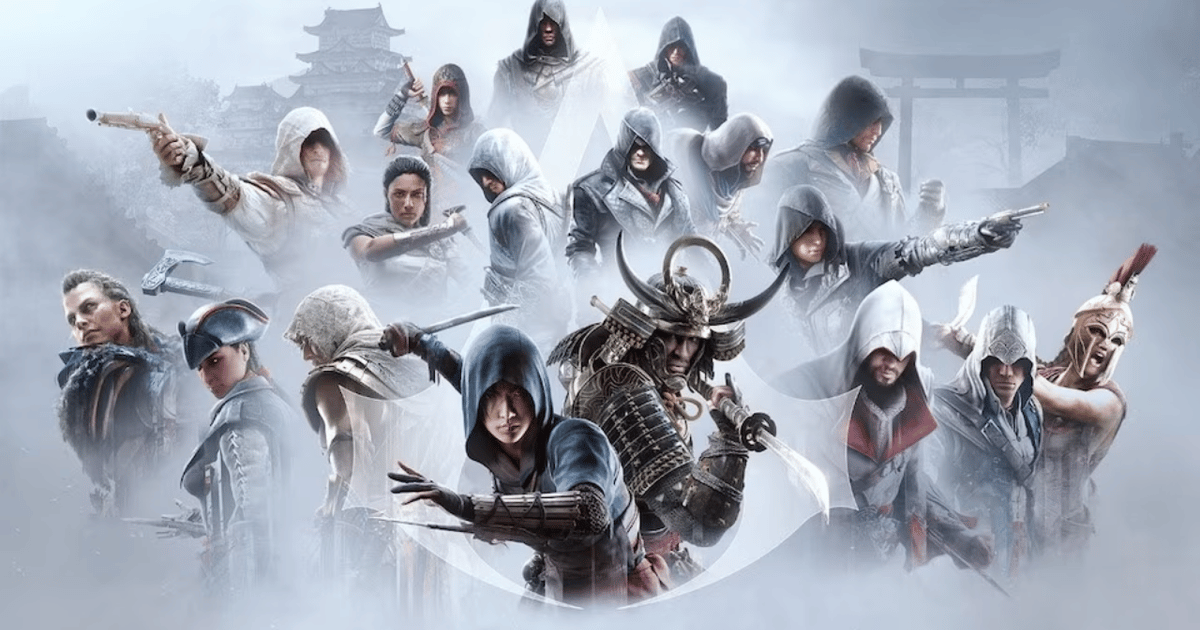
The creation of Vantage Studios and the specialized Assassin’s Creed leadership team are integral components of a larger, ambitious restructuring effort by Ubisoft. This overarching strategy aims to dismantle the company’s long-standing studio ecosystem, which often involved multiple studios contributing to a single title with a more centralized oversight, in favor of becoming a "more gamer-centric company." The goal is to empower these "creative houses" with greater focus and decision-making capabilities, theoretically leading to more innovative and higher-quality games that resonate directly with player expectations.
Yves Guillemot has been vocal about the strategic vision behind these changes, confirming that "several" games are currently in development under the Assassin’s Creed brand, encompassing both "single-player and multiplayer experiences." This multi-pronged approach underscores the franchise’s importance and the company’s desire to cater to diverse player preferences. Similarly, two Far Cry games are reportedly in development, and the Rainbow Six franchise has expanded its reach with a recent mobile port, launched concurrently with these announcements. Guillemot also hinted at the development of "several new games, based on new IP," within these creative houses, signaling a renewed focus on innovation beyond established franchises.
However, this period of transformation has not been without its challenges. The corporate restructuring has been accompanied by a series of difficult decisions, including the cancellation of several games that were actively in development. Among the most notable casualties was a highly anticipated remake of Prince of Persia: The Sands of Time. Furthermore, Ubisoft has undertaken significant cost-cutting measures, leading to the closure of its Halifax office and dozens of developer layoffs across various studios. These actions have not gone unnoticed by employees and labor organizations.
In response to the widespread cost-cutting and a controversial return-to-office mandate, five unions representing Ubisoft workers in France called for an international strike. This industrial action, which reportedly saw over a thousand employees walk off the job for three days, highlighted significant employee dissatisfaction and calls for "real accountability" within the company’s leadership. The backdrop of these internal struggles makes the strategic importance of the Assassin’s Creed leadership appointments even more pronounced, as Ubisoft seeks to project stability and a clear path forward for its most valuable assets while navigating internal turbulence.
The Enduring Legacy and Future Trajectory of Assassin’s Creed
The Assassin’s Creed franchise, since its debut in 2007, has been a commercial and critical cornerstone for Ubisoft. Known for its blend of historical settings, parkour mechanics, stealth gameplay, and an overarching science fiction narrative involving ancient civilizations and a modern-day conspiracy, the series has sold over 155 million units worldwide as of early 2023. Its evolution from a more linear action-adventure game to expansive open-world RPGs with titles like Origins, Odyssey, and Valhalla has kept it relevant, but also sparked debates among fans regarding its core identity.
The decision to install a dedicated leadership triumvirate for Assassin’s Creed within Vantage Studios reflects a recognition of the franchise’s immense value and the need for focused, long-term stewardship. Martin Schelling’s role in "overall strategy and long-term vision" suggests a meticulous planning process to ensure the series’ continued growth and profitability. Jean Guesdon’s mandate to "stay true to its core DNA" while guiding creative direction is a delicate balancing act, aiming to satisfy veteran fans while attracting new players with fresh narratives and gameplay mechanics. François de Billy’s focus on "production excellence" is critical for maintaining the high visual fidelity and technical polish expected from a AAA title, especially given the growing demands of next-generation hardware and player expectations.
This specialized approach within Vantage Studios positions Assassin’s Creed for a potentially more coherent and strategically aligned future. Instead of being one of many priorities within a larger studio, it now has a dedicated "mini-CEO" structure focused solely on its success. This could lead to more efficient decision-making, better resource allocation, and a clearer creative vision across multiple projects in development. The emphasis on both single-player and multiplayer experiences also points to Ubisoft’s adaptation to market trends, aiming to capture different player segments and potentially increase player engagement and monetization opportunities through live service elements.
The Tencent partnership further bolsters this strategy. Tencent’s vast resources and deep understanding of the global, particularly Asian, gaming market could unlock new avenues for Assassin’s Creed‘s expansion. This could manifest in enhanced mobile adaptations, region-specific content, or innovative business models, ensuring the franchise remains a global powerhouse.
Implications and Outlook
The leadership appointments for Assassin’s Creed at Vantage Studios represent a critical strategic maneuver by Ubisoft. By dedicating a high-level, experienced team to its flagship franchise, the company is signaling its intent to protect and grow its most valuable asset during a period of significant internal change and external market pressures. This move is designed to inject stability, clarity, and focused expertise into the development and long-term strategy of Assassin’s Creed, aiming to ensure its continued success for years to come.
While the broader corporate restructuring, layoffs, and union actions underscore the challenges Ubisoft faces, the targeted investment in leadership for Assassin’s Creed within the unique subsidiary structure of Vantage Studios suggests a clear prioritization of its core intellectual properties. The success of this new model, and particularly the performance of the Assassin’s Creed franchise under its new leadership, will be closely watched by the industry, analysts, and millions of players worldwide as Ubisoft navigates its ambitious transformation towards a more "gamer-centric" future. The coming years will reveal whether this bold new organizational strategy can truly revitalize Ubisoft’s creative output and secure its position as a leading force in the global video game industry.
About the Author