The iconic PlayStation title LittleBigPlanet 2 marked its tenth anniversary last week, a milestone that reflects its enduring impact on the gaming landscape and its sophisticated approach to licensed music integration. This retrospective delves into the intricate process behind curating the game’s soundtrack, exploring the creative decisions, challenges, and collaborative efforts that shaped its distinct sonic identity. Far beyond simply licensing popular tracks, the development team meticulously crafted playlists that not only complemented the game’s evolving themes but also offered a glimpse into the creative journey of its development.
The Sonic Tapestry of LittleBigPlanet 2: A Dual Approach
The licensed soundtrack of LittleBigPlanet 2 can be broadly categorized into two distinct yet interconnected streams: the familiar tracks that players experienced within the game, and a wealth of music considered but ultimately not selected, offering a fascinating look at alternative creative directions. This dual approach underscores the complexity of soundtrack selection for a project of LittleBigPlanet 2‘s scope, where artistic vision, technical constraints, and licensing realities converged.
1. The Core Licensed Soundtrack: Familiar Melodies of Imagination
The primary licensed soundtrack of LittleBigPlanet 2 comprised tracks that players readily associate with the game. It’s important to note that, due to the game’s commitment to backward compatibility with LittleBigPlanet 1 player-created levels, the licensing pool technically encompassed all music from the original title. However, for clarity and to focus on the unique sonic contributions of the sequel, these prior selections were omitted from this particular retrospective. The author highlights a practical consideration: while Spotify playlists offer a convenient way to access music, they often fall short of including the specific edits, instrumental versions, or remixes that were crucial for the game’s implementation. These bespoke versions, often sourced from less conventional channels like YouTube, were integral to achieving the precise audio-visual synergy desired by the development team. This necessity points to the often-unseen labor involved in adapting music for interactive media, where a track’s usability transcends its original form.
2. The Alternate Universe Soundtrack: Unused Gems and Creative Detours

Perhaps the most intriguing aspect of the LittleBigPlanet 2 soundtrack is the collection of music that was considered but ultimately did not make the final cut. These playlists represent a rich repository of creative exploration, showcasing tracks that, while deemed unsuitable for the game’s final iteration, still hold artistic merit. The author notes that the majority of these selections were not included due to deliberate creative choices made during development. The process of curating these alternate soundtracks reveals a dynamic decision-making environment, where the "brief" for the game’s audio evolved, leading some promising tracks to be set aside. In a poignant reflection, the author recalls one instance where a desired track could not be licensed, a decision that "broke my heart at the time," illustrating the emotional investment involved in the selection process. The inclusion of these "alternate universe" tracks allows fans and aspiring game developers to experience the sonic possibilities that were explored, offering a deeper appreciation for the final choices made.
3. The "Brief Says No" Soundtrack: Navigating Creative Constraints
This third category encompasses music that, while possessing intriguing qualities and potential relevance, ultimately did not align with the overarching creative direction of LittleBigPlanet 2. Many of these tracks originated from the earlier stages of music exploration, where they might have effectively complemented linear video mock-ups. However, as the game’s specific aesthetic and gameplay mechanics solidified, these selections were re-evaluated. The author emphasizes that these tracks were not necessarily deemed "bad" but rather "not fitting the brief/direction well enough." This category serves as a testament to the iterative nature of game development, where initial ideas are refined and sometimes discarded in pursuit of a cohesive final product. The inclusion of these tracks underscores the importance of the "brief" – a guiding document that shapes creative output – and the challenges of satisfying its evolving demands.
A Decade of Innovation: The Evolution of LittleBigPlanet‘s Sonic Identity
The anniversary of LittleBigPlanet 2 prompts a look back at its predecessor, LittleBigPlanet, and the distinct creative philosophies that guided their respective soundtracks. While the first game embraced a "journey around the world" theme, LittleBigPlanet 2 aimed for a more abstract yet equally evocative concept: "science through the ages" or "science fiction through the ages." This thematic shift presented both opportunities and challenges for the audio team.
Thematic Resonance and Musical Analogies
The abstract nature of the "science through the ages" theme offered a rich canvas for artistic interpretation, particularly for the art department. However, for the music team, it demanded a more nuanced approach. The author found that the most effective way to ground the music in tangible and appropriate choices was to delve into the specifics of the art direction, the emotions it evoked, and to find musical analogies that amplified these feelings. This contrasted with the original score, which was primarily focused on characterization, drama, and narrative exposition. The licensed soundtrack, therefore, had the advantage of not needing to duplicate these narrative functions, allowing for a more distinct and complementary sonic role.
Navigating the Sci-Fi Genre: Avoiding Pastiche
A key concern during the early stages of LittleBigPlanet 2‘s development was to acknowledge the established musical tropes of the science fiction genre without succumbing to pastiche. The development team set a target of ensuring that "no more than 50% of the soundtrack being electronic in nature." This was a strategic decision, recognizing that player-created levels would have no such aesthetic limitations, necessitating a broader musical palette to inspire diverse creations. The overarching goal was to retain the successful elements of the first game’s soundtrack while imbuing the sequel with its own unique flavor and identity. A deliberate strategy of playing with or subverting genre conventions was employed to preserve the element of surprise and unexpectedness that characterized the original LittleBigPlanet‘s audio experience.

Early Sound Design: The Music Montage Video
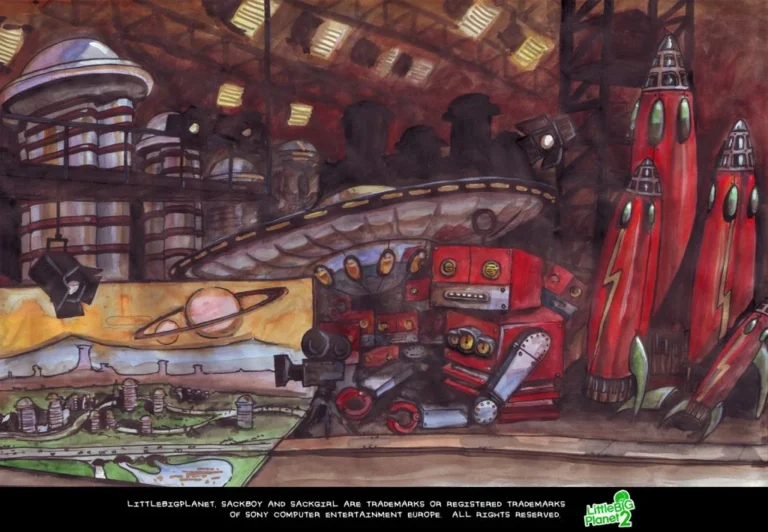
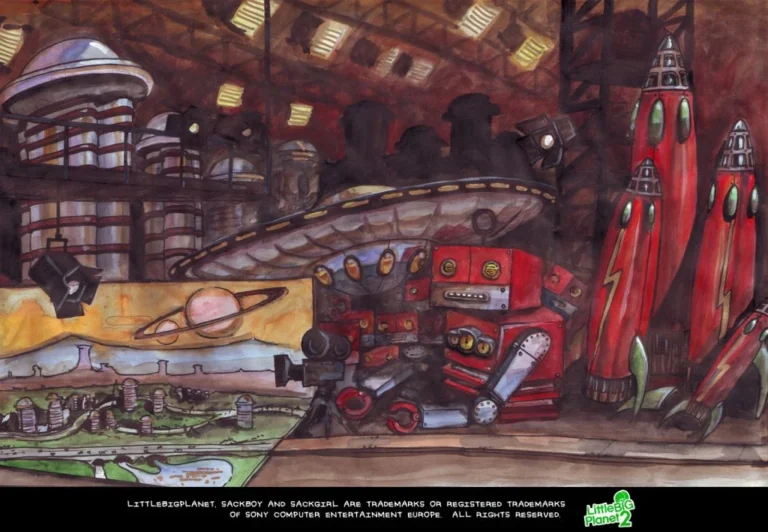
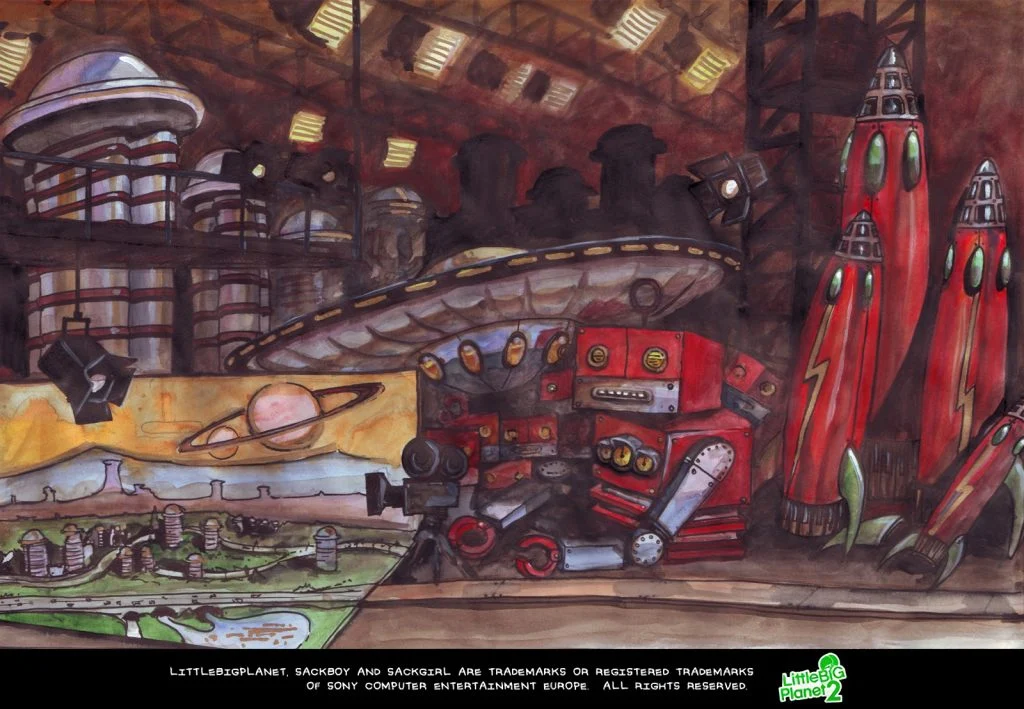
As early as May 2009, during the pre-production phase, a significant step was taken to conceptualize the game’s audio. A music montage video was created, pairing the concept art for each in-game area with the composer’s work-in-progress licensed music ideas. This "quick and dirty" approach, as described by the author, proved invaluable in initiating the creative process. The initial high-level direction for each area, heavily influenced by the art direction, was as follows:
- The Factory of a Better Tomorrow: A focus on industrial sounds and a sense of mechanical progression.
- Eve’s Asylum: Aiming for an ethereal, perhaps slightly unsettling, atmosphere.
- The Cosmos: Exploring themes of space, wonder, and vastness.
- The Sackbot Factory: Potentially leaning into robotic and repetitive soundscapes.
- The Da Vinci Library: Suggesting a more classical or historical musical sensibility.
- The Victorian Lab: Evoking a sense of steampunk or early scientific discovery.
- Clive’s Castle: Hinting at a more traditional adventure or fantasy feel.
From this initial selection, only Ladytron’s "Ghosts" ultimately made it into the final game. However, artists like Squarepusher and Röyksopp were already in consideration, albeit with different tracks than those eventually chosen. This early experimentation highlights the iterative process of matching music to evolving game design.
The author acknowledges the inherent challenge of using linear video to inform interactive audio. Music that functions effectively in a static video may not translate well to the dynamic pacing and interactivity of a game. Nevertheless, this process is crucial in the early stages of development, serving as a "starting point, a packaged-up palette or mood board" for inspiration and discussion. It provides a tangible way to visualize and test the interplay of visual and aural elements, fostering a collective understanding of the project’s direction among the development team. The music concept video marked a significant milestone, being the first instance where visual and aural ideas coalesced into a cohesive experiential vision.
Refinement and Evolution: December 2009 and Beyond
By December 2009, approximately a year before the game’s release, the initial concepts had been refined, leading to a more defined vision that more closely resembled the final game. The number of distinct themes was reduced from eight to six, a process of merging overlapping ideas rather than simply cutting content, although the reduced scope also played a role as the full development team mobilized for full production. The music direction continued to evolve, with further refinement of existing ideas and the identification of even more suitable music, particularly to better support the emerging gameplay mechanics.
Several key aspects were still under development at this stage:
- Clive’s Factory: The integration of a "Soviet/Hollywood mashup" component.
- Eve’s Asylum: Clarifying the meaning of "organic" in the context of high-intensity gameplay, creating a potential juxtaposition.
- The Cosmos: Progress on the music sequencer gadget, intended to incorporate an 8-bit aesthetic, was yet to be realized.
At this juncture, 10 out of the 21 tracks that would eventually be licensed were under consideration, though not yet definitively selected. This tally provides a retrospective insight into the evolving direction and aligns with the author’s sentiment that the project was on a strong trajectory, requiring continued effort to find suitable music. The licensing process itself had not yet begun, meaning that securing the rights to use any chosen track was not guaranteed. This necessity underscored the strategy of "overprovision" – identifying a surplus of suitable music to ensure backup options, or "Plan B’s," were available.

Collaborative Creation: A Symphony of Voices
The development of LittleBigPlanet 2‘s soundtrack was a testament to a collaborative spirit, with music suggestions originating from various members of the team and beyond. Unlike the first game, a greater number of individuals contributed to the music selection process for the sequel. This increased involvement can be attributed to the positive reception of the first game’s soundtrack and its significant contribution to the project’s identity. Team members were eager to participate, undeterred by the perceived restrictions of the curation process or the considerable effort involved.
Every track evaluated played a role in refining the overall brief, whether by testing assumptions, reaffirming existing ideas, or providing crucial feedback for improvement. The final licensed soundtrack featured contributions from:
- Media Molecule (Mm) Team: Rex, Dan, John, Alex, Costa, Jim, Jonatan, Mark, Martin, Tom.
- Sony PlayStation: Martin Hewett.
- External Collaborators: Jo (a friend at Sony).
The author acknowledges that this list is not exhaustive and many other individuals likely contributed to the wealth of suggestions. This broad participation highlights LittleBigPlanet 2 as a genuine "team effort," underscoring the idea that exceptional creative output often arises from diverse perspectives.
The Power of "Sleepyhead": Crafting the Announcement Trailer
As the game approached its announcement, the collaboration with Sony’s music licensing department intensified, significantly expanding the scope of music review. This timing proved opportune, as the game’s sonic direction had sufficiently matured to enable focused and productive searches and suggestions from Sony.
A standout contribution came from Rex, who once again demonstrated his keen ear by suggesting Passion Pit’s "Sleepyhead" for the announcement trailer. The selection of this track was a deliberate and challenging decision. The goal was to find music that conveyed a sense of community, achievement, and forward momentum into a new project, while simultaneously acknowledging the sequel’s more digital aesthetic. While an initial "Plan A" track was considered, "Sleepyhead" ultimately proved to be the perfect fit.
The song’s dynamic structure, with its smooth build-up and sharp descent, allowed the trailer to effectively shift gears, expanding its messaging and maintaining viewer engagement. The pitched-up voices, particularly the Irish Gaelic ones, added a unique and charming layer that resonated with the game’s distinctive Sackfolk characters. While "Sleepyhead" was not an ideal fit for the game’s core gameplay due to its energy, its strong association with the project through marketing made its inclusion desirable. Ultimately, it found a meaningful home in the game’s end credits, demonstrating a successful balance between marketing impact and in-game relevance.

The Final Stretch: Navigating Development Delays and Licensing Hurdles
Towards the latter stages of development, a significant scheduling decision was made: to delay the game’s release from the crucial Christmas market to January 2011. This decision, driven by the need to ensure the game was fully polished, ultimately benefited the soundtrack process. The extended timeline allowed for the clearance of several tracks as late as October 2010, a tight but manageable deadline given the revised schedule. One particular track required an arduous six-month clearance period, a testament to the often-unpredictable nature of music licensing negotiations, where securing approval can sometimes be a lengthy and protracted process.
The period leading up to the game’s release was a critical phase where the sonic landscape of LittleBigPlanet 2 was solidified. The author’s reflection on player comments, noting the soundtrack’s lasting impact on their childhoods and continued listening habits, underscores the profound connection between music and memorable gaming experiences. Music’s ability to transcend the confines of the game itself, evoking memories and emotions long after the gaming platform has aged, is a powerful testament to its enduring relevance. The contribution of the licensed artists was instrumental in shaping LittleBigPlanet 2‘s unique identity, solidifying its place as a beloved title.
In conclusion, the tenth anniversary of LittleBigPlanet 2 serves as an occasion to celebrate not only a critically acclaimed game but also the intricate and thoughtful process behind its acclaimed soundtrack. The careful selection, creative exploration, and collaborative spirit that defined the curation of its music demonstrate a commitment to sonic excellence that enriched the player experience and continues to resonate with fans a decade later.
About the Author