The discourse surrounding video game mechanics is on the cusp of a significant linguistic refinement, as a proposal emerges to retire the catch-all term "randomness" in favor of a more precise and nuanced vocabulary. This initiative, spearheaded by a prominent voice in game design, aims to address the inherent ambiguity and often negative connotations associated with "randomness," which currently conflates a multitude of distinct game behaviors and player experiences. The goal is to foster clearer communication among designers, critics, and players, allowing for a more accurate assessment of game systems without inadvertently casting judgment.
The current challenge stems from "randomness" being an overloaded term, frequently used to describe everything from a strategic card draw to a wildly unpredictable outcome. This imprecision can obscure the designer’s intent and misrepresent the player’s interaction with the game. For instance, a designer might intend for a mechanic to introduce strategic variance, while players perceive it merely as arbitrary "luck." The proposed lexicon seeks to delineate these experiences, providing specific terms for specific phenomena.
The Historical Baggage of "Randomness" in Gaming
For decades, "randomness" has served as a ubiquitous descriptor in the gaming world. From the simple dice rolls in early tabletop games translated into digital formats, to complex procedural generation and critical hit systems in modern video games, unpredictable elements have been integral to the player experience. Initially, this broad term sufficed when game mechanics were relatively simpler, and the distinction between different types of variance was less critical. However, as game design matured, incorporating intricate systems, deep strategic layers, and diverse player motivations, the limitations of "randomness" became increasingly apparent.
The term often carries a pejorative connotation, implying a lack of skill, unfairness, or a developer’s inability to design predictable, balanced systems. This perception can lead to misinterpretations of game mechanics. A game like "Hearthstone: Battlegrounds," cited by the proponent of this new lexicon, exemplifies this dilemma. While undeniably featuring numerous unpredictable elements, labeling it simply "random" fails to capture the strategic depth and skill required to navigate its evolving battlefields. Players often complain about "RNG" (Random Number Generation) when they experience unfavorable outcomes, conflating systemic variance with a perceived lack of fairness, even when the system is designed to introduce strategic choice and replayability.
The ambiguity also hinders effective communication within development teams. When a designer says a new feature is "too random," it could mean it’s too impactful, too frequent, too difficult to predict, or simply feels unfair. Without precise language, identifying and addressing the specific design problem becomes a convoluted process. This new proposal, therefore, is not merely semantic but a practical tool for improving the entire ecosystem of game creation and consumption.
A New Lexicon for Understanding Game Variance
The core of the proposal introduces several distinct terms, each designed to capture a specific aspect of game variance that currently falls under the "randomness" umbrella. These terms offer a framework for analytical discussion, moving beyond generalized complaints or praises to pinpoint the exact nature of a game’s unpredictable elements.
Unpredictable: The Foundational Term
This term is put forth as the blanket replacement for "randomness," covering any mechanism whose outcome a player cannot deterministically foresee. It encompasses a wide array of phenomena:
- Card Draws: The shuffling and drawing of cards from a deck, a staple in countless digital and physical card games, introduces strategic decision-making based on incomplete information.
- Damage Ranges: Combat systems where damage output falls within a specified range (e.g., 5-10 damage) rather than a fixed number. This adds tension and requires players to account for potential variations in enemy encounters.
- Procedural Generation: The creation of game worlds, levels, or encounters through algorithms, ensuring unique experiences on each playthrough. Examples include roguelikes like Hades or sandbox games like Minecraft.
- Player Execution: While often overlooked, the successful input of complex commands (e.g., a "dragon punch" in a fighting game) is inherently unpredictable for the player, dependent on their real-time skill and precision.
- Simultaneous Actions: In games where multiple players act concurrently, the immediate outcome of one’s action is unpredictable until all actions are revealed, adding a layer of strategic bluffing and adaptation.
"Unpredictable" serves as the neutral, objective descriptor, acknowledging the non-deterministic nature of an event without implying positive or negative judgment. It highlights the design choice to introduce variability, which can enhance replayability, create emergent strategies, and test player adaptability.
Chaotic: The Experiential Descriptor
"Chaotic" moves beyond the technical definition to describe the feeling of playing a game where numerous unpredictable effects occur with such frequency and magnitude that the game state feels fluid, difficult to control, or rapidly shifting.
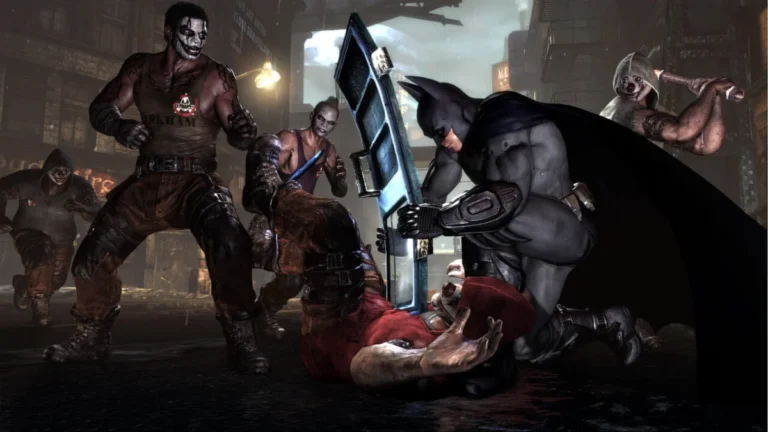
- Examples: Large-scale battles in strategy games (e.g., Total War series), physics-driven sandbox games (e.g., Teardown), or games with many simultaneous, interacting systems (e.g., certain bullet-hell shooters).
- Design Intent: A game being chaotic is not inherently good or bad; it is an experiential quality. Designers might intentionally cultivate chaos to evoke the visceral feeling of a fight, the pandemonium of a battlefield, or the unpredictable nature of a wild environment. Games themed around conflict that lack this quality might feel too much like puzzles, diminishing the intended aesthetic. The feeling of being overwhelmed but still having agency can be thrilling for some players.
Volatile: Quantifying Impact
This term focuses on the consequence or impact of an unpredictable mechanism, rather than its frequency or probability. Volatility describes high-impact unpredictable events.
- Examples: A damage range of "0-100 damage" is significantly more volatile than "6-10 damage." Similarly, a critical hit that deals double damage is less volatile than one that instantly kills an enemy boss. The rare drop of a "legendary" item with game-altering stats, compared to common loot with minor upgrades, also demonstrates high volatility.
- Design Intent: Volatility introduces significant risk and reward. Highly volatile mechanics can create dramatic swings in gameplay, leading to exhilarating comebacks or crushing defeats. They can keep players on their toes, forcing them to adapt to extreme outcomes. However, excessive volatility without sufficient player agency or counterplay can lead to frustration, where skill feels irrelevant compared to a single unpredictable event.
Erratic: The Non-Uniform Flow of Predictability
"Erratic" describes systems where the level of unpredictability itself is non-uniform and, well, unpredictable. A game might largely feel deterministic and controlled, only to suddenly introduce a period of intense, unforeseen chaos.
- Examples: Imagine a puzzle game where, after several predictable levels, a "crazy mini-game" suddenly appears, flipping the entire board with unpredictable physics. Or a narrative adventure game where a seemingly stable environment is suddenly ravaged by an unforeseen natural disaster event, drastically altering gameplay. Some adaptive AI systems could also be considered erratic if their behavior shifts dramatically and unpredictably based on hidden internal states or player performance.
- Design Intent: Erratic mechanics are designed to surprise players, break monotony, and introduce unexpected challenges. They can prevent gameplay from becoming stale by injecting sudden, novel situations. The challenge for designers lies in ensuring these erratic shifts feel like a meaningful part of the experience rather than arbitrary disruptions.
Luck-Based / Unfair: The Emotional & Social Dimensions
These terms address the subjective, often emotional experience of playing games with high-variance unpredictable events.
- Luck-Based: Primarily used in single-player contexts, this term reflects a player’s feeling that their success or failure is predominantly determined by chance rather than their skill or strategic choices. It’s often associated with outcomes perceived as beyond the player’s control.
- Unfair: More prevalent in multiplayer games, "unfair" describes the feeling that game systems disproportionately favor or disadvantage certain players due to unpredictable elements. This invokes concepts of equity and competitive balance. When one player consistently benefits from a series of high-impact unpredictable events, others might perceive the game as unfair, undermining the integrity of competition.
- Design Intent & Mitigation: These terms highlight critical feedback areas for designers. While some degree of "luck" or perceived "unfairness" can exist in games with high variance, designers often employ systems like "pity timers," "bad luck protection," or transparent probability displays to mitigate these negative feelings and ensure a baseline level of competitive integrity or player satisfaction. Understanding when players feel "luck-based" or "unfair" is crucial for maintaining player engagement and a positive community sentiment.
"Slot Machine": The Skill-Agnostic System
This vivid metaphor describes a game or system where the skill ceiling is effectively the same as the skill floor, or very close to it. In such systems, player input or decision-making has minimal to no impact on the outcome, making it akin to a pure gamble.
- Examples: A simple coin flip, or the random outcome of spinning reels in a mobile game’s "gacha" mechanic. While rare in core gameplay loops of traditional video games, this concept is highly relevant to monetization strategies involving loot boxes, randomized reward systems, and mobile game "gambling" mechanics.
- Implications: The "slot machine" descriptor is crucial for distinguishing between games that genuinely incorporate strategic unpredictability and those that primarily rely on pure chance for engagement, often leveraging psychological hooks associated with gambling. This term helps critically analyze the ethical implications of such systems, especially in the context of consumer protection and responsible game design.
Broader Implications for Game Development and Discourse
The adoption of this refined vocabulary carries significant implications across the gaming industry:
For Developers:
- Enhanced Design Clarity: Clearer terms allow designers to articulate their intentions more precisely during conceptualization, prototyping, and iteration. This reduces miscommunication within teams and ensures that unpredictable elements are implemented with specific goals in mind.
- Targeted Feedback: When a playtester says a game is "too volatile" instead of "too random," designers immediately understand the problem lies with the impact of unpredictable events, rather than their mere existence or frequency. This enables more efficient problem-solving.
- Improved Balance and Iteration: With a precise language, designers can better analyze the interplay of different variance types, leading to more robust balancing efforts and iterative design improvements. They can consciously choose to introduce "chaos" for aesthetic reasons or temper "volatility" to enhance player agency.
For Players:
- Deeper Understanding of Mechanics: Players will gain a more sophisticated understanding of how games work, moving beyond simplistic labels. This can lead to greater appreciation for complex design choices.
- More Constructive Feedback: Equipped with a better vocabulary, players can provide more actionable feedback to developers, articulating specific frustrations or areas for improvement.
- Enriched Community Discussion: Online forums and communities can engage in more nuanced debates about game balance, skill expression, and design philosophy, moving past emotionally charged blanket statements.
For Critics and Academics:
- Sharper Analytical Tools: Game critics and academics will have a more robust framework for analyzing game systems, enabling deeper insights into player psychology, strategic depth, and the effectiveness of design decisions.
- Advancing Game Theory: This linguistic precision can contribute to the formalization of game design theory, fostering a more rigorous academic discipline.
Challenges and Adoption
While the benefits are clear, widespread adoption of new terminology always faces hurdles. Habits are hard to break, and the ingrained use of "randomness" is deeply rooted. Education and consistent application by influential voices in the industry—designers, journalists, and content creators—will be crucial for these terms to gain traction. The inherent human tendency to simplify complex ideas may also resist the embrace of a more nuanced vocabulary.
However, as the gaming landscape continues to evolve, featuring increasingly intricate mechanics and diverse player expectations, the need for precise language becomes paramount. This proposal represents a forward-thinking step towards a more sophisticated and articulate discourse within the multi-billion-dollar global video game industry, ultimately benefiting everyone involved in the creation, analysis, and enjoyment of interactive entertainment. By moving beyond the blunt instrument of "randomness," the industry can foster greater clarity, understanding, and appreciation for the art and science of game design.
About the Author