The landscape of digital content creation is undergoing a profound transformation, spearheaded by Epic Games’ Unreal Engine 5 (UE5) and its groundbreaking MetaHuman character library. This innovative offering provides developers and artists with access to a vast collection of high-fidelity, photorealistic digital humans, free for use in their projects, significantly lowering the barrier to entry for producing visually stunning characters. The integration of these advanced digital assets directly within the UE5 ecosystem marks a pivotal moment, promising to democratize character development across industries ranging from video games to film and virtual production.
The Dawn of Digital Realism: A Technical Revolution
At its core, the MetaHuman project represents a culmination of years of research and development in photogrammetry, facial rigging, and advanced material systems. These digital humans are not merely static models; they are fully rigged, animated, and capable of displaying a vast range of expressions and movements with uncanny realism. Each MetaHuman is constructed with meticulous detail, featuring high-resolution textures, intricate hair and skin shaders, and sophisticated skeletal and facial animation rigs that support both motion capture and manual keyframe animation. This level of fidelity, once the exclusive domain of large AAA studios with extensive resources, is now accessible to individual creators and smaller teams.

The "free to use" aspect of the MetaHuman library is particularly impactful. By eliminating the substantial costs and time associated with custom character creation, Epic Games empowers a broader spectrum of developers to elevate the visual quality of their projects. This strategic move aligns with Epic’s overarching vision of making high-end tools and assets available to the global creative community, fostering innovation and pushing the boundaries of what is achievable in real-time rendering. The MetaHuman framework is also designed to be highly customizable, with a forthcoming MetaHuman Creator tool poised to allow users to design unique characters from a diverse range of facial features, body types, and attire, further expanding creative possibilities.
Unreal Engine 5 itself provides the perfect canvas for MetaHumans, leveraging its suite of next-generation technologies. Features like Nanite, UE5’s virtualized micropolygon geometry system, efficiently renders cinematic-quality assets with billions of polygons, ensuring MetaHumans retain their stunning detail without overwhelming performance. Similarly, Lumen, the fully dynamic global illumination and reflections system, enhances the visual authenticity of MetaHumans by accurately simulating how light interacts with their complex surfaces, resulting in truly immersive digital portrayals. The synergy between MetaHumans, Nanite, and Lumen delivers a cohesive, high-fidelity experience that redefines expectations for real-time graphics.
A Seamless Workflow: Integrating MetaHumans into Unreal Engine 5 Projects
The process of incorporating these advanced digital characters into an Unreal Engine 5 project has been streamlined for efficiency, primarily through the integrated Quixel Bridge. This dedicated asset management application serves as the gateway to Epic Games’ extensive library of high-quality assets, including the comprehensive collection of MetaHumans.
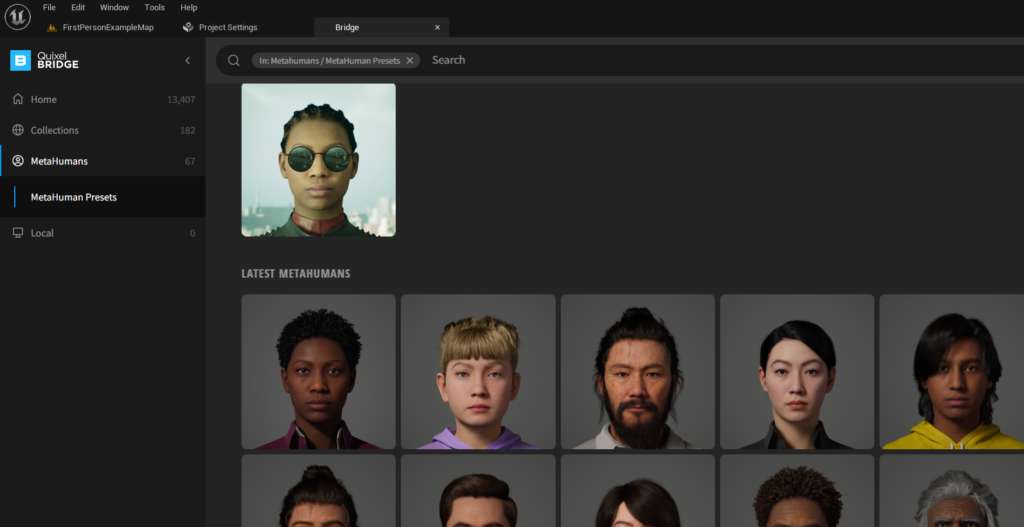
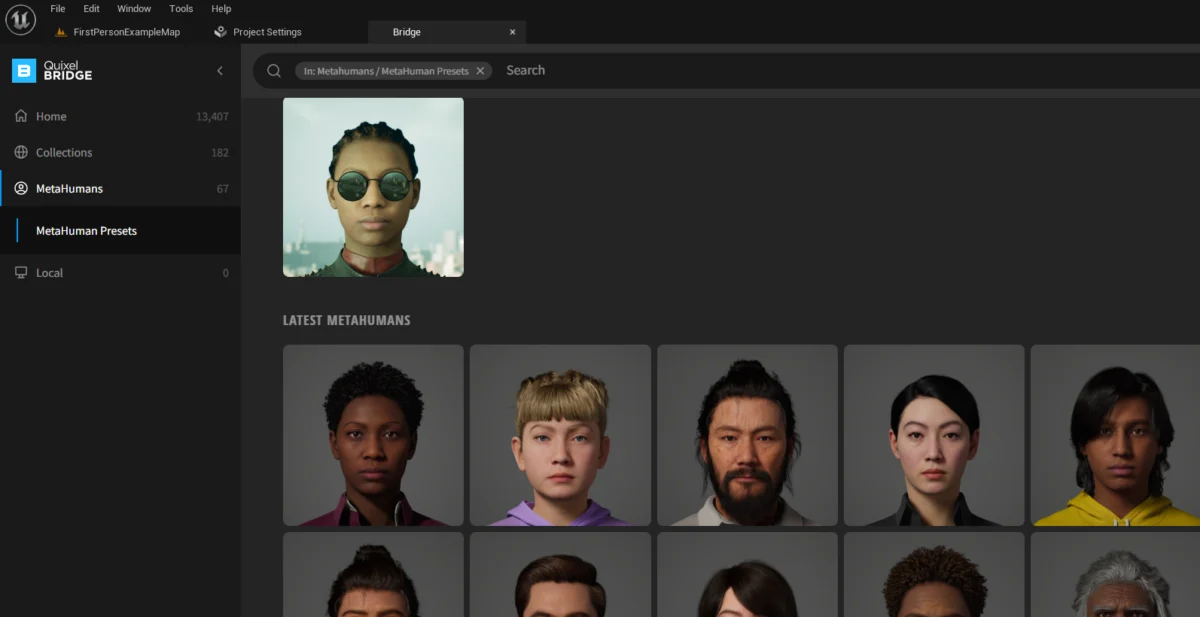
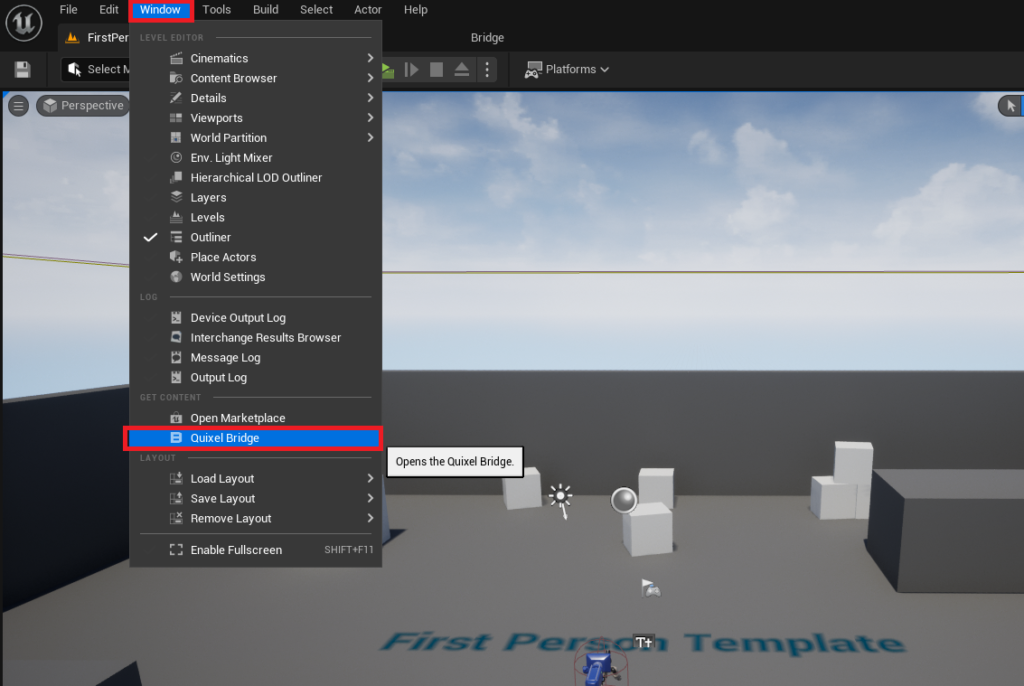
The initial step for developers involves accessing the Quixel Bridge directly within the Unreal Engine editor. This is achieved by navigating to the "Window" tab in the editor’s menu bar and selecting "Quixel Bridge." Upon activation, the Quixel Bridge interface loads within the editor, presenting a navigable portal to various asset categories.
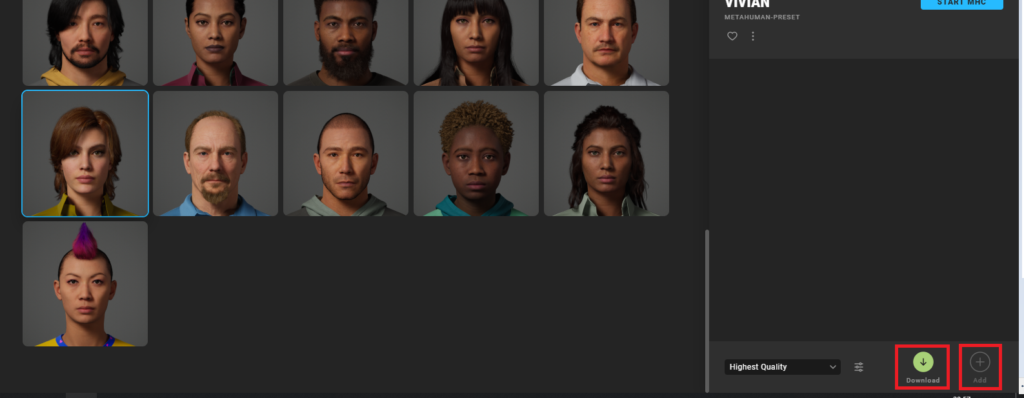
Once Quixel Bridge is active, developers proceed to locate the dedicated "MetaHumans" tab. This tab, clearly labeled within the Bridge interface, serves as the central repository for browsing the preconfigured MetaHuman characters. The library showcases a diverse array of digital humans, each meticulously crafted and ready for integration. Users can preview these avatars, examining their visual fidelity and suitability for their respective projects.
A crucial authentication step precedes the download of any MetaHuman asset. To gain full access to the Quixel Megascans and MetaHuman libraries, users are required to sign in with their Epic Games account. This ensures licensing compliance and provides a personalized experience within the ecosystem. The sign-in prompt typically appears upon selecting an avatar, guiding the user through the authentication process seamlessly.
Following successful authentication, developers can proceed to select their chosen MetaHuman avatar from the extensive grid. A "Download" button becomes available, initiating the transfer of the high-fidelity character data to the local system. Once the download is complete, an "Add" button appears, allowing for direct integration of the MetaHuman into the currently open Unreal Engine project. This streamlined "download-and-add" functionality minimizes manual file management and accelerates the asset import workflow.
Upon initiation of the import, the Unreal Engine editor commences the process of incorporating the MetaHuman. During this phase, the editor may prompt the user with notifications in the bottom left corner, indicating missing plugins or project settings necessary for MetaHuman functionality. It is imperative for developers to respond by clicking "Enable Missing," which allows the editor to automatically configure the project environment to support MetaHumans fully. This includes enabling required plugins and adjusting specific project settings to optimize performance and rendering for these complex assets.
After enabling the necessary configurations, the editor will typically require a restart to apply the new settings effectively. A "Restart Now" button will appear, prompting the user to restart the Unreal Engine editor. This ensures that all MetaHuman-specific plugins and project settings are properly initialized, preparing the environment for optimal character utilization.
Once the editor has restarted and all configurations are in place, the newly imported MetaHuman asset can be located within the Content Drawer. Developers navigate to the "MetaHumans" folder, which is automatically created upon import, and then into the subfolder corresponding to the name of the chosen MetaHuman. Within this folder, the core MetaHuman asset is represented by a blueprint, typically prefixed with "BP_," signifying a ready-to-use, fully rigged character blueprint. This blueprint encapsulates all the necessary components, including meshes, materials, and animation rigs, making the MetaHuman immediately deployable within the project. The character, as seen within the blueprint, is comprised of multiple interconnected meshes, all meticulously rigged for animation and ready to serve as a player character or non-player character (NPC) within the digital environment.
Strategic Vision: Epic Games’ Commitment to Creator Empowerment

The availability of the MetaHuman library through Quixel Bridge is a direct consequence of Epic Games’ strategic acquisition of Quixel in 2019. Quixel, renowned for its Megascans library of photorealistic 3D assets, brought an unparalleled wealth of digital content creation expertise to Epic. This acquisition solidified Epic’s commitment to providing high-quality, production-ready assets to developers, thereby accelerating content creation pipelines and fostering visual innovation.
Epic Games’ philosophy, articulated by company spokespersons, consistently emphasizes the democratization of high-end content creation. The MetaHuman project is a testament to this commitment, aiming to dismantle the traditional barriers of cost, time, and specialized expertise that have historically limited access to photorealistic digital characters. By offering MetaHumans free of charge and integrating them seamlessly into Unreal Engine 5, Epic is not only enhancing its own ecosystem but also empowering a new generation of creators to realize their ambitious visions without prohibitive constraints. The goal is to allow artists to focus on creative storytelling and gameplay mechanics, rather than expending vast resources on foundational character development.
Transforming Industries: The Broader Implications of MetaHumans
The introduction and widespread adoption of MetaHumans carry significant implications across multiple creative and technological sectors.

Game Development: For the video game industry, MetaHumans represent a paradigm shift. Independent game developers and smaller studios, often constrained by budget and personnel, can now access character assets that rival those found in AAA titles. This levels the playing field, allowing for more visually impressive and diverse game worlds. For larger studios, MetaHumans can drastically cut down character production times and costs, enabling more rapid prototyping, iteration, and the creation of larger casts of unique NPCs. The ability to quickly populate a game world with highly realistic characters can free up development teams to focus on gameplay innovation and narrative depth.
Film and Virtual Production: The film industry, particularly with the rise of virtual production techniques, stands to benefit immensely. MetaHumans offer a cost-effective and flexible solution for digital actors, crowd generation, and stunt doubles. Real-time rendering capabilities in UE5, combined with MetaHumans, allow filmmakers to visualize and iterate on scenes instantly, reducing post-production cycles and costs. This technology facilitates more agile and experimental filmmaking, blurring the lines between live-action and computer-generated imagery.
Beyond Entertainment: The impact extends far beyond traditional entertainment. Industries like architecture, engineering, and construction (AEC) can leverage MetaHumans to create realistic virtual walkthroughs populated with human figures, enhancing client presentations and design visualizations. For training and simulation, MetaHumans can populate virtual environments with believable avatars, offering immersive and interactive learning experiences, from medical simulations to emergency response training. The burgeoning metaverse concept also finds a powerful ally in MetaHumans, as they provide a foundation for highly realistic and customizable avatars that can represent users in persistent virtual worlds. Furthermore, digital twins and virtual assistants can achieve a new level of presence and interactivity with MetaHuman fidelity.
Future Outlook: The upcoming MetaHuman Creator tool is expected to unlock unprecedented levels of customization, allowing users to sculpt and generate unique characters with intuitive controls. This will further enhance the versatility of MetaHumans, moving beyond the preconfigured library to truly bespoke digital identities. Continued advancements in AI-driven animation and performance capture integration are also anticipated, promising even more lifelike and responsive MetaHumans in the future.
Challenges and Considerations
Despite their transformative potential, MetaHumans also present certain considerations. The sheer fidelity of these assets means they demand significant computational resources, requiring robust hardware for optimal performance, especially when populating scenes with multiple characters. Developers must also consider artistic consistency; integrating photorealistic MetaHumans alongside more stylized custom assets requires careful planning to maintain a cohesive visual style. While the integration process is streamlined, mastering the advanced customization and animation workflows for MetaHumans still involves a learning curve for developers aiming to push the boundaries of their projects.
Conclusion
The integration of the MetaHuman character library into Unreal Engine 5 represents a monumental leap forward in digital content creation. By providing free access to an extensive collection of photorealistic, fully rigged digital humans, Epic Games is not only democratizing high-end character development but also empowering creators across all scales. This initiative, seamlessly facilitated through the Quixel Bridge, simplifies a previously complex and resource-intensive process, allowing developers to focus on narrative and gameplay innovation. As MetaHumans continue to evolve, particularly with the anticipated MetaHuman Creator, they are poised to become a cornerstone technology, shaping the future of interactive experiences, virtual production, and the burgeoning metaverse, ushering in an era where digital realism is accessible to all.
About the Author