The fundamental nature of artistic creation, often described as an inherently social endeavor, is undergoing a profound transformation as digital platforms increasingly mediate interactions between creators and their audiences. Historically, artists have sought to share their work, elicit engagement, and receive validation that affirms their message or "vibe" resonates, even if only with a single individual. This dynamic mirrors basic human communication, where a speaker seeks a listener’s comprehension, mirroring, and follow-up, signifying the value and reception of their words. While successful engagement provides validation, discordant feedback can be equally informative, fostering growth and critical reflection. However, the architecture of the modern internet has significantly altered this reciprocal relationship, concentrating visibility and challenging the very essence of open discovery and equitable interaction that once defined its promise.
The Early Internet: A Crucible for Community and Discovery
In its nascent stages, particularly around the turn of the millennium and into the early 2010s, the internet presented itself as a democratizing force for creative expression. The prevailing ethos championed the formation of online communities, promising artists unprecedented avenues for interaction and feedback. This era was characterized by a more decentralized web, often referred to as the "blogosphere," where independent websites, forums, and early social platforms allowed for relatively organic discovery. Content creators, from bloggers and independent musicians to nascent game developers, could achieve significant reach without extensive marketing budgets. Algorithms, if present, were generally less sophisticated and did not exert the same level of gatekeeping control seen today.
During this period, the internet was widely perceived as a level playing field. A small independent game, "100 Rogues," released in 2010, serves as a poignant example. Despite being the developer’s first published game, launching with initial bugs, inconsistent artwork, and lower production values compared to many contemporary titles, it garnered substantial community engagement. Players created fan art, uploaded gameplay videos, and the developer received frequent interview requests from gaming websites – a phenomenon far less common for independent creators today. This success was attributed not to a hefty marketing budget or a radically different approach to development, but to the inherent design of the internet at that time, which facilitated genuine discovery and direct interaction between creators and their burgeoning fan bases. This environment fostered a sense of accessibility and community, allowing niche interests to find their audience and for diverse voices to emerge.
The Algorithmic Shift: Centralization and Declining Organic Reach
Over the subsequent decade, this landscape drastically shifted. A series of strategic actions undertaken by large technology companies, coupled with a notable lack of regulatory intervention from governments, progressively centralized the internet’s infrastructure and audience attention. This evolution has resulted in a "top-heavy" digital ecosystem where engagement has become increasingly concentrated among a diminishing number of high-profile entities. Illustratively, where a decade ago 100,000 creators might each have cultivated a following of 100 fans, the current dynamic often sees perhaps 100 creators commanding 100,000 fans each, or even millions. This concentration of viewership and interaction continues to intensify annually, exacerbating the challenges for new and independent voices.
The primary driver behind this shift is the evolution of proprietary algorithms employed by dominant social media platforms and content aggregators. Initially designed to help users navigate vast amounts of information, these algorithms have increasingly prioritized metrics like "engagement" (likes, shares, comments, watch time) and advertiser revenue, often at the expense of organic reach and diverse discovery. Content that aligns with these algorithmic preferences—often sensational, highly produced, or already popular—is amplified, while content from smaller creators struggles to break through the noise. Research from organizations like the Pew Research Center and various digital marketing analytics firms consistently shows a decline in organic reach for pages and profiles across major platforms like Facebook and Instagram, forcing creators and businesses to invest heavily in paid promotion to maintain visibility. For instance, some reports indicate that organic reach on Facebook pages has plummeted from around 16% in 2012 to less than 2% for many pages today, effectively turning these platforms into "pay-to-play" environments.
The Regulatory Vacuum and Corporate Consolidation
The trajectory of the internet’s centralization is not merely an organic technological development; it is a direct consequence of policy choices and, crucially, policy failures. Governments globally have largely opted not to rigorously enforce existing antitrust laws or to introduce new legislation necessary to safeguard the principles of an open and competitive digital sphere. This regulatory inertia has permitted unprecedented corporate conglomeration within the tech sector. Mergers and acquisitions have become commonplace, with tech giants absorbing potential competitors and consolidating market power. For example, Facebook’s acquisition of Instagram and WhatsApp, or Google’s dominance in search and advertising, have created vast ecosystems where competition is stifled, and individual creators are beholden to the policies and algorithms of a few powerful corporations.
This consolidation mirrors trends observed in other industries, such as gaming. A decade ago, the gaming landscape boasted a greater diversity of independent studios and publishers. Today, a significant portion of the industry has been absorbed by a handful of titans like Activision Blizzard (now part of Microsoft), Tencent, and Take-Two Interactive. This means fewer "creators" are producing games for an ever-larger segment of the global player base. For aspiring game developers, Twitch streamers, or any online content creator in 2025, the algorithmic hurdles and the financial investment required for visibility have become extraordinarily high. Success often demands not only substantial marketing budgets but also a radical optimization of content, and even the creative work itself, for the algorithms, rather than primarily for human connection and artistic merit. This shift fundamentally alters the creative process, potentially incentivizing formulaic content designed to game the system rather than groundbreaking art.
The "Open Mic" Analogy: A Model for Equitable Engagement
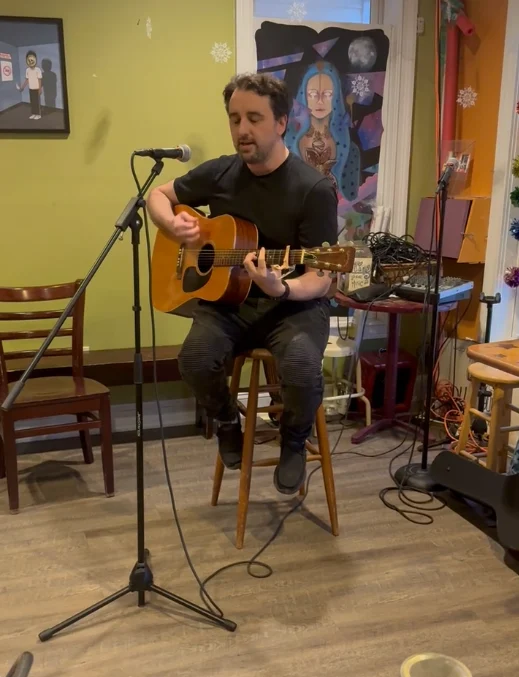
In stark contrast to the algorithm-driven, centralized internet, the concept of an "open mic" event in a physical space offers a powerful alternative model for equitable artistic engagement. At an open mic, the complex layers of algorithmic optimization, corporate gatekeeping, and financial barriers largely evaporate. Everyone present, regardless of background, experience, or social status, is typically granted an equal opportunity—often a fixed time slot of three to five minutes—to share their creative output. Whether it’s poetry, a musical performance, stand-up comedy, or simply a personal reflection, the platform is democratically accessible.
The inherent fairness of an open mic transcends typical societal hierarchies. Individuals of all ages, body types, ethnic backgrounds, and socioeconomic statuses are welcomed to participate, observe, and eventually take their turn in the spotlight. There are no algorithms to favor certain content over others, no million-dollar marketing budgets required for visibility, and no corporate conglomerations dictating who gets seen. Instead, the shared space fosters a spirit of curiosity and mutual respect among a diverse group of people who are simply "there"—physically present, sharing a moment, and engaging directly with one another’s expressions.
While it is important to acknowledge that the broader "IRL art world" is not entirely free from arbitrary barriers, biases, or the influence of corporate interests—especially where significant money is involved—the open mic specifically highlights a purer form of artistic exchange. Its power lies precisely in its lack of commercial incentive; performers typically do not make or spend money in participating, allowing the focus to remain purely on creation and reception. This model underscores the profound value of unmediated human connection and community building, free from the pervasive influence of digital intermediaries.
Reimagining Digital Interaction: Lessons and Demands
Despite the challenges posed by the current internet architecture, the digital realm remains an undeniable fixture in modern life. This necessitates a critical re-evaluation of its design and a concerted effort to steer its evolution towards a more equitable and artist-friendly future. Some existing online platforms offer glimpses of what a more balanced digital space could look like. Discord, for instance, is cited as a platform where, within specific community servers, chat participants generally operate on a more equal footing regarding attention and interaction. While not without its own challenges, its design often facilitates peer-to-peer engagement without a central algorithm actively dictating visibility in the same way as many mainstream social media platforms.
The demand for a "better internet" echoes calls from advocates for digital rights, anti-monopoly activists, and independent creators who envision a return to principles of decentralization, interoperability, and user control. This could involve promoting open protocols, supporting federated social media models (like Mastodon), and implementing regulations that mandate algorithmic transparency, data portability, and robust antitrust enforcement. The goal is to move towards an internet where discovery is genuinely organic, where communities can thrive without constant algorithmic manipulation, and where the basic concept of "discovery" is restored.
The Broader Implications: Community Resilience and Civic Engagement
Beyond artistic expression, the conversation about online versus physical spaces extends into broader societal implications. In an increasingly polarized and volatile global landscape, characterized by rising social tensions and challenges to democratic norms, the importance of physical community engagement becomes even more pronounced. Being present in real-world spaces offers opportunities for serendipitous collaboration, inspirational encounters, and the simple act of bearing witness. More critically, physical presence fosters the kind of direct human connection and solidarity that is essential for collective action and civic resistance.
The erosion of "third places"—spaces outside of home and work where people can gather informally—has been a concern for sociologists for decades. The internet, while connecting people across distances, has sometimes inadvertently contributed to this decline in local, physical interaction. Rekindling robust physical communities is vital for building social capital, fostering mutual aid networks, and enabling collective mobilization in response to societal challenges. When individuals are physically present within their communities, they are better positioned to understand local needs, forge stronger bonds, and collectively address issues that impact their shared lives. This notion of "being there" transcends mere artistic validation; it becomes a fundamental aspect of building resilient, engaged, and responsive communities capable of navigating an uncertain future.
The trajectory of the internet has demonstrated that its current form is not an inevitability but a product of design choices and regulatory environments. As the world grapples with the implications of an algorithmically controlled digital sphere, the lessons from the "open mic" and the urgent need for robust physical communities offer powerful counter-narratives and models for fostering genuine connection, equitable participation, and collective resilience in both artistic and civic life. The ongoing effort to shape the future of digital interaction, alongside a renewed appreciation for physical presence, will determine the landscape of creativity and community for generations to come.
About the Author