The rapid advancement of artificial intelligence (AI) has ushered in an era of unprecedented technological transformation, with a growing suite of AI-powered tools now poised to redefine efficiency and foster innovation across a myriad of industries. As businesses and individuals navigate the complexities of the modern digital landscape, the adoption of AI is no longer a distant prospect but a present imperative. This comprehensive exploration delves into the top 10 AI tools making significant waves in 2023, highlighting their capabilities, applications, and the profound impact they are having on automating tasks, streamlining workflows, and amplifying productivity. From sophisticated language models to groundbreaking image generators and intelligent coding assistants, these tools represent the vanguard of AI-driven progress, offering tangible solutions for a diverse range of challenges.
AI’s Ascendancy: A Landscape of Transformation
The year 2023 has solidified AI’s position not merely as a theoretical concept but as a practical force driving tangible outcomes. The accessibility of advanced AI models, coupled with decreasing computational costs, has democratized the application of these powerful technologies. The tools featured herein are not isolated innovations but rather integral components of a larger ecosystem, designed to augment human capabilities and unlock new potentials. Their emergence signals a shift towards more intelligent, adaptive, and automated processes, promising to reshape the future of work and creativity.
Leading the Charge: The Top 10 AI Tools of 2023
1. ChatGPT: The Conversational Powerhouse
At the forefront of natural language processing (NLP) innovation stands ChatGPT, a large language model developed by OpenAI. Its ability to generate human-like text in response to a vast array of prompts has made it an indispensable tool for communication, content creation, and information retrieval. ChatGPT can seamlessly engage in conversations, translate languages, answer complex questions, and even complete text with remarkable coherence and fluency. Its underlying architecture, based on the GPT (Generative Pre-trained Transformer) series, allows it to understand and generate contextually relevant responses across a broad spectrum of topics and writing styles.
- Key Applications: Content generation (articles, marketing copy, creative writing), customer service chatbots, language translation, summarization of lengthy documents, educational assistance, and code explanation.
- Impact Analysis: ChatGPT’s widespread adoption has accelerated content creation workflows, providing businesses with a powerful engine for marketing, communication, and internal documentation. Its ability to democratize access to information and assist with complex language tasks has also significant implications for education and research.
- Considerations: While exceptionally powerful, users are advised to exercise caution. ChatGPT may inadvertently generate biased, offensive, or factually incorrect information due to its training data. Critical evaluation and human oversight remain paramount.
2. DALL-E: Visualizing Imagination
Another groundbreaking creation from OpenAI, DALL-E, has revolutionized the field of visual content creation. This generative model leverages a sophisticated architecture, built upon the principles of GPT-3, to conjure unique and high-resolution images from simple text descriptions. DALL-E’s capacity to interpret nuanced prompts and translate them into visually compelling imagery has opened new avenues for artists, designers, and marketers. Its ability to generate images that are both novel and aesthetically pleasing has made it a sought-after tool for a wide range of creative endeavors.
- Key Applications: Concept art generation, marketing campaign visuals, product mockups, illustrations for publications, and personalized digital art.
- Impact Analysis: DALL-E is democratizing the creation of visual assets, reducing reliance on expensive stock photography or extensive design resources. This empowers smaller businesses and individual creators to produce professional-quality visuals with greater ease and speed.
- Considerations: As with any generative AI, the output of DALL-E is influenced by its training data. While capable of producing original-looking images, there’s a potential for influences from existing artistic styles or content. Review and refinement are crucial for commercial applications.
3. Lumen5: Simplifying Video Content Creation
In the realm of digital marketing and social media, video content reigns supreme. Lumen5 addresses this demand by providing an AI-powered platform that simplifies the creation of engaging videos from text-based content. Its intelligent algorithms can transform blog posts, articles, or other textual material into dynamic video narratives, complete with relevant visuals, music, and text overlays. Lumen5 streamlines the often time-consuming process of video production, making it accessible to users with minimal video editing experience.
- Key Applications: Social media video marketing, explainer videos, promotional content, and repurposing existing written content into visual formats.
- Impact Analysis: Lumen5 significantly lowers the barrier to entry for video marketing, enabling businesses to rapidly produce shareable video content that can enhance engagement and reach. This is particularly valuable for small to medium-sized enterprises seeking to compete in the visual-heavy online space.
- Considerations: The quality and uniqueness of Lumen5-generated videos can depend on the source material and the customization applied. While efficient, manual refinement is often beneficial to ensure brand consistency and optimal audience appeal.
4. Grammarly: Elevating Written Communication
Grammarly has become a ubiquitous tool for anyone who writes, leveraging AI to enhance the clarity, correctness, and impact of written communication. Beyond basic spell-checking and grammar correction, Grammarly offers sophisticated suggestions for improving sentence structure, word choice, tone, and overall readability. Its AI-driven insights help users to articulate their ideas more effectively, ensuring their messages are understood as intended.
- Key Applications: Proofreading documents, emails, social media posts, academic papers, and professional reports. Enhancing writing style and tone for specific audiences.
- Impact Analysis: Grammarly empowers individuals and organizations to communicate with greater confidence and precision. By reducing errors and improving clarity, it fosters professionalism and strengthens the credibility of written content across all sectors.
- Considerations: While highly advanced, Grammarly’s suggestions should be viewed as recommendations. Users should maintain their judgment, especially in creative writing or contexts where stylistic choices deviate from conventional norms.
5. OpenAI Codex: The Programmer’s AI Assistant
OpenAI Codex represents a significant leap forward in the integration of AI with software development. This AI system is capable of translating natural language instructions into functional code across a multitude of programming languages. Built upon the foundation of GPT-3, Codex can understand the intent behind a developer’s description of a task and generate the corresponding code, accelerating the development cycle and making coding more accessible.
- Key Applications: Rapid prototyping, code generation from natural language prompts, assisting junior developers, automating repetitive coding tasks, and translating code between languages.
- Impact Analysis: Codex has the potential to drastically reduce the time and effort required for software development. It can democratize coding by enabling individuals with less formal programming training to contribute to software creation, and it allows experienced developers to focus on more complex architectural and problem-solving aspects.
- Considerations: The code generated by Codex must be meticulously reviewed and tested. While powerful, it is not infallible and can produce code that is inefficient, insecure, or contains subtle errors. It is best utilized as an intelligent assistant rather than a complete replacement for developer expertise.
6. Tabnine: Intelligent Code Completion
Tabnine is another AI-powered tool designed to enhance developer productivity, specifically through intelligent code completion. By analyzing vast amounts of code and understanding programming patterns, Tabnine predicts and suggests code snippets as developers type. This not only speeds up the coding process but also helps reduce syntax errors and promotes adherence to best practices. Its compatibility with numerous programming languages and integration capabilities with popular code editors make it a versatile asset for development teams.
- Key Applications: Accelerating software development, reducing coding errors, improving code consistency, and assisting developers in discovering new libraries or API functions.
- Impact Analysis: Tabnine contributes to a more efficient and less error-prone development environment. By automating the suggestion of common code patterns, it allows developers to concentrate on the unique logic and functionality of their projects.
- Considerations: Similar to Codex, developers should critically evaluate Tabnine’s suggestions. While generally accurate, the tool’s recommendations may not always align with the specific context or project requirements. Human oversight is essential.
7. Jasper AI: The Content Marketing Engine
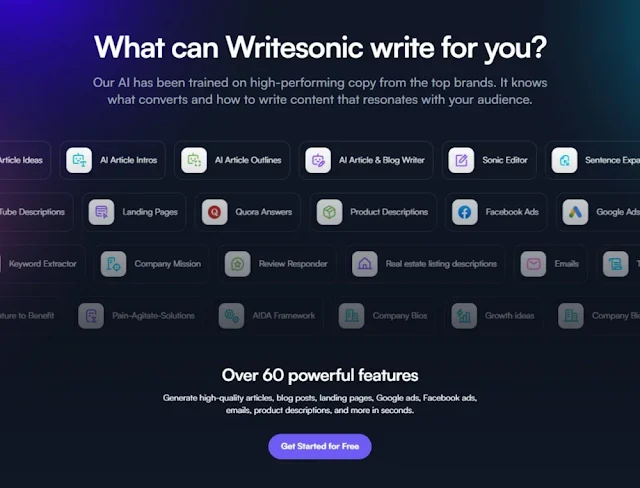
Jasper AI has emerged as a leading platform for AI-powered content creation, specifically tailored for marketing and business communication. This tool leverages artificial intelligence to craft compelling written content by identifying optimal word choices and sentence structures that align with a user’s defined writing style and target medium. Jasper aims to deliver content that is not only efficient to produce but also highly engaging and effective in achieving marketing objectives.
- Key Applications: Blog post generation, ad copy creation, website content, social media updates, email marketing campaigns, and product descriptions.
- Impact Analysis: Jasper empowers marketers and content creators to scale their output significantly. It allows for the rapid generation of diverse marketing materials, freeing up human resources for strategic planning and creative oversight.
- Considerations: While Jasper excels at generating persuasive copy, the unique voice and strategic nuance of a brand often require human refinement. Ensuring factual accuracy and maintaining brand integrity are crucial steps in the content creation process.
8. Surfer SEO: Optimizing for Search Engine Dominance
In the competitive digital landscape, search engine optimization (SEO) is paramount for online visibility. Surfer SEO is a sophisticated software tool designed to help website owners and digital marketers meticulously analyze and enhance their on-page SEO efforts. By examining top-ranking content for target keywords, Surfer SEO provides data-driven insights and actionable recommendations for content optimization, keyword density, structure, and more, aiming to improve search engine rankings.
- Key Applications: Content optimization for search engines, keyword research and analysis, competitive analysis, and on-page SEO audits.
- Impact Analysis: Surfer SEO provides a data-informed approach to SEO, moving beyond guesswork to evidence-based strategies. This can lead to improved organic traffic, higher search engine rankings, and ultimately, greater online success for businesses.
- Considerations: Surfer SEO is a powerful tool within the broader SEO ecosystem. It is not a guaranteed solution for ranking but rather a guide to implementing best practices. A holistic SEO strategy that includes off-page factors and technical optimization remains critical.
9. Zapier: Automating the Digital Workflow
Zapier operates as a powerful web automation tool, enabling users to connect different web applications and automate repetitive tasks without requiring extensive coding knowledge. Through the creation of "Zaps"—automated workflows—Zapier can seamlessly transfer data between applications, trigger actions in one app based on events in another, and streamline complex multi-step processes. This interconnectivity significantly enhances operational efficiency and productivity.
- Key Applications: Automating data entry, synchronizing customer relationship management (CRM) systems, managing social media posting, integrating marketing automation tools, and streamlining project management workflows.
- Impact Analysis: Zapier acts as a digital glue, breaking down data silos and automating mundane tasks that often consume valuable human time. This allows businesses to operate more efficiently, reduce errors, and reallocate resources to more strategic initiatives.
- Considerations: While Zapier is designed for ease of use, some advanced configurations may require a degree of technical understanding. Furthermore, the effectiveness of Zaps is dependent on the functionality and integration capabilities of the connected applications.
10. Compose AI: Intelligent Natural Language Generation
Compose AI specializes in developing Natural Language Generation (NLG) software that utilizes AI to automatically produce written or spoken text from structured data. This technology can take raw data from sources like spreadsheets, databases, or APIs and transform it into coherent, human-readable narratives. Compose AI’s solutions are particularly valuable for organizations that need to generate large volumes of consistent and informative content from data.
- Key Applications: Automated report generation, personalized customer communications, financial summaries, product descriptions, and data-driven storytelling.
- Impact Analysis: Compose AI streamlines the process of content creation from data, enabling businesses to communicate insights and information more effectively and at scale. This can lead to improved customer engagement, faster reporting cycles, and more efficient data utilization.
- Considerations: The quality of the generated content is intrinsically linked to the quality and structure of the source data. Human review and validation are essential to ensure accuracy, context, and adherence to specific communication standards.
The Broader Implications of AI Integration
The widespread adoption of these top AI tools signifies a fundamental shift in how individuals and organizations operate. The overarching trend is towards increased automation, enhanced efficiency, and a democratized access to sophisticated capabilities. For businesses, this translates into opportunities for cost reduction, improved customer experiences, and accelerated innovation. For individuals, it means more time to focus on creative problem-solving, strategic thinking, and tasks that require uniquely human skills.
However, this technological evolution also presents challenges. Concerns around data privacy, algorithmic bias, and the potential impact on employment necessitate careful consideration and proactive policy-making. As AI continues to mature, fostering a responsible and ethical approach to its development and deployment will be crucial to harnessing its full potential for societal benefit.
The Future of AI-Driven Productivity
The trajectory of AI development suggests that the tools highlighted in this list are merely the beginning. As AI models become more sophisticated, their capabilities will expand, leading to even more transformative applications. The future promises AI systems that are more intuitive, adaptive, and capable of handling increasingly complex tasks. The ongoing evolution of AI is set to reshape industries, redefine professional roles, and ultimately, usher in a new era of human-computer collaboration, driving progress and innovation at an unprecedented pace. Embracing these tools and understanding their potential is no longer optional but a strategic necessity for navigating the future of work and technology.
About the Author