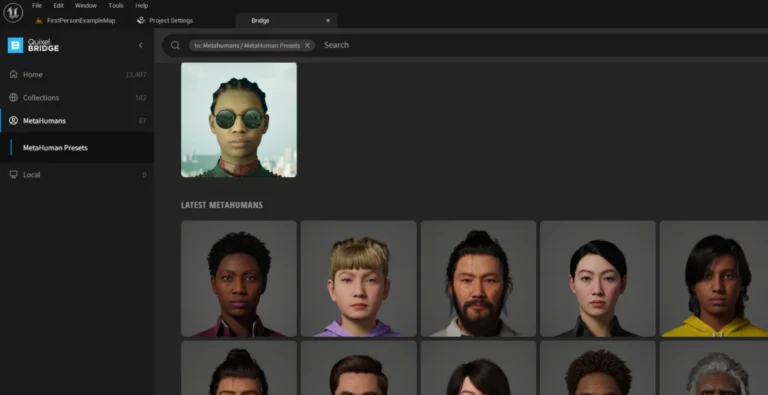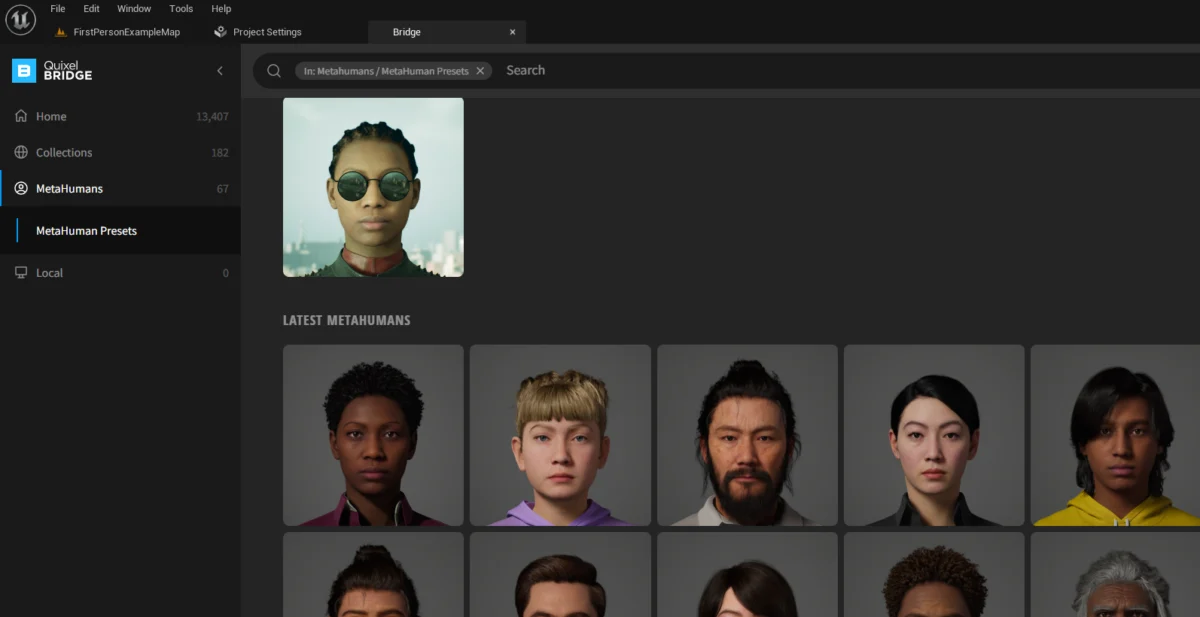
Epic Games has made a significant stride in empowering creators within the digital realm by integrating its groundbreaking MetaHuman character library directly into Unreal Engine 5 (UE5). This initiative provides developers, artists, and studios with free access to a vast collection of high-fidelity digital humans, designed to serve as characters in diverse projects ranging from video games and virtual production to architectural visualization and metaverse experiences. The availability of these photorealistic digital assets marks a pivotal moment, lowering the barrier to entry for achieving unparalleled visual fidelity in real-time environments.
The introduction of MetaHumans is a direct outcome of Epic Games’ strategic investments and a long-term vision for the future of digital content creation. The technology behind MetaHumans stems from Epic’s acquisitions of leading companies in digital character technology, including 3Lateral (a pioneer in digital human creation and facial rigging) and Cubic Motion (an expert in real-time facial animation). These integrations have culminated in a robust framework that allows for the creation and deployment of incredibly detailed and expressive digital characters with unprecedented ease. Traditionally, producing such high-quality digital humans required extensive time, highly specialized artistic skills, and significant financial investment, often limiting their use to large-budget productions. MetaHumans fundamentally disrupt this paradigm, making cutting-edge character design accessible to a broader audience, including indie developers and smaller studios, thereby democratizing a critical aspect of digital content creation.

Unreal Engine 5 serves as the ideal platform for MetaHumans, leveraging its suite of next-generation technologies to render these characters with breathtaking realism. Features like Nanite, UE5’s virtualized micro-polygon geometry system, enable the engine to handle the immense geometric detail of MetaHumans without significant performance overhead, allowing for cinematic-quality assets to run in real-time. Similarly, Lumen, the fully dynamic global illumination and reflections system, ensures that MetaHumans are lit and interact with their environments in a physically accurate and visually stunning manner. This synergy between MetaHumans and UE5’s core rendering technologies ensures that the digital characters not only look exceptional but also integrate seamlessly into immersive virtual worlds.
Accessing the MetaHuman Library: A Gateway to Digital Personas
The process of integrating MetaHumans into an Unreal Engine 5 project is streamlined through Quixel Bridge, Epic Games’ comprehensive content management application. Quixel Bridge, itself an acquisition by Epic Games, acts as a central hub for accessing a vast library of high-resolution 3D assets, including the renowned Megascans library, and now, the MetaHuman collection. This integration ensures a cohesive workflow for developers looking to populate their projects with top-tier assets.
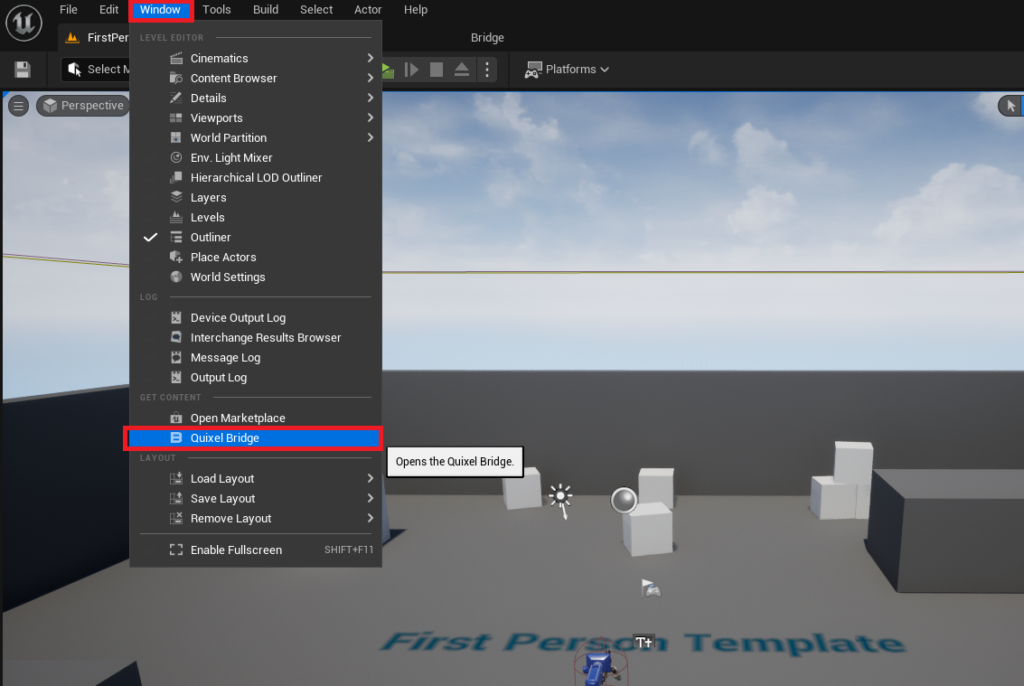
To begin, users must launch the Unreal Engine 5 editor. Within the editor’s interface, navigation to the Window tab reveals a dropdown menu containing various utilities and panels. Selecting Quixel Bridge from this menu will open the application directly within the Unreal Engine environment. This integrated approach eliminates the need to switch between external applications, enhancing productivity and maintaining focus within the development workspace. The appearance of Quixel Bridge within the editor signifies the immediate access to Epic’s expansive digital asset ecosystem.
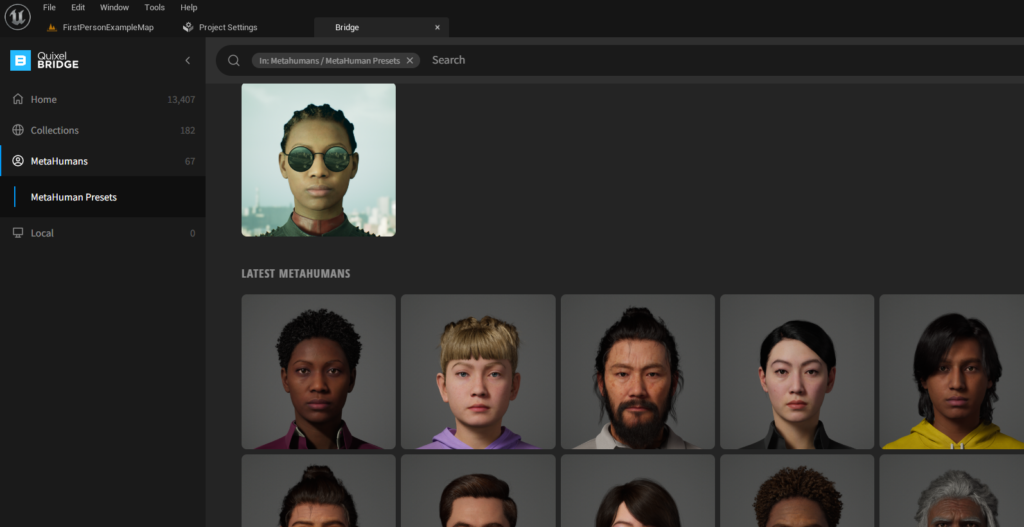
Once Quixel Bridge is successfully initialized and displayed, users will notice several tabs dedicated to different asset categories. A prominent tab, clearly labeled MetaHumans, is the gateway to the digital character library. Clicking this tab transitions the view to showcase the full range of available MetaHuman assets. This dedicated section is meticulously organized, providing a clear overview of the pre-configured characters that Epic Games has made available.
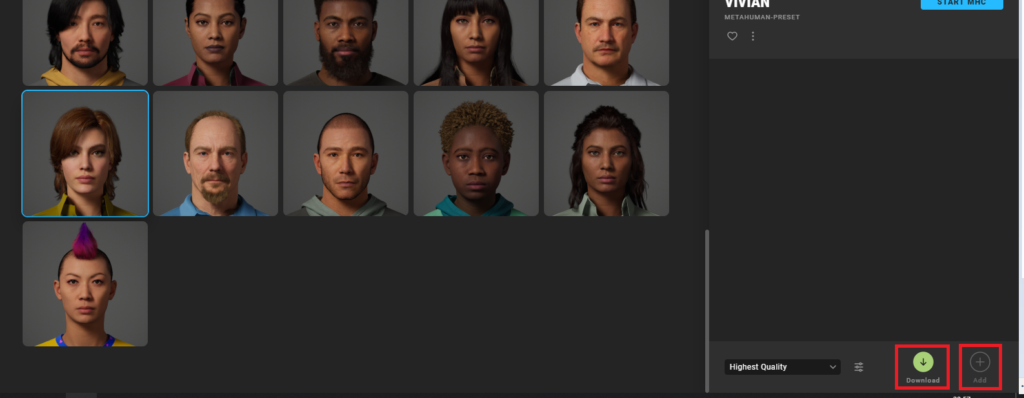
The MetaHumans tab presents a curated selection of digital avatars, each meticulously crafted to represent a diverse array of human characteristics. Users can browse through a variety of pre-scanned MetaHumans, featuring different ages, genders, ethnicities, and body types. The level of detail in these models is extraordinary, encompassing realistic skin textures with subtle pores, individual hair strands rendered with advanced groom systems, and highly detailed eye models that capture lifelike reflections and refractions. Each MetaHuman is built upon a robust underlying rigging system, designed for high-fidelity animation and seamless integration with motion capture data. This ready-to-use nature of the MetaHuman assets dramatically accelerates the character creation pipeline, allowing developers to focus on creative storytelling and gameplay mechanics rather than the arduous process of character modeling and rigging from scratch.
Before any MetaHuman can be downloaded and incorporated into a project, a crucial authentication step is required. Users must sign in with their Epic Games account. This is typically prompted when attempting to select or download an avatar from the library. The Sign In button, usually located at the bottom right of the Quixel Bridge window, facilitates this process. Logging in with an Epic Games account not only grants access to the MetaHuman library but also unlocks the full potential of the Quixel Megascans library, providing a unified content experience under the Epic Games ecosystem. This strategy reinforces Epic’s commitment to building a comprehensive platform for content creators, where high-quality assets are readily available and integrated.
Integrating MetaHumans into Your Project: From Library to Livestream
With the Epic Games account successfully linked and the MetaHuman library accessible, the next phase involves selecting and importing the desired character into the active Unreal Engine 5 project. This process is designed to be intuitive, minimizing technical hurdles for developers.

After browsing the available MetaHumans and selecting a preferred avatar, users will typically find a Download button associated with that character. Clicking this button initiates the download process, during which the high-resolution assets, including meshes, textures, materials, and rigging data, are fetched from Epic’s servers. Due to the inherent complexity and detail of MetaHumans, these files can be substantial in size, and download times may vary depending on internet connection speeds. Following a successful download, the Download button typically transforms into an Add button. Clicking Add automatically imports all the necessary MetaHuman assets into the currently open Unreal Engine project, placing them in a designated content folder for easy access.
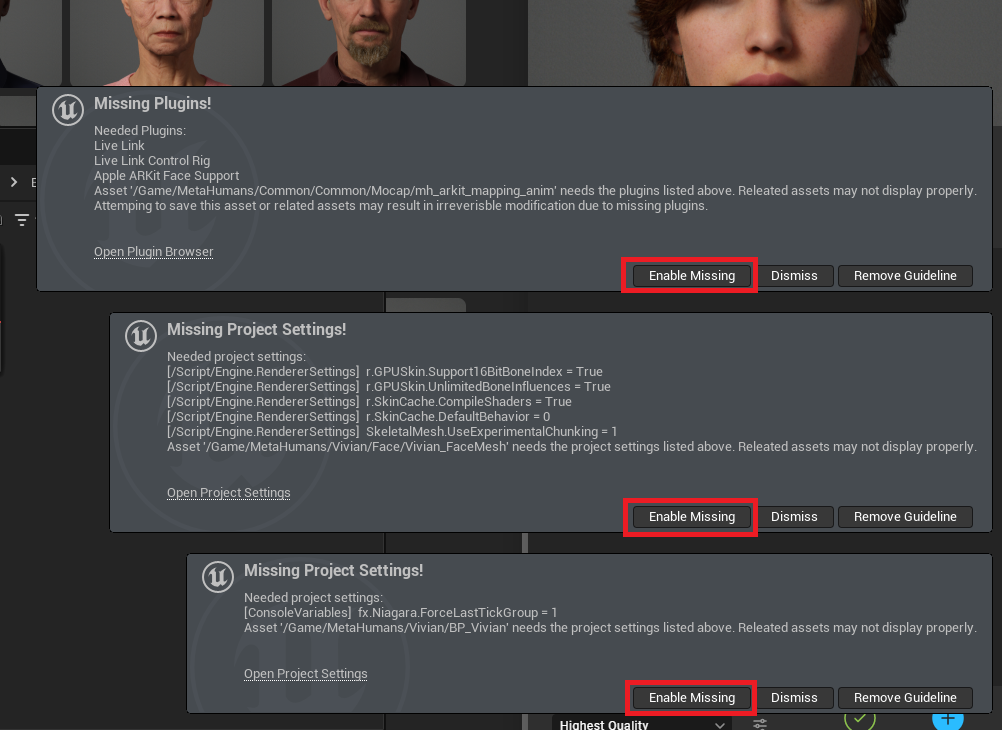
Upon adding a MetaHuman, Unreal Engine 5 may prompt the user with notifications, usually located in the bottom left corner of the editor window. These notifications often indicate that certain project settings or plugins are missing or need to be enabled for optimal MetaHuman functionality. It is critical to heed these prompts and press Enable Missing. This action allows the editor to automatically configure the project by activating essential plugins such as Groom for realistic hair rendering, LiveLink for real-time data streaming (useful for animation), and adjusting rendering settings to accommodate the advanced material and shading models used by MetaHumans. These configurations are vital to ensure that the MetaHuman characters render correctly and achieve their intended visual fidelity within the project.
After enabling the missing settings and plugins, Unreal Engine 5 will typically present a Restart Now button. This restart is a standard procedure in game development environments when significant changes to engine settings or plugin activations occur. Restarting the editor ensures that all newly enabled plugins are properly initialized and that the project’s configuration fully supports the MetaHuman assets. While a brief interruption, this step is crucial for stable operation and correct rendering of the digital characters.

Once the editor has restarted, the integrated MetaHuman is ready for use. Navigating to the Content Drawer (or Content Browser) within Unreal Engine, users will find a newly created folder, typically named MetaHumans. Inside this folder, there will be another subfolder corresponding to the name of the specific MetaHuman chosen in the previous steps. Within this character-specific folder, the core asset for the MetaHuman will be a Blueprint asset, identifiable by its BP_ prefix (e.g., BP_MyChosenMetaHuman). This Blueprint encapsulates the entire MetaHuman character, combining its various meshes (face, body, hair, clothing), skeletal mesh, animation blueprints, and material instances into a single, ready-to-use entity. Developers can simply drag and drop this Blueprint into their scene to instantly populate their world with a highly realistic, fully rigged, and animatable digital human.
The Broader Impact and Future of Digital Humans in Unreal Engine 5
The advent of MetaHumans in Unreal Engine 5 represents more than just a new feature; it signifies a fundamental shift in how digital characters are created and utilized across industries. The democratization of high-end character design is perhaps the most immediate and profound impact. Small development teams and individual creators, previously constrained by budget and skill limitations, can now access and implement characters of a quality once reserved for AAA games and blockbuster films. This not only levels the playing field but also fosters greater creative freedom and innovation within the independent development scene. The time and cost savings are substantial, allowing resources to be reallocated to other critical aspects of project development.
Beyond traditional gaming, the applications of MetaHumans are rapidly expanding into diverse fields. In virtual production, MetaHumans offer filmmakers the ability to integrate realistic digital actors into live-action sets in real-time, enabling unprecedented creative control and iteration during pre-visualization and production. For architectural visualization, MetaHumans provide believable human scale and presence, making architectural renders more relatable and immersive. The concept of digital twins benefits immensely from MetaHumans, allowing for highly accurate human representations in simulations for training, analysis, and research. Furthermore, as the metaverse continues to evolve, MetaHumans are poised to become a foundational element for populating persistent virtual worlds with expressive and engaging avatars, enhancing social interaction and immersion. Fields like education and training can leverage MetaHumans for interactive digital instructors or realistic role-play scenarios, while marketing and advertising can deploy customizable digital spokespersons.
Technically, MetaHumans also drive innovation. While their detail is immense, Epic Games is continuously working on performance optimization to allow for multiple MetaHumans to run efficiently in real-time scenes. The highly anticipated MetaHuman Creator, a cloud-based application that allows users to sculpt, blend, and customize their own unique MetaHumans from a vast library of scanned faces and attributes, further enhances the flexibility and creative potential of the system. While the original article alluded to this as a future capability, the MetaHuman Creator is already a powerful tool available to creators, enabling bespoke character generation.
The future trajectory of MetaHumans hints at even deeper integration with artificial intelligence and machine learning, potentially leading to autonomous digital actors with advanced emotional intelligence and dynamic facial animation driven by sophisticated AI algorithms. However, this level of realism also brings forth ethical considerations, particularly concerning the "uncanny valley" phenomenon, where near-perfect human replicas can sometimes evoke unease. There are also broader societal implications regarding the potential for misuse, such as in the creation of highly convincing deepfakes. Epic Games and the wider developer community bear a responsibility to navigate these ethical landscapes carefully as the technology advances.
In conclusion, the free availability and streamlined integration of the MetaHuman library within Unreal Engine 5 represents a transformative leap for digital content creation. By dismantling traditional barriers to high-fidelity character design, Epic Games has ushered in a new era where photorealistic digital humans are accessible to all creators. This initiative not only empowers a broader spectrum of developers but also paves the way for groundbreaking applications across various industries, fundamentally reshaping the landscape of real-time 3D content and the future of digital interaction.
Further Reading:
- Official MetaHuman Unreal Engine page: https://www.unrealengine.com/en-US/metahuman
- Unreal Engine 5 MetaHuman documentation: https://docs.metahuman.unrealengine.com/en-US/
- Custom MetaHumans using the MetaHuman Creator: https://www.unrealengine.com/en-US/metahuman (Note: The MetaHuman Creator is already available, not a future tool as implied in the original source.)
About the Author