The discourse surrounding video game mechanics is on the cusp of a significant linguistic refinement, as a proposal emerges to replace the broad and often ambiguous term "randomness" with a more nuanced and specific vocabulary. Spearheaded by game designer Keith Burgun, this initiative seeks to introduce a set of precise descriptors for various forms of variance and unpredictability in games, aiming to foster clearer communication among developers, critics, and players alike. The core argument posits that "randomness" has become an overloaded term, frequently leading to misinterpretations and unintended criticisms, thereby hindering productive discussions about game design principles and player experience.
The genesis of this proposal stems from a recognized need within the game design community to articulate the diverse ways in which uncertainty manifests in interactive experiences. Burgun, known for his work on strategy and abstract games, highlights the personal affinity for titles like "Hearthstone: Battlegrounds"—an autobattler rich in what many would label "random" elements—as a testament to how unpredictability, when thoughtfully implemented, can enhance engagement rather than detract from it. The current lexicon often conflates vastly different mechanics under a single umbrella, obscuring the designer’s intent and the actual impact on gameplay. This move towards specificity is not merely an academic exercise but a practical step towards improving the craft of game design and the critical analysis of its products.
Deconstructing Variance: A New Vocabulary for Game Mechanics
The proposed framework introduces several distinct terms, each designed to capture a particular facet of non-deterministic gameplay. These terms aim to provide a common ground for discussing mechanics that, while all falling under the general umbrella of "unpredictability," serve vastly different design functions and elicit distinct player responses.
Unpredictable: The Foundational Term
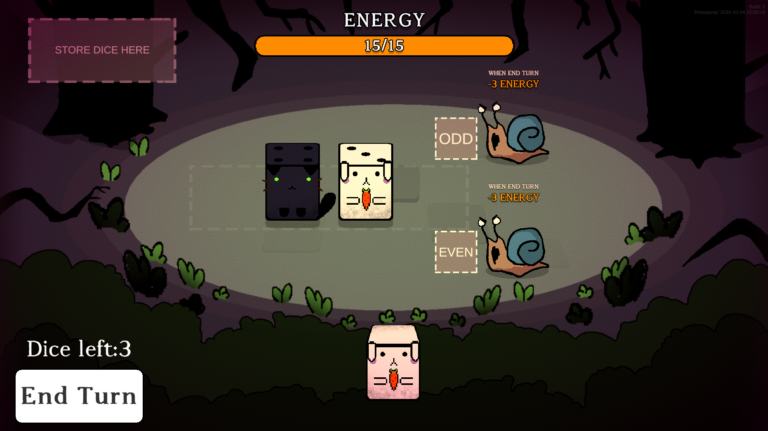
As the primary replacement for "randomness," Unpredictable serves as the blanket term for any game mechanism whose outcome cannot be deterministically foretold by the player. This encompasses a vast array of common game elements, from the shuffling and drawing of cards in a digital deck-builder to the variable damage ranges of an attack (e.g., 5-10 damage). Beyond explicit dice rolls or card draws, this term extends to player execution—the inherent uncertainty in precisely timing a complex input like a "dragon punch" in a fighting game—and even simultaneous actions in multiplayer contexts, where anticipating an opponent’s move before it’s revealed is a form of unpredictability.
The prevalence of unpredictable elements is fundamental to most interactive experiences, providing replayability, strategic depth, and moments of tension. Without some degree of unpredictability, games risk becoming rote puzzles with singular optimal solutions, diminishing long-term engagement. Modern game design, particularly in genres like roguelikes and deck-building games, thrives on sophisticated systems of managed unpredictability, where players learn to adapt to fluctuating circumstances rather than memorize fixed patterns. This foundational term acknowledges the omnipresent nature of variance while paving the way for more granular distinctions.
Chaotic: The Experiential Descriptor of Disarray
Chaotic is proposed as an experiential descriptor, characterizing the feeling of a game where numerous unpredictable effects occur with such frequency and magnitude that it becomes challenging for players to firmly grasp the current game state or reliably forecast immediate future outcomes. Crucially, this term carries no inherent positive or negative connotation; a game being chaotic can be a deliberate design choice with beneficial aesthetic or thematic implications.
For instance, games aiming to simulate the visceral confusion and adrenaline of a real-time battle or a fantastical, unpredictable encounter often leverage chaotic elements. The rapid, interwoven effects in a real-time strategy game during a large-scale skirmish, or the cascade of abilities in a fast-paced action RPG, can deliberately evoke a sense of chaos. Conversely, a battle-themed game lacking this "chaoticness" might feel more like a sterile puzzle, failing to deliver the intended immersive experience. The deliberate introduction of chaotic systems, such as environmental hazards that randomly trigger or enemy behaviors that are difficult to pattern, can enhance player immersion and reinforce the game’s thematic identity, pushing players to react instinctively rather than plan meticulously.
Volatile: The Measure of Impact
Volatile focuses on the impact of unpredictable mechanisms, rather than their frequency or probability. This term describes high-stakes unpredictable events where the range of potential outcomes, and thus their consequences, is significant. A clear distinction is drawn between a system where "you deal 6-10 damage" (low volatility) and one where "you deal 0-100 damage" (high volatility). The former offers a predictable baseline with minor fluctuations, allowing for consistent strategic planning, while the latter introduces the potential for wildly divergent outcomes that can drastically alter the game state in an instant.
Volatility is a critical tool for designers looking to create dramatic moments, swingy matchups, or distinct strategic choices. In some role-playing games, a critical hit system that multiplies damage by a large factor can introduce volatility, making each attack potentially game-changing. Similarly, the chance of a rare, powerful item dropping from an enemy, or the occurrence of a catastrophic event in a simulation game, are examples of volatile mechanics. Managing volatility is key to game balance; excessive volatility can lead to frustration and a feeling of lack of agency, while too little might render strategic decisions less impactful.
Erratic: The Unpredictable Nature of Unpredictability
Erratic describes a system that exhibits non-uniform unpredictability, transitioning from highly predictable to highly unpredictable in a manner that is itself somewhat unpredictable. This concept highlights a secondary layer of uncertainty—not just the outcome of an event, but the very degree of predictability in the system. While examples may not be immediately ubiquitous, one could envision a game that operates on deterministic rules for extended periods, only to abruptly introduce a "crazy mini-game" or a sudden, dramatic rule change that throws the entire established order into disarray.
An adaptive AI that unpredictably shifts between highly aggressive and highly passive behaviors, or a procedural generation system that occasionally produces radically different map layouts from its usual patterns, could be considered erratic. This type of unpredictability can be used to keep players on their toes, prevent meta-game stagnation, and introduce surprising twists that challenge ingrained strategies. It speaks to the dynamic nature of certain game systems where the rules of engagement themselves are subject to fluctuating levels of variance.
Luck-Based / Unfair: The Emotional Experience of Variance
These two terms address the primarily emotional and subjective experience of playing a game with high-variance unpredictable events. Luck-Based typically applies to single-player contexts, where a player attributes success or failure largely to chance rather than skill or strategy. For instance, a challenging puzzle game with randomly generated elements might feel "luck-based" if success hinges more on favorable generation than player acumen.
Unfair, conversely, is more frequently invoked in multiplayer scenarios. When unpredictable elements disproportionately favor one player over another, or when outcomes feel divorced from player input and strategy, players may perceive the game as "unfair." This perception is particularly potent in competitive games where a level playing field is expected. Designers often grapple with the delicate balance between introducing enough variance to ensure replayability and excitement, and maintaining a sense of fairness and skill-based progression. Mechanics like "pity timers" (guaranteeing a rare drop after a certain number of attempts) or visible odds are often implemented to mitigate feelings of unfairness or pure luck, offering players a degree of psychological control.
"Slot Machine": The Skill-Floor-Equals-Skill-Ceiling Mechanic
The term "Slot Machine" is reserved for game systems or entire games where the skill ceiling is equivalent to, or very close to, the skill floor. This implies that player input and strategic decisions have minimal to no impact on the outcome, rendering the experience akin to a pure coin flip or the spinning reels of a slot machine. While pure "slot machine" mechanics are rare as the sole basis of a video game (beyond literal gambling simulations), elements of this design philosophy have become increasingly prevalent, particularly in mobile gaming.
The rise of gacha mechanics, loot boxes, and randomized reward systems in free-to-play titles often incorporates "slot machine" elements. Players engage in these systems with the hope of a rare, high-value outcome, but their skill or strategic choices do not influence the probability of success. This design often raises ethical concerns, blurring the lines between gaming and gambling, and has led to widespread industry debate and regulatory scrutiny regarding monetization practices and consumer protection. Understanding this specific type of mechanic is crucial for analyzing the economic and psychological models underpinning many modern digital games.
Broader Implications and Industry Context
This proposal for a refined vocabulary arrives at a critical juncture for the game industry. As games grow increasingly complex, incorporating intricate procedural generation, adaptive AI, and sophisticated online multiplayer systems, the need for precise communication has never been greater. The ambiguity of "randomness" has long been a sticking point in design discussions, often leading to unproductive arguments where individuals are using the same word to describe entirely different phenomena.
For game designers, this new lexicon offers a more robust toolkit for conceptualizing, documenting, and discussing their creations. It allows for a clearer articulation of design intent, distinguishing between a deliberate choice for chaotic gameplay and an accidental implementation of volatile mechanics. This precision can streamline development processes, improve internal communication within studios, and lead to more coherent and purposeful game experiences.
Game critics and journalists stand to benefit immensely from this refined language. Instead of vaguely labeling a game as "too random," they can now pinpoint whether the game suffers from excessive volatility, a poorly implemented erratic system, or a feeling of unfairness in competitive play. This elevates the quality of game criticism, moving beyond subjective complaints to an objective analysis of specific mechanics and their impact.
For players, a more precise vocabulary can foster a deeper understanding of the games they play. By distinguishing between different types of unpredictability, players can better appreciate the intricate design choices made by developers and articulate their own experiences and preferences with greater clarity. This can lead to more constructive feedback loops between players and developers, ultimately contributing to better game design.
The initiative also reflects a broader trend within game studies and the academic discourse surrounding interactive entertainment. Scholars and practitioners are continually striving to formalize the language and theories of game design, drawing parallels to established fields like architecture or literature. Proposals like Burgun’s are instrumental in this ongoing maturation, providing the conceptual scaffolding necessary for a rigorous and comprehensive understanding of games. While the adoption of such a new lexicon will undoubtedly require time and widespread community engagement, the conversation has officially begun, marking a pivotal step towards a more precise and sophisticated dialogue about the art and science of game design.
About the Author