Microsoft Gaming has officially entered a new era of leadership as Asha Sharma assumes the role of Chief Executive Officer, inheriting a mobile gaming portfolio that generated an estimated $1.7 billion in in-app purchase (IAP) revenue throughout 2025. According to data provided by market intelligence firm Appmagic, the tech giant’s mobile footprint has expanded significantly following the integration of Activision Blizzard King, positioning Microsoft as a formidable contender in the global mobile landscape. However, the headline revenue figure, while impressive, arrives with several strategic caveats that define the current state and future challenges of the division.
The $1.7 billion figure primarily reflects third-party estimates of player spending within apps and does not account for substantial revenue streams from in-game advertising or direct-to-consumer webshops. Furthermore, several of Microsoft’s high-profile mobile titles, including Call of Duty: Mobile and Diablo Immortal, are managed through complex partnership agreements with Chinese giants Tencent and NetEase. In these instances, Microsoft acts largely as a licensor, likely retaining a smaller percentage of the gross IAP spend than it does with its wholly-owned and operated titles.
The Dominance of King and the Casual Gaming Moat
At the heart of Microsoft’s mobile success is King, the developer behind the ubiquitous Candy Crush franchise. In 2025, King’s portfolio generated approximately $1.3 billion in IAP revenue, securing its position as the ninth-largest mobile game publisher globally. To provide industry context, King’s earnings placed it narrowly behind Playrix, which earned $1.4 billion, and ahead of the Finnish powerhouse Supercell, which saw $1.1 billion in IAP revenue during the same period.
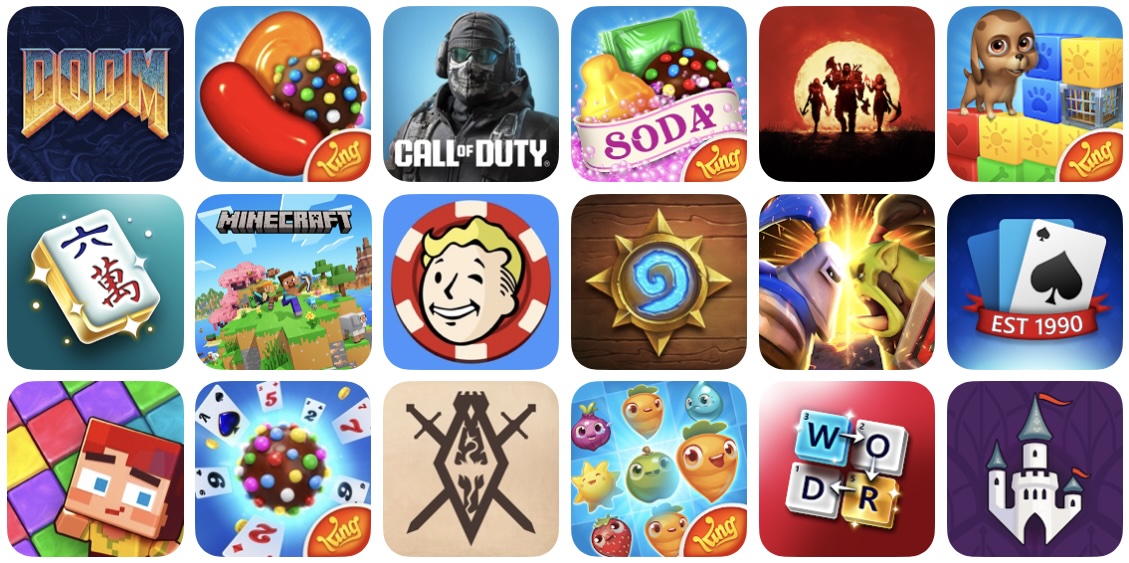
The flagship title, Candy Crush Saga, remains an unparalleled juggernaut, contributing $1 billion of King’s total earnings. The "Saga" ecosystem continues to demonstrate remarkable longevity, with secondary titles also providing significant, albeit smaller, contributions. Candy Crush Soda Saga earned $161.1 million, while Farm Heroes Saga brought in $57.7 million. Despite the age of these franchises, their ability to maintain top-tier monetization levels highlights the strength of the casual gaming audience Microsoft acquired through the Activision Blizzard deal.
Beyond direct purchases, King operates a sophisticated advertising model that serves non-paying users. While this revenue is notoriously difficult to track via third-party tools, analysts suggest that the total valuation of King’s business is considerably higher when advertising yields are factored into the gross earnings.
Activision and Blizzard: High Stakes and Global Partnerships
The second-largest pillar of Microsoft’s mobile revenue comes from the Activision label, dominated by Call of Duty: Mobile. The title earned approximately $250 million in 2025, with the United States remaining the primary market, accounting for $126 million of that total. Japan followed as the second-largest market with $25.1 million in spending, with Mexico, Germany, and Brazil rounding out the top five.
A separate SKU of Call of Duty: Mobile, managed by Garena for selected Asian territories, earned an additional $25.5 million. The Philippines and Taiwan emerged as the leading markets for this version. However, because Tencent handles the day-to-day operations and development of the title, the net revenue flowing to Microsoft is estimated to be a fraction of the gross player spend.
Blizzard Entertainment’s mobile offerings showed a mixed performance in 2025. Hearthstone remains a consistent earner, generating $59.6 million, while the combined global versions of Diablo Immortal brought in $67.2 million. Much like the Call of Duty arrangement, Diablo Immortal is a co-development with NetEase, meaning Blizzard’s take-home revenue is subject to revenue-sharing agreements. Conversely, Warcraft Rumble appears to be in a state of managed decline; despite earning $4.4 million last year, the title is being wound down with no further content updates planned.
Mojang, Bethesda, and the Struggle of Legacy Brands on Mobile
Mojang’s Minecraft continues to be a unique outlier in the mobile market. Unlike the free-to-play models of its peers, Minecraft operates primarily as a premium title with a $6.99 entry price. Despite this, it generated over $100 million in 2025 through a combination of initial sales and its in-game marketplace.
In contrast, the mobile efforts of Bethesda Softworks—the studio behind legendary franchises like Fallout and The Elder Scrolls—have largely underperformed. Fallout Shelter, once a massive hit, earned $6.3 million in 2025, placing it on par with the lower-tier titles in King’s portfolio. More concerning for the company are the figures for The Elder Scrolls: Castles ($533k) and The Elder Scrolls: Blades ($354k). The exceptionally low earnings for these titles, alongside the dwindling revenue for the Elder Scrolls: Legends card game, suggest that Bethesda’s mobile catalog may face significant restructuring or "sunsetting" under Sharma’s leadership.
Similarly, Microsoft’s internal casual suite, including Solitaire Collection ($1.2 million), Wordament, and Mahjong, are currently viewed as "rounding errors" in the context of a $1.7 billion portfolio. Industry analysts expect these legacy titles to be scrutinized as Microsoft seeks to lean out its mobile operations.
Chronology of the Microsoft Mobile Expansion
The current state of Microsoft’s mobile empire is the result of a multi-year strategic pivot that began with the announcement of the Activision Blizzard acquisition.
- January 2022: Microsoft announces its intent to acquire Activision Blizzard for $68.7 billion, citing mobile gaming as a primary driver for the deal.
- October 2023: The acquisition officially closes after rigorous regulatory scrutiny in the US, UK, and EU. Microsoft immediately becomes one of the world’s largest mobile publishers.
- Early 2024: Integration phase begins. Microsoft starts evaluating the performance of "mobile-native" projects, leading to the cancellation of several unannounced titles.
- Late 2024: King undergoes a workforce reduction of approximately 200 roles. Reports suggest the layoffs are tied to the implementation of AI tools designed to streamline level design and asset creation.
- February 2025: Asha Sharma is named CEO of Microsoft Gaming, signaling a shift toward a platform-agnostic, AI-driven future.
The Sharma Strategy: AI and the "Build Once" Philosophy
Asha Sharma’s appointment is widely viewed as a move to align the gaming division with Microsoft’s broader corporate focus on Artificial Intelligence. With a background deeply rooted in AI and platform scaling, Sharma is expected to move away from the traditional model of developing isolated mobile-native games.
In her introductory address, Sharma emphasized a vision where hardware boundaries are obsolete. "Gaming now lives across devices, not within the limits of any single piece of hardware," she stated. "As we expand across PC, mobile and cloud, Xbox should feel seamless… We will break down barriers so developers can build once and reach players everywhere without compromise."
This philosophy suggests a shift in resource allocation. Rather than funding mobile-specific spin-offs like Gears Pop or Forza Street—both of which were shuttered after failing to gain traction—Microsoft may focus on perfecting cloud streaming and cross-platform play. This would allow flagship Xbox titles to be played natively on mobile devices without the need for simplified "mobile versions" that often fail to capture the essence of the original brand.
Broader Impact and Industry Implications
The transition under Sharma comes at a volatile time for the mobile industry. The rise of alternative app stores and the impact of the Digital Markets Act (DMA) in Europe are creating opportunities for Microsoft to bypass the traditional 30% "Apple Tax" and "Google Tax." Microsoft has long hinted at launching its own Xbox mobile store, and the $1.7 billion in existing IAP revenue provides a massive built-in audience to kickstart such a platform.
However, the human cost of this technological shift remains a point of contention. The use of AI at King to replace roles previously held by developers has sparked industry-wide debate. If Sharma continues to "relentlessly question everything" and "change what does not work," further consolidation of the mobile workforce is likely.
The success of Sharma’s tenure will likely be measured by her ability to convert Microsoft’s massive library of intellectual property into a cohesive, cross-platform ecosystem. While King remains a reliable cash cow, the underperformance of Bethesda and the "winding down" of titles like Warcraft Rumble indicate that simply having a famous brand name is no longer enough to succeed in the crowded mobile marketplace.
As Microsoft Gaming looks toward 2026, the industry will be watching to see if Sharma can bridge the gap between the high-fidelity world of console gaming and the high-frequency world of mobile. The goal is no longer just to own a mobile empire, but to redefine what a mobile game can be in an age of cloud computing and ubiquitous AI.
About the Author