The launch of Battlefield 6 by Battlefield Studios marked a significant commercial triumph for Electronic Arts (EA), selling over 7 million copies within its first three days. This impressive initial performance positioned the title as the franchise’s best launch to date, a critical success for an EA soon to be under majority Saudi ownership, highlighting the strategic importance of its flagship intellectual properties. However, in an increasingly competitive gaming landscape, initial sales represent only one facet of a live service game’s long-term viability. EA’s overarching business model for Battlefield 6, much like many contemporary AAA titles, hinges on sustained engagement and post-launch in-app spending, a revenue stream that relies heavily on players’ continued enjoyment and investment of time.
This strategy faced an early and significant test when, shortly after launch, a critical flaw emerged in the game’s "meta progression" system. This system, designed to reward players for their time and dedication, instead became a source of widespread frustration. Alexia Christofi, a producer on Battlefield 6, openly acknowledged the issue during a conversation with Game Developer at the 2026 DICE conference, stating, "It needed a little bit of a rework." Her admission resonated with the deluge of player feedback observed across community platforms, most notably Reddit, where players consistently expressed feeling "worn out and frustrated" by the necessity of undertaking repetitive or undesirable tasks to unlock desired in-game items. This situation underscored a familiar high-pressure scenario for many developers: the rapid influx of player feedback contrasting with the inherent time required to implement meaningful fixes.
The Crucial Role of Live Service Models in Modern Gaming
The contemporary gaming industry has increasingly pivoted towards live service models, where games are treated as ongoing platforms rather than standalone products. This shift is driven by several factors, including the desire for sustained revenue beyond initial purchase, the potential for building enduring communities, and the ability to adapt and evolve games based on player feedback. For a publisher like EA, with its diverse portfolio of online multiplayer titles, optimizing live service elements is paramount. Titles like Apex Legends and the FIFA series (now EA Sports FC) exemplify the immense profitability of microtransactions, Battle Passes, and seasonal content.
Battlefield 6‘s initial sales figures, while robust, represent the gateway to this long-term engagement. The game, priced at $70, generates significant upfront revenue, but the true financial potential lies in the subsequent years of player investment in Battle Passes, cosmetic items, and other in-app purchases. Industry analysis consistently shows that player retention is directly correlated with perceived value and enjoyment of the progression systems. If players feel their time is not respected or that progression is an arduous chore rather than a rewarding journey, they are likely to disengage, leading to a decline in active users and, consequently, a drop in crucial post-launch revenue. The initial missteps in Battlefield 6‘s meta progression thus posed a direct threat to EA’s long-term financial projections for the title.
Player Feedback and the "Worn Out" Syndrome
The sentiment expressed by Battlefield 6 players regarding the progression system was not an isolated incident but rather a common complaint seen in many live service games that struggle to balance engagement with monetization. Players reported feeling "forced into specific modes" or tasks that did not align with their preferred playstyles, simply to advance their Battle Pass or unlock specific items. This artificial constraint often transforms what should be an enjoyable leisure activity into a grind, diminishing the core fun factor of the game.
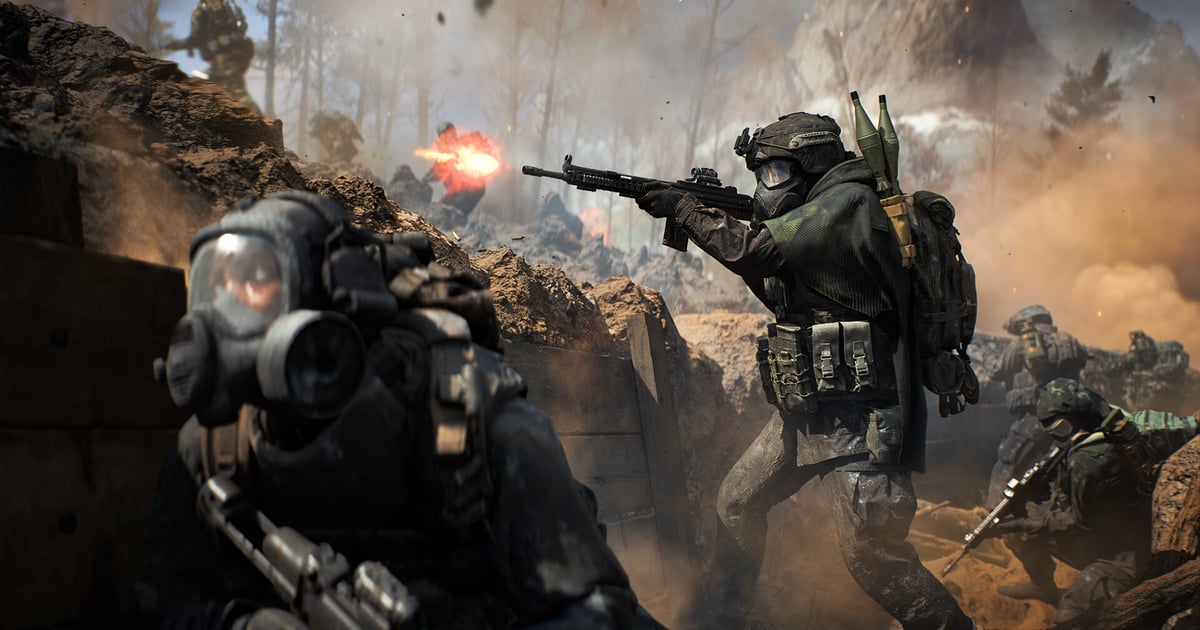
Community platforms like Reddit became vital conduits for this feedback. Threads detailing specific frustrations, suggestions for improvement, and comparative analyses with other games’ progression systems proliferated. This collective player voice served as an undeniable signal to the development team that a fundamental re-evaluation was necessary. Christofi acknowledged this, recalling, "Players didn’t like feeling they were forced into specific modes." This direct and unfiltered feedback loop, while sometimes overwhelming, is indispensable for live service development, providing real-time insights into player sentiment that traditional playtesting might miss.
A New Ethos for Player Progression
In response to the critical player feedback, the Battlefield 6 development team undertook a significant internal reassessment. Christofi detailed this process, explaining, "We took a step back, re-evaluated, and as we’re launching future seasons, we’ve changed our ethos a little bit to challenges and player progression in general." This philosophical shift represents a move towards a more player-centric design, prioritizing enjoyment and agency over strict, prescriptive pathways.
A key component of this rework focused on the Battle Pass, a cornerstone revenue driver for EA and a primary mechanism for player progression. The team implemented several strategic adjustments:
- Reduced Experience Point Requirements: The amount of experience points needed to acquire Battle Pass points was significantly lowered. This change directly addressed the "grind" complaint, making progression feel faster and more rewarding for the average player.
- Improved Weekly Challenges: The design of weekly challenges was overhauled to make them more "fun and engaging" without "forcing them into undesired game scenarios." This likely involved creating challenges that could be completed through diverse playstyles, in various game modes, or that encouraged creative and emergent gameplay rather than rigid, repetitive actions. For instance, instead of "get 50 kills with a specific weapon in a specific mode," challenges might become "earn 10 ‘Battlefield Moments’ across any mode" or "capture objectives X times."
The introduction of these revised progression mechanics coincided with the launch of Battlefield 6‘s "Season 2" content pack earlier this month. The initial reception to these changes is now being closely monitored by Christofi and her colleagues. While acknowledging that testing new ideas in limited groups can differ greatly from how millions of players will react, the team is optimistic. With the immediate "triage scenario" addressed, they now have a clearer path to build upon Battlefield 6‘s long-term live service vision, focusing on iterative improvements and responsive development.
The Unprecedented Global Development Model
One of the most distinctive aspects of Battlefield 6‘s live service management is its distributed development team structure. Alexia Christofi, while technically employed by DICE Studios in Sweden, operates from the Criterion Games office in the UK. Her team, responsible for the game’s meta progression system, is composed of developers spread across four distinct studios: DICE (Sweden), Criterion Games (UK), Motive (Canada), and Ripple Effect (US). This multi-studio, cross-continental collaboration creates a near-continuous development cycle.
This global distribution offers unique advantages:

- 24/7 Workflow: As Christofi described, "There have been times when I’ve woken up in my morning, we’ve seen something, we’ve got some bugs we need to fix for the next patch, and we haven’t got around to fixing it by the evening… and then we’ve been able to hand it over to someone in LA to take that on and carry on working on that." This ‘follow-the-sun’ model allows for uninterrupted progress on critical fixes and content development, theoretically accelerating the pace of updates and responses to player issues.
- Diverse Talent Pool: Leveraging expertise from multiple studios across different regions brings a broader range of perspectives, skills, and creative input to the project. Each studio may specialize in different aspects of game development, contributing their strengths to the live service ecosystem.
- Rapid Hotfixing: The ability to address critical bugs and implement "hotfixes" quickly is enhanced by having teams active across various time zones, enabling a faster response to emergent problems.
However, this innovative structure also presents its own set of challenges:
- Coordination Complexity: Managing a team spread across four studios and multiple time zones requires robust communication protocols, shared tools, and a unified vision to prevent fragmentation or conflicting development priorities.
- Latency in Feedback-to-Fix Cycle: Despite continuous development, Christofi admitted that her team sometimes recognizes problems faster than they can fix them. This creates an "uncomfortable gap" between when players report issues and when a fix can be announced, let alone rolled out. "Some things take a little bit more time," she noted, highlighting the inherent complexity of game development even with a global team.
- Balancing New Content with Existing Fixes: The team constantly grapples with integrating new features and content originally planned for launch with the necessary fixes and adjustments based on player feedback. "Trying to get that healthy balance between the two is tough, but worthwhile," Christofi stated, encapsulating a universal challenge in live service game development.
Comparison with Industry Peers
The distributed development model employed for Battlefield 6 stands out when compared to other major live service first-person shooters. Activision’s Call of Duty series and EA’s own Apex Legends both benefit from multi-studio support, with various teams contributing to different aspects of the games or rotating as lead developers for new iterations. For example, Call of Duty often involves a three-year development cycle rotating between Infinity Ward, Treyarch, and Sledgehammer Games, with support from numerous other studios like Raven Software and High Moon Studios. Similarly, Apex Legends is primarily developed by Respawn Entertainment but receives significant support from other EA studios.
However, the Battlefield 6 model appears to take this collaboration a step further by integrating developers from different studios directly into a single, cohesive live service progression team that operates virtually 24/7 across continents. While other titles utilize multi-studio support, their operational models may not replicate the same continuous, time-zone-spanning workflow dedicated to a specific live service component like meta progression. This aggressive approach underscores EA’s commitment to rapidly iterating and responding to the dynamic demands of a major live service title.
Celebrating "Battlefield Moments" and Future Vision
Amidst the technical challenges and critical feedback, a consistently rewarding aspect of Christofi’s role is witnessing and fostering the unique player-created experiences known as "Battlefield Moments." These unscripted, emergent gameplay scenarios are a hallmark of the franchise, showcasing player creativity and the game’s dynamic sandbox environment. A classic example is the "RendeZook," a legendary stunt originating from Battlefield 3 where a player ejects from a fighter jet, uses a bazooka to destroy an enemy jet mid-air, and then re-enters their own aircraft.
Christofi highlighted the team’s commitment to recognizing and rewarding such feats, noting, "There’s a dog tag for that if you do that successfully." This proactive approach to integrating community-driven achievements into the game’s reward structure reinforces player agency and celebrates the very essence of what makes Battlefield unique. The team actively collaborates to identify potential "cool moments" players might create and then designs in-game support, such as unique challenges or cosmetic rewards, to allow players to celebrate these achievements. This fosters a stronger sense of community and provides additional, organic motivators for engagement beyond the standard progression track.
The journey of Battlefield 6 since its launch exemplifies the complex realities of modern live service game development. While initial sales provided a strong foundation, the subsequent necessity to overhaul core progression systems based on player feedback underscores the paramount importance of sustained player satisfaction. Through a novel, globally distributed development model and a renewed player-centric ethos, the team behind Battlefield 6 is not merely fixing problems but actively shaping the future of the franchise, aiming to deliver an experience that is both commercially successful and deeply resonant with its dedicated player base. The ongoing evolution of Battlefield 6 will serve as a valuable case study for the wider gaming industry, illustrating the delicate balance between innovation, responsiveness, and long-term player engagement.
About the Author