A decade has passed since the whimsical world of LittleBigPlanet 2 first graced our screens, a milestone that evokes a sense of nostalgia and appreciation for the creative endeavors that shaped this beloved title. To commemorate this significant anniversary, a retrospective examination of the game’s licensed soundtrack has been undertaken, offering an in-depth look at the curated musical landscape that complemented Sackboy’s adventures. This exploration delves into the initial selection process, the challenges faced, and the eventual triumph of assembling a sonic tapestry that resonated deeply with players and contributed significantly to the game’s unique identity.
The Genesis of a Sonic World: From Concept to Compilation
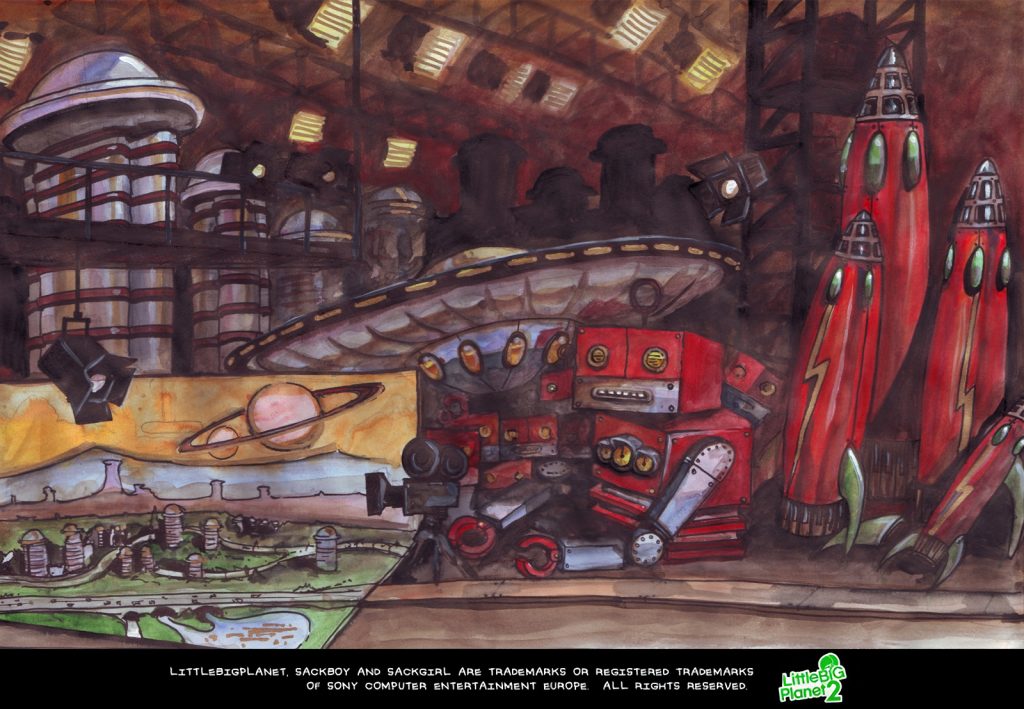
The development of LittleBigPlanet 2‘s soundtrack was a meticulously planned process, building upon the foundational success of its predecessor. While the first game’s thematic direction was broadly defined as "a journey around the world," LittleBigPlanet 2 aimed for a more abstract and ambitious concept: "science through the ages" or "science fiction through the ages." This conceptual shift presented both exciting opportunities and unique challenges for the music department. The art direction, rich with ideas and evocative imagery, served as a crucial guide, allowing the music team to find sonic analogies that amplified the game’s visual storytelling.
In contrast to the original score, which focused on characterization, drama, and exposition, the licensed soundtrack’s role was to imbue the game’s diverse environments with a distinct mood and energy. This division of labor allowed for a more focused and streamlined approach to selecting external music. The core objective was to acknowledge the established musical tropes of the science fiction genre without succumbing to mere pastiche. A deliberate target was set: no more than 50% of the soundtrack would be electronic in nature. This decision was strategic, recognizing that player-created levels would possess no such aesthetic restrictions, thus necessitating a broader musical palette to draw from. The overarching ambition was to retain the successful elements of the first game’s soundtrack while forging a new, distinct flavor and identity for LittleBigPlanet 2. Subverting genre conventions also played a key role, aiming to recapture the "unexpected" edge that characterized the original’s musical approach.

A Chronology of Sound: From Early Concepts to Final Polish
The initial phase of development, around May 2009, saw the creation of a music montage video. This crucial early step involved pairing concept art for each in-game area with work-in-progress licensed music ideas. While described as "quick and dirty," this exercise proved invaluable for initiating the creative momentum. The high-level direction for each area, heavily influenced by the art direction, began to take shape. For instance, early concepts for the game’s areas included thematic inspirations that would later evolve into the distinct worlds players would explore.
From this initial selection of tracks, only Ladytron’s "Ghosts" ultimately made it into the final game. However, artists like Squarepusher and Röyksopp were considered during this stage, albeit with different tracks than those eventually chosen. The process of using linear video for music concepting highlighted a critical difference between its application in a game context and its use in standalone video. While effective for generating initial ideas and establishing a mood board, the interactivity and pacing of a game necessitate a different approach. This early music concept video was pivotal, serving as the first instance where visual and aural ideas coalesced, marking a significant milestone for the project and fostering a shared vision among the development team.
By December 2009, approximately a year before the game’s release, these initial concepts had undergone further refinement, leading to a clearer vision that more closely resembled the finished product. The number of distinct themes was reduced from eight to six, a process that involved merging overlapping ideas rather than simply cutting content. This streamlining was partly driven by the practicalities of full production as the entire team became involved. The music direction also evolved, with further refinement of existing ideas and the identification of even more suitable music, now with a clearer understanding of how to best support gameplay.
Several key aspects of the game’s design were still in flux during this period. The fusion of Soviet and Hollywood aesthetics for "Clive’s Factory," the precise definition of "organic" for "Eve’s Asylum" in relation to its high-intensity gameplay, and the development of the music sequencer gadget for "The Cosmos" all presented unique challenges. Despite these evolving elements, the overall direction was clear. At this juncture, 10 out of the 21 tracks that would eventually be licensed for the game were under consideration. While not yet definitively selected, their presence indicated a strong trajectory. It is important to note that at this stage, the licensing process had not yet commenced. This meant that securing the rights to use any of the selected music was not guaranteed, underscoring the need for an "overprovision" of suitable music to serve as backup options.

Curated Soundscapes: The Three Pillars of the LittleBigPlanet 2 Soundtrack
The LittleBigPlanet 2 soundtrack can be broadly categorized into three distinct playlists, each representing a different stage or facet of the music selection process:
1. The LittleBigPlanet 2 Licensed Soundtrack
This playlist comprises the familiar licensed tracks that players encountered within the game. It’s worth noting that the technical definition of LBP2‘s licensed soundtrack also encompasses all licensed music from LittleBigPlanet 1 to ensure backwards compatibility for player-created levels. However, for clarity and focus, these tracks have not been included in this particular playlist. A notable omission from the Spotify playlist consists of eight tracks. This discrepancy arises from the inclusion of instrumental, remix, and edited versions of songs that were specifically licensed for the game and are not readily available on mainstream streaming platforms, often residing in unofficial sources.
2. The LittleBigPlanet 2 Alternate Universe Soundtrack
This collection features tracks that were considered for inclusion in the game but ultimately did not make the final cut. Some of these tracks are unavailable on both YouTube and Spotify. The primary reason for their exclusion was creative choice. From recollection, only one track that the team actively pursued could not be obtained, a situation that proved particularly disappointing at the time.
3. The LittleBigPlanet 2 ‘Brief Says No’ Soundtrack
This playlist showcases tracks that, while possessing merit and suitability in certain aspects, did not align well enough with the game’s overall brief or evolving direction. Many of these suggestions emerged during the early stages of music research and proved effective in linear mock-up videos. However, as the project’s vision became more refined, these tracks were either set aside or deemed to lack the necessary energy to support gameplay. Nevertheless, this collection represents a wealth of interesting music that remains worthy of exploration.

Collaborative Synergy: A Team Effort in Sonic Discovery
The process of curating the LittleBigPlanet 2 soundtrack was a testament to collaborative synergy. Unlike the first game, a significantly larger number of individuals contributed to the music selection. This heightened engagement can be attributed to the success of the original game and the profound impact its soundtrack had on the project’s identity and reception. Team members were eager to participate, seemingly unfazed by the perceived constraints of the music selection process and the considerable effort involved in meeting its demands.
Every track evaluated played a role in refining the brief, whether by testing, reaffirming, or solidifying musical ideas. The final soundtrack is a product of contributions from various members of the Media Molecule (Mm) team, including Dan, John, and Rex, as well as Martin Hewett from Sony. Beyond the core development team, numerous individuals offered valuable suggestions, many of which are featured in the aforementioned playlists. These contributors include Alex, Costa, Jim, Jonatan, Mark, Martin, and Tom, alongside external collaborators from Sony, such as Jo. This collective effort underscores the truly team-oriented nature of the soundtrack’s creation.
Engaging with Sony Music Licensing: Expanding the Sonic Horizon
As the game’s announcement approached, the development team began working more closely with Sony’s music licensing department. This collaboration significantly broadened the scope of music being reviewed and considered. This timing proved opportune, as the game’s musical direction had matured sufficiently to enable focused and productive searches and suggestions from Sony’s extensive resources.
A standout contribution came from Rex, who once again demonstrated an exceptional knack for identifying suitable music by suggesting Passion Pit’s "Sleepyhead" for the announcement trailer. The selection process for this particular track was challenging, requiring a piece that conveyed the appropriate emotional tone, supported the sense of community and shared achievement in embarking on a new project, and acknowledged the sequel’s more digital aesthetic. While the team initially explored other options and even attempted to license a different track as their primary choice, "Sleepyhead" ultimately proved to be the perfect fit for the trailer. Its dynamic ebb and flow, with a smooth build-up and a sharp descent, allowed the trailer to effectively shift gears, expand its messaging, and maintain viewer engagement. The pitched-up voices, particularly the Irish Gaelic ones, also harmonized brilliantly with the game’s iconic Sackfolk characters.

The primary drawback of "Sleepyhead" was its less-than-ideal suitability for LittleBigPlanet 2‘s core gameplay. This led to the initial pursuit of a more energetically aligned track. However, the desire to have music strongly associated with the project’s marketing appear within the game itself was a significant consideration. While the likelihood of this was recognized as slim when "Sleepyhead" was chosen, the importance of a compelling announcement trailer took precedence. Consequently, the track found a meaningful place in the game’s end credits.
The Pacing of Production: Navigating Delays and Licensing Hurdles
Towards the latter stages of development, a difficult decision was made to postpone the game’s release from its initial target of the crucial Christmas market to January 2011. This delay was necessitated by the fact that the game was not yet fully polished. Fortunately, this schedule adjustment proved beneficial for the soundtrack, as a couple of tracks were not cleared until as late as October 2010, a tight turnaround even with the extended timeframe. One particular track required six months for licensing clearance, a lengthy process attributed to the often unpredictable nature of securing rights.
The impact of music licensing on game development timelines cannot be overstated. The process involves intricate negotiations, copyright checks, and approvals from various rights holders, which can introduce unforeseen delays. For LittleBigPlanet 2, this meant that the final selection and integration of certain musical pieces were contingent on these clearances, highlighting the delicate balance between creative vision and logistical realities.
A Lasting Legacy: Music as a Timeless Companion
The enduring appeal of LittleBigPlanet 2‘s soundtrack is evident in the heartfelt comments from players who recall the game as a significant part of their childhoods and continue to listen to its music regularly. Music possesses a remarkable ability to transcend its original context, offering enjoyment long after the interactive experience has concluded. This relevance grows as gaming platforms age and become more challenging to access. The memories of the game and its vibrant community are kept alive through the contributions of these artists and their music, which played an integral role in defining LittleBigPlanet 2‘s unique character. The game’s tenth anniversary serves as a poignant reminder of the powerful and lasting impact that carefully curated music can have on the overall player experience, solidifying its place in the hearts of its fans and in the annals of gaming history.
About the Author