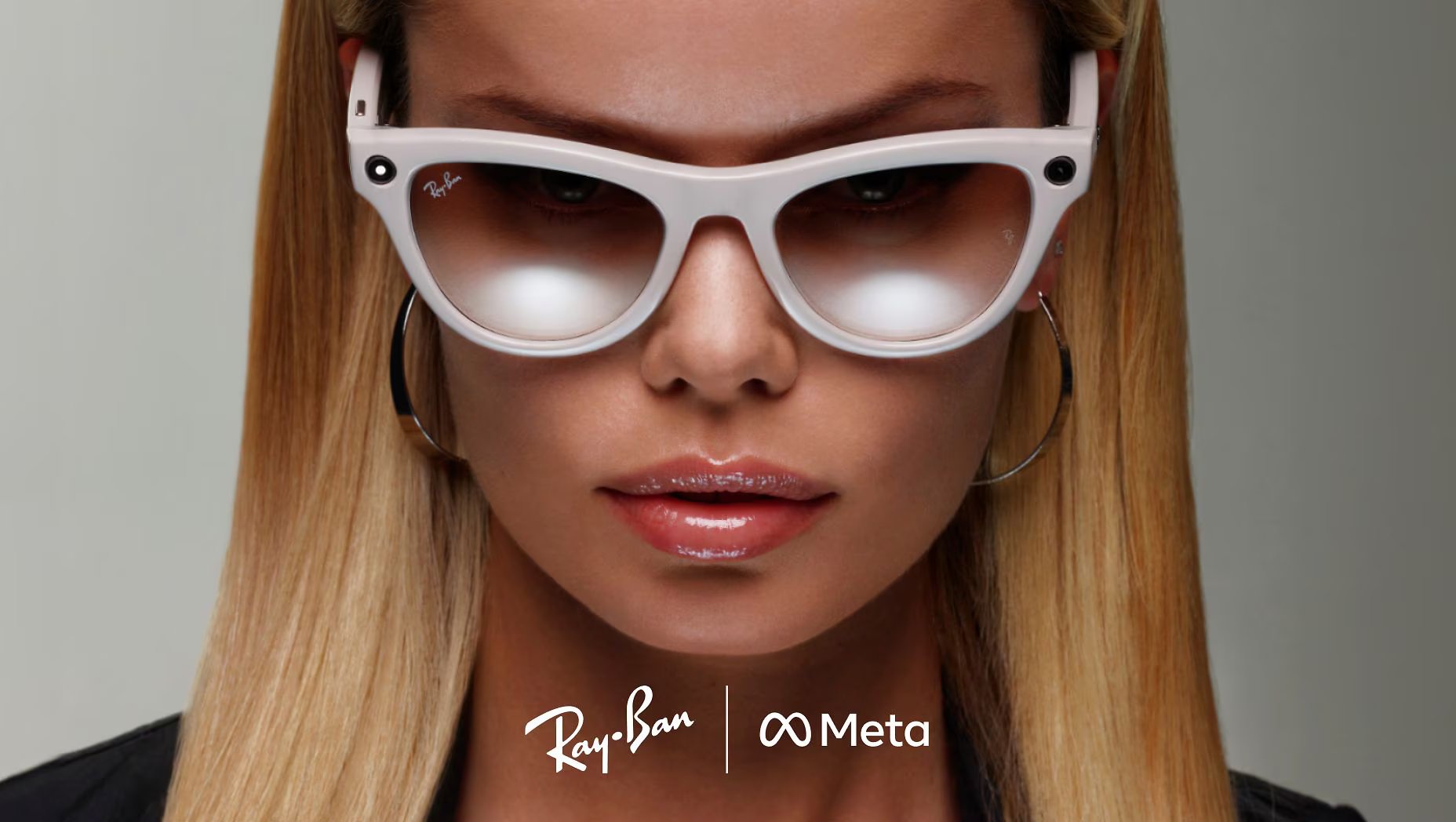
Meta Platforms Inc., in collaboration with the European eyewear conglomerate EssilorLuxottica, has reported a significant surge in the adoption of its smartglasses technology, with total sales exceeding seven million units in 2025 alone. This milestone, revealed in a recent financial update from the French-Italian eyewear giant, represents a tripling of sales compared to previous reporting periods, where the first generation of the device saw approximately two million units sold. The data indicates a pivotal shift in the extended reality (XR) landscape, as consumer interest increasingly moves from bulky virtual reality (VR) headsets toward stylish, wearable artificial intelligence (AI) peripherals.
According to EssilorLuxottica, the Ray-Ban Meta smartglasses have become one of the company’s most successful product lines, with sales growth in the United States described as "exponential." This commercial success stands in contrast to the slower-than-anticipated growth of the VR headset market. While Meta’s Quest 3 and Quest 3S continue to lead the VR sector, industry analysts suggest that the smartglasses have likely outsold the latest VR hardware within the same calendar year. The discrepancy in sales figures is attributed to two primary factors: retail distribution and functional utility. Unlike VR headsets, which are often restricted to specialty electronics retailers, the Ray-Ban Meta glasses are available in thousands of traditional optical boutiques. Furthermore, consumers possess a pre-existing understanding of the utility of eyewear, making the leap to "smart" glasses a lower barrier to entry than the immersive, yet socially isolating, experience of VR.
Strategic Hardware Roadmap and the Confirmation of Quest 4
In a comprehensive interview with technology journalist Alex Heath, Meta’s Chief Technology Officer, Andrew "Boz" Bosworth, provided insights into the company’s long-term hardware strategy. Bosworth essentially confirmed that Meta is currently developing two distinct head-mounted displays to succeed the current lineup. While specific release dates were withheld, internal sources and industry rumors suggest that one device will be the Quest 4, a headset optimized for high-end gaming and immersive entertainment. The second device, codenamed Puffin, Loma, or Phoenix, is reportedly designed to compete with the Apple Vision Pro by offering a lightweight form factor focused on "spatial computing" and productivity rather than traditional gaming.

Bosworth also addressed concerns regarding hardware "retention"—the metric defining how often a user returns to a device after the initial purchase. He noted that the Ray-Ban Meta glasses have demonstrated "impressive retention" rates. Because the devices function as high-quality, fashionable eyewear even when the digital features are not in use, they are less likely to be abandoned by consumers compared to VR headsets, which are often relegated to storage after the novelty of immersive gaming fades.
The Convergence of Artificial Intelligence and Egocentric Data
A significant portion of Meta’s current research and development is focused on the synergy between wearable hardware and Large Language Models (LLMs). Bosworth revealed that Meta’s AI development team and the hardware team responsible for the smartglasses are now working in close coordination. This integration is critical for the training of future Meta AI models. By utilizing "egocentric" data—the first-person perspective data captured by the cameras and sensors on smartglasses—Meta is training its AI to understand the world from the user’s point of view.
This strategy aims to position Meta AI as the premier assistant for wearable technology. If successful, this would create a self-reinforcing ecosystem: superior AI software drives smartglasses sales, while a larger install base of smartglasses provides more data to refine the AI. Beyond wearables, Bosworth also hinted at Meta’s entry into the field of humanoid robotics, suggesting that the spatial awareness and AI navigation systems developed for XR are being applied to physical robotic platforms.
Ethical Implications and the Facial Recognition Controversy
As smartglasses become a mainstream consumer product, the debate surrounding privacy and surveillance has intensified. A report from the New York Times recently highlighted internal discussions within Meta regarding the potential activation of facial recognition features on the Ray-Ban Meta glasses. Such a feature would allow users to identify individuals in real-time, potentially linking faces to social media profiles or professional databases.

The report cited an internal company memo from 2025 which suggested that the current "dynamic political environment" might provide a strategic window to launch controversial features. The memo allegedly argued that civil society groups and privacy advocates might be too distracted by broader social and political instability to mount a concentrated opposition to the technology. While Meta has not officially announced the rollout of facial recognition, industry experts like Scott Stein of CNET argue that such features are "inevitable" due to their clear utility in professional and social networking. However, the potential for misuse—including stalking, non-consensual data harvesting, and the erosion of public anonymity—remains a significant hurdle for regulators and ethicists alike.
Market Outlook and Near-Eye Display Revenue Projections
The broader XR market is poised for a period of hyper-growth, according to the latest research from Omdia. The firm projects that revenue from near-eye displays—the specialized screens used in AR, VR, and MR devices—will reach $1.2 billion in 2026. This represents a year-on-year growth rate of over 200%. This surge is largely driven by the adoption of OLED on Silicon (OLEDoS), or Micro OLED, which allows for higher pixel density and lower power consumption in a compact form factor.
While the market is expanding, the competitive landscape remains in flux. HTC, once a dominant force in the VR space, has recently shifted its focus toward smartglasses with the announcement of the Vive Eagle. However, the company’s long-term commitment to high-end VR hardware has been questioned following the sale of a significant portion of its engineering team to Google in previous years. Meanwhile, Apple continues to refine its ecosystem, recently allowing the release of a native YouTube app for the Vision Pro, filling a significant content gap that had existed since the device’s launch.
Broader Impact and Future Implications
The transition from "Metaverse" gaming headsets to "AI-powered" smartglasses marks a maturation of the XR industry. The success of the Meta and EssilorLuxottica partnership suggests that the future of augmented reality may not lie in complex, fully holographic displays, but in incremental improvements to devices that people already wear. By prioritizing aesthetics and AI utility over pure immersion, Meta has found a path to the mass market that eluded previous iterations of wearable tech like Google Glass.

However, as these devices become ubiquitous, the industry faces a reckoning regarding data security and social etiquette. The integration of cameras into everyday eyewear, coupled with the potential for real-time facial recognition, necessitates a new framework for digital privacy. Whether through self-regulation or government intervention, the next phase of the XR evolution will likely be defined as much by its legal and ethical boundaries as by its technological capabilities. For now, the sales data from 2025 confirms that the "Year of the Smartglasses" has arrived, signaling a new era in human-computer interaction.
About the Author