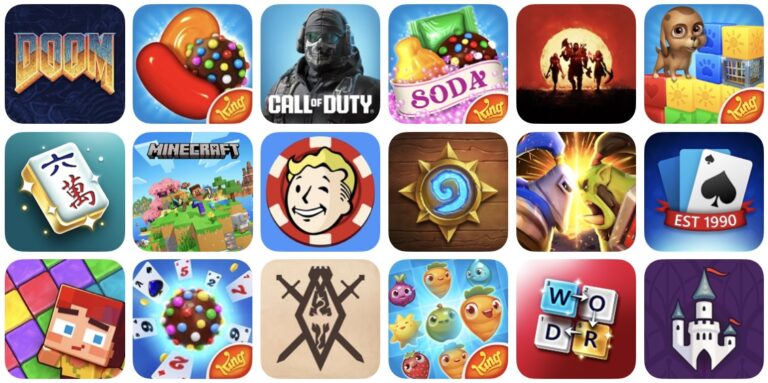
The global mobile gaming landscape is currently undergoing a period of significant structural and economic transformation, driven by high-level leadership changes at major platform holders and the continued emergence of high-revenue titles that challenge established market leaders. At the center of this shift is Microsoft’s ongoing integration of Activision Blizzard King (ABK), a move that has necessitated a comprehensive executive reshuffle within the Xbox division to better align its console-centric roots with a mobile-first future. According to recent industry analysis and data provided by the mobilegamer.biz digest, these internal changes coincide with a surge in market performance for new mobile entries and a shifting demographic profile that emphasizes the growing importance of female players and casual gaming mechanics.
Strategic Realignment Within the Microsoft and Xbox Ecosystem
The recent executive reshuffle at Microsoft’s gaming division represents a pivotal moment in the company’s broader strategy to diversify its revenue streams beyond hardware and subscription services like Xbox Game Pass. Following the record-breaking $68.7 billion acquisition of Activision Blizzard, Microsoft has been tasked with harmonizing the cultures and operational workflows of its various studios. The restructuring aims to streamline communication between the traditional Xbox leadership and the newly acquired mobile powerhouses, specifically King and the mobile-focused arms of Blizzard Entertainment.
Industry observers note that the leadership changes are designed to empower executives with a deeper understanding of the "free-to-play" (F2P) ecosystem. While Microsoft has historically dominated the "buy-to-play" and subscription spaces, the inclusion of King—the architects of the Candy Crush franchise—provides the company with an unparalleled foothold in the mobile market. The reshuffle is expected to facilitate a more aggressive push into mobile-native content, potentially leading to the development of a proprietary mobile storefront intended to bypass or compete with the established duopoly of the Apple App Store and Google Play Store.
The Growth of Microsoft’s Mobile Empire and the Future of King
Microsoft’s mobile strategy is no longer a peripheral concern but a core pillar of its fiscal health. King remains the standout performer in this portfolio, contributing significantly to Microsoft’s quarterly earnings. The integration of King’s data-driven approach to player retention and monetization is currently being analyzed for its potential application across other Microsoft IPs. As the company looks toward the next phase of its mobile evolution, the focus is shifting toward how King can leverage Microsoft’s cloud infrastructure to enhance its social and multiplayer features.
Speculation regarding the next steps for King suggests a possible expansion into hybrid-casual genres, blending the accessibility of match-three mechanics with more complex progression systems. This strategy would align with broader industry trends where "mid-core" elements are being introduced into casual titles to drive higher Average Revenue Per User (ARPU). For Microsoft, the challenge lies in maintaining King’s operational autonomy while ensuring its massive user base is integrated into the wider Xbox ecosystem through cross-platform rewards and unified account systems.
Blizzard Entertainment’s Pivot: The Introduction of Overwatch Rush
A significant development in Blizzard Entertainment’s mobile portfolio is the emergence of Overwatch Rush, a new mobile-exclusive spin-off of the popular hero shooter franchise. This move follows the varied success of Diablo Immortal and Warcraft Rumble, signaling Blizzard’s commitment to adapting its core intellectual properties for a mobile-first audience. Overwatch Rush is positioned as a more accessible entry point into the Overwatch universe, likely utilizing simplified controls and shorter session lengths optimized for on-the-go play.
The announcement of Overwatch Rush comes at a time when Blizzard is under pressure to stabilize its mobile output. While Diablo Immortal generated substantial revenue, it faced criticism regarding its monetization strategies. Analysts suggest that Overwatch Rush may adopt a more balanced approach, focusing on cosmetic-driven monetization similar to its PC and console counterpart. The success of this title will be a critical litmus test for Blizzard’s ability to translate high-action, precision-based gameplay into a touch-screen format without alienating its core fanbase.
Comparative Data: Kingshot’s Record-Breaking $500 Million Milestone
The competitive dynamics of the mobile market are further illustrated by the rapid ascent of Kingshot, a title that has recently surpassed the $500 million revenue mark. Notably, Kingshot reached this milestone at a faster rate than Whiteout Survival, which had previously been considered one of the most successful recent launches in the 4X strategy and survival genre.
Whiteout Survival, published by Century Games, set a high bar for user acquisition and retention through its innovative blend of city-building and environmental survival mechanics. For Kingshot to outpace its growth suggests a highly effective marketing strategy and a monetization loop that resonates deeply with high-spending "whale" players. Data from Sensor Tower indicates that Kingshot’s success is largely attributed to its aggressive live-ops schedule and localized content updates, which have allowed it to capture significant market share in both Western and Asian markets.
Demographic Shifts: The Rising Influence of Female Players and Casual Gaming
Recent market data highlights a significant demographic shift that is reshaping how developers approach game design. There is a measurable increase in the influence of female players within the mobile space, particularly in the casual and puzzle genres. This demographic is not only growing in terms of total player count but also in terms of lifetime value (LTV).
The casual market continues to dominate the charts, with titles that offer "snackable" gameplay and low barriers to entry seeing the highest engagement levels. The data suggests that female players are driving much of this growth, showing a preference for games that emphasize social connectivity, creative expression, and narrative progression. Developers are responding by incorporating more diverse characters and inclusive storylines into their titles, recognizing that the "traditional" gamer profile is no longer the sole driver of mobile gaming revenue.
January Market Performance and Sensor Tower Insights
The January performance reports for the mobile gaming sector reveal a stable yet highly competitive environment. According to the latest Sensor Tower findings, the top-grossing titles for the start of 2026 remain dominated by established franchises, though new entries are increasingly finding ways to disrupt the top ten rankings. The "casualization" of mid-core games remains a dominant trend, with developers successfully implementing light-weight mechanics into traditionally complex genres like RPGs and strategy games.
The Sensor Tower report also notes a stabilization in user acquisition costs, which had spiked in previous years due to changes in privacy regulations and tracking limitations. Developers who have invested in first-party data and community-building are seeing the best returns on investment. The report emphasizes that while the total number of downloads has seen a slight plateau, the depth of engagement and the willingness of players to participate in in-game economies remain robust.
Chronology of Key Events and Industry Milestones
The current state of the mobile gaming industry is the result of a series of strategic moves and market corrections over the past 24 months.
- Late 2024: Microsoft completes the acquisition of Activision Blizzard King, initiating a long-term integration plan.
- Early 2025: Initial leadership changes are announced within Xbox, with Sarah Bond and Matt Booty taking on expanded roles to oversee the integration of ABK’s mobile assets.
- Mid-2025: Whiteout Survival dominates the charts, proving the viability of hybrid-genre survival games.
- Late 2025: Internal rumors of Overwatch Rush begin to circulate as Blizzard shifts resources toward mobile-native development.
- January 2026: Market data confirms Kingshot as a major contender, hitting the $500 million revenue milestone in record time.
- February 2026: Microsoft announces a comprehensive executive reshuffle to further align its gaming divisions, coinciding with the latest mobile market analysis.
Official Responses and Strategic Implications
While Microsoft has not issued a formal statement on every specific executive move, internal memos suggest a focus on "agility and cross-platform synergy." Leadership has emphasized that the goal is to create a "unified gaming ecosystem" where the distinction between console, PC, and mobile becomes increasingly blurred.
Industry analysts react to these moves with cautious optimism. "Microsoft is finally positioning itself to be a true mobile first-mover," says one senior market analyst. "By leveraging the expertise of King and the IP of Blizzard, they are building a vertical stack that covers every segment of the gaming population. The challenge will be maintaining the creative identity of these studios while folding them into a corporate structure as large as Microsoft’s."
Broader Impact on the Gaming Industry
The implications of Microsoft’s restructuring and the success of titles like Kingshot extend beyond individual companies. The industry is witnessing a move toward consolidation, where a few major players own the lion’s share of high-value IPs. This has led to concerns regarding market competition and the ability of independent developers to gain visibility in crowded app stores.
Furthermore, the rapid growth of the mobile sector is forcing traditional console and PC developers to reconsider their release strategies. The "mobile spin-off" is becoming a standard part of a franchise’s lifecycle, serving as both a revenue generator and a marketing tool for the main series. As the technology behind mobile devices continues to advance, the gap in graphical fidelity and gameplay complexity between mobile and traditional platforms is narrowing, leading to a future where high-fidelity gaming is accessible to anyone with a smartphone.
The mobile gaming business in 2026 is defined by data-driven decision-making, demographic inclusivity, and strategic corporate realignments. As Microsoft continues to integrate its "mobile empire" and new titles continue to break revenue records, the industry remains in a state of high-velocity evolution, with mobile platforms firmly established as the primary driver of global gaming growth.
About the Author