The global mobile gaming industry continues to navigate a landscape defined by rigorous pre-launch testing, regional soft launches, and iterative development cycles. For major publishers, the soft launch phase—releasing a game in a limited number of territories—is no longer merely a technical beta; it is a critical period for measuring key performance indicators (KPIs) such as retention, monetization, and user acquisition costs. As development costs for high-fidelity mobile titles escalate, the strategy of "failing fast" or refining a title in a controlled environment has become the industry standard.

This report examines the current state of mobile games in development and testing from the sector’s largest developers. The data reflects a strategic shift toward hybrid-casual mechanics, the expansion of established intellectual properties (IP), and the adaptation of successful console and PC survival and shooter genres for a mobile-first audience.

High-Stakes Shooters and Survival Titles: Ubisoft and Supercell
Among the most anticipated titles in the current testing pipeline are high-budget shooters from Ubisoft and Supercell. Ubisoft’s approach to mobile development has been characterized by long-term commitment and multi-studio collaboration. Rainbow Six Mobile, a title that has been in development for over six and a half years, is currently nearing a global release. According to recent financial reports, the game has utilized the resources of 11 different Ubisoft studios, with additional technical input from Tencent. This level of investment underscores the difficulty of translating complex, tactical shooters to a touch-screen interface.

Similarly, The Division Resurgence remains in a prolonged soft launch phase. Ubisoft’s latest financial guidance suggests a global launch window closing on March 31, 2026. This timeline indicates a cautious approach to quality assurance, ensuring that the open-world RPG elements of the franchise function seamlessly on mobile hardware.

Supercell, the Finnish developer known for its high standards and willingness to cancel projects that do not meet internal benchmarks, is currently testing two significant projects. Boat Game, a third-person looter-shooter, is reportedly poised for a soft launch on Google Play across 29 markets, primarily in Europe and North America. This marks a departure from Supercell’s traditional top-down or lane-based strategies. Meanwhile, Project Rise, a social action RPG roguelite formerly known as Clash Heroes, continues through limited beta testing. The rebooting of this title suggests Supercell is seeking to capture the growing market for social, cooperative mobile experiences.

The Evolution of Physics and Racing: Fingersoft and Moonton
Fingersoft is iterating on its flagship franchise with Hill Climb Racing 3. The most significant update in this entry is the introduction of real-time multiplayer, a feature that addresses the competitive demands of the modern mobile audience. The game is currently being tested in the United Kingdom and several Nordic countries, including Norway, Sweden, and Finland. By testing in these high-LTV (lifetime value) markets, Fingersoft can gauge the server stability and competitive balance required for a global rollout.

Moonton, a subsidiary of ByteDance, is exploring the roguelike genre with Hermit Crab Go. Soft launched in Canada, Hong Kong, Japan, and Taiwan, the game represents Moonton’s effort to diversify its portfolio beyond its dominant MOBA title, Mobile Legends: Bang Bang. The choice of testing regions reflects a strategy to capture both Western and mature Asian markets.

Casual Dominance and Genre Blending: Playrix and Moon Active
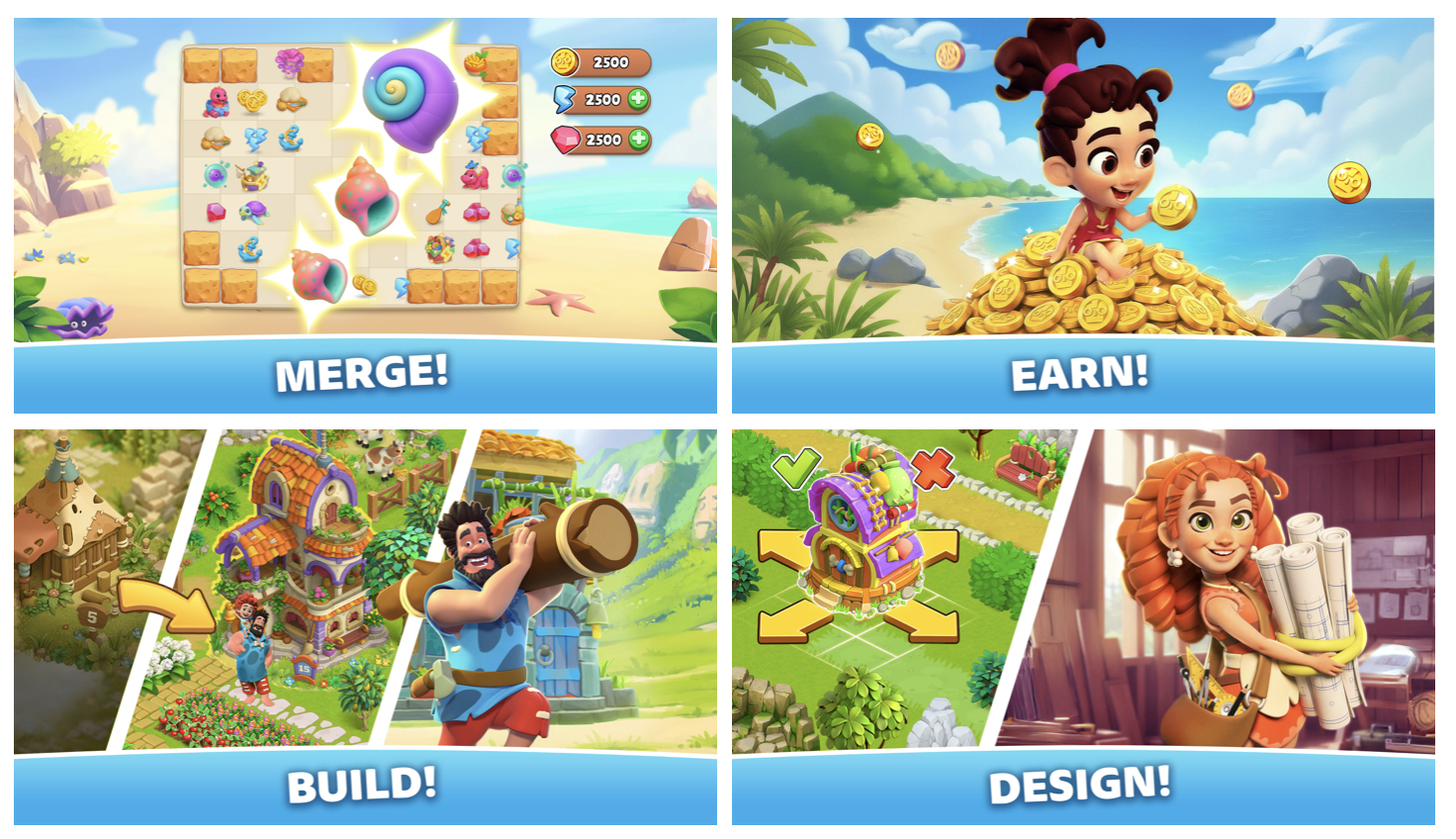
The casual gaming sector remains dominated by Playrix and Moon Active, both of whom are aggressively testing new titles to expand their market share. Playrix, the master of the "scapes" formula, is currently managing a massive pipeline of diverse titles. Questbound, a fantasy-themed squad battler, represents a significant genre pivot for the company. Simultaneously, Playrix is refining its core competency with Match Around, which blends match-3 and merge-2 mechanics, and FamilyScapes, which focuses on narrative-driven drama.

Moon Active, the developer of the multi-billion-dollar Coin Master, is clearly attempting to counter the rise of Scopely’s Monopoly Go. Their title Coin Master – Board Adventure is currently live in Canada, India, and several other territories, directly challenging the social-casino-meets-board-game niche. Furthermore, Moon Active is testing Reality Bay, a merge-2 game set on a film set, and Jelly Busters, an action-puzzler that utilizes pixel art. This diversification strategy suggests that Moon Active is looking to reduce its reliance on a single major hit.

Brand Integration and Technical Testing: Sega and Rovio
Following Sega’s acquisition of Rovio, the synergy between the two companies is becoming visible in the soft launch market. Sonic Blitz, a collectible card game developed by Rovio using Sega’s iconic IP, is undergoing technical testing in Brazil and the Philippines. This collaboration allows Sega to leverage Rovio’s mobile-first expertise while providing Rovio with a world-class brand to attract users.

Rovio is also continuing to iterate on the Angry Birds franchise. Angry Birds Match World and Angry Birds Rush (the latter developed in collaboration with OhBiBi) are currently in early testing. These titles aim to modernize the franchise by incorporating battle mechanics and deeper social features, moving away from the simple slingshot mechanics of the original games.

Emerging Trends: The Rise of "GTA-Likes" and Hybrid-Casual Tycoons
A notable trend in the current testing cycle is the attempt to replicate the open-world crime genre on mobile. Garena, the developer of Free Fire, is testing Garena Free City, a title that draws heavy inspiration from the Grand Theft Auto series. Initially soft-launched in Argentina, it has expanded to the Philippines and North African markets. Miniclip is following a similar path with Pure Crime: Gangster Shooting, currently in a placeholder phase on Google Play. These titles represent an effort to capture the "urban sandbox" audience, a demographic that has historically been underserved on mobile due to hardware limitations.

In the tycoon and simulation space, Supercent is testing Daily Farm: Harvest Empire, an idle farming game. This reflects the broader trend of "hybrid-casual" gaming—titles that combine the simple, accessible mechanics of hyper-casual games with the deep meta-progression and monetization strategies of mid-core titles.

Regional Testing Strategy and Economic Context
The selection of soft launch territories is a calculated decision based on economic and demographic data. The Philippines and Indonesia are frequently used for technical testing and volume-based user acquisition due to their large, English-proficient populations and lower cost-per-install (CPI). Conversely, Canada and Australia are utilized as proxies for the United States and European markets to test monetization and high-end device performance.

This period of intense testing occurs alongside a shifting economic landscape for mobile developers. The rise of direct-to-consumer (D2C) web stores is a significant factor, as developers seek to bypass the 30% platform fees charged by Apple and Google. Partnerships with payment processors such as FastSpring are becoming essential for publishers looking to launch global web stores, providing a redundant vendor system that protects revenue streams.

Chronology of Recent Pipeline Changes
The mobile testing landscape is highly volatile, with games frequently entering and exiting the pipeline based on performance data.

- November 7: Hoyoverse launched a closed beta for Petit Planet, a cosmic life simulation game, specifically targeting PC and iOS users.
- December: Ubisoft and Tencent conducted a closed beta for Rust Mobile across North America, Europe, and Asia.
- January 23: Funplus/Kingsglory will begin a second closed beta for Aniimo, an open-world creature-catching RPG, signaling a move toward the "monster collection" genre dominated by Pokémon Go and Palworld.
- Recent Removals: Electronic Arts (EA) recently removed EA Sports FC Tactical from soft launch, indicating a shift in strategy or a return to the development phase for further refinement. Metacore also recently removed Grandma’s Solitaire Secrets after a year of testing.
Broader Industry Implications
The current pipeline suggests that the mobile market is entering a phase of "IP consolidation" and "genre hybridity." Developers are no longer content with simple clones; they are blending mechanics—such as combining merge-2 with narrative renovation or adding multiplayer to physics-based racing—to increase player lifetime value.

The presence of titles like Petit Planet from Hoyoverse and Project Rise from Supercell indicates that high-fidelity, social-first experiences are the next frontier. As mobile hardware continues to close the gap with consoles, the line between "mobile games" and "cross-platform experiences" will continue to blur. For publishers, the soft launch remains the most potent tool in their arsenal to navigate this competitive and expensive environment, ensuring that only the most viable products reach a global audience. The success of these titles in their respective test markets will likely dictate the financial health of the mobile sector throughout 2025 and 2026.
About the Author