A prominent discourse in game design is challenging the long-standing, often overused term "randomness," proposing a more precise lexicon to describe the various forms of unpredictability within interactive experiences. This initiative seeks to clarify communication among developers, critics, and players, moving beyond a blanket term that often conflates distinct mechanical and experiential phenomena. The proposal advocates for specific terms like "Unpredictable," "Chaotic," "Volatile," "Erratic," "Luck-Based/Unfair," and "Slot Machine" to foster a more sophisticated understanding of game systems.
The impetus for this re-evaluation stems from the inherent ambiguity of "randomness." In contemporary game design, the term can refer to anything from a fair dice roll to a completely arbitrary outcome, leading to misinterpretations and unproductive discussions. Game designers often struggle to articulate specific design intentions or address player feedback when the core vocabulary is imprecise. For instance, a player might criticize a game as "too random" when they are, in fact, reacting to high volatility rather than mere unpredictability. This linguistic imprecision can obscure genuine design flaws or prevent appreciation of intentional design choices.
Unpredictable: The Foundational Replacement
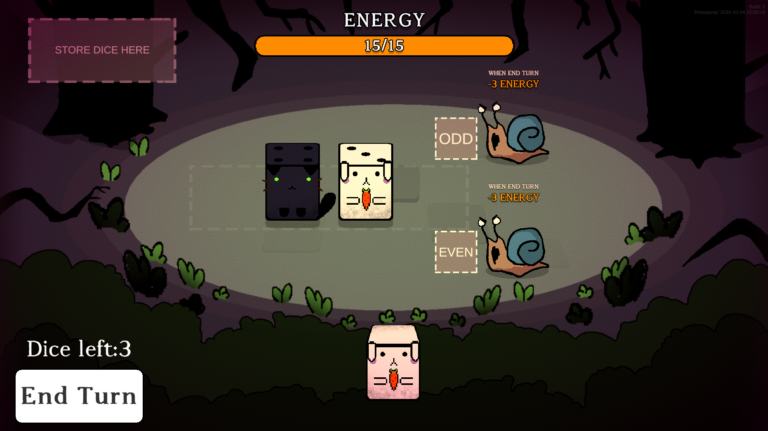
The cornerstone of this new terminology is "Unpredictable." This serves as the overarching, neutral term for any game mechanism whose outcome cannot be deterministically foreseen by the player. It encompasses a broad spectrum of variance, from the shuffle of a deck of cards in a digital card game to the damage range of an attack (e.g., 5-10 damage). Crucially, "unpredictable" does not carry an inherent positive or negative connotation, unlike "randomness" often does in player discourse.
Beyond explicit numerical ranges or card draws, this definition extends to elements like player execution in skill-based games (e.g., the success rate of a complex combo input in a fighting game) or simultaneous actions in strategic titles where opponent choices are unknown. The "fog of war" in real-time strategy games, where enemy unit positions are hidden, also falls under unpredictability, as does the behavior of complex AI systems in open-world environments. The strategic depth in many games relies heavily on players making informed decisions in the face of unpredictable elements, calculating probabilities, and adapting their plans. Without unpredictability, many games would devolve into solvable puzzles, losing their replayability and emergent narrative potential.
Experiential Dynamics: Chaotic and Volatile
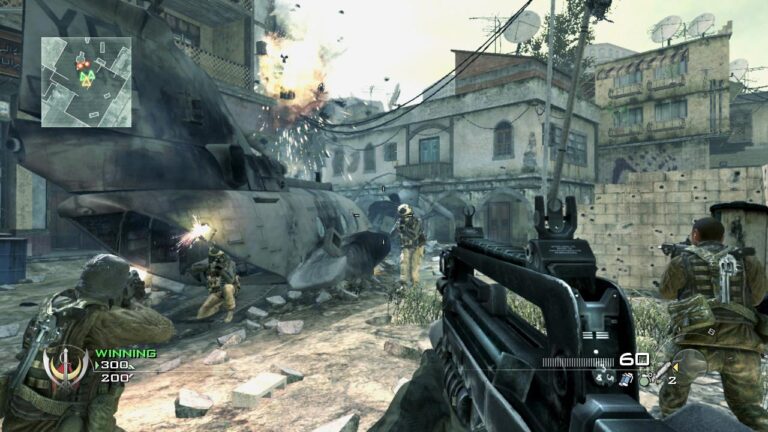
Moving beyond mere mechanism, the proposed terms delve into the player experience. "Chaotic" is introduced as an experiential descriptor for games where a high frequency and density of unpredictable effects make it challenging for players to firmly grasp or predict the evolving game state. This isn’t necessarily a critique but an aesthetic choice. Many action-oriented games, such as fast-paced brawlers like Super Smash Bros., bullet-hell shooters, or certain roguelikes known for their overwhelming enemy encounters and unpredictable item synergies, intentionally cultivate a chaotic feel.
For instance, the rapid succession of abilities, environmental hazards, and enemy movements in a game like Hades can create a sense of glorious chaos, mirroring the frantic nature of mythological combat. This aesthetic choice distinguishes a "battle" from a "puzzle," injecting a sense of urgency, improvisation, and visceral engagement. Developers aiming to evoke feelings of a sprawling conflict or a desperate struggle often leverage chaotic elements to enhance immersion and challenge player adaptability.
"Volatile," in contrast, focuses on the impact of unpredictable mechanisms, rather than their frequency. A volatile event is one with a potentially massive swing in outcome. Comparing a damage range of "6-10" to "0-100," the latter is significantly more volatile. While the odds of success might be the same, the consequences of a favorable or unfavorable outcome are dramatically different.
High volatility is often found in critical hit systems that can instantly turn the tide of battle, or in games with rare, powerful item drops that drastically alter a character’s capabilities. A game like Darkest Dungeon masterfully uses volatility with its critical hits, misses, and stress mechanics, where a single unpredictable event can cascade into devastating consequences for the player’s party. This adds a layer of tension and strategic risk assessment, as players must decide whether to pursue high-risk, high-reward strategies. However, excessive volatility without sufficient player agency can lead to frustration, particularly in competitive settings where skill might feel overshadowed by extreme luck.
Systemic Irregularity: Erratic Mechanics
The term "Erratic" describes systems that are non-uniformly unpredictable, shifting between periods of high predictability and sudden, significant unpredictability in an unpredictable manner. This concept highlights a system whose very nature of variance is inconsistent. While less common than consistent unpredictability, erratic systems can create unique dramatic tension.
Consider a game that predominantly follows deterministic rules, allowing for meticulous planning, but then introduces an abrupt, highly randomized mini-game or "event" that can drastically alter the game state or player resources. For example, a grand strategy game where turns are usually predictable, but a rare "cosmic event" might suddenly change global parameters or trigger unique, randomized diplomatic crises. Or a card game where certain powerful "chaos" cards, when drawn, fundamentally change the rules of the current round in an unforeseen way. This sudden shift can shock players out of complacency, demanding immediate adaptation and offering memorable, if sometimes frustrating, experiences. The unpredictability of the unpredictability itself is key here, contributing to a sense of living, evolving game world.
Player Perception: Luck-Based and Unfair
These terms delve into the emotional and perceived fairness aspects of games with high-variance unpredictable events. "Luck-Based" often describes a single-player experience where success feels predominantly determined by favorable unpredictable outcomes rather than player skill or strategy. Players might feel that their efforts are overshadowed by the capricious nature of the game’s systems. This can be seen in certain roguelikes where a perfect "run" feels less about masterful play and more about receiving optimal item drops or enemy spawns.
"Unfair," on the other hand, typically arises in multiplayer contexts. When unpredictable events disproportionately favor one player over another, or when outcomes seem to contradict the effort or skill invested, the system is perceived as unfair. This is a common point of contention in competitive card games where a series of "bad draws" can decide a match regardless of strategic prowess, or in games with highly volatile critical hit mechanics that consistently favor one side. The perception of unfairness can severely impact player engagement and the competitive integrity of a game, leading to calls for rebalancing or re-evaluation of specific mechanics. Transparency in game design, where probabilities and outcomes are clearly communicated, can mitigate some of these perceptions by allowing players to understand the underlying mechanics, even if they dislike the outcomes.
The Extreme End: Slot Machine Mechanics
At the far end of the spectrum lies "Slot Machine," a term reserved for games or systems where the skill ceiling is indistinguishable or nearly indistinguishable from the skill floor. These are systems where player agency is minimal, and outcomes are almost entirely determined by pure chance, akin to a coin flip or a literal slot machine pull. While rarely forming the core of traditional video games, "slot machine" mechanics have seen a significant rise, particularly in mobile gaming and monetization strategies.
The proliferation of "gacha" mechanics, loot boxes, and randomized reward systems in free-to-play titles exemplifies this trend. Players engage in these systems not through strategic input but by investing currency (real or virtual) for a chance at desirable, rare outcomes. The psychological principles at play here are similar to those in gambling, leveraging intermittent reinforcement to drive engagement. While some argue that these systems offer a form of "meta-game" for collectors, critics often point to their exploitative nature, blurring the lines between gaming and gambling and raising ethical concerns, particularly regarding vulnerable populations. Understanding this term is crucial for critically analyzing modern game monetization and design ethics.
Historical Context and The "Randomness" Conundrum
Historically, the term "randomness" has served as a convenient shorthand for any non-deterministic element in games. From the roll of dice in board games to critical hits in early RPGs, its use was widespread and generally accepted. However, as game design matured and titles became increasingly complex, the limitations of this singular term became evident. Discussions among game designers and critics often devolved into debates about whether "RNG" (Random Number Generation) was "good" or "bad," without the necessary vocabulary to dissect what kind of randomness was being discussed.
This lack of precision hindered productive feedback loops and nuanced design conversations. A game might feature a highly unpredictable enemy AI, which is a positive design choice, but also include extremely volatile loot drops, which might be a negative. Lumping both under "randomness" prevents specific critique and targeted improvement. Leading game theorists and educators have long advocated for a more rigorous vocabulary to match the sophistication of modern game mechanics.
Implications for Game Design and Criticism
The adoption of a refined vocabulary for unpredictability holds significant implications across the gaming ecosystem. For game designers, these terms offer a more precise toolkit for conceptualizing, implementing, and tuning game mechanics. Instead of debating "how much randomness" a game needs, designers can now discuss how much "volatility" is appropriate for a boss encounter, or whether a game’s "chaotic" aesthetic is effectively serving its theme. This clarity facilitates better internal communication, streamlines development processes, and allows for more targeted iteration based on player feedback.
For game critics and journalists, the new terminology provides the means for more nuanced analysis. Reviews can move beyond simplistic judgments of "too much RNG" to articulate which specific aspects of a game’s unpredictable elements contribute to its strengths or weaknesses. This elevates the quality of game criticism, offering deeper insights into design choices and their impact on player experience.
Finally, for players, a shared, precise language can empower them to articulate their experiences and feedback more effectively. Instead of vague complaints about "luck," players can pinpoint whether they are frustrated by high "volatility" in combat outcomes, or if they find a particular system "unfair" in a competitive context. This fosters more constructive community discussions and allows developers to better understand and address player concerns.
Industry analysts suggest this linguistic refinement could be a crucial step towards more sophisticated game analysis and development practices. While the wholesale adoption of new terminology can be a gradual process, the proposal highlights a growing recognition within the industry that the language we use to describe games must evolve alongside the games themselves. As interactive entertainment continues to push boundaries, a precise and shared vocabulary will be essential for navigating its increasing complexity and richness. The conversation initiated by this proposal underscores a commitment to clarity and depth in understanding the intricate world of game design.
About the Author