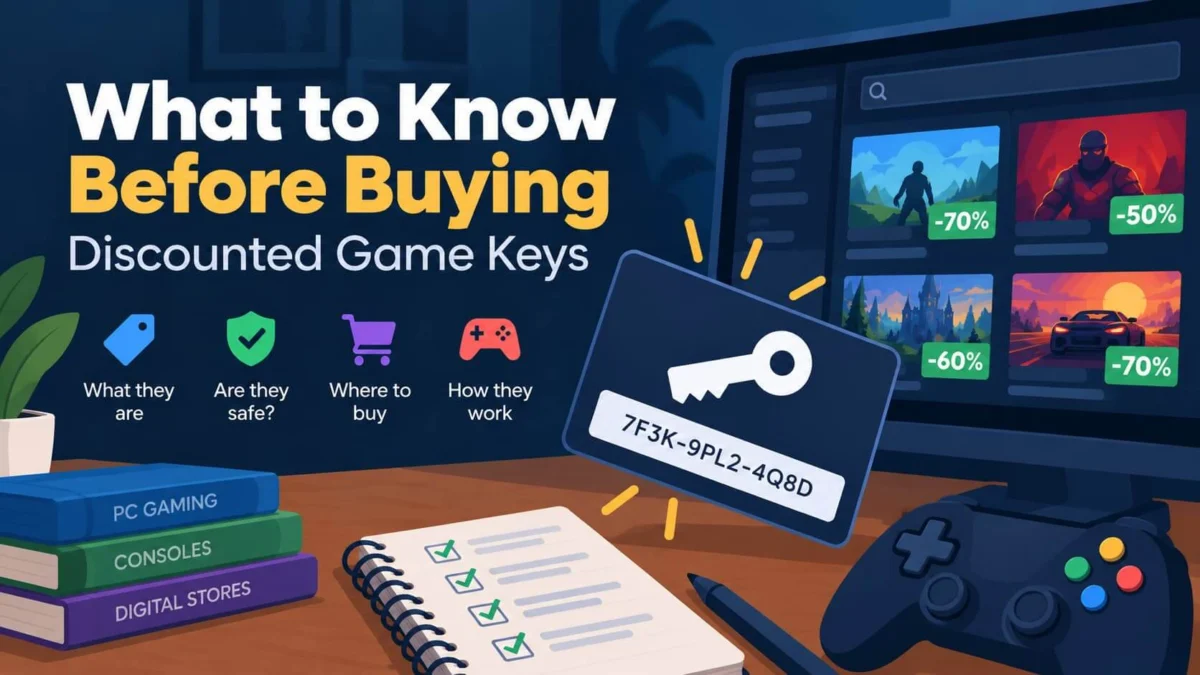
The acquisition of digital game keys has become a cornerstone of modern gaming, offering players expansive libraries and access to attractive pricing models. This trend is driven not only by official storefronts like Steam, Epic Games Store, and PlayStation Store but also significantly by a burgeoning ecosystem of online marketplaces. These platforms provide a broad selection of game codes from diverse sellers, frequently at highly competitive prices, fostering a dynamic environment for digital content acquisition.
Marketplaces such as G2A.COM exemplify this model, consolidating numerous offers into a single interface where consumers can meticulously compare options. Factors like price, seller reputation, regional activation restrictions, and specific game editions become critical decision points, empowering buyers with unprecedented choice. While these platforms offer considerable benefits, understanding their operational nuances and inherent safeguards is essential for a seamless and secure purchasing experience. This article delves into the mechanics of game key marketplaces, examines their safety protocols, and provides actionable insights for confident digital game acquisition.
The Evolution of Digital Game Distribution and the Rise of Key Marketplaces
The gaming industry has undergone a profound transformation over the past two decades, shifting predominantly from physical media to digital distribution. This paradigm shift was largely spearheaded by platforms like Steam, which launched in 2003, revolutionizing how PC games were purchased, stored, and updated. Console manufacturers soon followed suit, integrating robust digital storefronts directly into their hardware. This evolution democratized access to games, reduced physical waste, and enabled instant gratification for players globally.
However, the centralized nature of official digital storefronts also meant that pricing was largely controlled by publishers and platform holders. This led to regional price disparities, often designed to align with varying economic conditions across different territories, and created opportunities for secondary markets. The emergence of online game key marketplaces was a direct response to this landscape. These platforms began to facilitate the reselling of digital keys – codes that unlock games on official platforms – sourced from various channels, including publisher promotions, regional sales, game bundles, and sometimes even excess inventory from retail stores. This "grey market," as it is sometimes termed, quickly gained traction by offering prices often significantly lower than official channels, appealing to budget-conscious gamers worldwide.
Understanding the Marketplace Model: A Comparative Analysis
The fundamental distinction between an official digital store and a marketplace like G2A.COM lies in their operational model and the nature of their offerings. Official stores act as direct retailers for publishers, while marketplaces serve as intermediaries, connecting independent sellers with buyers. This difference manifests in several key areas:
- How Games are Sold: In official stores, games are purchased directly from the platform or publisher. On marketplaces, various third-party sellers list digital game keys, making the transaction a peer-to-peer or business-to-consumer exchange facilitated by the platform.
- Pricing Dynamics: Official store prices are set by the store or publisher, often reflecting MSRPs and specific promotional periods. Marketplaces, conversely, feature dynamic pricing driven by competition among numerous sellers. This often leads to significant price variations, allowing buyers to find more competitive deals by comparing multiple offers. Data from various consumer surveys consistently indicates that price remains a primary driver for choosing third-party key resellers, with savings often ranging from 10% to 50% or more compared to official storefronts, especially outside major sale events.
- Choice and Variety of Offers: Official stores typically present one main offer for a particular game edition. Marketplaces, however, enable buyers to compare different sellers, prices, editions (Standard, Deluxe, Ultimate), regional availability, and even legacy titles that might no longer be easily accessible on primary platforms. This breadth of choice caters to diverse consumer needs and preferences.
- Seller Information and Transparency: Official stores handle transactions directly, offering a unified customer service experience. Marketplaces, recognizing their role as facilitators, provide granular seller information, including ratings, transaction history, and buyer feedback. This transparency empowers buyers to evaluate the credibility and reliability of individual sellers before committing to a purchase.
- Regional Availability and Compatibility: Official store availability is determined by the platform’s geographical licensing agreements. Marketplace listings, crucially, include detailed activation-region information and compatibility specifics (e.g., "Global," "EU Only," "North America"). This is vital as many digital keys are region-locked, preventing activation outside designated territories.
- Buying Experience: While official stores offer a streamlined, single-retailer purchase, marketplaces provide a comparative shopping experience. Users can review multiple offers, filter by price, platform, edition, and region, and select the option that best aligns with their specific requirements. This flexibility is a significant draw for informed consumers.
The marketplace model, therefore, represents a consumer-centric approach, prioritizing choice and competitive pricing. For a platform like G2A.COM, this translates into a vast selection complemented by tools designed to help buyers navigate the options and make informed decisions.
Assuring Transactional Security: Buyer Protection Frameworks
A key concern for consumers engaging with online marketplaces is the safety and security of their purchases. Established game key marketplaces have invested significantly in developing robust buyer protection systems to foster trust and mitigate risks. These frameworks are designed to make transactions transparent and convenient, addressing common issues that may arise.
Before finalizing a purchase, users can typically review crucial information such as:
- Seller’s Reputation and Rating: A cumulative score reflecting past buyer experiences, often accompanied by detailed feedback.
- Number of Completed Transactions: An indicator of the seller’s activity and reliability.
- Product Description: Comprehensive details regarding the game edition, platform compatibility, language support, and any specific activation requirements.
- Activation Region: Clear labeling of geographical restrictions for the digital key.
- Customer Reviews for the Specific Product: Insights from previous buyers about that particular listing.
Beyond pre-purchase transparency, marketplaces also provide structured customer support and dispute resolution processes. If a digital key fails to activate as expected, or if there is a discrepancy with the order, buyers can report the problem through the platform’s official channels. These procedures typically involve contacting the seller first, and if a resolution isn’t reached, escalating the issue to marketplace support for mediation or intervention. Platforms like G2A.COM, for instance, have dedicated support teams that review evidence, mediate disputes, and facilitate refunds or replacements when legitimate issues are identified. This commitment to post-purchase support is crucial for building consumer confidence in a multi-seller environment.
Dispelling Myths: Account Risk and Cheaper Game Keys
A common misconception among gamers is that a lower-priced game key inherently carries a higher risk of being invalid or leading to an account restriction. This perception, often fueled by past controversies surrounding illegally obtained keys, does not accurately reflect the current reality of established marketplaces. A discounted price does not automatically equate to an unsafe or illicit product.
Several legitimate reasons contribute to lower prices on marketplaces:
- Seller Competition: The sheer number of sellers on a platform creates intense competition, driving prices down.
- Regional Pricing Differences: Publishers often set different base prices for games in various countries to align with local purchasing power. Keys purchased from lower-priced regions can then be resold globally, creating arbitrage opportunities.
- Promotional Sales and Bundles: Publishers frequently offer deep discounts during sales events or as part of game bundles. Sellers acquire these keys at reduced rates and pass on savings to consumers.
- Supply and Demand: The market forces of supply and demand for specific titles also influence pricing.
- Currency Fluctuations: Changes in exchange rates can also affect the comparative value of keys sourced internationally.
For the vast majority of buyers, the paramount consideration is ensuring that the digital item is compatible with their gaming account, platform, and activation region. Before purchasing a key for Steam, Xbox, PlayStation, Epic Games Store, or any other platform, it is imperative to verify a few basic details:
- Correct Platform: Is the key for PC, PlayStation, Xbox, Nintendo Switch, etc.?
- Specific Edition: Is it the Standard, Deluxe, or Ultimate edition, and does it include desired DLC?
- Activation Region: Is the key "Global" or compatible with the buyer’s geographical location?
- Language Support: Does the game support the buyer’s preferred language?
Simply purchasing a game key at a lower price, provided it is valid and correctly activated according to the platform’s standard rules, does not typically lead to account bans. Gaming platforms primarily focus on the legitimacy of the key’s origin (i.e., whether it was fraudulently obtained or otherwise violates terms of service) rather than the price paid. Established marketplaces have implemented sophisticated anti-fraud measures, including identity verification for sellers and transaction monitoring, to minimize the risk of illicit keys entering their ecosystem. Checking these crucial details in advance is the most effective way to ensure a smooth and secure activation experience.
Industry Perspectives: A Complex Ecosystem
The relationship between game key marketplaces, game developers, and publishers remains complex and often fraught with tension. While consumers undeniably benefit from competitive pricing and broader selection, publishers frequently voice concerns regarding:
- Revenue Share Erosion: Publishers argue that when keys are sold significantly below their intended regional price, or when they originate from promotional bundles, their direct revenue share is diminished.
- Fraudulent Key Acquisition: Although marketplaces have enhanced security, the historical association with keys acquired via stolen credit cards or other fraudulent means continues to be a point of contention for some publishers. This concern led to high-profile incidents in the past, prompting marketplaces to tighten their vetting processes.
- Brand Perception: Some developers express discomfort with their games being part of a "grey market," preferring that all sales occur through official, curated channels.
Despite these concerns, the digital key marketplace ecosystem continues to thrive, fueled by consumer demand. Industry analysts suggest that the total global digital games market, valued at over $150 billion in 2022 and projected to grow further, inherently includes a segment serviced by these platforms. Their existence also exerts a subtle pressure on official storefronts to offer more frequent and competitive sales, ultimately benefiting consumers across the board. The ongoing challenge for marketplaces is to balance consumer demand with stronger assurances to publishers regarding key provenance and anti-fraud measures.
Best Practices for Confident Digital Game Key Acquisition
To maximize the benefits of game key marketplaces while minimizing potential risks, informed buyers should adhere to several best practices:
- Scrutinize Seller Ratings and Reviews: This is arguably the most critical step. Prioritize sellers with consistently high positive feedback percentages (e.g., 95% or higher) and a substantial number of completed transactions. Look for recent reviews to ensure ongoing reliability. An established seller with a transparent history instills greater confidence.
- Meticulously Read the Product Description: A lower price is only valuable if the product is precisely what you need. Beyond checking the platform and edition, verify supported languages, specific activation instructions (e.g., "requires a VPN for activation" – though using a VPN to bypass region locks may violate platform TOS), and any additional requirements or included content. Assume nothing.
- Verify the Activation Region: Digital game keys are often geographically restricted. Established marketplaces prominently display this information. Labels such as "Global," "EU," "North America," or region-specific availability (e.g., "RU/CIS") are crucial. Purchasing a key for the wrong region will render it unusable on your account. Avoid sellers who are vague about region restrictions.
- Utilize Secure Payment Methods: Always complete transactions using the secure payment gateways provided by the marketplace (e.g., PayPal, major credit cards, regional payment solutions). These methods often come with their own buyer protection policies. Critically, never agree to make payments directly to a seller outside the platform, as this bypasses all marketplace protections and dispute resolution mechanisms.
- Leverage Marketplace Support When Needed: If an issue arises – a key doesn’t work, or the product is not as described – immediately utilize the marketplace’s official support or dispute resolution process. Document all communications and provide any requested evidence. Keeping all interactions and transactions within the platform’s framework significantly simplifies the process of resolving potential problems.
- Compare Across Multiple Platforms: Before making a purchase, especially during major sales events, it’s wise to cross-reference prices on the marketplace with official storefronts and other reputable key retailers. Sometimes, an official sale might offer a comparable or even better deal, potentially with fewer perceived risks.
- Understand Key Types: Be aware that keys can originate from various sources (retail boxes, digital bundles, publisher giveaways). While most are functionally identical, some may have specific activation requirements or restrictions. Reputable sellers typically disclose this in the product description.
The Future Landscape of Digital Gaming and Marketplaces
The trajectory of digital game key marketplaces points towards continued relevance and evolution. As the digital games market expands globally, the demand for flexible and affordable acquisition methods will persist. Marketplaces are likely to further refine their buyer protection systems, enhance fraud detection, and potentially explore new technologies like blockchain for key provenance verification, aiming to address persistent industry concerns.
Publishers, in turn, may continue to adapt their regional pricing strategies or explore alternative distribution models to compete with the secondary market. However, the fundamental value proposition of marketplaces – competitive pricing, expansive choice, and user empowerment – ensures their enduring place in the digital gaming ecosystem. For gamers who prioritize value and are equipped with the knowledge to navigate these platforms confidently, digital marketplaces offer a simple, flexible, and cost-effective avenue to continually expand their gaming libraries, discover new titles, and get more enjoyment from their gaming budgets. The key lies in informed decision-making and adherence to established best practices, transforming what was once a contentious "grey market" into a valuable resource for savvy consumers.
About the Author