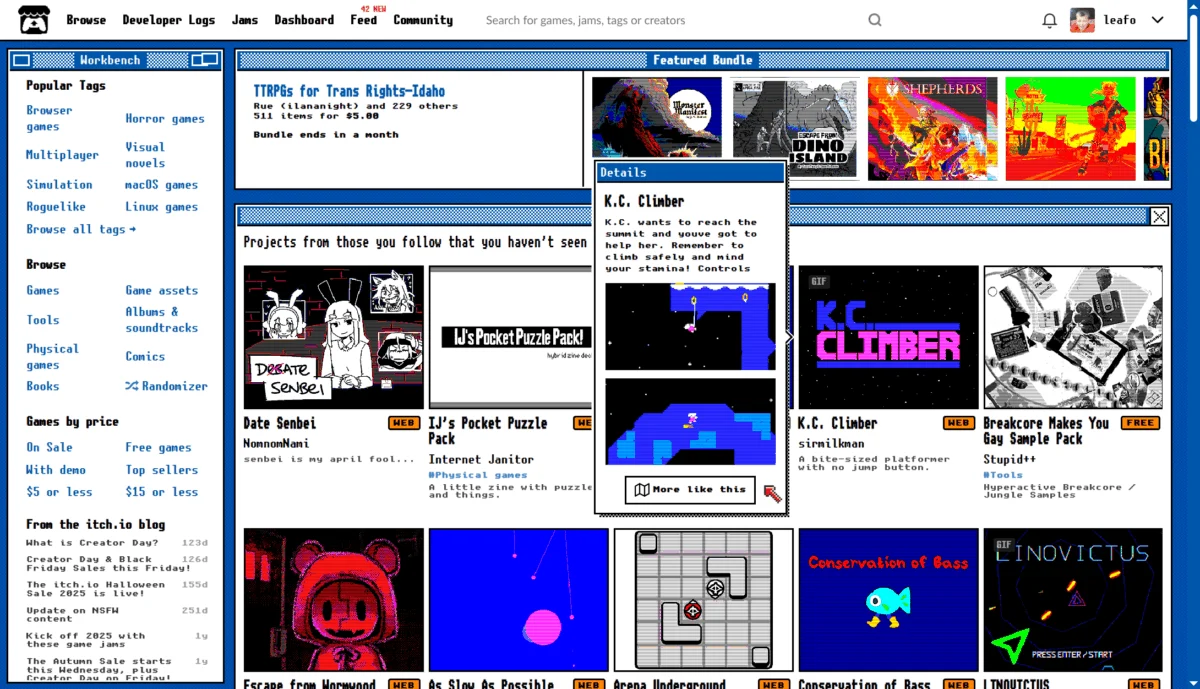
The temporary "Ameyega mode" experiment on the indie game marketplace itch.io, a distinctive April Fools’ Day activation that transformed the platform’s homepage into a retro-inspired, ASCII art interface, has officially concluded. Launched initially on April 1st, the playful redesign aimed to evoke nostalgia for early computing aesthetics, drawing both praise and criticism from the platform’s diverse user base. While the mode has been deactivated from the main homepage, itch.io has made it accessible to logged-in users via a dedicated URL (https://itch.io/?ameyega) for a limited period, promising its availability until the next significant homepage overhaul. This decision reflects the mixed, yet fervent, reactions generated by the unique visual overhaul.
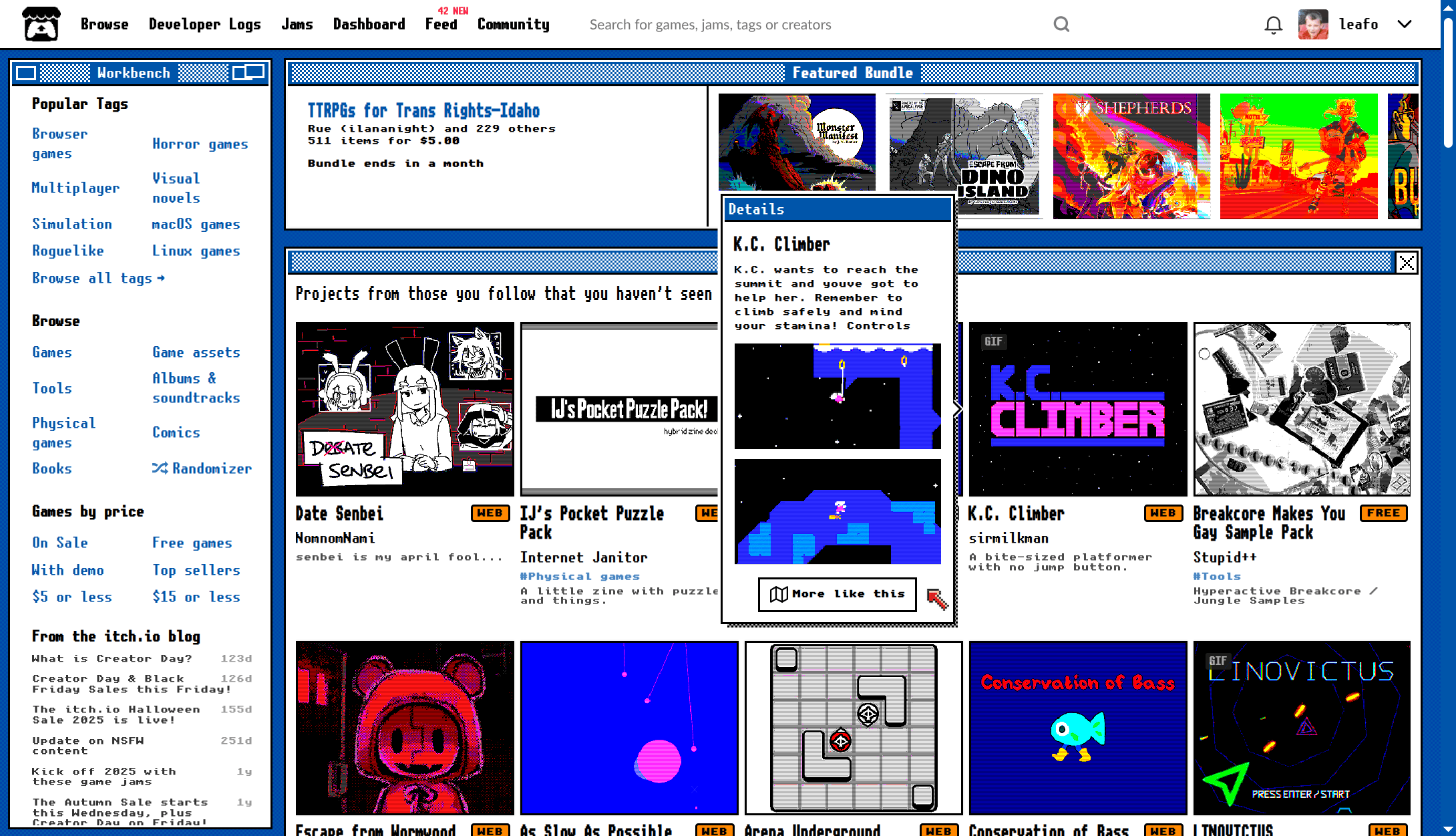
The digital storefront, known for its commitment to independent game developers and creators, embraced a distinctly lo-fi aesthetic for "Ameyega mode." Users visiting itch.io during the activation period were greeted by a monochromatic, text-based interface, reminiscent of the graphical limitations and creative solutions prevalent in the Amiga and DOS eras of computing. This deliberate stylistic choice, credited to the fonts provided by viznut.fi/unscii/, served as a whimsical nod to a bygone era of digital interaction, momentarily transporting the modern web experience back several decades.
The Genesis of Ameyega Mode: A Digital Nostalgia Trip
April Fools’ Day has long been a tradition within the technology and gaming industries, with companies often leveraging the occasion to showcase their playful side through elaborate hoaxes, satirical product announcements, or temporary interface transformations. From Google’s various playful stunts, including Gmail Motion or Google Nose, to game developers introducing outlandish patches or temporary game modes, these annual events serve not only as a source of amusement but also as a unique engagement strategy. For platforms like itch.io, which prides itself on its community-driven ethos and support for experimental content, an April Fools’ prank offers an opportunity to connect with its audience on a more personal, humorous level.
Itch.io, founded in 2013, has carved out a significant niche in the digital distribution landscape by providing a flexible and developer-friendly platform for indie games, tools, assets, and other digital creations. Unlike more mainstream marketplaces, itch.io is celebrated for its open nature, customizable storefronts, and a strong emphasis on community interaction and fair revenue sharing for creators. This established reputation for fostering innovation and individuality within the indie space provided fertile ground for an unconventional experiment like "Ameyega mode."
The "Ameyega mode" itself was a striking departure from itch.io’s standard clean and modern interface. It embraced the limitations of early computer graphics, specifically the ASCII (American Standard Code for Information Interchange) character set, to render all visual elements – from navigation menus to game thumbnails – as intricate patterns of text characters. This art form, known as ASCII art, originated in the early days of computers when graphical displays were rudimentary or non-existent, and text terminals were the primary output method. Artists and programmers found creative ways to use letters, numbers, and symbols to form images, a practice that developed into a distinct subculture. The "Ameyega" moniker itself cleverly blends "Amiga," a popular home computer of the 1980s and early 1990s known for its advanced multimedia capabilities for its time, with "Mega," implying an exaggerated or ultimate version of this retro aesthetic. This fusion perfectly encapsulated the prank’s intent: a full-blown, immersive dive into computing’s visual past.
Chronology of a Pixelated Prank
The rollout of "Ameyega mode" commenced on April 1st, aligning with the global tradition of April Fools’ Day. However, the itch.io team acknowledged a slight delay in its deployment, stating, "We’ll run this one a bit longer because I got it out late." This extension allowed more users to experience the unique homepage transformation, prolonging the novelty beyond the initial 24-hour window typically associated with such pranks. The explicit communication of this extension underscored the team’s responsiveness and desire for broader community engagement with the feature.
Following its extended run, itch.io officially announced the conclusion of "Ameyega mode" with a simple message: "Ameyega mode is now over, thanks everyone." This marked the return of the standard itch.io homepage design. However, recognizing the interest generated and the requests from users who either missed the event or wished to revisit it, the platform implemented a thoughtful contingency. By providing a persistent URL (https://itch.io/?ameyega), logged-in users could still access the retro interface. This archival approach ensures that the "Ameyega mode" remains a discoverable artifact of itch.io’s history, preserving the creative effort and the community experience for future reference, at least until the next major redesign of the homepage. This flexibility demonstrates a keen understanding of user sentiment and the value of ephemeral digital experiences.
User Reactions: A Spectrum of Engagement
The introduction and subsequent conclusion of "Ameyega mode" ignited a flurry of activity across itch.io’s comment sections and social media channels, revealing a deeply polarized user base. The reactions spanned a wide spectrum, from enthusiastic praise for its nostalgic charm to outright frustration over perceived usability issues and technical glitches.
On one end of the spectrum, many users lauded "Ameyega mode" as a brilliant and refreshing prank. Sentiments such as "The ASCII art homepage was a delightful throwback – it actually made browsing feel nostalgic and charming," highlighted the successful evocation of retro computing aesthetics. Some found the simplified, text-based interface surprisingly beneficial, with one user exclaiming, "Please please please make an option to keep this, it’s SO much easier to read for me wow I love love love it." This unexpected accessibility benefit for certain users, possibly those with specific visual sensitivities or preferences for minimalist interfaces, added another layer to the discussion, suggesting that a design intended as a joke could inadvertently offer functional advantages. Others appreciated the humor and novelty, describing it as a "top tier jump scare" and expressing fondness for the unique experience. The desire for the mode to become a permanent, optional theme was a recurring request, underscoring a segment of the community’s genuine appreciation for the alternative aesthetic.
Conversely, a significant portion of the user base expressed strong dissatisfaction with the "Ameyega mode." Complaints primarily revolved around usability and visual discomfort. Phrases like "omg please change it back thus is so hard to navigate and there is no option in my feed to see new updates I follow. I hate thisssss" illustrated the practical difficulties encountered by users trying to perform routine tasks on the site. The highly pixelated, text-based graphics, while nostalgic for some, caused eye strain and disorientation for others: "I CAN’T WATCH THIS! How do you get this crap off?!" and "it hurting my eyes." These reactions highlighted a critical tension between aesthetic novelty and functional accessibility, particularly for a platform designed for content discovery and interaction.
A notable technical issue that arose during the "Ameyega mode" activation was its conflict with itch.io’s Dark Mode setting. Several users reported that the retro interface failed to respect their preferred dark theme, resulting in a jarring visual experience. Comments such as "it’s over but dark mode is not working now…" and "Because you messed up, Dark mode and I can’t get it to work" indicated a widespread problem. This issue, however, was swiftly addressed by the itch.io development team, with one user updating their comment to note, "four hours after posting this, the front page is showing Dark mode correctly. Apparently they’re paying attention!" This quick resolution demonstrated the platform’s attentiveness to user feedback and its commitment to rectifying technical glitches, even those stemming from a temporary, playful feature.
The Technical Underpinnings and Creative Vision
Implementing a site-wide visual transformation like "Ameyega mode" in ASCII art, even temporarily, is a non-trivial technical undertaking. It requires a robust system to parse and convert existing graphical elements—such as images, icons, and layout structures—into their textual approximations. This often involves algorithms that analyze pixel data and map it to a corresponding ASCII character based on luminosity or density. The successful rendering of diverse content, from game thumbnails to navigation buttons, entirely through text characters, showcases a sophisticated understanding of web development and a creative application of rendering techniques.
The choice of fonts from viznut.fi/unscii/ further underscores the attention to detail in crafting an authentic retro experience. Unscii is a set of monochrome bitmap fonts that draw inspiration from various old computer systems, specifically designed for console and text-mode applications. Utilizing such specialized fonts ensured that the ASCII art presentation not only functioned but also accurately captured the visual essence of the computing eras it aimed to emulate. This commitment to an authentic aesthetic, even for a temporary prank, reflects the itch.io team’s appreciation for digital history and their creative flair.
Broader Implications for Platform Engagement and Accessibility
The "Ameyega mode" incident offers several broader implications concerning community engagement, digital accessibility, and platform development.
Community Building: April Fools’ pranks, when executed well, can significantly boost community engagement. By injecting humor and unexpected changes, platforms can foster a sense of shared experience and inside jokes among their users. The sheer volume of comments, both positive and negative, indicates a highly engaged user base that cares deeply about the platform’s direction and user experience. This kind of interaction, even when critical, can strengthen the bond between a platform and its community, making users feel heard and valued.
Accessibility Paradox: Perhaps one of the most intriguing aspects of "Ameyega mode" was its unintended role in highlighting the complexities of digital accessibility. While designed as a nostalgic aesthetic, the monochromatic, high-contrast, text-heavy interface proved unexpectedly beneficial for some users who found it "easier to read." This stands in stark contrast to others who experienced eye strain and navigation difficulties. This paradox underscores that accessibility is not a one-size-fits-all solution; what aids one user might hinder another. It serves as a valuable case study for designers on how different visual presentations impact diverse user needs and how a playful experiment can inadvertently open discussions about user interface flexibility.
Platform Responsiveness: The rapid correction of the Dark Mode compatibility issue is a testament to itch.io’s responsiveness and technical agility. In a world where user feedback is instantaneous and public, a platform’s ability to quickly identify and resolve problems, even those related to a temporary feature, is crucial for maintaining user trust and satisfaction. It demonstrates that while experimentation is encouraged, user experience remains a priority.
Future of Customization: The recurring requests for "Ameyega mode" to become an optional theme or for itch.io to introduce other customizable themes point towards a user desire for greater personalization on the platform. In an era where many digital services offer dark modes, custom color palettes, and layout options, the idea of offering retro or other stylistic themes could be a compelling avenue for itch.io to explore. Such features could cater to diverse aesthetic preferences, potentially converting a temporary joke into a valuable, long-term user feature that enhances accessibility and personalization.
Analysis: Balancing Innovation with User Experience
The "Ameyega mode" incident exemplifies the delicate balance required when platforms choose to innovate or engage in playful experimentation. On one hand, it successfully demonstrated itch.io’s creative spirit, its willingness to step outside conventional boundaries, and its deep connection to computing history. It generated buzz, fostered community discussion, and, for many, delivered a delightful dose of nostalgia. The extension of the mode and its subsequent archival accessibility are clear indicators of itch.io’s responsiveness to positive feedback.
On the other hand, the experiment also exposed potential pitfalls, particularly concerning user experience and accessibility for a significant portion of the user base. The difficulties in navigation, the visual discomfort, and the initial technical incompatibility with Dark Mode highlight the importance of thorough user testing and considering a wide range of user needs, even for features intended to be temporary or humorous. While a temporary prank might be forgiven for minor inconveniences, sustained issues could erode user satisfaction.
Ultimately, itch.io’s "Ameyega mode" will likely be remembered as a memorable, if divisive, moment in the platform’s history. It reinforced itch.io’s identity as a quirky, community-focused hub for indie creators, willing to take risks and have fun. More importantly, it provided invaluable lessons on the multifaceted nature of user experience, the unexpected demands of accessibility, and the critical role of transparent communication and swift responsiveness in fostering a loyal and engaged digital community. The continued availability of the archived mode serves as a lasting reminder of this unique digital experiment and the vibrant discussions it ignited.
About the Author