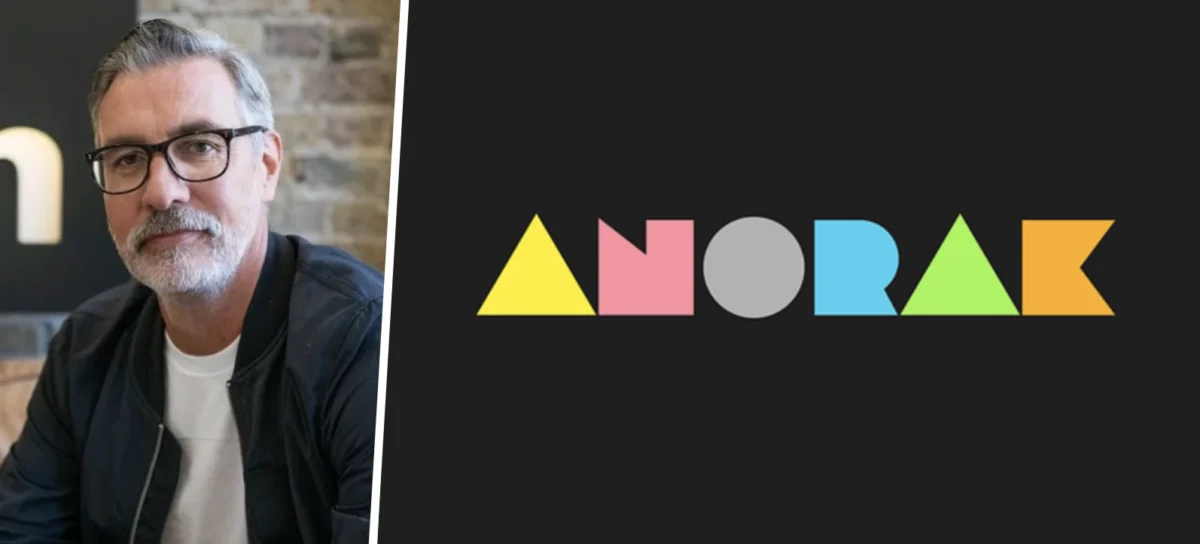
Shaun Rutland, the visionary co-founder and long-time leader of the mobile racing powerhouse Hutch, has officially announced the formation of Anorak, a specialized technology and entertainment studio poised to redefine the boundaries of digital media. Moving away from traditional game development frameworks, Anorak is positioning itself at the intersection of artificial intelligence and interactive media, focusing on a proprietary format described as interactive generative video. This transition marks a significant pivot for Rutland, who has spent over a decade building Hutch into a premier mobile developer, culminating in its high-profile acquisition by Modern Times Group (MTG) in 2020 for $375 million.
The emergence of Anorak comes at a critical juncture for the interactive entertainment industry, as generative artificial intelligence begins to transition from a supplementary tool for asset creation to a foundational technology for real-time content generation. Rutland, serving as the Chief Executive Officer of the new venture, has explicitly stated that Anorak is not a traditional games company but rather a technology entertainment business. This distinction is central to the firm’s mission to develop play patterns and platforms that can transform any hobby, interest, or "pursuit" into a playable, interactive experience.
The Vision for Interactive Generative Video
At the heart of Anorak’s research and development is the concept of interactive generative video (IGV). Unlike conventional video games, which rely on pre-rendered assets, rigid code-based logic, and hand-animated sequences, IGV utilizes generative AI models to create visual and interactive content on the fly. This allows for a level of dynamism and personalization previously unattainable in the mobile or console gaming sectors.
Anorak has already begun demonstrating the practical applications of this technology through a series of technical prototypes. One such demo features a generative dress-up application, where the visual elements of the clothing and the character’s reactions are synthesized through AI rather than selected from a static library of assets. Another showcase includes a boxing simulation and a unique "alien salesman" prototype. In the latter, users provide images to an AI-driven character who analyzes the input and attempts to "sell" the items back to the user using dynamically generated dialogue and visual cues.
These demonstrations highlight a shift toward "playability" as a universal layer that can be applied to various forms of media. Rutland’s vision suggests a future where the barrier between watching a video and playing a game is erased, allowing users to engage with content in a way that feels natural and responsive to their specific creative inputs.
Strategic Leadership and Global Operations
To steer this ambitious project, Rutland has assembled a leadership team comprised of industry veterans. Joining him as Chief Operating Officer is David Amor, a figure with deep roots in the gaming industry. Amor’s involvement brings a wealth of operational experience to Anorak, complementing Rutland’s creative and strategic direction. The studio currently operates in a dedicated research and development phase, focusing on refining the underlying algorithms that will power its future platform.
Anorak’s operational structure is notably global, reflecting the decentralized nature of modern AI development. The firm maintains a presence in London and across various regions in Europe, but perhaps most significant is its footprint in Chengdu, China. The company has established a specialized AI laboratory in Chengdu, a city that has rapidly emerged as a primary hub for technological innovation and software engineering in East Asia. By tapping into the high-density talent pool of the Chinese tech sector, Anorak aims to stay at the forefront of rapid advancements in machine learning and computer vision.
The Hutch Legacy and Financial Context
The foundation of Anorak is inextricably linked to the success of Hutch, the studio Rutland co-founded in 2011. Hutch became a dominant force in the mobile racing genre with hit titles such as F1 Clash, Top Drives, and Rebel Racing. The studio’s ability to blend high-fidelity graphics with sophisticated live-ops and monetization strategies made it an attractive target for international conglomerates.
In December 2020, Modern Times Group (MTG) acquired Hutch in a deal valued at an initial $275 million, with additional earn-out payments bringing the total potential consideration to $375 million. Under MTG’s ownership, Hutch continued to expand its portfolio and refine its data-driven approach to game publishing. In October 2024, MTG announced a leadership transition within the studio: Shaun Rutland would step back from his role as co-CEO to become the Executive Chairman of Hutch, effective January 2025. This move was designed to allow Rutland the freedom to pursue the "next frontier" of entertainment with Anorak while maintaining a strategic oversight role at the company he helped build.
The financial backing for Anorak appears robust, with Rutland teasing an imminent funding announcement involving prominent venture capital firms and established mobile gaming companies. This interest from the investment community underscores a broader market trend: the shift of capital toward "AI-native" entertainment ventures that promise higher scalability and lower content production costs compared to traditional "triple-A" development.
Market Trends and the Democratization of Content
Anorak’s focus on community-made content and monetization represents a strategic alignment with the "Creator Economy." By providing a platform where users can leverage generative video tools to create "play" for their own subcultures, Anorak is following a path blazed by platforms like Roblox and Fortnite’s Creative Mode, but with a significantly lower technical barrier to entry.
In traditional User-Generated Content (UGC) platforms, creators must still understand basic 3D modeling or scripting. Anorak’s generative approach suggests a future where "prompting" or providing visual references is enough to generate a functional interactive experience. This democratization of creation is expected to yield a vast array of niche content that traditional studios would find unprofitable to produce.
Furthermore, the monetization of this community-led content is a core pillar of Anorak’s business model. By creating a marketplace or an ecosystem where creators can profit from their generative designs, Anorak aims to foster a self-sustaining loop of innovation and engagement. Rutland has also hinted at novel distribution methods for this content, moving away from the standard App Store and Google Play models that have dominated the last fifteen years of mobile entertainment.
Technological Implications and Challenges
While the promise of interactive generative video is significant, the path to commercial viability is fraught with technical challenges. Generative AI, particularly in the realm of video, is computationally expensive. Real-time generation requires massive processing power, which often leads to latency issues—a critical flaw in any interactive experience where responsiveness is paramount.
Additionally, maintaining visual consistency (ensuring a character looks the same from one frame to the next) remains a hurdle for current generative models. Anorak’s R&D phase is likely focused on solving these "temporal consistency" problems and optimizing models to run efficiently on consumer-grade hardware or through low-latency cloud streaming.
The industry is watching closely to see how Anorak handles "hallucinations"—the tendency for AI to produce nonsensical or unintended visual artifacts. For a dress-up game or a boxing simulation to feel satisfying, the generative output must adhere to a set of internal rules that feel "fair" and predictable to the user.
Industry Impact and Future Outlook
The launch of Anorak signals a broader shift in the United Kingdom’s tech sector, which is increasingly pivoting toward high-end AI research. As London continues to compete with Silicon Valley for dominance in the AI space, ventures like Anorak provide a bridge between technical prowess and commercial entertainment.
Industry analysts suggest that if Anorak successfully bridges the gap between static video and interactive play, it could disrupt not only the gaming industry but also social media and streaming services. Platforms like TikTok and YouTube have already begun experimenting with AI filters and interactive elements; however, a dedicated platform for "playable pursuits" could represent a new category of digital consumption entirely.
As Shaun Rutland prepares to assume his role as Executive Chairman at Hutch in early 2025, his primary focus will undoubtedly be the maturation of Anorak. With the backing of industry veterans, a strategic presence in the world’s leading AI markets, and a vision that challenges the very definition of a "game," Anorak is positioned to be a central player in the next generation of interactive media. The forthcoming funding details and distribution plans will be the next major milestones for a company that is currently operating at the bleeding edge of what is technologically possible in the entertainment landscape.
About the Author