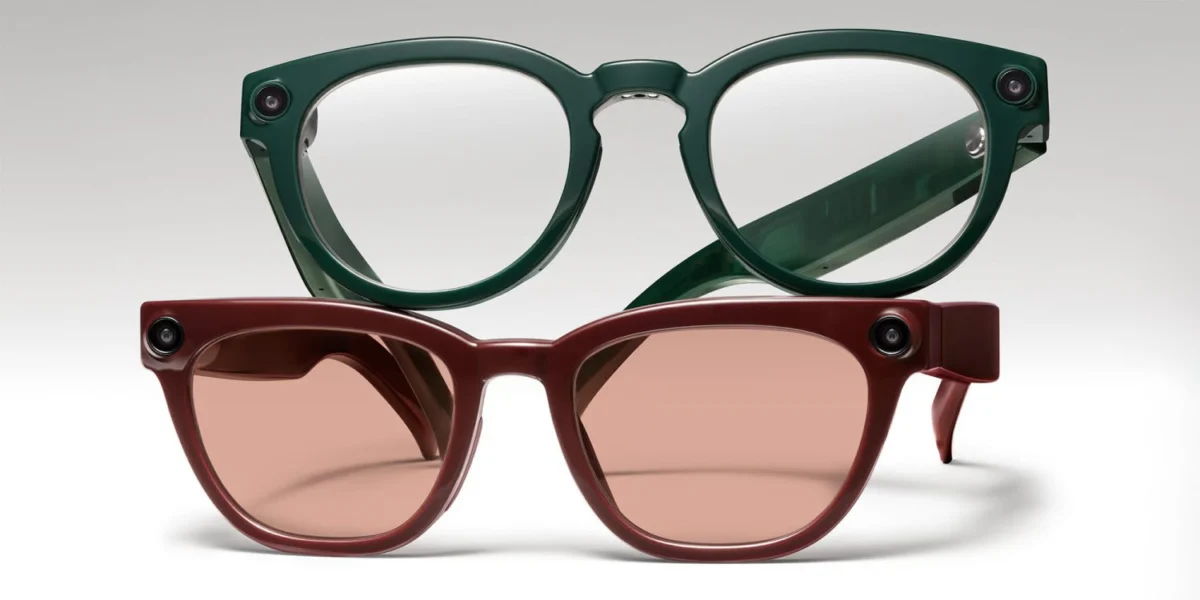
Snap Inc. has officially announced the appointment of Academy Award-winning actor Robert Downey Jr. as the company’s honorary Chief Customer Experience Officer (CCEO), a strategic move aimed at accelerating the adoption of its latest augmented reality (AR) hardware, "SPECS." According to the corporate announcement, Downey Jr. will serve as a high-profile bridge between the technical capabilities of see-through AR glasses and the end-user experience. His responsibilities are slated to include guiding consumer imagination regarding the utility of wearable computers, shaping new "Lens" experiences, and contributing to the development of original content tailored for the SPECS platform.
The partnership follows months of industry speculation regarding a potential $100 million ambassadorial deal between the actor and the social media firm. While Snap has not officially confirmed the specific financial terms, the depth of the integration—which includes a series of promotional demonstrations where Downey Jr. positions SPECS as a superior alternative to traditional mobile hardware and competing wearable devices—suggests a significant capital investment. This move aligns with Snap’s long-term strategy to position AR as a "cool" and "glamorous" consumer category rather than a niche productivity tool.
However, the appointment has drawn mixed reactions from the extended reality (XR) development community. Critics point to a disparity between high-expenditure celebrity endorsements and the current lack of robust financial grant programs for independent developers creating the very "use cases" that would justify the $2,200 price point of the SPECS hardware. While the involvement of a global icon may increase general market awareness, the high barrier to entry for the device remains a significant hurdle for mass-market penetration.

Samsung and Google Smartglasses Specifications Leak
Parallel to Snap’s marketing push, new technical details have emerged regarding the highly anticipated smartglasses developed through a partnership between Samsung, Google, and Qualcomm. Leaked specifications indicate that the device, which may debut as early as November 2024, is designed to compete directly with the third-generation Ray-Ban Meta glasses.
The leaked data suggests the Samsung glasses will weigh approximately 41 grams—notably lighter than many current competitors—and will be powered by the Snapdragon AR1 chipset. Additional hardware features reportedly include a 12-megapixel camera and a 155mAh battery. To ensure consumer appeal across different demographics, Samsung is reportedly collaborating with fashion-forward brands such as Gentle Monster and Warby Parker to provide various frame styles and prescription lens options.
Market analysts observe that while the specifications largely mirror those of Meta’s current offerings, Samsung’s advantage may lie in its ecosystem integration with Android and its focus on a lightweight form factor. The success of the device will likely depend on whether Google’s "Android XR" software can provide a more compelling suite of AI-driven features than Meta’s established platform.
OpenXR Introduces Spatial Containers for Multitasking
In a significant move for the standardization of mixed reality (MR) software, the Khronos Group has announced the inclusion of "spatial containers" within the OpenXR standard. This technical evolution marks a shift from purely immersive, full-screen applications toward a multitasking environment similar to traditional desktop computing.

Spatial containers allow for "bounded" experiences—AR or MR widgets that occupy a limited physical volume, such as a one-meter cube. This enables users to interact with multiple 3D applications simultaneously without leaving their primary environment. Key features of this update include:
- Bounded-to-Immersive Transition: Applications can exist as small floating widgets and expand into fully immersive environments at the user’s discretion.
- Cross-Platform Interoperability: By standardizing these containers, developers can build multitasking "spatial widgets" that function seamlessly across devices like the Apple Vision Pro, Pico Space Pro, and Meta Quest.
- Multitasking Utility: This standard supports the industry’s broader move toward "spatial computing," where the headset serves as a persistent productivity tool rather than a gaming-only peripheral.
The Diverging Fates of Social VR Platforms
The social VR landscape continues to experience volatility as established players exit the market while others attempt to revive legacy brands. Ramen VR has officially confirmed the permanent shutdown of Zenith: The Last City, one of the first and most ambitious VR Massively Multiplayer Online (MMO) games. Despite raising millions in venture capital, the developers cited the immense complexity and high operational costs of maintaining an MMO in a niche market. The servers are scheduled to go dark on December 18, 2026.
Conversely, the team behind Sidequest has officially launched a reboot of AltspaceVR, the social platform originally shuttered by Microsoft. Now available on the Meta Horizon Store, the reboot aims to recapture the community-driven essence of the original platform. Initial reception has been cautious, with industry observers noting that the platform faces stiff competition from established giants like VRChat and Rec Room.
In a rare positive turn for platform transitions, the fitness application Supernatural has successfully migrated back to its original founders under the "Supernatural Health" banner. Following a period of Meta ownership, the app has been "rebooted" on the Horizon Store in Early Access, allowing long-time users to migrate their fitness data to the new, independently managed entity.

Technical Milestones and Content Updates
The XR industry also saw several critical technical resolutions and feature additions this week:
- NVIDIA Driver Fix: NVIDIA released Driver 621.01, which reportedly resolves a long-standing bug causing Quest Link and Air Link runtimes to freeze. This update is expected to significantly improve the stability of PC-based VR for Meta Quest users.
- VRChat Native Face Tracking: VRChat has introduced native support for face tracking in its Avatar SDK. This eliminates the need for third-party OSC (Open Sound Control) workarounds and allows users with hardware such as the Quest Pro or Vive Facial Tracker to transmit natural expressions directly to their avatars.
- Valve’s Legacy Support: In an unusual update for the "Steam Frame" runtime, Valve engineers responded to community requests by adding support for external USB CD-ROM drives, allowing users to access legacy media through the modern XR interface.
Market Outlook and Implications
The current trajectory of the XR industry indicates a bifurcated focus: high-end celebrity-driven marketing for luxury hardware and a rigorous push for software standardization to enable productivity. Snap’s investment in Robert Downey Jr. represents a gamble on "prestige tech," while the Khronos Group’s OpenXR updates suggest the industry is preparing for a future where headsets replace traditional monitors for daily tasks.
As Samsung prepares to enter the smartglasses market and platforms like Zenith exit, the sector remains in a state of "creative destruction." The transition of apps like Supernatural back to independent ownership further suggests that the "big tech" acquisition model of the early 2020s may be giving way to a more fragmented, specialized ecosystem. For developers and consumers alike, the coming months—marked by the launch of Samsung’s hardware and the implementation of spatial multitasking—will be a critical litmus test for the viability of the "spatial computing" era.
About the Author