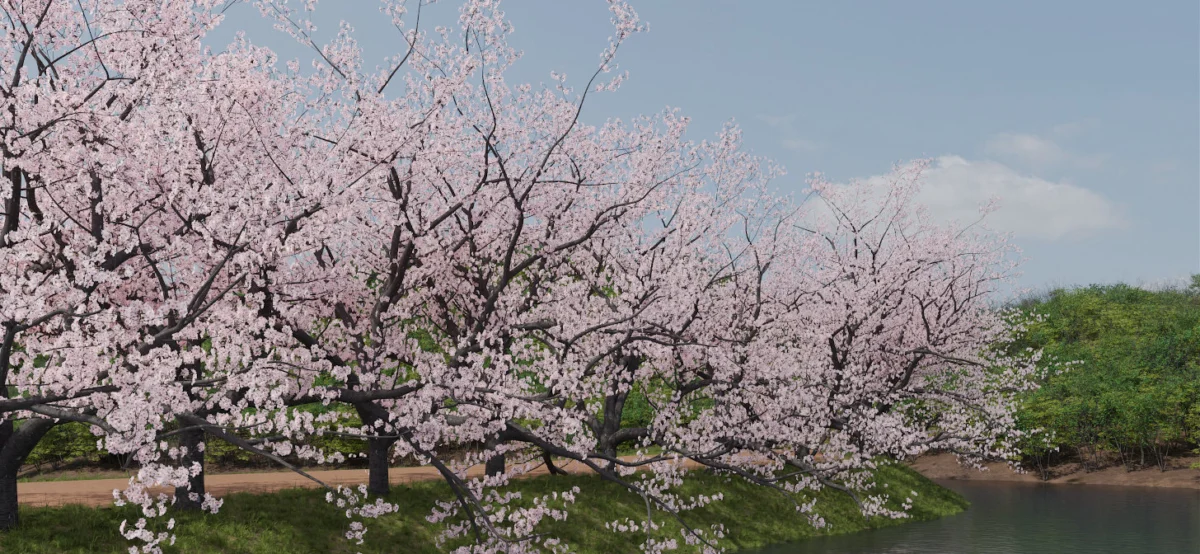
Koshizu Space has unveiled Koshizu Trees, a groundbreaking procedural tree add-on for Blender, meticulously crafted to bring the authentic beauty and nuanced artistry of Japanese tree cultivation to digital artists worldwide. This innovative tool goes beyond mere aesthetic representation, delving into the specific growth patterns, pruning techniques, and the natural aging processes that define Japanese tree species in their native gardens. The initial release, version 1.0, offers a curated selection of seven meticulously designed presets, showcasing five distinct Japanese species: Kusunoki (camphor tree), Momiji (Japanese maple), Aodamo (Japanese ash), Manryo (Ardisia crenata), and Sakura (cherry, in its blooming phase). Notably, both the Momiji and Aodamo species are presented in both single-stemmed and multi-stemmed configurations, providing artists with a broader range of compositional possibilities.
The genesis of Koshizu Trees stems from a deep-seated desire to share the aesthetic sensibilities and natural elegance characteristic of Japan’s horticultural heritage. "I want to share the beauty of Japan with you," states the Koshizu Space announcement, "so I tuned each preset until its shape looked natural and graceful to Japanese eyes." This commitment to cultural authenticity and visual fidelity underscores the add-on’s unique selling proposition, aiming to capture the soul of these arboreal specimens rather than simply their physical form.
The Technical Foundation: Geometry Nodes and Unprecedented Editability
At its core, Koshizu Trees leverages the power and flexibility of Blender’s Geometry Nodes system. This foundational technology ensures that each tree is not a static model but a dynamic, editable entity. Artists retain a high degree of control over crucial aspects of the tree’s appearance, including trunk character, branch structure, and foliage density. The intuitive nature of the Geometry Nodes implementation is further exemplified by the ability to directly manipulate the tree’s height and lean by simply dragging its tip within the viewport. This direct manipulation, coupled with the underlying procedural generation, offers a workflow that is both powerful and remarkably user-friendly.
The output generated by Koshizu Trees is standard Blender geometry, ensuring seamless integration with Blender’s rendering engines, Cycles and EEVEE. This compatibility means that artists can immediately begin incorporating these realistic Japanese trees into their scenes, confident in their ability to render beautifully and efficiently.
A Strategic Release and Future Expansion
Koshizu Trees is designed to be compatible with Blender version 4.5 and has also undergone testing with version 5.0, indicating a commitment to supporting current and near-future iterations of the popular 3D software. The add-on is priced at $39, with an introductory launch price of $32 available until November 14th. Koshizu Space has also confirmed that this is a one-time purchase, and users will receive free updates for all v1.x versions. Looking further ahead, a significant expansion is planned for early 2027, with five additional Japanese species slated to be released as a free update. This commitment to ongoing development and content addition suggests a long-term vision for Koshizu Trees as a continuously evolving asset for the Blender community.
Contextualizing the Innovation: The Art of Japanese Gardening and Digital Botany
The release of Koshizu Trees arrives at a time when the demand for realistic and culturally specific assets in 3D visualization, game development, and architectural rendering is at an all-time high. The Japanese art of gardening, particularly niwaki (meaning "garden trees"), is a centuries-old practice that emphasizes shaping trees to evoke natural landscapes, often on a miniature scale. Niwaki practitioners painstakingly prune and train trees over decades, sometimes centuries, to create living sculptures that embody principles of balance, asymmetry, and the passage of time. This meticulous approach to horticultural art is precisely what Koshizu Trees aims to translate into the digital realm.
Historically, creating truly convincing tree models in 3D has been a labor-intensive process. While many procedural tree generators exist, they often fall short in capturing the subtle, organic irregularities and the specific aesthetic qualities that distinguish different species and cultivation styles. The focus on Japanese species, with their unique pruning techniques designed to mimic ancient, weathered forms, presents a particular challenge that Koshizu Trees appears to have addressed with exceptional detail.
The inclusion of species like Kusunoki, known for its robust, spreading canopy and often trained into majestic, mature forms, and Momiji, celebrated for its vibrant seasonal foliage and often sculpted into elegant, multi-tiered structures, highlights the depth of research and artistic intent behind the add-on. The Sakura, or cherry blossom tree, a symbol of ephemeral beauty in Japanese culture, adds another layer of thematic richness.
Potential Implications and Artist Reactions
The implications of Koshizu Trees for the Blender community are significant. For architectural visualizers, it offers the ability to create more authentic and evocative renderings of projects situated in or inspired by Japanese aesthetics. For game developers, it provides a means to populate virtual worlds with unique, characterful flora that can enhance immersion and storytelling. For digital artists creating still renders or animations, the add-on democratizes access to a level of botanical realism previously requiring extensive manual modeling or the acquisition of specialized, often expensive, asset libraries.
While direct quotes from specific artists reacting to the release are not yet available in this initial announcement, the nature of the tool suggests a strong positive reception is likely. Independent 3D artist and educator, "Blender Guru" Andrew Price, has consistently emphasized the importance of quality assets and efficient workflows for Blender users. Add-ons that significantly reduce the time and complexity of creating realistic elements, such as Koshizu Trees, are typically met with enthusiastic adoption by creators seeking to elevate their work. The fact that the tool is built with Geometry Nodes also appeals to a segment of the Blender community that values a node-based workflow for its flexibility and non-destructive editing capabilities.
The $39 price point, with an attractive launch discount, positions Koshizu Trees as an accessible investment for both hobbyists and professionals. The promise of free updates, including the addition of five new species, further enhances its value proposition, suggesting a commitment to long-term support and growth. This strategy is common among successful add-on developers, fostering loyalty and encouraging continued engagement with their products.
A Glimpse into the Koshizu Space Ecosystem
The announcement encourages potential users to visit the Koshizu Space website for a deeper understanding of their offerings. This suggests that Koshizu Trees may be part of a broader ecosystem of digital assets or tools focused on botanical realism and potentially other aspects of Japanese artistic influence. The inclusion of a trailer video on platforms like YouTube is a standard and effective marketing practice, allowing potential customers to visually assess the quality and capabilities of the add-on before making a purchase. The trailer, titled "Koshizu Trees – Japanese Trees for Blender | Trailer," serves as a direct demonstration of the add-on’s output and aesthetic appeal.
Looking Ahead: The Evolution of Digital Nature
The development and release of Koshizu Trees mark a noteworthy advancement in the field of procedural content generation for 3D applications. By focusing on a specific cultural context and the intricate art of traditional horticultural practices, Koshizu Space has created a tool that is not only technically sophisticated but also rich in cultural resonance. As digital art continues to push the boundaries of realism and artistic expression, tools like Koshizu Trees that offer both power and specificity will undoubtedly play an increasingly vital role in shaping the virtual landscapes of tomorrow. The planned expansion with five additional species in early 2027 further solidifies its position as a comprehensive and evolving solution for artists seeking to infuse their digital creations with the timeless beauty of Japanese flora.
About the Author