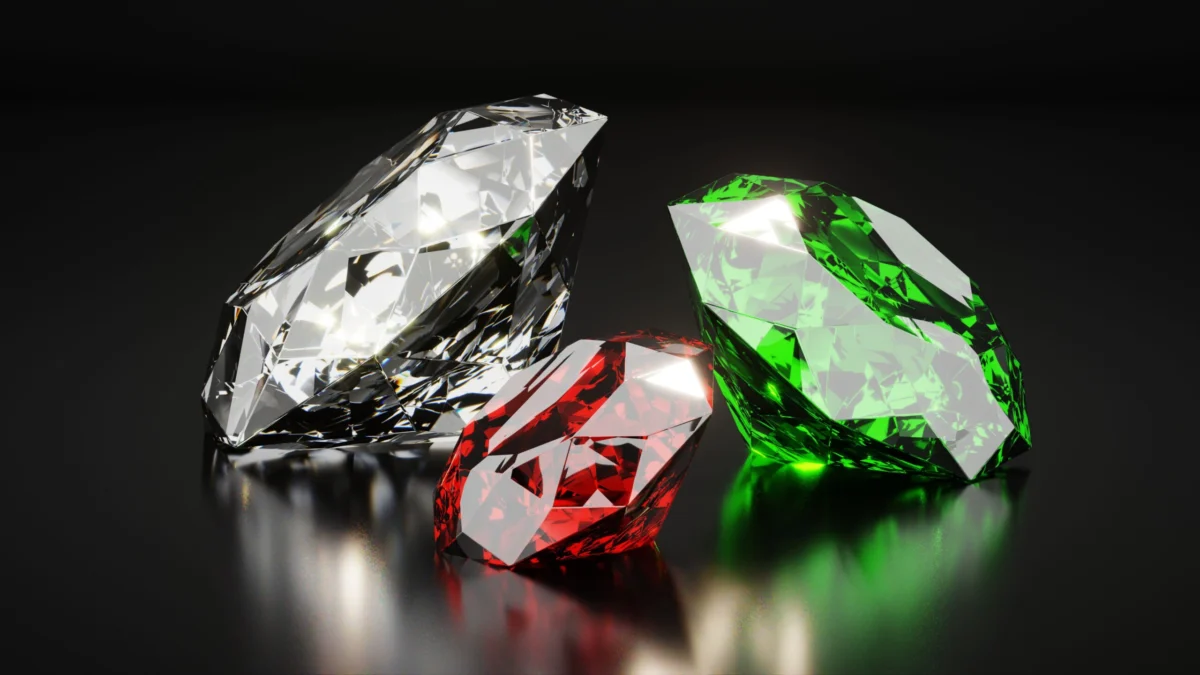
In a recent development for the 3D rendering community, Ryan King Art has released a comprehensive video tutorial demonstrating the creation of stunningly realistic procedural diamond materials within Blender version 5.3. This tutorial, made available on November 13, 2026, provides a detailed walkthrough for users aiming to achieve photorealistic gemstone renders without the need for complex external texturing or asset libraries. The release signifies a continued trend in the accessibility of advanced rendering techniques for a broader audience of 3D artists, educators, and hobbyists.
Unveiling the Diamond Material Tutorial
The core of this announcement lies in the detailed instructional video produced by Ryan King Art. The tutorial focuses on leveraging Blender’s powerful node-based shader editor to construct a procedural diamond material from scratch. Procedural materials are highly valued in 3D art as they are generated mathematically, allowing for infinite variations in texture, color, and detail without requiring large texture files. This approach offers significant advantages in terms of file size, flexibility, and the ability to scale detail infinitely.
Blender, a free and open-source 3D creation suite, has seen a surge in its user base and capabilities over the past decade. Version 5.3, the specific version highlighted in the tutorial, likely incorporates advancements in its rendering engines (Cycles and Eevee) and shader nodes that facilitate more sophisticated material creation. The tutorial aims to demystify the complex optical properties of diamonds, such as refraction, dispersion (the splitting of light into its constituent colors, often seen as spectral flashes), and subsurface scattering, translating them into practical node setups.
The visual appeal of realistic diamonds in 3D renders is paramount for various applications, including product visualization for jewelry, architectural renderings where decorative elements are crucial, and in the realm of digital art and animation. Achieving this level of realism often involves meticulous attention to how light interacts with the material. Diamonds, known for their exceptional hardness and high refractive index, exhibit unique light-bending and light-returning properties that are challenging to replicate accurately.
The Procedural Approach: A Deeper Dive
Ryan King Art’s tutorial champions a procedural workflow. This means that instead of relying on pre-made image textures, the material is built using a combination of Blender’s built-in procedural textures (like Noise, Voronoi, Musgrave, etc.), mathematical nodes, and color ramp nodes. These elements are interconnected to simulate the facets, internal inclusions, and surface imperfections that give a diamond its character and unique sparkle.
Key aspects of diamond rendering that the tutorial likely addresses include:
- Refraction: The bending of light as it passes through the diamond. This is a critical factor in creating the illusion of depth and the characteristic distortion seen through a gemstone. Blender’s Principled BSDF shader, a versatile node, incorporates a "Transmission" input that is essential for simulating this effect.
- Dispersion: Also known as chromatic aberration, this phenomenon causes different wavelengths of light to refract at slightly different angles, resulting in the colorful flashes often seen in diamonds. This is typically achieved by mathematically separating the light paths based on wavelength, a technique that can be computationally intensive but yields highly realistic results.
- Anisotropy and Roughness: While diamonds are extremely hard and their surfaces can be polished to a very high degree of smoothness, subtle surface variations and the way light scatters off microscopic imperfections contribute to their overall appearance. The tutorial might explore how to simulate these nuances.
- Internal Structure and Inclusions: Many diamonds possess natural internal characteristics, known as inclusions, which are crucial for their identification and grading. A truly realistic diamond material often incorporates subtle variations to mimic these natural imperfections, adding depth and authenticity. Procedural methods allow for the generation of these inclusions in a non-repetitive and organic manner.
- Fresnel Effect: This optical phenomenon dictates how much light is reflected versus refracted at a surface, depending on the angle of incidence. At glancing angles, more light is reflected, contributing to the brilliance of the diamond.
The tutorial’s release on BlenderNation, a prominent platform for Blender news and resources, suggests a high level of interest and anticipation within the Blender community. BlenderNation consistently features tutorials and news that cater to both beginner and advanced users, making it an ideal venue for such content.
Timeline and Context of Blender Development
Blender has undergone a significant transformation in recent years, moving from a project with a dedicated but niche following to a leading force in the 3D software industry. The transition to Blender 2.8x marked a major overhaul in its user interface and workflow, making it more accessible to newcomers. Subsequent releases, including the likely 5.3 version referenced, have continued to build upon this foundation, introducing new features and refining existing ones.
The development of Blender is driven by a combination of a dedicated core development team and contributions from the wider open-source community. This collaborative model ensures rapid innovation and a constant stream of new functionalities. The fact that a tutorial is released for version 5.3 implies that this version is either current or has been recently released, showcasing the ongoing pace of development.
The release of such detailed tutorials by independent artists like Ryan King Art is a testament to the robust ecosystem that surrounds Blender. These creators play a vital role in democratizing advanced 3D techniques, making them accessible to a global audience who might not have the resources for expensive commercial software or specialized training.
Potential Impact and Implications
The availability of this tutorial has several potential implications for the 3D rendering industry and its practitioners:
- Enhanced Realism in Digital Content: For game developers, filmmakers, and architectural visualization studios, the ability to create highly realistic diamonds procedurally can significantly elevate the quality of their output. This can lead to more immersive virtual environments and more compelling product presentations.
- Democratization of High-End Rendering: Artists working with limited budgets or on independent projects can now achieve professional-grade diamond renders without relying on costly asset packs or extensive research into complex shader setups. This levels the playing field for creators.
- Educational Value: For students and aspiring 3D artists, this tutorial serves as a valuable learning resource. Understanding how to build complex materials procedurally is a fundamental skill that can be applied to a wide range of other rendering challenges.
- Community Engagement: The sharing of such detailed knowledge fosters a collaborative spirit within the Blender community. Tutorials like this often spark further experimentation and innovation as artists build upon the techniques presented.
The choice of Blender 5.3 is significant. If this version introduced specific improvements to its rendering pipeline, shader nodes, or performance optimizations related to complex material calculations, then this tutorial would be a practical demonstration of those advancements in action. For instance, improvements in ray tracing capabilities or faster shader compilation could directly benefit the creation of intricate materials like diamonds.
Analysis of Procedural Material Creation
The trend towards procedural material creation in 3D software is a significant shift from older, texture-based workflows. While texture maps (like diffuse, specular, and normal maps) are still essential for many applications, proceduralism offers distinct advantages:
- Scalability: Procedural textures can be scaled to any resolution without loss of quality, whereas bitmap textures become pixelated when enlarged.
- Flexibility: Parameters of a procedural material can be easily tweaked to generate variations, allowing for quick adjustments to color, roughness, and other properties.
- Efficiency: In some cases, complex procedural setups can be more memory-efficient than large sets of high-resolution texture maps.
- Artistic Control: Proceduralism grants artists a deep level of control over every aspect of a material’s appearance, allowing for unique and highly customized results.
The challenge with procedural materials, particularly for complex phenomena like diamond dispersion, lies in the mathematical understanding and node wrangling required. Tutorials like Ryan King Art’s serve as crucial bridges, translating complex theory into practical, step-by-step instructions that are digestible for a wider audience.
Expert Commentary (Inferred)
While direct quotes from industry experts are not available in the provided content, one can infer the general sentiment within the 3D art community. Experts often emphasize the importance of understanding light physics when creating realistic renders. They would likely commend a tutorial that breaks down the intricate optical behavior of diamonds into manageable node setups.
A common refrain among seasoned 3D artists is that realism is achieved through meticulous attention to detail and a deep understanding of how real-world materials behave. Proceduralism, when mastered, offers a powerful avenue to achieve this level of detail and understanding. The success of such tutorials on platforms like BlenderNation suggests a strong demand for practical knowledge that empowers artists to create more compelling visual content.
Broader Impact on the 3D Industry
The continued release of high-quality, free tutorials for open-source software like Blender has a profound impact on the entire 3D industry. It lowers the barrier to entry for aspiring artists, fosters a more diverse and talented workforce, and drives innovation by making sophisticated tools and techniques accessible to a global community.
As digital content continues to grow in demand across various sectors – from entertainment and gaming to virtual reality and product design – the need for skilled 3D artists will only increase. Tutorials that focus on specific, high-impact elements like realistic diamonds contribute to building the foundational skills necessary for artists to thrive in this evolving landscape. Ryan King Art’s contribution, therefore, is not just about creating beautiful diamonds in a 3D software; it’s about empowering a new generation of digital creators.
The future of 3D rendering is increasingly leaning towards proceduralism, AI-assisted workflows, and real-time rendering engines. Tutorials that address these areas, like the one discussed, are vital for keeping the community at the forefront of technological advancements. The ability to create photorealistic materials such as diamonds without relying on external assets signifies a move towards greater artistic independence and technical self-sufficiency within the Blender ecosystem.
About the Author