Unreal Engine 5 (UE5) has significantly advanced the landscape of digital content creation, particularly with the introduction of its groundbreaking MetaHuman character library. These highly realistic digital humans are now freely accessible, enabling developers and creators across various industries to integrate professional-grade characters into their projects with unprecedented ease. This pivotal development democratizes access to what was once an extraordinarily time-consuming and expensive facet of game development and virtual production, empowering studios of all sizes to achieve cinematic visual fidelity.
The integration of MetaHumans into UE5 represents a strategic move by Epic Games to streamline and enhance the character creation pipeline. Traditionally, crafting a photorealistic digital human from scratch demanded extensive expertise in 3D modeling, texturing, rigging, and animation, often requiring months of dedicated effort from highly skilled artists. The MetaHuman framework drastically reduces this barrier, offering a curated collection of pre-configured, production-ready characters that can be quickly downloaded and deployed. This guide delves into the straightforward process of leveraging the MetaHuman library within a UE5 project, examining the technological underpinnings, the workflow, and the broader implications for digital content creation.
The Evolution of Digital Humans and Epic Games’ Vision

The pursuit of photorealistic digital humans has been a long-standing aspiration in computer graphics, often considered the "holy grail" due to the complex interplay of subtle details in human appearance and movement that trigger the "uncanny valley" effect when not perfectly rendered. Advances over the past two decades, particularly in areas like subsurface scattering for skin, physically based rendering (PBR) materials, and sophisticated hair simulation, have gradually brought this goal closer. However, the cost and specialized knowledge remained prohibitive for many.
Epic Games, recognizing this bottleneck, embarked on a mission to democratize high-end character creation. This vision was significantly bolstered by their acquisitions of 3Lateral, a company renowned for its digital human technology, and Cubic Motion, a leader in advanced facial animation. These acquisitions laid the foundational technological bedrock for what would become MetaHuman. The overarching strategy aligns with Epic’s broader aim for Unreal Engine 5: to provide tools that allow creators to achieve next-generation visuals and immersive experiences without requiring massive budgets or highly specialized, bespoke pipelines. MetaHumans are a natural complement to other UE5 innovations like Nanite (virtualized micropolygon geometry for unparalleled detail) and Lumen (a fully dynamic global illumination and reflections system), all working in concert to create hyper-realistic environments and characters.
A Chronology of MetaHuman Development and Integration
The journey of MetaHuman began publicly in February 2021 with the announcement of the MetaHuman Creator, a cloud-based application designed to allow users to create bespoke digital humans from a vast array of presets and customization options. This reveal generated significant excitement, showcasing incredibly detailed characters capable of intricate facial animation. The initial early access to the MetaHuman Creator and select MetaHuman assets followed, allowing developers to experiment with the technology.
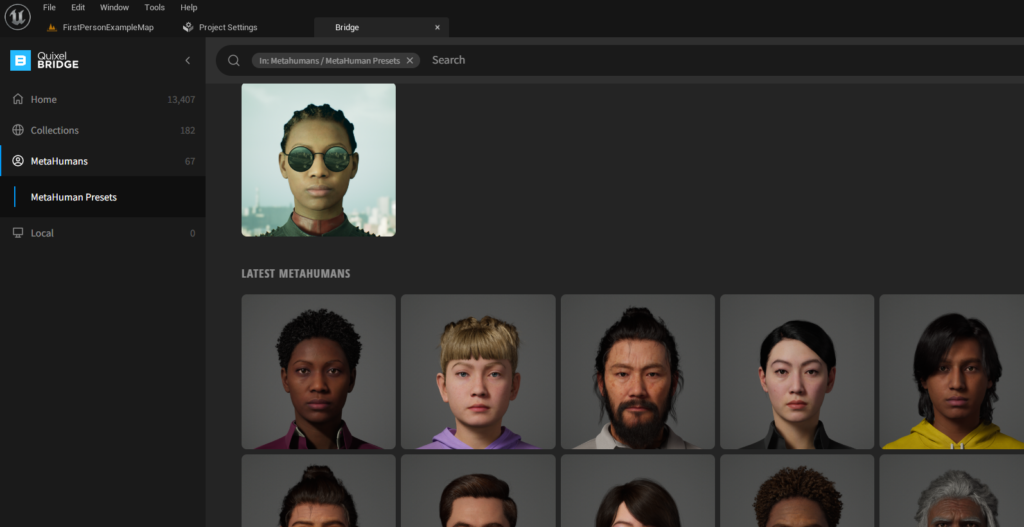
The full public release of Unreal Engine 5 in April 2022 marked a significant milestone. With this release, the MetaHuman library became an integral, accessible component of the UE5 ecosystem, primarily through the Quixel Bridge application. This deep integration means that the process of acquiring and importing these complex assets is streamlined directly within the engine editor, reflecting Epic’s commitment to a seamless developer experience. Future iterations promise even deeper customization capabilities via the MetaHuman Creator, allowing users to sculpt and refine characters to an even greater degree before exporting them to Unreal Engine.
Accessing the MetaHuman Library: A Step-by-Step Guide
Integrating a MetaHuman into a UE5 project is designed to be intuitive, leveraging the powerful Quixel Bridge interface.
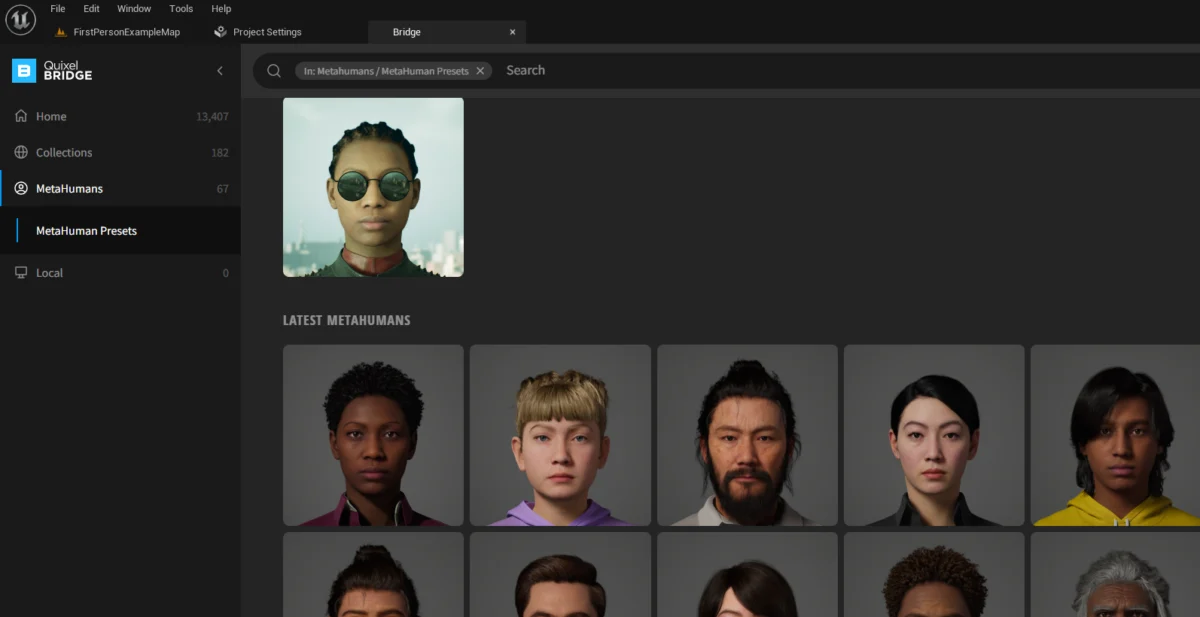
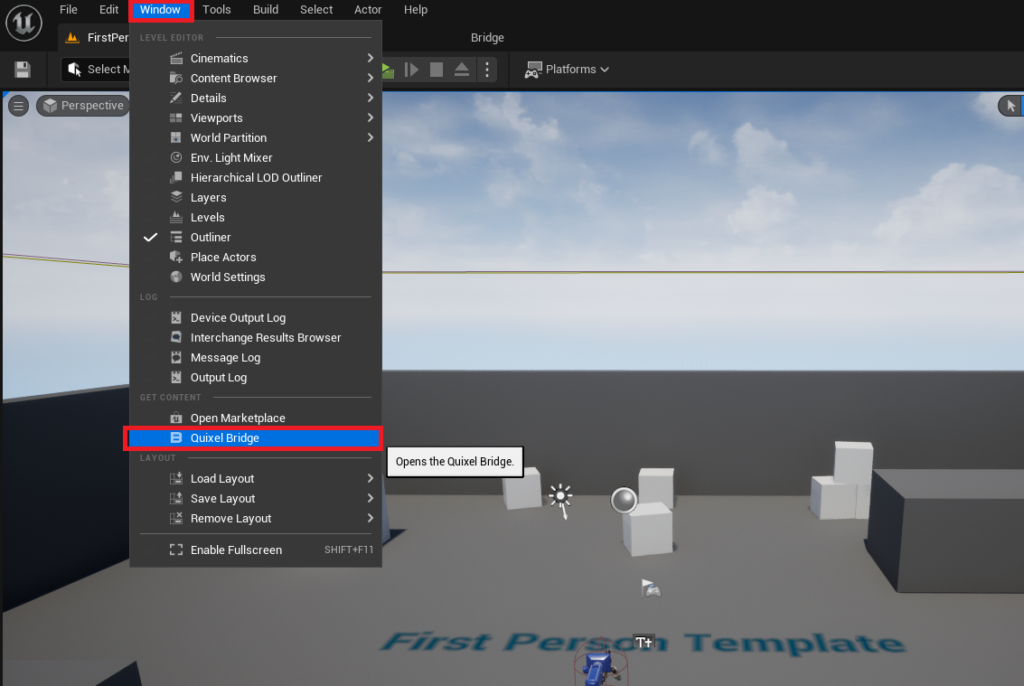
The initial step requires opening the Quixel Bridge. This is achieved directly within the Unreal Engine editor by navigating to the "Window" tab in the top menu bar and selecting "Quixel Bridge." Quixel Bridge serves as Epic’s integrated content management system, providing access not only to MetaHumans but also to an extensive library of high-quality photogrammetry assets from Quixel Megascans, all of which are optimized for Unreal Engine. Once opened, the Quixel Bridge typically appears as a docked window within the editor, ensuring that developers do not need to switch between multiple applications.
Upon opening Quixel Bridge, users will find several tabs categorized by content type. To access the digital humans, click on the "MetaHumans" tab. This action filters the library to display only the pre-configured MetaHuman characters available for download. The library presents a diverse array of digital humans, showcasing various ages, ethnicities, and styles, all rendered with an astonishing level of detail and realism. Each character is a fully rigged, production-ready asset, complete with high-resolution textures, intricate hair systems, and advanced skeletal and facial rigs.
Authentication and Asset Acquisition
Before any MetaHuman can be downloaded and added to an active project, user authentication is required. Selecting any avatar in the MetaHuman grid will prompt a "Sign In" button, typically located at the bottom right of the Quixel Bridge window. Users must log in with their Epic Games account credentials. This authentication is crucial as it verifies licensing for the use of MetaHuman and Quixel Megascans assets, which are provided free for use in Unreal Engine projects. This ensures compliance with Epic Games’ licensing terms and grants full access to the comprehensive library.
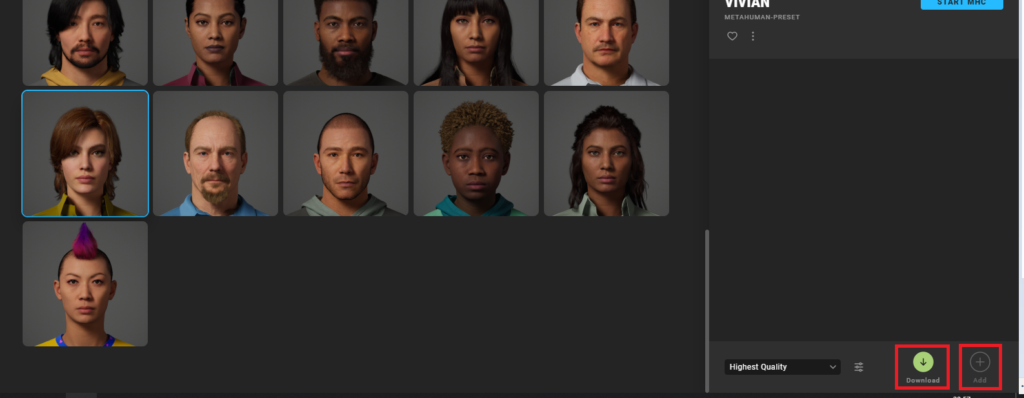
After successful authentication, users can select their desired MetaHuman avatar. The next action is to click the "Download" button associated with the chosen character. The download process will commence, transferring the high-fidelity assets from Epic’s servers to the local machine. Given the intricate detail and complexity of MetaHuman assets, file sizes can be substantial, and download times may vary depending on internet connection speed. It is important to note that MetaHumans are modular, consisting of multiple components like body, face, hair, and clothing, all packaged for optimal performance and customization.

Once the download is complete, the "Download" button will transform into an "Add" button. Clicking "Add" initiates the automatic import process, bringing the selected MetaHuman directly into the currently open Unreal Engine project. This automated integration is a significant time-saver, as it handles the complex process of importing multiple textures, meshes, materials, and skeletal assets, organizing them within the project’s content structure.
Project Configuration and Editor Restart
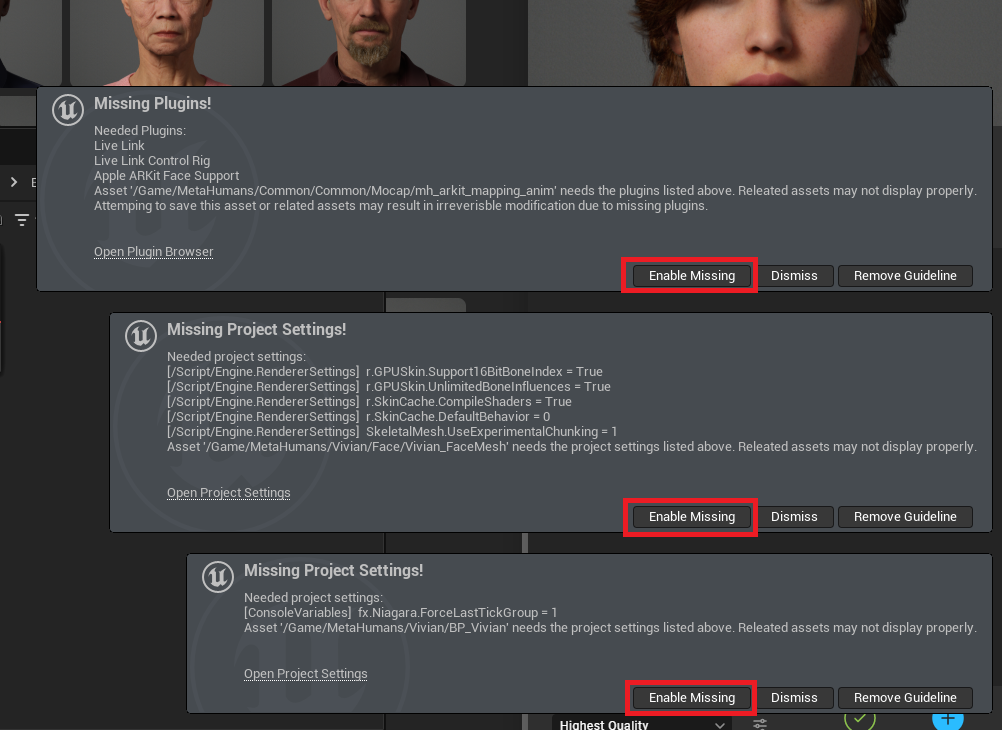
The advanced nature of MetaHumans often necessitates specific project settings and plugins within Unreal Engine 5 to ensure proper rendering and functionality. During the import process, the editor may display notifications in the bottom left corner, indicating "missing" plugins or project settings required for MetaHuman assets. It is imperative to click "Enable Missing" when prompted. This action automatically configures the project by enabling essential plugins such as Mesh Deformers, Alembic, Groom (for hair rendering), and other relevant modules. These plugins are vital for features like real-time mesh deformation, high-quality hair simulation, and advanced material rendering that give MetaHumans their distinctive realism.
After enabling the necessary settings and plugins, Unreal Engine will often prompt the user to "Restart Now." This step is critical, as it ensures that all newly enabled plugins and modified project settings are properly loaded and applied to the editor environment. Failing to restart could result in rendering issues or incomplete functionality of the MetaHuman asset within the project. Once the editor restarts, the project will be fully prepared to utilize the imported MetaHuman.

Locating and Utilizing the MetaHuman Blueprint
Following the restart, the newly imported MetaHuman can be located within the project’s Content Drawer. Navigating to the "MetaHumans" folder, users will find a subfolder named after the specific MetaHuman character that was downloaded. Inside this folder, the core asset for the MetaHuman is typically a Blueprint Actor, identifiable by its "BP_" prefix (e.g., BP_MetaHumanName). This Blueprint encapsulates all the complex components of the MetaHuman – its skeletal mesh, materials, textures, hair groom assets, and animation rig – into a single, easy-to-manage entity.
This BP_ asset is fully rigged and ready for use. Developers can simply drag and drop this Blueprint into their level, where the MetaHuman will appear. The modular nature of MetaHumans means that the Blueprint contains multiple meshes that make up the full character, allowing for potential customization or swapping of individual components if desired. These characters are not merely static models; they are fully prepared for animation, posing, and integration into gameplay mechanics, serving as player characters, non-player characters (NPCs), or digital actors in virtual productions.
Broader Impact and Implications for Digital Content Creation
The free availability and streamlined integration of MetaHumans have profound implications across various creative industries.
Democratization of High-End Content: The most significant impact is the democratization of high-fidelity character creation. Small independent studios, individual developers, and even hobbyists can now access character assets that previously required significant financial investment and specialized talent. This levels the playing field, allowing smaller teams to compete visually with larger, more established entities.
Accelerated Production Workflows: For larger studios, MetaHumans dramatically accelerate pre-production and production phases. The time saved in character modeling, texturing, and rigging can be reallocated to other critical aspects of development, such as gameplay mechanics, environmental design, or narrative enhancement. This efficiency translates directly into cost savings and faster time-to-market for projects.
Cross-Industry Applications: While initially prominent in game development, MetaHumans are rapidly finding applications in film, television, and virtual production. Filmmakers can use them for digital doubles, crowd generation, or entirely virtual characters, blending seamlessly with live-action footage. Architectural visualization can incorporate realistic human figures to bring renders to life. Moreover, the burgeoning metaverse and virtual reality sectors stand to benefit immensely, as MetaHumans provide a foundation for realistic and expressive digital avatars, enhancing immersion and social interaction in virtual spaces. The fashion industry is also exploring MetaHumans for digital clothing showcases and virtual models.
Technical Advancements and Future Potential: MetaHumans showcase the bleeding edge of real-time rendering. Their detailed skin shaders, which incorporate subsurface scattering, micro-normal details, and physically accurate reflections, contribute to an uncanny sense of presence. The advanced hair systems, often utilizing strand-based grooms, react realistically to light and movement. The underlying skeletal and facial rigs are built for high-performance animation, supporting a wide range of expressions and motions. Looking ahead, the full rollout of the MetaHuman Creator tool will unlock unprecedented customization, allowing users to sculpt unique faces, modify body proportions, and tailor every aspect of their digital human, further blurring the lines between the real and the virtual.
Conclusion
The introduction of the MetaHuman library within Unreal Engine 5 marks a transformative moment in digital content creation. By offering a comprehensive collection of free, high-fidelity digital humans and an incredibly efficient integration workflow, Epic Games has once again lowered the barrier to entry for producing visually stunning projects. From aspiring indie developers to seasoned professionals in film and games, creators now have access to production-ready, fully rigged characters that can be dropped into a project with minimal effort.
This innovation not only streamlines existing pipelines but also opens up new avenues for creative expression and technological exploration. As Unreal Engine 5 continues to evolve, with future updates to the MetaHuman Creator promising even greater customization, the potential for lifelike digital characters to populate our virtual worlds will only grow. The MetaHuman library is more than just a collection of assets; it is a catalyst for the next generation of immersive storytelling and interactive experiences, solidifying Unreal Engine 5’s position at the forefront of real-time 3D development.
About the Author