NVIDIA has officially released a series of driver updates designed to rectify a long-standing technical conflict that caused the Meta Quest Link software to freeze and malfunction for a significant portion of the PC-based virtual reality (PCVR) community. The resolution, which arrived via Game Ready Driver version 621.01 and the subsequent Enterprise Driver version 621.14, addresses a bug that has plagued users for approximately ten months, disrupting both consumer entertainment and professional development workflows.
Overview of the Technical Conflict
The issue first gained widespread attention in early 2024 following a series of NVIDIA driver updates. Users utilizing the Meta Quest Link—formerly known as Oculus Link—reported that their VR sessions would abruptly freeze. During these incidents, the visual output within the headset would lock onto a single frame, often accompanied by severe visual artifacts and "tearing" at the periphery of the user’s vision.
Technically, the error necessitated a full restart of the Meta Quest background services or a complete reboot of the host PC to restore functionality. However, these fixes were temporary, as the freezing would typically recur within minutes of resuming a session. While the bug did not affect every NVIDIA user, it was prevalent enough to trigger extensive investigations by both Meta’s engineering teams and NVIDIA’s driver stability department.
Chronology of the Ten-Month Bug
The timeline of this issue reflects the complexities of modern software-hardware interoperability.

- January 2024: Following the release of new NVIDIA GPU drivers, reports began to surface on community forums such as Reddit and the Meta Community Forums regarding stability issues with the Quest Link cable and Air Link.
- Q1 – Q2 2024: Meta’s technical support confirmed that the instability was rooted in NVIDIA’s driver architecture rather than the Meta Quest firmware. During this period, the only viable solution for affected users was to roll back their GPU drivers to versions released in late 2023, which often meant sacrificing performance and compatibility in newer non-VR titles.
- Q3 2024: NVIDIA officially acknowledged the issue, assigning it the internal tracking ID [6292679]. The company listed "Meta Horizon Link stream may freeze when connected over USB" as a known issue in several consecutive release notes.
- October 2024: NVIDIA deployed the first successful patch in Game Ready Driver v621.01.
- November 2024: The fix was integrated into the Enterprise-grade drivers (v621.14), ensuring that professionals using workstations with Quadro or RTX Enterprise GPUs could also return to stable operations.
Analysis of the Impact on the VR Ecosystem
The Meta Quest series, including the Quest 2, Quest 3, and Quest Pro, maintains a dominant position in the VR market. According to recent Steam Hardware Survey data, Meta headsets account for over 60% of the VR devices used on the SteamVR platform. Because many Quest owners rely on the Link feature to play high-fidelity PCVR games that the standalone mobile processor cannot handle, a driver-level failure of this magnitude significantly impacted the broader PCVR ecosystem.
During the outage, many users migrated to third-party alternatives. Applications such as Virtual Desktop and Valve’s Steam Link for Quest became the primary methods for connecting to PCs, as these programs utilize different streaming protocols that were unaffected by the specific NVIDIA driver bug. While these alternatives provided a necessary lifeline, they did not offer a complete replacement for the official Meta Quest Link software for all use cases.
The Critical Role of Quest Link for Developers
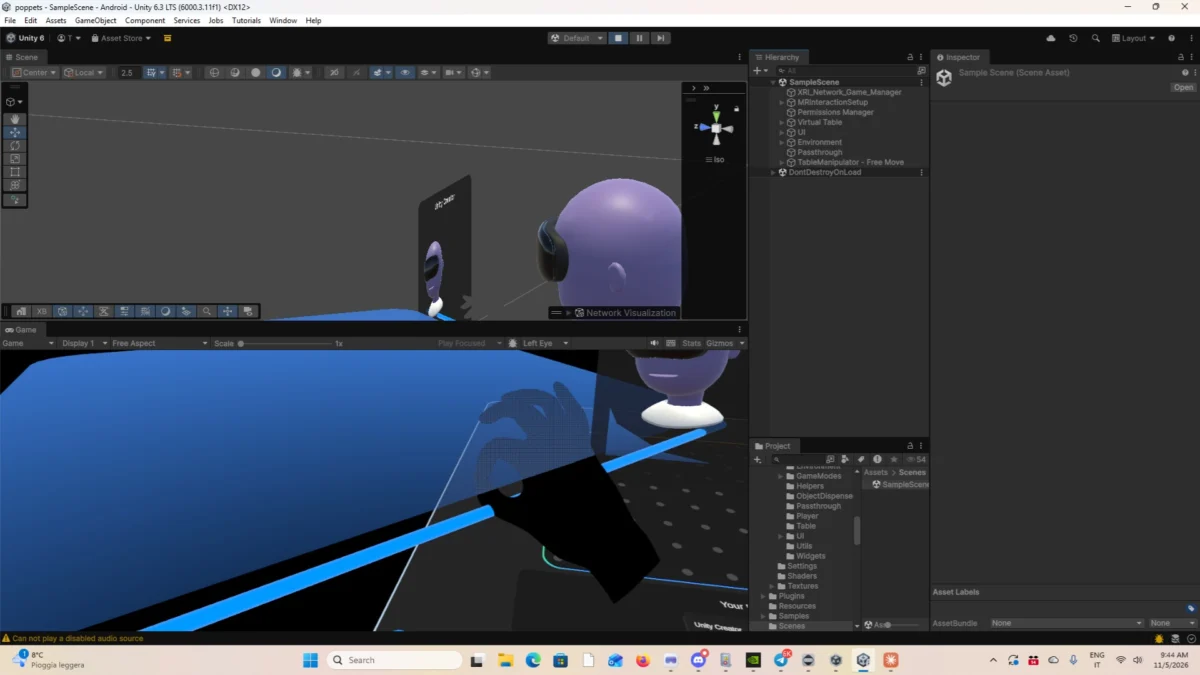
The resolution of this driver issue is particularly significant for the augmented reality (AR) and virtual reality (VR) development community. While gaming-centric users could switch to Virtual Desktop, developers working within the Unity or Unreal Engine environments often rely on the official Quest Link for its deep integration with Meta’s developer tools.
The official Link software allows for the real-time streaming of proprietary data types from the headset to the development environment, including:
- Passthrough Data: Essential for testing Mixed Reality (MR) applications.
- Hand Tracking: High-fidelity data for gesture-based interactions.
- Eye and Face Tracking: Critical for social VR and performance-based foveated rendering.
Without a stable Link connection, developers are often forced to "build and run" their applications—a process that involves compiling the software and installing it on the headset for every minor change. This adds significant time to the development cycle. The return of stable Link functionality allows developers to use the "Play" mode within their engines, seeing changes instantly in the headset and significantly accelerating the iteration process.

Official Responses and Technical Specifications
NVIDIA’s release notes for the corrective drivers explicitly mention the fix for bug [6292679], noting that the "Meta Horizon Link stream" should no longer freeze during USB connections. Meta has also updated its support documentation to encourage users to update their drivers to the latest version to ensure compatibility.
Industry analysts suggest that the delay in providing a fix may have been due to the evolving nature of the Meta Horizon software suite. During the ten months the bug persisted, Meta was in the process of rebranding its PC software from "Oculus" to "Meta Horizon," a transition that involved significant changes to the underlying service architecture. This shifting environment likely complicated NVIDIA’s efforts to isolate the specific driver calls that were triggering the freezes.
Broader Implications for Hardware-Software Synergy
The ten-month duration of this glitch highlights a growing concern in the tech industry regarding the prioritization of VR stability. As NVIDIA’s primary focus remains on AI development and high-performance gaming, niche sectors like PCVR sometimes face longer lead times for critical bug fixes.
However, the eventual resolution demonstrates a continued commitment to the XR (Extended Reality) space. For users still experiencing issues, technical experts recommend a "Clean Install" of the latest NVIDIA drivers. This process involves using the NVIDIA installer’s built-in tool or the third-party Display Driver Uninstaller (DDU) to remove all remnants of previous, corrupted driver versions before applying the v621.01 (or newer) update.
As the industry moves toward more complex Mixed Reality hardware, the stability of the bridge between mobile headsets and powerful PCs remains a cornerstone of the high-end VR experience. The patch released by NVIDIA not only restores functionality to millions of Quest owners but also reinforces the infrastructure necessary for the next generation of spatial computing development.
About the Author