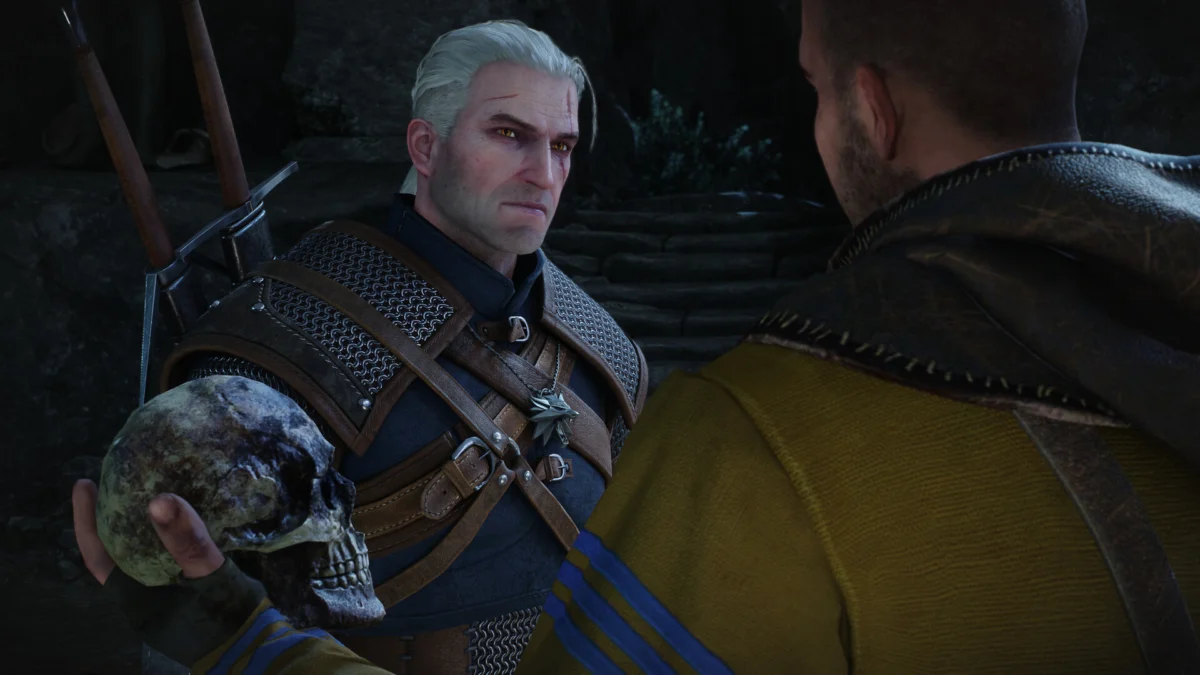
In a significant development for the gaming industry and the evolving landscape of artificial intelligence in creative fields, Jacek Rozenek, the original Polish voice actor for Geralt of Rivia in The Witcher 3: Wild Hunt, has granted CD Projekt Red a special exception to utilize AI technology to maintain continuity in his performance for the upcoming expansion, Songs of the Past. This unprecedented agreement addresses the impact of a stroke Rozenek suffered years prior, which altered his voice, ensuring that the iconic protagonist’s Polish vocal portrayal remains consistent with his established sound from over a decade ago.
The Challenge of Continuity: Rozenek’s Journey and Geralt’s Voice
The Witcher 3: Wild Hunt, released in 2015, quickly cemented its place as a masterpiece in the gaming pantheon, selling over 50 million copies worldwide and garnering numerous Game of the Year awards. Its rich narrative, expansive open world, and compelling characters, including the stoic monster hunter Geralt, captivated millions. A crucial element of this immersion for Polish-speaking players has always been Jacek Rozenek’s distinctive voice, which has defined Geralt for over two decades, spanning the original game trilogy and beyond.
However, the passage of time brought unforeseen challenges. In 2017, Rozenek suffered a severe stroke that significantly affected his vocal cords and speech patterns. While he bravely returned to acting in the subsequent years, the physical toll of voice work was considerable, and his voice naturally became gruffer and lower than it had been before his stroke. This change, while minor in a new, standalone project, presented a substantial hurdle for Songs of the Past, an expansion designed to seamlessly integrate with a game released 11 years prior. The new lines recorded by Rozenek would be placed in direct proximity to thousands of lines he had recorded for the base game in 2015, creating a noticeable discontinuity that could break player immersion.
CD Projekt Red, renowned for its meticulous attention to detail and commitment to player experience, recognized this challenge early in the development of Songs of the Past. The studio approached Rozenek to discuss his return for the expansion, acknowledging both his invaluable contribution to the character and the physical realities of his altered voice. The goal was to find a solution that honored Rozenek’s legacy and ensured the beloved character’s vocal integrity.
Leveraging AI for Preservation: The Respeecher Solution
The decision was made to employ advanced AI voice synthesis. CD Projekt Red turned to Respeecher, a professional AI voice generator with whom the studio had a prior, successful collaboration. Respeecher’s technology is designed to recreate and modify vocal performances while preserving the original actor’s emotional nuance and delivery. Their AI tools are trained on extensive datasets of an actor’s previous recordings, allowing them to accurately mimic specific vocal characteristics.
This is not CD Projekt Red’s first foray into using AI for voice continuity. The studio previously utilized Respeecher’s technology for the Cyberpunk 2077 expansion, Phantom Liberty. In that instance, the voice of the late actor Miłogost Reczek, who portrayed the beloved ripperdoc Viktor Vektor in the base game, needed to be recreated for new lines. Reczek passed away in 2021, and rather than recasting the role, CD Projekt Red, with the consent of Reczek’s family, used AI to synthesize new dialogue in his voice, ensuring Viktor Vektor’s consistent presence in the expansion. This precedent demonstrated the studio’s capability and ethical framework for deploying such technology.
For Songs of the Past, Respeecher’s AI tools were trained on Rozenek’s extensive archive of recordings from previous Witcher games, meticulously capturing the subtle nuances of his voice as Geralt prior to his stroke. When Rozenek recorded his lines for the new expansion – for which he was fully hired and compensated – the AI was then used to subtly modify these new recordings, making them sound consistent with his vocal performance from over a decade ago. This process ensures that players will experience a seamless transition between old and new dialogue, preserving the illusion of Geralt’s unchanging voice.
An Ethical Precedent: Consent and Compassion in AI Adoption
The core of this development lies in the explicit consent provided by Jacek Rozenek. In an industry grappling with the ethical implications of AI, particularly concerning job displacement and unauthorized voice replication, Rozenek’s agreement stands as a powerful example of responsible and compassionate technology integration.
Mikołaj Szwed, a localization producer at CD Projekt Red, underscored the significance of this approach. "I do think this is one of those ways where you can use AI ethically, with consent and also to do something good," Szwed stated, emphasizing that this was an exceptional circumstance driven by Rozenek’s health, rather than a standard operational procedure. He stressed that such exceptions are not common and are made with the utmost respect for the actors involved.
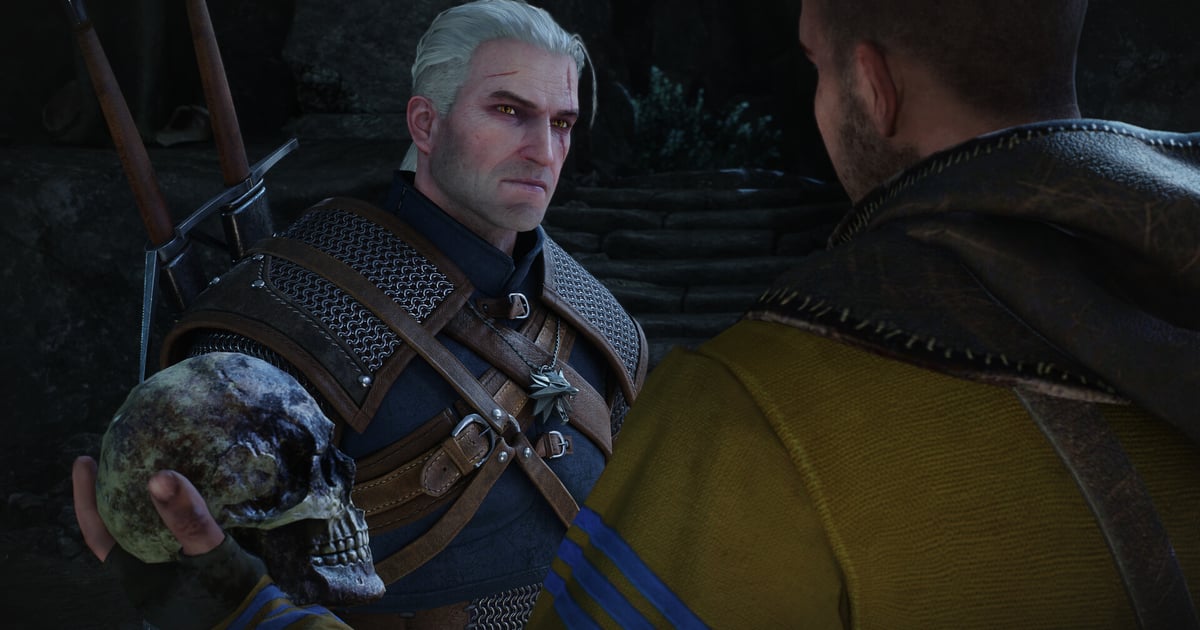
This case sharply contrasts with the broader anxieties prevalent in the voice acting community and creative industries. Organizations like SAG-AFTRA have been actively campaigning for robust protections against unauthorized AI voice cloning, fearing that such technology could devalue human talent and lead to widespread job losses. The agreement between Rozenek and CD Projekt Red, however, highlights a potential pathway for AI to serve as an assistive tool, extending careers and preserving iconic performances, rather than replacing them. It demonstrates that when deployed with transparency, consent, and fair compensation, AI can bridge gaps created by unforeseen circumstances, allowing beloved characters to maintain their integrity while supporting the artists who bring them to life.
Broader Implications for the Gaming Industry and Voice Acting
The decision to use AI for Jacek Rozenek’s voice in Songs of the Past sets a significant precedent with far-reaching implications for the video game industry and voice acting as a whole.
Firstly, it offers a tangible model for ethical AI implementation. In an era where AI generative tools are rapidly advancing, this collaboration showcases how technology can be used to augment human performance, especially in cases of illness, aging, or disability. It provides a framework for how studios can approach similar challenges, ensuring that actors are not only compensated but also integral to the decision-making process regarding their vocal likeness.
Secondly, it addresses the challenge of character longevity in long-running franchises. As games become more expansive and development cycles stretch across years, maintaining vocal consistency for iconic characters becomes increasingly difficult. Actors age, their voices naturally change, and health issues can arise. This solution offers a method to preserve the "sound" of a character, ensuring that beloved figures like Geralt maintain their familiar auditory identity across multiple entries or protracted development timelines. This could be particularly valuable for series with deep lore and established fan bases, where even subtle changes in a character’s voice can be jarring.
Thirdly, this case highlights the potential for AI to extend the careers of voice actors. For performers who, like Rozenek, experience health-related vocal changes, this technology could enable them to continue working on projects they love, without the added strain of trying to force their voice back to a previous state, or the risk of being replaced. It transforms a potential career-ending obstacle into a solvable technical challenge, with the actor remaining at the heart of the creative process.
The Future of Geralt’s Voice: Beyond Songs of the Past
While this solution addresses the immediate needs of Songs of the Past, questions naturally arise about the future of Geralt’s Polish voice, particularly concerning The Witcher 4. CD Projekt Red has confirmed that a new saga in The Witcher universe is in development, though details remain scarce.
For an expansion like Songs of the Past, which is intrinsically linked to the original Witcher 3 narrative and timeline, maintaining vocal consistency is paramount. A sudden shift in Geralt’s voice would disrupt the immersion for players expecting the familiar sound from an 11-year-old game. However, for a brand-new installment like The Witcher 4, set potentially years or even decades after the events of Wild Hunt, a different approach might be more appropriate.
A deeper, gruffer voice for an older, more weathered Geralt could naturally fit a sequel. Such a change, if handled within the narrative context of the character’s aging or new experiences, might even be welcomed by fans. It is unknown whether Jacek Rozenek will reprise the role of Geralt in the Polish version of The Witcher 4, or if the studio might opt for a new actor, or even continue with a subtly AI-enhanced version of Rozenek’s current voice. The decision would likely involve a complex interplay of creative direction, narrative considerations, and, crucially, further discussions and agreements with Rozenek himself.
The precedent set by Songs of the Past ensures that CD Projekt Red has a viable, ethically sound option should they choose to continue working with Rozenek in the future, regardless of how his voice might naturally evolve. It underscores the studio’s commitment to its talent and its iconic characters, navigating technological advancements with a clear moral compass.
Conclusion
Jacek Rozenek’s consent to the use of AI to maintain his voice as Geralt of Rivia in The Witcher 3‘s Songs of the Past expansion marks a pivotal moment in the discussion surrounding artificial intelligence in creative industries. It exemplifies a collaborative, ethical approach where technology serves as an enabler, preserving artistic integrity and supporting actors through personal challenges, rather than displacing them. As the video game industry continues to evolve, this case provides a valuable blueprint for how developers can responsibly integrate advanced tools, ensuring that the human element and the consent of the artist remain at the forefront of innovation. It’s a testament to the power of thoughtful partnership, allowing beloved characters to endure and the voices behind them to continue their legacy.
About the Author