The immersive and intricate worlds brought to life within Blender, the industry-standard open-source 3D creation suite, often represent a significant triumph of artistic vision and technical execution. However, for many artists and studios, the journey from a beautifully crafted viewport scene to a final rendered output can be a protracted and computationally intensive ordeal. This bottleneck, characterized by dramatically extended render times, particularly for complex animations and high-resolution visuals, has long been a central challenge in digital content creation. While Blender itself boasts impressive optimization, especially with its Cycles renderer and GPU acceleration capabilities, the inherent demands of detailed lighting, high-resolution textures, and sophisticated physics simulations frequently push local hardware to its absolute limits. The question for many is no longer if rendering is a time-consuming process, but rather how to accelerate it effectively without the prohibitive cost of acquiring increasingly powerful, and expensive, hardware. This exploration delves into the persistent rendering challenges faced by Blender users and examines the growing viability of offloading these demanding tasks to specialized cloud-based render farm solutions.
The Rendering Bottleneck in Blender: A Deep Dive into Performance Challenges
At the core of the rendering slowdown lies the inherent complexity of the visual data being processed. A Blender scene, especially one destined for professional animation or architectural visualization, can contain an astonishing amount of information. High-resolution textures, often exceeding 4K or even 8K, demand substantial memory and processing power to load and sample accurately. Intricate lighting setups, employing numerous light sources, global illumination, and complex shader networks, require extensive ray tracing and path tracing calculations to simulate realistic light interactions. Furthermore, dynamic elements like fluid simulations, cloth dynamics, and particle systems introduce a layer of computational overhead that escalates rapidly with scene complexity and simulation duration.
Even with dedicated professional graphics cards and multi-core processors, a single workstation has finite resources. When rendering an animation, each frame must be processed sequentially. For projects involving hundreds or thousands of frames, even with optimized samples, lighting, and render settings, the cumulative time can stretch into days, weeks, or even months for particularly demanding projects. This reality directly impacts project timelines, client satisfaction, and the overall productivity of artists and studios. The temptation to invest in more powerful hardware is ever-present, but the escalating costs of top-tier GPUs and CPUs, coupled with the rapid pace of technological advancement, make this a continuous and often unsustainable financial commitment.
A Paradigm Shift: Offloading Rendering to Cloud-Based Solutions
Recognizing these limitations, a growing segment of the Blender community has embraced a different approach: offloading rendering tasks to specialized render farms. This strategy fundamentally alters the traditional rendering paradigm by distributing the computational burden across a vast network of machines, rather than relying solely on a local setup.
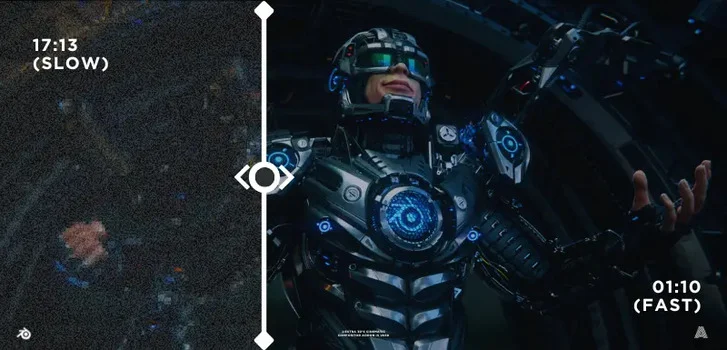
In essence, a render farm acts as a powerful, scalable, and on-demand rendering infrastructure. Projects are meticulously prepared locally and then uploaded to the farm’s servers. Here, the project is intelligently divided into smaller segments, often on a per-frame basis, and processed concurrently across hundreds or even thousands of individual computing nodes. This parallel processing capability is the key to dramatic reductions in render times. Instead of waiting for a single machine to render frames one by one, a render farm can process them simultaneously, completing a project that might take days locally in mere hours.
Among the prominent players in this evolving landscape is Fox Renderfarm, a service specifically engineered to address the demands of large-scale rendering within professional production environments. For Blender users, the appeal of such services lies in their compatibility with common workflows and their minimal disruption to existing scene creation processes. Artists can continue to build and refine their scenes within the familiar Blender interface on their local machines. Once satisfied, the project is uploaded, and the render farm’s sophisticated system takes over the computationally intensive rendering phase remotely.
Practical Considerations and the Workflow Integration
The operational aspects of utilizing a render farm like Fox Renderfarm are designed to be as streamlined as possible. Typically, the process involves several key steps:
- Scene Preparation: The artist completes the entirety of their scene setup, including modeling, texturing, lighting, and animation, within their local Blender installation.
- Project Upload: The Blender scene file, along with all associated assets (textures, HDRI maps, etc.), is uploaded to the render farm’s platform. This is usually facilitated through dedicated client software or web-based upload managers, often optimized for large file transfers.
- Render Configuration: Within the render farm’s interface, users specify their desired render settings. This includes selecting the render engine (e.g., Cycles or Eevee), choosing render samples, setting output resolution and format, and defining the frame range to be rendered. The platform often provides tools to check for common errors or missing assets before the rendering process begins.
- Rendering Execution: Once configured, the render farm initiates the rendering process. The project is distributed across its network of machines, and frames are rendered in parallel. Users can typically monitor the progress of their renders in real-time through a web dashboard, observing which frames have been completed and the overall estimated completion time.
- Download and Review: Upon completion, the rendered frames or animation sequence are made available for download. Users can then assemble the final output and perform any necessary post-processing.
This model offers a crucial advantage: it frees up the artist’s local workstation for continued creative work or other tasks. While the rendering is happening elsewhere, the artist is not tethered to their machine, waiting for the render to finish. This parallel workflow significantly enhances productivity.
When Does Cloud Rendering Become Essential?
While cloud rendering is not a necessity for every Blender project, its utility becomes particularly pronounced in specific scenarios. Projects characterized by:
- High Frame Counts and Long Animations: As mentioned, animations with thousands of frames are prime candidates. A 30-second animation at 24 frames per second requires 720 individual frames. Rendering each frame for even an hour on a single machine would result in 30 days of continuous rendering.
- Complex Lighting and Global Illumination: Scenes that rely heavily on ray tracing and global illumination for photorealism, such as architectural visualizations or product renders with intricate reflections and refractions, place an immense burden on processing power.
- Intensive Physics Simulations: Realistic fluid simulations, particle systems, or complex cloth dynamics can require days of simulation time before rendering even begins. The subsequent rendering of these simulations, often at high resolutions, further exacerbates the demand.
- Tight Deadlines and Client Demands: In professional environments, project deadlines are often non-negotiable. When faced with an imminent deadline, a render farm can be the difference between meeting and missing a critical delivery date.
- Budgetary Constraints on Hardware Upgrades: For freelancers, small studios, or educational institutions, the capital expenditure for high-end render farms of local machines can be prohibitive. Cloud rendering offers a pay-as-you-go model, allowing access to immense computing power without the upfront investment.
The cost-effectiveness of render farms is often measured against the expense of purchasing and maintaining powerful local hardware. While individual render farm jobs incur costs based on processing time and resources used, these costs can be significantly lower than the total cost of ownership for comparable local hardware, especially when considering depreciation, electricity consumption, and cooling. For instance, a study by a prominent animation studio found that outsourcing rendering for a feature film project saved them an estimated 30% in hardware acquisition and operational costs compared to building and maintaining an equivalent in-house render farm.
Background and Evolution of Render Farm Technology
The concept of distributed rendering is not new. Early forms emerged in the late 1990s and early 2000s, often involving networks of dedicated computers within studios or academic institutions. However, the advent of widespread broadband internet, coupled with advancements in virtualization and cloud computing infrastructure, has democratized access to massive computational resources. This evolution has transformed render farms from internal studio assets into accessible, scalable, and on-demand services available to individuals and businesses worldwide.
The rise of cloud computing platforms like Amazon Web Services (AWS), Google Cloud Platform (GCP), and Microsoft Azure has provided the foundational infrastructure upon which modern render farms are built. These platforms offer vast pools of on-demand computing power, storage, and networking capabilities that can be provisioned and de-provisioned as needed. Render farm providers leverage this infrastructure to create their specialized services, offering user-friendly interfaces and optimized software stacks for 3D rendering applications.
Fox Renderfarm, for example, has been a consistent presence in this space, evolving its services to support the latest versions of Blender and other popular 3D software. Their commitment to providing a robust platform is evident in their continuous updates and integration with industry-standard tools, ensuring that artists can seamlessly incorporate their services into their existing pipelines.
Implications for the Creative Industry
The widespread availability and increasing affordability of render farms have profound implications for the creative industry.
- Democratization of High-End Production: Artists and small studios, who previously lacked the resources for extensive rendering infrastructure, can now compete with larger organizations on projects requiring significant computational power. This fosters innovation and allows a wider range of creative voices to emerge.
- Accelerated Production Cycles: The ability to render complex scenes in hours rather than days or weeks dramatically speeds up production cycles. This allows for more iteration, quicker client feedback loops, and the ability to take on more projects within a given timeframe.
- Focus on Creativity: By offloading the time-consuming and often frustrating task of rendering, artists can dedicate more of their time and energy to the creative aspects of their work – modeling, texturing, animation, and storytelling.
- Scalability and Flexibility: Render farms offer unparalleled scalability. A project’s rendering needs can be met by scaling up or down the number of computing nodes used, providing flexibility that is impossible to achieve with fixed local hardware. This is particularly valuable for projects with fluctuating rendering demands.
Challenges and Future Outlook
Despite the significant advantages, challenges remain. The initial learning curve for understanding render farm workflows, managing uploads, and configuring settings can be a hurdle for some users. Furthermore, the cost of render farms, while often more economical than hardware investment, still represents a tangible expense that needs to be factored into project budgets. Ensuring data security and the integrity of uploaded project files is also a paramount concern for users, and reputable render farms invest heavily in robust security measures.
The future of rendering technology is likely to see continued integration between local and cloud-based solutions. Hybrid rendering approaches, where local machines handle initial test renders and less demanding tasks, while cloud farms are utilized for final high-resolution outputs, will become increasingly common. Advancements in AI and machine learning are also poised to play a significant role, potentially optimizing render settings, predicting render times more accurately, and even accelerating certain rendering processes through intelligent denoising and frame interpolation.
In conclusion, while Blender’s rendering capabilities are powerful, the computational demands of complex visual projects can create significant bottlenecks. The emergence and maturation of cloud-based render farms, such as Fox Renderfarm, offer a compelling and increasingly accessible solution. By enabling artists to offload these intensive tasks to a distributed network of machines, render farms empower creators to overcome hardware limitations, accelerate production timelines, and ultimately bring their most ambitious visions to life with greater efficiency and flexibility than ever before. The question is no longer if render farms are a viable option, but rather when they become an indispensable tool in the modern 3D artist’s arsenal.
About the Author