The extended reality (XR) industry reached a significant media milestone this August 2026 as the sector observed the tenth anniversary of dedicated industry reporting, coinciding with a flurry of hardware leaks, software price adjustments, and intensifying public debate over wearable privacy. The week was headlined by the latest VR Games Showcase, which, while lacking a singular "killer app" announcement, demonstrated a maturing ecosystem characterized by steady content production and sophisticated community-driven modifications. This period also saw Meta Platforms Inc. facing renewed scrutiny over its smart glasses hardware, highlighting the ongoing friction between technological integration and social privacy norms.
The VR Games Showcase and the State of the Gaming Ecosystem
The August 2026 VR Games Showcase served as a barometer for the current state of virtual reality software development. The event featured a comprehensive lineup of trailers, release date announcements, and updates for existing titles. While industry analysts noted the absence of a major AAA breakthrough, the sheer volume of content signaled a healthy, mid-tier development environment. Key announcements included "Job Simulator: Human Relations," a sequel to the seminal VR title, and "D.E.C.A.Y.," a survival shooter inspired by the Fallout franchise, slated for early access later this month.
In a move to lower the barrier to entry for new users, the showcase was accompanied by the "New Essentials Bundle." This curated collection of high-performing titles aims to provide a standardized starting point for consumers entering the VR space. Furthermore, the announcement that "Walkabout Dungeon Golfer" has moved into official production—transitioning from what was originally perceived as an April Fools’ joke—highlights a trend of developers leveraging community engagement to greenlight unconventional concepts.

Privacy Concerns and Legal Restrictions Surrounding Ray-Ban Meta Glasses
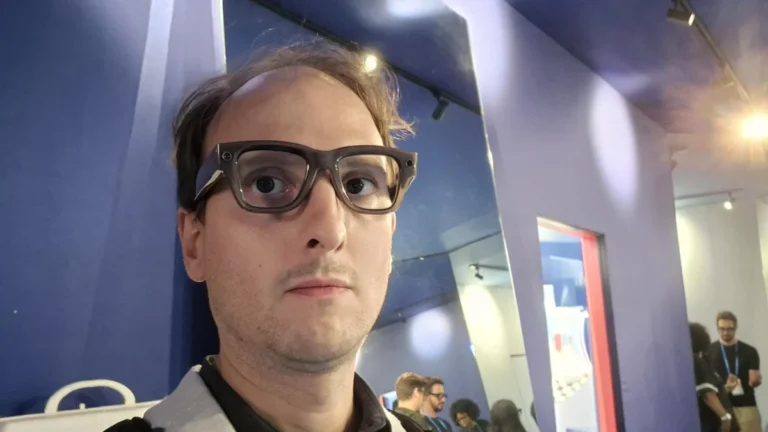
While the software ecosystem shows signs of steady growth, Meta’s hardware division is navigating a complex social and legal landscape. The Ray-Ban Meta smart glasses have become the focal point of an intensifying backlash regarding unauthorized recording and facial recognition capabilities. In the United Kingdom, the judiciary has taken a definitive stance, with courts in England and Wales officially banning the use of the glasses within legal precincts to prevent the surreptitious recording of proceedings.
The private sector has mirrored this caution. JD Wetherspoon, one of the UK’s largest pub chains, has implemented a ban on the devices across its 800+ locations. The glasses have been pejoratively labeled "pervert glasses" or "creep glasses" in various social circles and media outlets, following reports of individuals using the technology to record social interactions without consent.
Adding to the controversy, a recently surfaced patent granted to Meta describes an AI-driven system capable of using facial recognition to identify individuals in a crowd and automatically generating "highlight reels" of social events. While Meta maintains that these features are designed for convenience and personal memory archival, privacy advocates argue that the technology facilitates a level of surveillance that outpaces current regulatory frameworks. The industry now faces a critical inflection point: determining the boundary between "nascent technology" and intrusive hardware.
Hardware Leaks: The Meta Phoenix and Eye-Tracking Integration
In the hardware sector, significant leaks have emerged regarding Meta’s next-generation headset, codenamed "Phoenix." Leaked interface images suggest that the device will feature "Phoenix Eye Unlock," a biometric security system allowing users to access their devices via iris or eye-pattern recognition. This confirms the integration of internal eye-tracking sensors, a feature previously reserved for high-end enterprise headsets like the Quest Pro or the Apple Vision Pro.

The inclusion of eye-tracking in a consumer-facing Meta device suggests several technical advancements. Beyond security, eye-tracking is essential for foveated rendering—a technique that reduces the graphical load by only rendering the area the user is looking at in high resolution—and enhanced social presence through realistic avatar eye movements. Meta has reportedly stated that biometric eye data will be processed locally on the device to mitigate data security concerns, though this has yet to be verified by third-party audits.
Economic Shifts and Market Expansion: Beat Saber and Rokid
The economic landscape of VR software saw a surprising shift this week as Meta announced a permanent price reduction for "Beat Saber." The title, which has remained the most consistent top-seller in VR history, saw its price cut from $29.99 to $19.99. Analysts suggest this is a strategic move to pivot the game’s monetization model toward downloadable content (DLC) and music packs. By lowering the initial entry cost, Meta likely aims to expand the user base to late-adopters who will subsequently spend more on recurring content updates.
Simultaneously, the augmented reality (AR) hardware market is seeing increased competition from Eastern manufacturers. Rokid, a prominent Chinese developer of AR glasses, has officially launched its creator program in the United States. This expansion is designed to build a localized ecosystem of developers and influencers. By providing hardware to content creators, Rokid aims to challenge Meta’s dominance in the smart glasses category, focusing on lightweight AR solutions rather than fully immersive VR.
Community Innovation and the Rise of VR Modding
The difficulty of keeping pace with official VR releases has led to a surge in community-driven innovation. A new centralized catalog for VR mods was launched this week, effectively serving as a searchable database for over 1,000 modifications that bring VR capabilities to traditionally "flat" PC games. This project, described by users as "SideQuest for mods," highlights a significant trend: the community is often faster at providing high-quality content than official studios. Recent highlights in the modding community include a full launch for a "Zelda: Breath of the Wild" VR mod and teasers for "Mario Kart" integrations, demonstrating the persistent demand for legacy Nintendo IP in immersive formats.

Broader Implications and Industry Outlook
The events of this week underscore a paradox in the XR industry. While technical capabilities—such as eye-tracking, AI-integrated optics, and immersive sports broadcasting (evidenced by Apple’s new MLB immersive schedule)—are advancing rapidly, social acceptance remains a significant hurdle. The "psychosis" or "backlash" surrounding smart glasses suggests that the transition to "everyday AR" will not be a purely technical challenge, but a sociological one.
Furthermore, the industry is seeing a shift in publishing power. Neem Interactive’s acquisition of publishing rights for Combat Waffle Studios (developers of "Ghosts of Tabor") indicates a consolidation of successful indie talent under larger umbrellas. As the XR media landscape enters its second decade, the focus is shifting from "proof of concept" to "sustainable ecosystem." The combination of lower software prices, more robust community tools, and sophisticated (albeit controversial) hardware suggests that while the "game-changing" moment remains elusive, the foundation of the XR industry is more resilient than ever.
As Meta continues to distribute "Impact Grants" to US entities for smart glasses research, the goal remains clear: to normalize wearable AI. However, the path to normalization will require navigating a complex web of legal bans, social etiquette, and the persistent challenge of maintaining user privacy in an increasingly recorded world.
About the Author