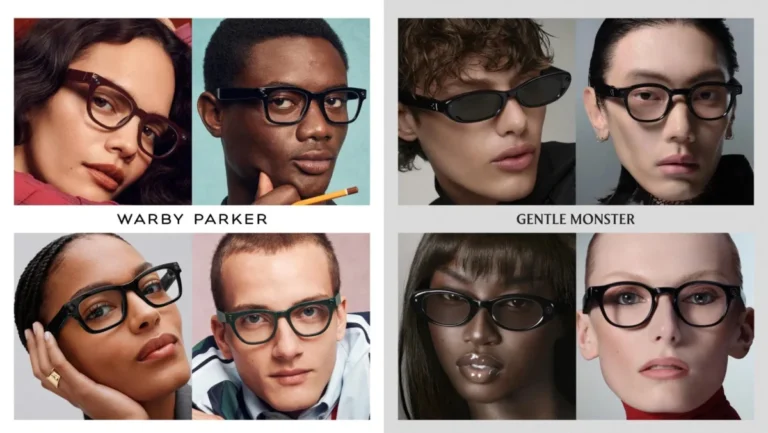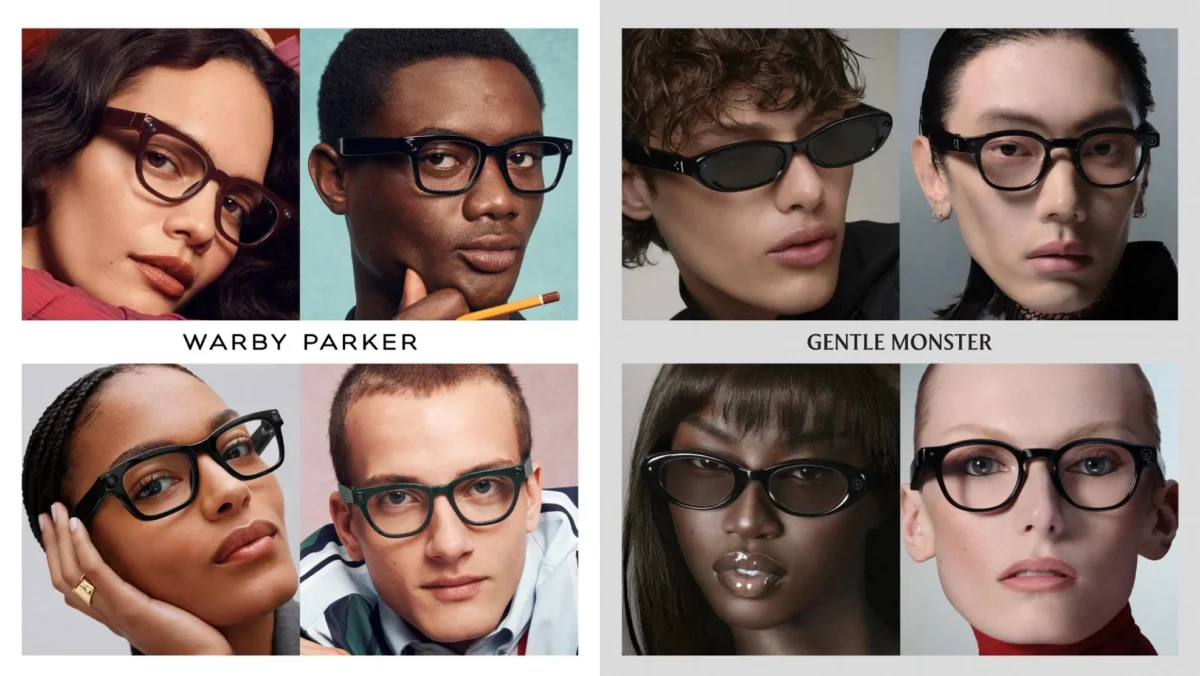
The landscape of wearable technology has undergone a significant shift following the official launch of smartglasses developed through a partnership between Samsung, Google, and eyewear specialists Gentle Monster and Warby Parker. This release marks a direct challenge to Meta’s dominance in the smartglasses category, specifically targeting the market share currently held by the Ray-Ban Meta collection. The new devices, powered by the Qualcomm Snapdragon AR1 chipset and the Android XR operating system, represent a convergence of fashion-forward design and high-performance mobile computing. These glasses feature a 12-megapixel camera and a battery life rated for approximately nine hours of intermittent use, mirroring the hardware profile of their primary competitors while introducing a deeper integration with Google’s Gemini AI ecosystem.
Technical Specifications and Market Entry
The collaborative effort between Samsung and Google has resulted in a hardware suite designed for daily wearability rather than the bulkier form factors associated with traditional virtual reality (VR) headsets. By utilizing the Snapdragon AR1, the devices are optimized for low-power processing, specifically for AI tasks and media capture. The integration of Android XR signifies a broader strategic move by Google to standardize the operating environment for augmented reality (AR) and smart wearable devices, providing developers with a consistent platform for application growth.
Pre-orders for the Samsung and Google smartglasses have commenced globally, with official retail availability scheduled for December 10. The pricing strategy appears to target the premium mid-range consumer, positioning the devices as both a functional tool for content creators and a lifestyle accessory for tech-early adopters. While the hardware remains comparable to existing market leaders, the differentiation lies in the software layer, particularly the multimodal capabilities of Gemini AI, which allows users to interact with their environment through voice and visual recognition in real-time.
A New Standard for Privacy in Wearable Technology
One of the most critical aspects of the Google and Samsung launch is the implementation of a robust privacy framework, an area where previous iterations of smartglasses faced significant public backlash. Google has introduced several hardware and software safeguards intended to mitigate concerns regarding unauthorized recording and data collection. These features include:

- Granular Camera Access: Users maintain full manual control over when the camera is active, with software overrides to prevent background recording.
- Visual Redaction: The Android XR platform includes automated protocols to redact the faces of bystanders in captured media unless specific permissions are granted.
- Mandatory Privacy LEDs: A visible light indicator signals to the public when the device is capturing video or photos, a feature that has become an industry standard but is reportedly more prominent in this iteration.
- Physical Kill-Switches: The ability to completely de-energize the sensor suite via hardware controls.
Industry analysts suggest that these privacy measures are essential for the social acceptance of smartglasses. By addressing these concerns at the OS level, Google is attempting to set a precedent for future AR devices, ensuring that the "always-on" nature of AI assistants does not compromise the privacy of the general public.
The Competitive Horizon: Apple’s 2027 Vision
As Samsung and Google solidify their immediate market presence, reports from Bloomberg’s Mark Gurman indicate that Apple is maintaining a long-term trajectory for its own smartglasses, currently projected for a 2027 release. Unlike the Apple Vision Pro, which serves as a high-end spatial computer, the upcoming Apple smartglasses are expected to follow the "wearable accessory" model.
Key takeaways from recent internal reports suggest that Apple’s strategy involves offloading significant processing tasks to the iPhone. This "distributed computing" approach allows the glasses to remain lightweight and aesthetically similar to traditional eyewear while leveraging the powerful silicon found in the latest iPhone models. Furthermore, Apple is reportedly developing a version of Face ID optimized for glasses and exploring the use of high-resolution internal displays that could eventually transition the product from "smartglasses" to true "augmented reality" glasses.
Despite the focus on future hardware, Apple continues to support its existing XR ecosystem. At a recent event in Cupertino, the company reaffirmed its commitment to the visionOS platform, introducing new tools for immersive video creators. This included the unveiling of a professional-grade ambisonic microphone by Blackmagic Design and specialized stabilization rigs like the "BeastGrip," which allows the Vision Pro to be used as a high-fidelity spatial camera for professional cinematography.
Meta’s Strategic Pivot: Content Investment and Ecosystem Growth
Meta, the current market leader in VR and smartglasses, is not remaining static. Chris Pruett, Meta’s Director of Content Ecosystem, recently outlined the company’s roadmap for VR content, revealing that the company remains heavily invested in third-party development. Contrary to rumors of a slowdown, Meta is reportedly increasing its financial support for developers to ensure a steady stream of high-quality titles for the Quest 3 and the upcoming Quest 3S.

Data from Meta indicates a significant shift in the VR economy. For the first time, revenue from in-app purchases (IAP) and subscription services like Meta Horizon Plus has begun to eclipse traditional "premium" one-time game purchases. This suggests that the VR market is maturing into a "live service" model, similar to mobile and console gaming. To further bolster the value of its subscription service, Meta is integrating 3D movies into its platform, following a similar move by Disney+. The Disney+ app on Quest now supports 3D environments and high-bitrate 3D film streaming, allowing users to view blockbuster titles in virtual cinema settings.
Innovations in Input and Tracking Technology
The broader XR industry is also seeing a surge in "grassroots" innovation and niche technological breakthroughs. One notable development is the emergence of subvocal command technology. The startup Subvocal is currently developing smartglasses that allow users to communicate with AI assistants without speaking aloud. By using sensors to detect the neuromuscular signals associated with "silent speech," the device can interpret commands based on the user’s intent and lip movements alone. This technology aims to solve the social friction of speaking to a digital assistant in public or noisy environments.
In the realm of motion capture, open-source developers have demonstrated a method for achieving full-body tracking using the inertial measurement units (IMUs) found in standard Apple AirPods. While not as precise as dedicated infrared tracking systems, this project highlights the potential for using existing consumer electronics as sensors for spatial computing.
Furthermore, the "legacy" VR community has achieved a breakthrough with the original Meta Quest 1. Despite being officially discontinued, enthusiasts have successfully unlocked the device’s bootloader. This has led to community-driven updates, including the ability to run the headset at a 90Hz refresh rate—up from its native 72Hz—and the experimental installation of SteamOS. These developments indicate a growing "right-to-repair" and "right-to-modify" movement within the XR space, extending the lifecycle of hardware beyond manufacturer support.
Implications for the Future of Spatial Computing
The simultaneous push by Google, Samsung, Meta, and Apple suggests that the industry is moving away from the concept of XR as a purely gaming-centric medium. Instead, the focus is shifting toward "ambient computing," where AI-driven wearables provide a continuous layer of information and assistance throughout the day.

However, challenges remain regarding the implementation of "AI World Models." Analysis of current generative AI technologies, such as Google Genie, suggests that the computational cost of streaming real-time, stereoscopic, AI-generated environments is currently too high for mass-market adoption. Experts predict that while these models will eventually allow for infinite, procedurally generated VR experiences, the infrastructure required to support them at scale likely will not be viable until at least 2030.
As the market enters the 2025 fiscal year, the competition between Android XR and Meta’s Horizon OS will likely define the next era of wearable technology. With Samsung and Google now providing a viable hardware alternative to Meta, the industry is poised for a period of rapid iteration, driven by AI integration and a renewed focus on consumer privacy and fashion.
About the Author