The inherent desire to create and share art, fostering engagement and resonance with an audience, has long been a fundamental aspect of human culture. Historically, this interaction often occurred within physical communities, where artists presented their work and received direct feedback. The advent of the internet initially promised to democratize this process, offering an unprecedented global stage for creators to connect with audiences. However, over the past decade and a half, the digital landscape has undergone a profound transformation, moving from a decentralized "blogosphere" to a highly centralized, "top-heavy" ecosystem that paradoxically hinders discovery for independent artists and favors algorithmically optimized content over genuine human connection. This evolution has sparked critical discussions among artists, technologists, and policymakers about the internet’s original vision and its current reality.
The Early Promise of Digital Connectivity
In its nascent stages, particularly around the late 2000s and early 2010s, the internet was widely hailed as a revolutionary tool for artistic expression and community building. Platforms like independent blogs, early social media sites, and specialized forums provided fertile ground for creators to share their work—be it music, visual art, writing, or interactive media—and engage directly with a burgeoning online audience. The architecture of the internet at that time, characterized by less sophisticated algorithms and a greater emphasis on direct navigation and peer-to-peer sharing, allowed for significant organic discovery.
A prime example illustrating this era’s potential is the independent video game "100 Rogues," released in 2010. Despite lacking a substantial marketing budget and launching with acknowledged bugs and inconsistent artwork—factors that would typically doom a modern release—the game garnered considerable attention. Its creator observed a vibrant community forming around it, with players creating fan art, uploading gameplay videos, and engaging with the developer through interviews on various independent gaming websites. This organic growth and robust interaction were not attributed to a polished product or aggressive marketing, but rather to the internet’s design, which facilitated a more equitable distribution of attention and allowed novel content to find its audience without significant algorithmic hurdles. This period fostered a sense of an "online community" where interaction was more direct, feedback loops were shorter, and the barrier to entry for visibility was considerably lower.
The Rise of Algorithmic Gatekeepers and Corporate Consolidation
The landscape began to shift dramatically in the years following this initial golden age of online discovery. A series of strategic decisions by large technology companies, coupled with a notable lack of regulatory intervention from governments, gradually reshaped the internet into its current centralized form. This transformation can be characterized by two primary trends: the dominance of sophisticated algorithms and the extensive consolidation of digital platforms.
Algorithms, initially designed to help users navigate the vast sea of online content, evolved to prioritize engagement metrics, often at the expense of diversity and independent discovery. Content that could generate immediate clicks, shares, and watch time—often highly produced, sensationalized, or already popular—was amplified, while niche or emerging content struggled to gain traction. This created a feedback loop where established creators and brands received disproportionately more exposure, leading to a "winner-take-all" dynamic. Data from various platforms, though often proprietary, consistently suggest that a small percentage of accounts or content pieces capture the vast majority of user attention, mirroring the Pareto principle where 80% of outcomes come from 20% of causes. For instance, studies on YouTube and Twitch have shown that only a fraction of creators manage to achieve sustainable viewership, with the rest struggling for visibility.
Parallel to this algorithmic shift, the digital economy witnessed aggressive corporate conglomeration. Major tech players acquired smaller competitors, consolidating power and market share. In the gaming industry, for example, the past decade has seen a rapid absorption of independent studios and publishers by giants like Activision Blizzard (now part of Microsoft), Tencent, and Take-Two Interactive. This trend is not unique to gaming; it extends across social media, e-commerce, and content creation platforms. The consequence for independent creators is a progressively higher "bar for entry." To achieve visibility in 2024 or 2025, creators often need to invest substantial capital in marketing, and more critically, their content and marketing strategies must be meticulously "optimized for the algorithms" rather than primarily for human appeal or artistic merit. This often translates into prioritizing viral trends, specific keywords, or formats that the algorithms favor, potentially stifling genuine creativity and experimentation.
Regulatory Inertia and Missed Opportunities
A critical factor enabling this transformation has been the perceived inaction of governments and regulatory bodies. Critics argue that existing antitrust laws, designed to prevent monopolies and foster fair competition, have not been adequately applied to the digital sphere. These laws, which traditionally focused on market share and pricing power in tangible goods, struggled to adapt to the unique characteristics of digital platforms, where "free" services often mask monopolistic control over data, attention, and distribution channels.
The internet, as envisioned in its early days, was meant to be an open, decentralized network fostering a "blogosphere" of diverse voices, functioning search engines, and genuine content discovery. However, legislative efforts to maintain this vision have largely lagged behind technological advancements. Governments failed to introduce new legislation addressing issues like platform neutrality, data ownership, or algorithmic transparency, which many argue would have been necessary to safeguard an equitable online environment. This regulatory void allowed large tech companies to consolidate power, dictate terms of engagement, and shape the digital public square without significant checks and balances, leading to the current state where a few dominant platforms act as de facto gatekeepers for online visibility and commerce. Rectifying this imbalance, even with immediate legislative action, would likely be a protracted process, taking years to dismantle entrenched systems and rebuild a more equitable digital infrastructure.
The Erosion of Authentic Engagement
The consequences of this top-heavy internet extend beyond mere visibility for creators; they impact the very nature of artistic engagement and community. When algorithms dictate what is seen, the diversity of content diminishes, and audiences are increasingly funneled into "filter bubbles" or echo chambers, limiting exposure to varied perspectives and challenging ideas. For creators, the pressure to constantly produce algorithm-friendly content can lead to burnout, compromise artistic integrity, and diminish the intrinsic joy of creation. The quest for "likes" and "shares" can supplant the pursuit of meaningful connection, transforming art into a commodity optimized for metrics rather than a vehicle for human expression and dialogue.
This dynamic stands in stark contrast to the original ideal of art as an inherently social activity, where the creator seeks genuine reflection and resonance from an audience. The validation derived from a single person truly "seeing" and "feeling the vibe" of a piece of art is often far more profound than thousands of superficial digital interactions. The current system, by prioritizing broad, often shallow engagement metrics, risks alienating both creators and audiences from this deeper, more valuable form of connection.
The Enduring Value of Physical Spaces: The "Open Mic" Analogy
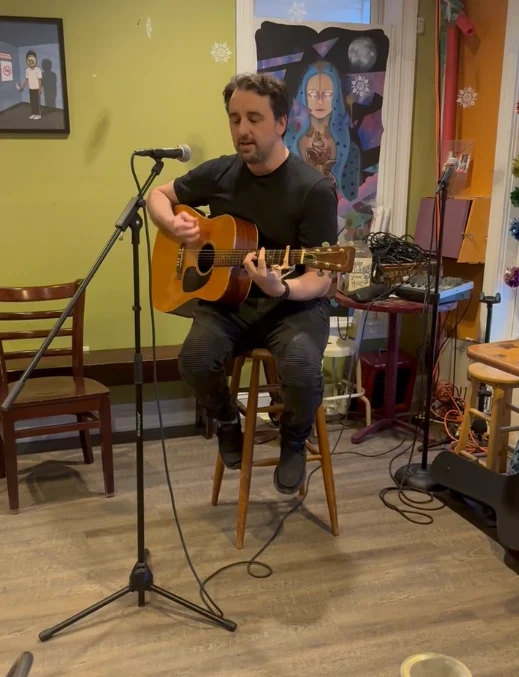
In light of these digital challenges, the appeal of physical spaces for artistic expression has gained renewed significance. The "open mic" event serves as a powerful metaphor for an alternative model of engagement—one that stands in stark opposition to the algorithmic dictates of the modern internet. At an open mic, irrespective of background, experience, or social standing, every participant is typically granted an equal opportunity—a few minutes on stage—to share their art. Whether it’s poetry, a musical performance, stand-up comedy, or a personal reflection, the platform is inherently equitable.
In such a setting, the usual digital metrics and barriers evaporate. There are no algorithms to optimize for, no corporate gatekeepers to appease, and no million-dollar marketing budgets required. The value lies in shared presence and mutual curiosity. The audience and performers are "there," sharing a physical space, engaging in direct, unmediated interaction. This directness fosters a spirit of community and genuine connection that is increasingly rare online. While the broader "IRL art world" certainly has its own biases, financial barriers, and corporate influences, the open mic exemplifies a micro-environment where the fundamental human desire for sharing and witnessing art can flourish unencumbered by the digital economy’s pressures. This pursuit of authentic interaction in physical spaces aligns with a growing sentiment among many individuals to reduce reliance on algorithm-driven platforms and seek out more direct, human-centric forms of community.
Towards a More Equitable Digital Future and Civic Engagement
The discussion is not about abandoning the internet entirely, but rather demanding its evolution towards a more equitable and human-centered design. Platforms that prioritize genuine community and peer-to-peer interaction, such as certain decentralized chat applications, offer glimpses of what a better internet could look like. These platforms, where all participants operate on a relatively equal footing regarding attention and interaction, demonstrate that digital spaces can still foster meaningful connection when designed with user empowerment in mind.
Ultimately, the challenges in the digital art world mirror broader societal trends. The centralization of power, the erosion of independent voices, and the prioritization of profit over public good are issues that extend far beyond creative expression. As societies navigate increasingly complex political and social landscapes, the importance of physical presence and community engagement becomes even more critical. Being "there"—whether at an open mic, a local community gathering, or a civic assembly—not only facilitates artistic collaboration and inspiration but also strengthens social bonds and fosters collective action. In an era marked by growing societal polarization and the potential for authoritarian overreach, the ability to gather, connect, and mobilize in physical spaces represents a fundamental aspect of civic resilience and the safeguarding of democratic values. The conversation about the future of art and the internet is thus inextricably linked to the broader dialogue about community, autonomy, and the future of human connection in an increasingly digital world.
About the Author