The landscape of modern video game development is continually evolving, driven by an insatiable demand for immersive experiences and intelligent non-player characters (NPCs). A cornerstone of this immersion is sophisticated artificial intelligence (AI) that can interact dynamically with the player and the game world. Recent advancements in Unreal Engine 5 (UE5) have significantly streamlined the process of implementing complex AI behaviors, particularly the fundamental functionality of AI characters chasing or following a player. This development, leveraging UE5’s powerful Blueprint visual scripting system, marks a notable step in making advanced game AI more accessible to developers of all scales, from independent creators to large AAA studios.
The Evolution of In-Game AI: A Historical Perspective
For decades, crafting believable AI in video games has been one of the most challenging aspects of development. Early game AI often relied on simplistic state machines, where characters would follow predefined paths or react to player input with basic, predictable responses. Pathfinding, the process by which an AI finds an optimal route through a game environment, was a particularly complex algorithmic challenge, often requiring extensive coding expertise in languages like C++.
The introduction of dedicated game engines, and subsequently, visual scripting tools, began to democratize this process. Engines like Unreal Engine have progressively integrated more robust AI frameworks, moving from basic navigation meshes (NavMeshes) to sophisticated behavior trees and perception systems. However, even with these tools, the initial setup for AI to simply follow a player could still involve multiple layers of code or complex graphical programming interfaces. The latest iteration of Unreal Engine 5 aims to simplify even these foundational tasks, significantly reducing the barrier to entry for developers looking to implement dynamic AI.
Unreal Engine 5: A Catalyst for Innovation in Game Development
Unreal Engine 5, Epic Games’ flagship development platform, has been lauded for its groundbreaking features such as Nanite virtualized micropolygon geometry, Lumen global illumination, and its highly optimized physics and animation systems. However, its continued emphasis on developer accessibility, particularly through the Blueprint visual scripting system, often gets highlighted as a key driver for broader innovation. Blueprints allow developers to create game logic, define character behaviors, and manage game states without writing a single line of C++ code, enabling rapid prototyping and iteration.
The global video game market, valued at approximately $200 billion in 2023, with projections for continued growth, underscores the increasing demand for high-quality, engaging content. A significant portion of this market relies on engines that can deliver both graphical fidelity and sophisticated gameplay mechanics efficiently. Unreal Engine’s market share, particularly in the AAA space and increasingly among indie developers, demonstrates its critical role. By simplifying core AI functionalities, UE5 directly addresses a key challenge that developers face: how to create compelling AI interactions without diverting vast resources to low-level programming tasks. This efficiency translates directly into reduced development cycles and costs, making ambitious projects more feasible for smaller teams.
Streamlining AI Implementation: The Blueprint Advantage
The process for enabling AI characters to intelligently follow a player in Unreal Engine 5 exemplifies this commitment to simplification. Developers who have previously set up a NavMesh – a fundamental component that defines walkable surfaces for AI – can now integrate player-following behavior with remarkable ease, often requiring only a few modifications to existing Blueprint nodes.
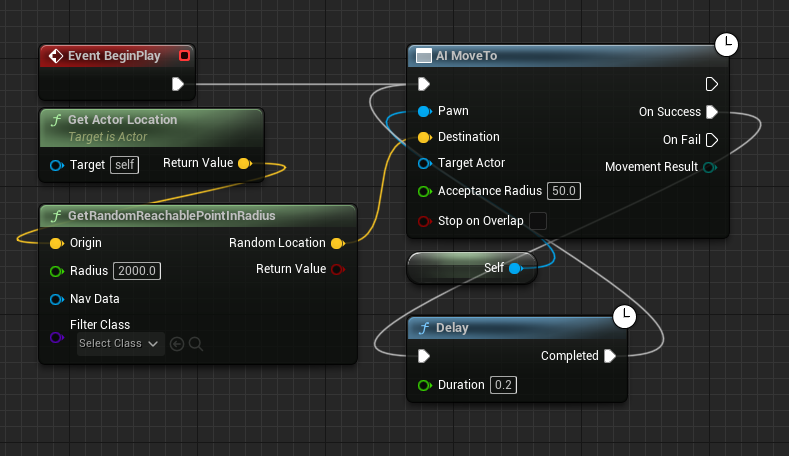
Traditionally, an AI character might be programmed to patrol a specific area or move to random, reachable points within its vicinity. This would involve Blueprint nodes such as "Get Actor Location" to ascertain the AI’s current position and "GetRandomReachablePointInRadius" to find a new target within a defined area. The core innovation in implementing player-following AI lies in redirecting the AI’s target from a random point to the player’s real-time location.
The simplified methodology involves a precise sequence of Blueprint manipulations:
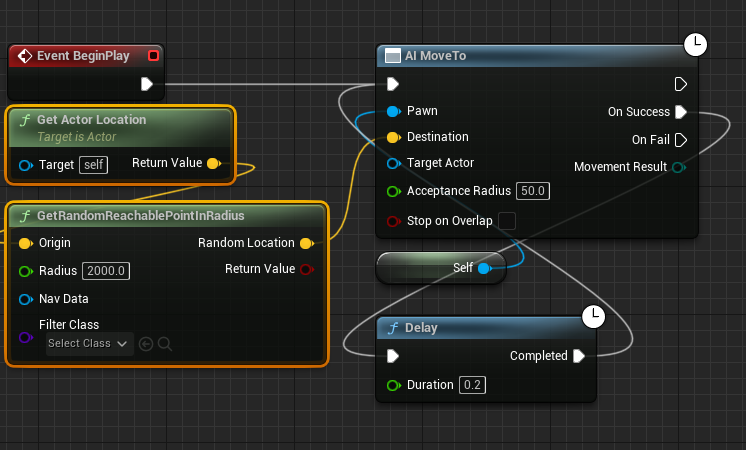
- Refactoring Existing Logic: Developers begin by streamlining existing AI movement logic. Nodes responsible for generating random destinations, such as "Get Actor Location" and "GetRandomReachablePointInRadius," are removed from the Blueprint graph. This step signifies a shift from autonomous, undirected movement to targeted, reactive behavior.
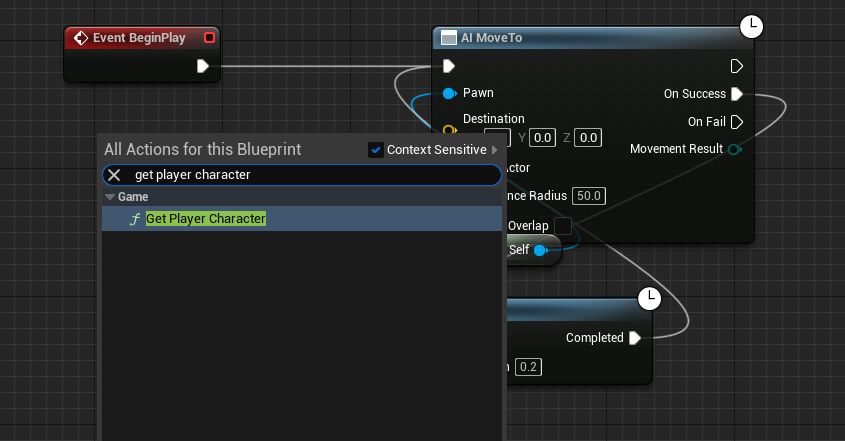
- Identifying the Player Character: A crucial addition is the "Get Player Character" node. This node dynamically retrieves a reference to the active player character in the game world, providing the AI with its primary target.
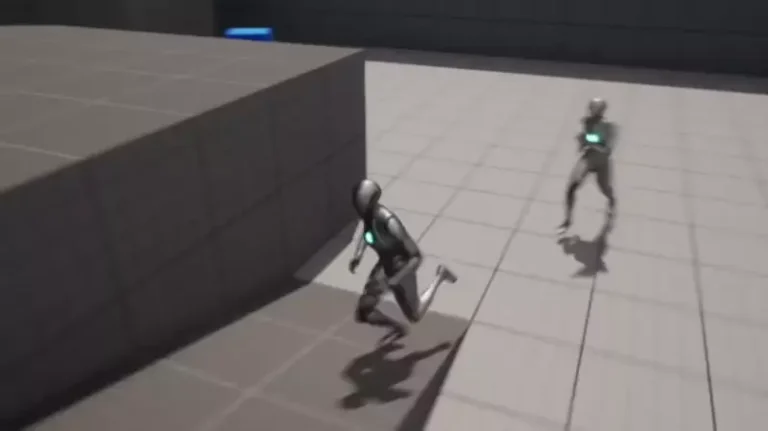
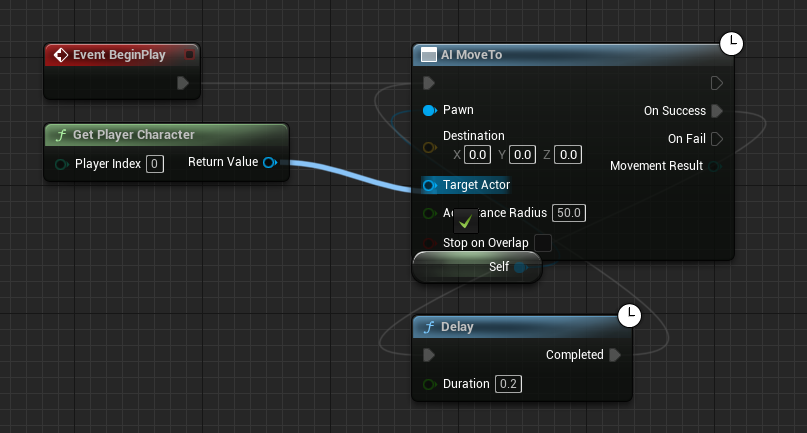
- Establishing the Target: The "Return Value" pin from the "Get Player Character" node, which outputs a reference to the player character, is then connected to the "Target Actor" pin of the "AI MoveTo" node. The "AI MoveTo" node is the central command for AI navigation, instructing an AI controller to move its pawn to a specified location or target actor. By linking it directly to the player character, the AI is now programmed to continuously seek out and move towards the player’s current position.
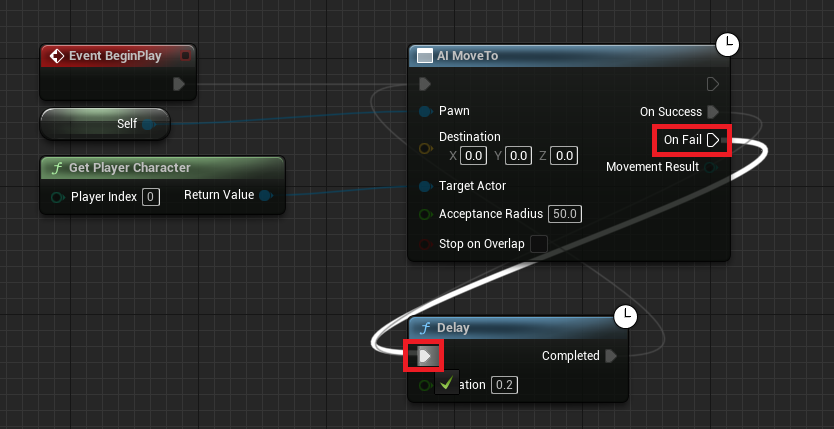
- Ensuring Robustness with Failure Handling: A critical aspect of developing reliable AI is implementing robust error handling. In dynamic game environments, it’s possible for the AI’s pathfinding to fail, perhaps if the player moves into an area unreachable by the NavMesh, or if the AI encounters an unexpected obstruction. To prevent the AI from stalling, the "On Fail" execution pin of the "AI MoveTo" node is connected back to a "Delay" node, which then loops back to re-initiate the "AI MoveTo" command. This creates a resilient system where the AI will repeatedly attempt to reach the player, ensuring continuous pursuit even if temporary pathfinding failures occur. This self-correcting mechanism is vital for maintaining player immersion and consistent gameplay.
- Finalizing and Deploying: The final step involves compiling and saving the modified Blueprint. This action applies all changes, making the AI’s new player-following behavior active within the game environment.
This streamlined approach, requiring minimal node changes, significantly accelerates the development process for a fundamental AI behavior that is ubiquitous across game genres.
Technical Deep Dive: Underpinning Intelligent Movement
At the heart of this simplified AI movement system lies the NavMesh. A NavMesh is a navigable surface generated within the game world, pre-calculating all possible paths an AI can take. When an "AI MoveTo" command is issued, the engine’s pathfinding algorithms (often variants of A* search) utilize this NavMesh to calculate the most efficient route from the AI’s current location to its target. The beauty of this system in UE5 is that developers don’t need to manually implement these complex algorithms; they simply provide the target, and the engine handles the intricate path calculation.
The "Delay" node, while seemingly simple, plays a crucial role in preventing performance bottlenecks and ensuring responsive AI. Instead of endlessly attempting to pathfind on a failed attempt, the delay provides a brief pause, allowing the game state to potentially change (e.g., player moves to a reachable area) before retrying. This also prevents the system from consuming excessive CPU cycles in a tight loop during repeated failures.
Industry Reactions and Expert Commentary
The simplification of core AI functionalities within Unreal Engine 5 has garnered positive reactions across the game development industry.
Dr. Anya Sharma, Lead AI Architect at Quantum Games, a prominent AAA studio, commented, "This streamlined approach in Unreal Engine 5 allows our AI engineers to focus on more complex behavioral patterns, such as tactical decision-making, sophisticated enemy formations, or emergent gameplay scenarios. By offloading the foundational pathfinding and targeting to efficient, engine-level Blueprint tools, we significantly accelerate our prototyping phase and free up valuable C++ development time for higher-level AI systems. It’s an essential evolution for large-scale production."
For independent developers, the impact is even more transformative. Maya Singh, a solo indie game designer behind the critically acclaimed ‘Chronicles of Eldoria,’ stated, "As an indie developer with limited resources, the ability to implement sophisticated AI logic without deep C++ knowledge is a game-changer. Blueprints empower us to create immersive experiences that previously required extensive coding resources or external AI middleware. Features like this lower the barrier to entry, allowing creative vision to take precedence over technical hurdles."
Professor Ethan Vance, an AI researcher specializing in interactive systems at the Global Institute of Game Studies, highlighted the broader implications: "The democratized access to robust AI navigation tools within engines like Unreal is pushing the boundaries of what small teams can achieve. This isn’t just about efficiency; it’s about fostering innovation. When basic mechanics are simplified, developers can experiment with more novel AI behaviors, leading to a richer and more diverse ecosystem of interactive entertainment. It also significantly impacts game development education, making complex topics more approachable for new students."
Beyond Simple Pursuit: Expanding AI Capabilities
While seemingly basic, the ability for AI to consistently follow a player forms the bedrock for a multitude of advanced in-game behaviors. Its use cases extend far beyond simple enemy pursuit:
- Dynamic Enemy Encounters: This foundational system allows for relentless enemy chases, tactical flanking maneuvers, or enemies retreating and regrouping based on player position. It enables more organic and less predictable combat scenarios.
- Intelligent Companions: Player-following AI is essential for companion characters, enabling them to stay with the player, provide assistance, or navigate alongside them through complex environments. This creates a sense of partnership and immersion.
- Responsive NPCs: Quest-givers or mission-critical NPCs can be programmed to follow the player, leading them to new objectives or acting as escorts. This adds a layer of realism and dynamism to world interactions.
- Environmental Storytelling: AI characters can be used to guide players through narrative sequences, reacting to the player’s pace and ensuring they remain within the storytelling context.
- Crowd Simulation: While more complex, the underlying principles can be scaled to create more believable crowd behaviors, where individuals react to and follow prominent figures or designated paths.
By providing a robust and easily implementable core, developers can then build upon this foundation with additional AI layers such as perception systems (sight, hearing), decision-making logic (behavior trees), and combat systems to create truly sophisticated and interactive characters.
The Future of Game Development: Accessibility and Innovation
The advancements in Unreal Engine 5’s AI toolkit underscore a broader trend in game development: the ongoing effort to make powerful tools more accessible. This democratization of technology has profound implications for the industry. It means that brilliant ideas are less likely to be stifled by technical complexity, fostering a more diverse range of voices and creative outputs.
As game engines continue to evolve, integrating even more sophisticated AI frameworks and visual scripting paradigms, the line between programmer and designer will continue to blur. This shift empowers creative professionals to directly implement complex game logic, leading to faster iterations, more experimental gameplay, and ultimately, a richer variety of interactive experiences for players worldwide. The ability to quickly prototype and deploy robust AI features in UE5 is not merely a technical convenience; it is a catalyst for the next generation of innovative and immersive video games.
In conclusion, Unreal Engine 5’s streamlined approach to implementing fundamental AI behaviors, such as player following, represents a significant leap forward in game development. By leveraging the intuitive power of Blueprints and robust engine architecture, it empowers developers to create dynamic, believable AI with unprecedented ease, ultimately fostering greater creativity and innovation across the entire gaming industry.
About the Author