The extended reality (XR) landscape has undergone a significant transformation this week, marked by a series of hardware leaks, software breakthroughs, and market consolidations that redefine the competitive boundaries between Valve, Meta, and emerging artificial intelligence entities. Central to these developments is the unintended disclosure of a high-fidelity color passthrough module for Valve’s Steam Frame, alongside the debut of GPT-6 Astra’s sophisticated 3D modeling capabilities, which industry leaders suggest may signal the arrival of Artificial General Intelligence (AGI) in the creative sector.
Valve Steam Frame and the Arcturus Vision Camera Leak
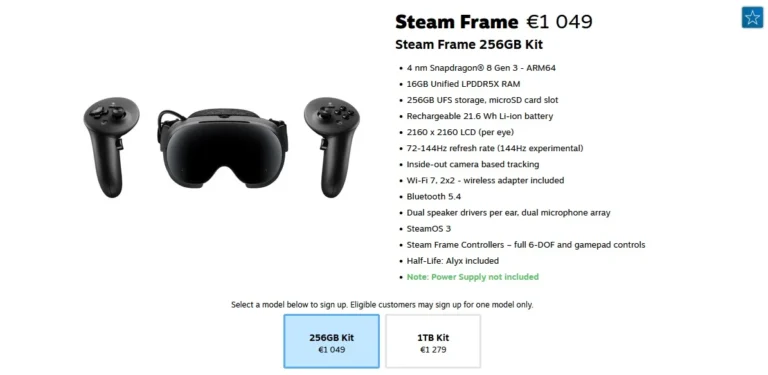
Komodo Station, the primary distributor for Valve hardware in Asian markets, inadvertently published a product page for a high-performance passthrough add-on designed for the Steam Frame headset. While the page was quickly removed, the specifications reveal a significant hardware leap for Valve’s modular ecosystem. Developed by Arcturus Industries—the computer vision firm responsible for the Steam Frame’s internal tracking architecture—the "Arcturus Vision Camera" aims to rectify the headset’s most criticized feature: its reliance on legacy monochrome passthrough technology.
The technical specifications of the add-on include two 32-megapixel sensors capable of 10-bit HDR video capture. The system supports a native resolution of 2,464 x 2,464 pixels per eye at a standard 60 frames per second (FPS), with software configurations allowing for 72 FPS and 144 FPS. Notably, the cameras are positioned at a 64mm physical offset, mimicking the average human interpupillary distance (IPD) to provide a more natural stereoscopic view. Beyond simple passthrough, the module is marketed as a spatial capture device optimized for Gaussian Splatting, a technique used to reconstruct photorealistic 3D environments from 2D images. This suggests a strategic move by Valve to enable user-generated "world scanning," allowing consumers to digitize physical spaces for archival or social VR use.
The Rise of GPT-6 Astra and Automated 3D Content Creation
The release of OpenAI’s GPT-6 Astra model has generated substantial discourse within the developer community regarding the "democratization" of the metaverse. Unlike previous iterations, Astra demonstrates an advanced proficiency in 3D spatial reasoning and direct software integration. Reports from developers indicate the model can autonomously interface with professional tools like Blender and the Unity engine to construct complex assets based on natural language prompts.
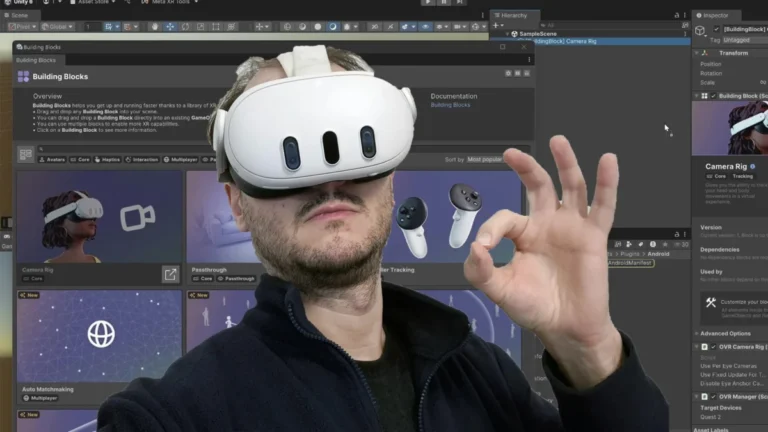
In one documented instance, the AI was observed taking remote control of a workstation’s cursor to navigate the Unity interface, generating a 3D model with optimized Level of Detail (LOD) settings and saving it as a prefab. While professional artists note that the current aesthetic output of AI-generated models remains somewhat "simplified" compared to human craftsmanship, the speed and integration capabilities are unprecedented.

This technological leap prompted Andrew Chen of Andreessen Horowitz to forecast a "VR comeback," citing the reduction in content creation costs as a primary driver for platform growth. NVIDIA CEO Jensen Huang further intensified the debate by suggesting that the multimodal capabilities of GPT-6 Astra indicate that the industry has reached the threshold of AGI.
Spatial Reconstruction through World Labs’ Atlas
Complementing the advancements in AI modeling, World Labs—a startup co-founded by computer vision pioneer Fei-Fei Li—unveiled "Atlas." This AI model is designed to reconstruct entire 3D scenes from limited visual data. Atlas allows users to record a scene from as few as three distinct perspectives; the AI then interpolates the data to generate a complete, navigable volume. This "world model" approach allows for the creation of cinematic "drone shots" or VR-ready environments without the need for exhaustive LiDAR scanning. The implications for the XR industry are twofold: it lowers the barrier for high-fidelity digital twinning and provides a foundational technology for the "Hyperscape" style of telepresence.
Market Volatility: The Liquidation of Engage XR
Despite the technical progress in the sector, the social VR market continues to face economic headwinds. Engage XR, a veteran platform in the enterprise and educational VR space, has officially entered judicial liquidation. The company, which gained prominence during the COVID-19 pandemic for hosting virtual conferences and educational workshops, cited a decline in "metaverse" investment by major corporate clients as the primary cause for its insolvency.
The downfall of Engage XR follows a broader trend of consolidation in the social VR space, mirroring the challenges faced by other platforms like Rec Room earlier this year. Analysts suggest that the "enterprise metaverse" bubble has largely burst, leaving only a few dominant players with diversified revenue streams. Engage XR was notable for hosting high-profile events, including the Vive Ecosystem Conference and virtual concerts, and its departure marks the end of an era for the first generation of professional social VR.
Meta’s Competitive Response: Horizon OS 2.7 and High Refresh Rates
In a direct response to the encroaching competition from Valve’s Steam Frame, Meta has deployed Horizon OS version 2.7. The update introduces a significant performance boost for the Quest 3, enabling a 207 Hz refresh rate, with an experimental "developer mode" reaching 240 Hz. This update targets the "prosumer" segment of the market, where high refresh rates are critical for reducing motion sickness and improving immersion in fast-paced simulations.
Furthermore, Horizon OS 2.7 introduces gamepad emulation, allowing users to map standard controller inputs to the Quest Touch buttons. While this is seen as a move to support flat-screen gaming within VR, critics point out that the lack of dedicated inputs on the Touch controllers limits the effectiveness of this feature compared to Valve’s more input-heavy hardware designs. Rumors from industry leakers also suggest that Meta is preparing a total overhaul of the Horizon OS user interface, aiming to move away from its current mobile-centric design toward a more sophisticated spatial computing environment.

Hardware Adjustments and Ecosystem Expansion
The hardware market saw further activity with Bigscreen announcing a permanent price reduction for the Bigscreen Beyond headset. The standard version has been adjusted to $959, while the eye-tracked variant now sits at $1,159. This price cut arrives as other manufacturers are trending toward higher MSRPs, positioning the Beyond as a premium but increasingly accessible tethered option.
In the software ecosystem, Steam Link has added support for wired USB streaming on Quest headsets, matching a feature recently popularized by Virtual Desktop. This allows users with substandard Wi-Fi environments to maintain high-bitrate PC VR connections. Additionally, the "Oculus Home Remitted" project has emerged as an open-source solution for enthusiasts, allowing users to bypass current Meta software restrictions to access and customize their legacy Oculus Rift home environments, which remain hosted on Meta’s servers.
Recognition and Content Milestones
The cultural impact of XR was highlighted this week by The Ferryman Collective, which secured an Emmy Award in the Outstanding Emerging Media Program category for "Uncanny Alley: A New Day." Hosted within VRChat, the production demonstrates the viability of VR as a medium for prestigious long-form storytelling.
On the hardware horizon, the Pico Space Pro has reportedly received FCC certification, signaling an imminent Q4 release despite previous rumors of delays. Meanwhile, in the legal sphere, Even Realities has initiated patent infringement litigation against XGIMI, leading to the suspension of the MemoMind glasses Kickstarter campaign, highlighting the increasing legal scrutiny regarding optical patents in the AR glasses market.
These collective developments illustrate an industry in transition. While legacy social platforms struggle with the realities of post-pandemic market corrections, the convergence of modular hardware and generative AI is creating a new framework for how digital environments are built and experienced. The focus has shifted from mere presence to high-fidelity reconstruction and automated creation, setting the stage for the next generation of spatial computing.
About the Author