Meta Platforms Inc. is preparing for its annual Connect conference, an event that historically serves as the primary stage for the company’s advancements in augmented reality (AR), virtual reality (VR), and artificial intelligence (AI). As the 2026 iteration approaches, industry analysts and internal leaks suggest a strategic pivot toward lightweight, wearable form factors and a more cohesive software ecosystem. The centerpieces of this year’s event are expected to be a new mixed-reality headset codenamed "Phoenix," a redesigned operating system, and the deep integration of Meta’s proprietary Muse AI across its hardware portfolio.
The Phoenix Project: A New Paradigm in Mixed Reality
The most anticipated hardware announcement involves a lightweight mixed-reality (MR) headset currently codenamed "Phoenix." According to supply chain reports and leaks from industry insiders, Phoenix represents Meta’s attempt to bridge the gap between bulky VR headsets and daily-wear smartglasses. Unlike the standalone Quest series, Phoenix is rumored to utilize a "puck" architecture, where the battery and primary computational units are housed in a separate device connected via a thin cable or high-bandwidth wireless link. This design allows the head-worn component to remain significantly lighter, potentially weighing under 250 grams.
Technical specifications leaked ahead of the event suggest a field of view (FOV) of approximately 90 degrees and a resolution of 2.5K by 2.5K per eye. The device is expected to prioritize "passthrough" mixed reality, using high-fidelity external cameras to overlay digital elements onto the physical world. Unlike previous consumer-grade headsets, Phoenix is rumored to include integrated eye-tracking and hand-tracking as standard features, with traditional controllers relegated to optional accessories. Positioned as a direct competitor to high-end spatial computers, the device is expected to retail for approximately $1,000, with pre-orders potentially opening during the keynote for a late 2026 or early 2027 release.

Expansion of the Wearables Portfolio: Luna and Ray-Ban Meta
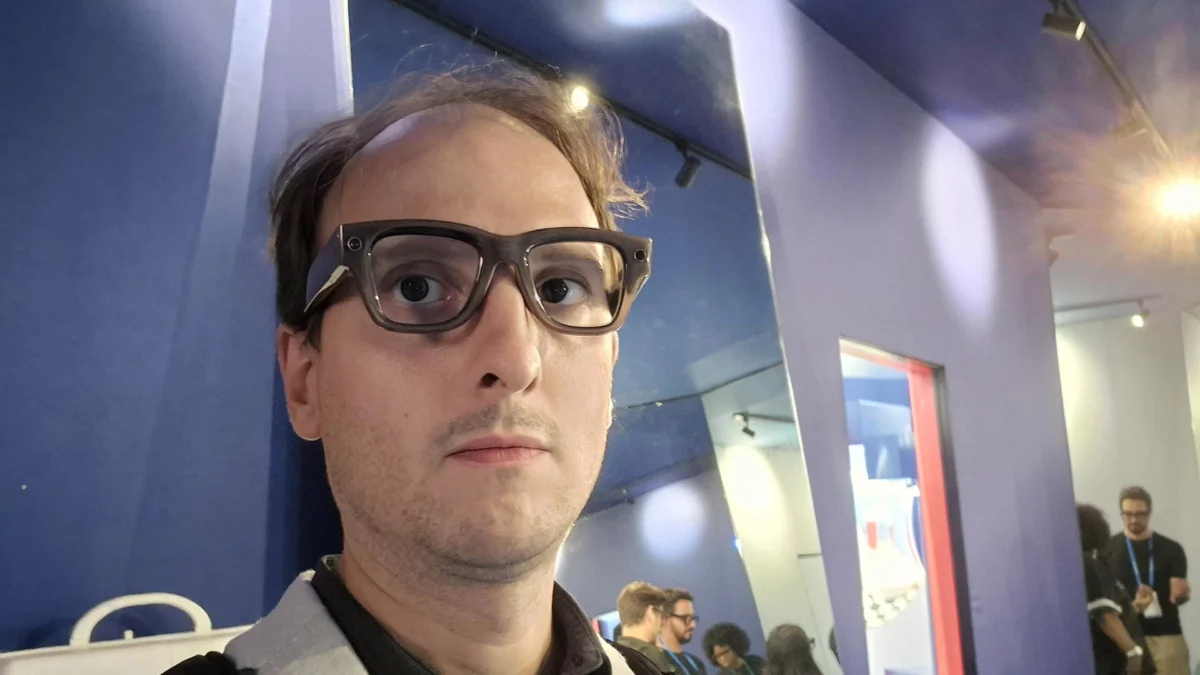
Building on the commercial success of the Ray-Ban Meta smartglasses, which analysts estimate have significantly outperformed internal sales targets, Meta is expected to announce new iterations of its wearable line. Reports from The Information indicate the development of a camera-less version of smartglasses, codenamed "Luna." This device is designed to appeal to enterprise environments and privacy-conscious consumers who require the audio and AI capabilities of smartglasses without the social friction of integrated cameras.
Furthermore, speculation remains high regarding a "Generation 3" or an iterative update to the Ray-Ban Meta line. Improvements are expected to focus on display technology, potentially moving from a monocular to a binocular heads-up display (HUD) system. This would allow for more complex data visualization and navigation cues. The strategic importance of these devices lies in their role as the primary interface for Meta’s AI, providing a "persistent" digital assistant that interacts with the user’s environment in real-time.
HorizonOS: A Design Overhaul by Alan Dye
The software experience of the Quest ecosystem has frequently been a point of criticism for users and developers alike. To address this, Meta reportedly recruited Alan Dye, a prominent designer known for his work on Apple’s user interfaces, to lead a comprehensive redesign of HorizonOS. The 2026 Connect event is expected to showcase the fruits of this labor: a more intuitive, "liquid" interface designed for spatial computing rather than traditional 2D menus.
This redesign is not merely aesthetic. With Meta opening HorizonOS to third-party hardware partners such as ASUS and Lenovo, the operating system must now support a wider variety of hardware configurations and control schemes. The new UX is expected to feature improved multitasking, a more robust content discovery engine, and a seamless transition between fully immersive VR and passthrough MR modes.

Muse AI: The Intelligent Core of Reality Labs
Artificial intelligence will likely dominate the keynote, centered on the official rollout of "Muse AI." This multimodal assistant is designed to operate across all Meta hardware, from the entry-level Quest 3S to the high-end Phoenix headset and smartglasses. Muse AI is expected to leverage Meta’s Llama 4 large language model, offering features such as:
- Environmental Awareness: The ability for glasses to "see" and "hear" what the user is experiencing to provide proactive suggestions.
- Real-time Translation: Low-latency audio and visual translation for international communication.
- Productivity Integration: Automated scheduling, note-taking, and context-aware reminders synchronized across the Meta ecosystem.
This move mirrors similar strategies from competitors, such as Apple’s integration of Siri with Apple Intelligence and Google’s deployment of Gemini across its mobile and wearable platforms.
Telepresence and the Commercial Debut of Codec Avatars
Meta’s long-term research into "Codec Avatars"—hyper-realistic digital representations of users—is expected to reach a milestone at Connect 2026. Internal leaks suggest a live demonstration featuring CEO Mark Zuckerberg and CTO Andrew Bosworth using full-body Codec Avatars during a remote "call" on stage. While previously limited by the lack of eye and face-tracking hardware in consumer devices, the launch of the Phoenix headset provides the necessary sensor array to bring this technology to the market. This development is aimed at the enterprise and high-end consumer sectors, positioning Meta as a leader in realistic telepresence and remote collaboration.
Strategic Context and Market Implications
The announcements at Meta Connect 2026 come at a critical time for the company’s Reality Labs division. Despite multi-billion dollar annual losses, Meta remains committed to the "metaverse" vision, though the narrative has shifted significantly toward "spatial computing" and "wearable AI."

| Feature | Quest 3 (Current) | Phoenix (Anticipated) |
|---|---|---|
| Form Factor | Standalone Headset | Glasses-style with external puck |
| Primary Input | Controllers / Hand-tracking | Hand / Eye-tracking / Voice |
| Display Res | 2K per eye | 2.5K per eye |
| Weight | ~515 grams | ~250 grams |
| Primary Use | Gaming / Fitness | Productivity / Media / AI |
Analysts suggest that by diversifying the hardware lineup, Meta is attempting to insulate itself from the "Osborne Effect"—where the announcement of a future product (like a Quest 4) kills the sales of current models. By positioning Phoenix as a productivity and media device rather than a direct successor to the gaming-centric Quest 3, Meta can maintain its current market share while expanding into new demographics.
Content Partnerships and Ecosystem Growth
To support the launch of the Phoenix headset, Meta is expected to announce high-profile content partnerships. Following previous collaborations, a VR-exclusive project or "immersive experience" involving filmmaker James Cameron is rumored to be in development. Additionally, Meta is likely to expand its immersive sports offerings, potentially announcing deeper integrations with leagues like the NBA to provide "courtside" virtual seating for Phoenix and Quest users.
For developers, Meta is expected to announce new funding initiatives. Reports suggest a $2 million grant program specifically for developers creating "lightweight" AR applications for smartglasses. This move aims to stimulate the creation of utility-based software that justifies the daily use of AR hardware.
Conclusion: The Road to 2027
Meta Connect 2026 is poised to be a transitionary event, marking the move from experimental VR to practical, AI-driven wearables. By focusing on the Phoenix headset and Muse AI, Meta is doubling down on the belief that the future of computing lies not in a pocket-sized screen, but in glasses that understand the world around them. While the financial risks remain high, the integration of sophisticated AI with lightweight hardware represents Meta’s most coherent strategy to date for achieving mainstream adoption of immersive technology.
About the Author