The landscape of extended reality (XR) and interactive entertainment underwent significant shifts during the final week of August 2026, marked by the intersection of high-profile gaming reveals and substantial technical updates to existing hardware. As the industry transitions into the high-volume product launch window of September and October, several developments—ranging from Rockstar Games’ latest trailer to Meta’s software-driven performance enhancements—underscore the evolving role of spatial computing in both the consumer and enterprise sectors.
Rockstar Games Integrates Virtual Reality into GTA VI Gameplay Reveal
Rockstar Games recently released an extended gameplay showcase for Grand Theft Auto VI (GTA VI), arguably the most anticipated title in modern gaming history. While the game remains a flat-screen experience for its primary launch, the trailer included a notable nod to the virtual reality industry. A brief segment of the video depicted an in-game character utilizing a black VR headset, which bears a striking resemblance to early-generation standalone hardware.
The character’s movements within the trailer suggest the consumption of immersive adult content, a satirical commentary consistent with Rockstar’s history of parodying contemporary social trends. Industry analysts suggest that the inclusion of a VR headset in a GTA trailer serves as a metric for the technology’s cultural penetration. By depicting VR as a common household activity—even in a satirical light—Rockstar acknowledges that the medium has achieved a level of mainstream recognition sufficient for global parody. Furthermore, the PC release of GTA VI is widely expected to trigger the development of third-party VR mods, a trend previously seen with Grand Theft Auto V and Red Dead Redemption 2.
Meta Quest 3 Receives Significant Refresh Rate Increase via Software Update
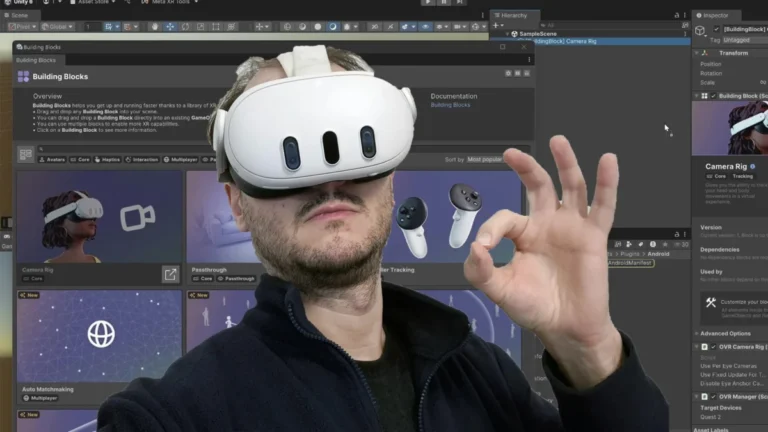
In a technical development that has surprised the XR community, Meta has announced a substantial increase in the maximum refresh rate for the Quest 3. Through the latest HorizonOS v2.7 update, the headset now supports a standard refresh rate of 207Hz. Additionally, users who enable developer mode can push the hardware to a peak of 240Hz.
This update represents a landmark in standalone VR performance, as no other consumer-grade headset currently on the market offers a 240Hz refresh rate. However, the practical application of this feature remains limited by the Quest 3’s chipset. While the display is capable of these speeds, the majority of high-fidelity VR applications currently struggle to maintain a consistent 90Hz or 120Hz output. To achieve 207Hz or 240Hz, developers will likely need to significantly reduce graphical complexity or utilize advanced asynchronous space warp (ASW) techniques.
Virtual Desktop has emerged as the first major application to leverage this update, launching a 144Hz mode in beta. Because Virtual Desktop relies on a tethered or wireless PC to handle rendering, it is uniquely positioned to utilize the Quest 3’s higher refresh capabilities without overtaxing the headset’s internal processor.

Meta Addresses Privacy Concerns and Hardware Tampering in Smart Glasses
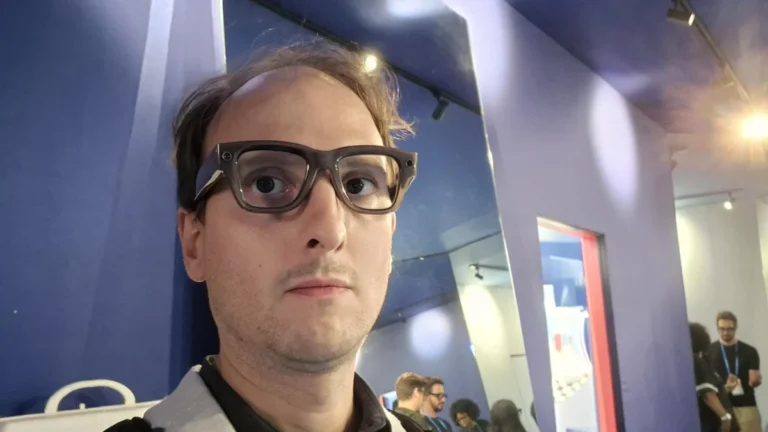
Following reports of users disabling the privacy LED on Ray-Ban Meta smart glasses to record footage clandestinely, Meta has issued a critical security update. The update introduces a hardware-software handshake designed to detect if the LED has been covered or disconnected. If tampering is detected, the camera functionality is automatically disabled.
This move follows a period of scrutiny regarding the social acceptability of wearable cameras. A Meta spokesperson confirmed that the company is engaged in a "cat-and-mouse" cycle with malicious actors and committed to releasing continuous updates to bypass illegal modifications. To supplement these technical measures, Meta has launched a public education campaign featuring billboards in major metropolitan areas. These advertisements are designed to inform the public that the presence of a light on the glasses indicates active recording, aiming to establish a clear social contract for wearable technology.
Corporate Restructuring and the "Project OT" Controversy at Meta
Internal documents and reports from Reuters have shed light on a high-stakes initiative within Meta known as "Project OT" (Organization Transformation). The project reportedly aimed to utilize generative AI to automate a vast array of internal workflows, potentially leading to staff reductions exceeding 60% in specific departments.
The initiative reportedly faced significant internal resistance, with employees expressing concerns over the ethics of using their own work to train the AI models intended to replace them. Furthermore, technical evaluations suggested that current AI models are not yet capable of replicating the complex problem-solving required for high-level engineering and creative roles. While Meta continues to champion AI as a tool for "abundance," the leak of Project OT has fueled a broader debate regarding the tension between AI development and workforce stability in the tech industry.
Economic Pressures and Layoffs at Schell Games
The broader "winter" of the VR industry has claimed another casualty in the form of staff reductions at Schell Games. Despite a 20-year history of stability and hits such as Among Us VR and the I Expect You To Die series, the studio confirmed a 10% reduction in its workforce.
Leadership at Schell Games attributed the layoffs to a cooling venture capital environment and Meta’s recent pivot away from aggressive third-party content funding. In response, the studio is shifting its strategy from a few high-budget "tentpole" projects to a larger portfolio of smaller, experimental titles. This leaner approach is intended to mitigate risk while allowing the studio to identify new gameplay trends in a volatile market.
Advancements in Volumetric Video and Spatial Intelligence
On the research front, the "4DAnyone" project has demonstrated a breakthrough in volumetric video production. Traditionally, creating high-quality 4D Gaussian Splats (volumetric videos) required expensive multi-camera arrays and professional lighting rigs. The 4DAnyone project utilizes monocular video—shot from a single smartphone—to infer skeletal poses and reconstruct a full volumetric representation.

By simulating multiple viewpoints from a single source, the technology could democratize the creation of "spatial memories" for the average consumer. While current results do not yet match the fidelity of professional studios like Gracia, the trajectory suggests that volumetric video creation will eventually become a standard feature on mobile devices.
Shifts in Leadership and Future Hardware Leaks
At Apple, reports indicate a shift in corporate philosophy under the leadership of John Ternus, who has reportedly taken a more prominent role in steering the company’s future. Unlike his predecessor’s heavy emphasis on the Vision Pro and "spatial computing," Ternus is reportedly prioritizing generative AI integration across the broader Apple ecosystem. This shift has led to speculation regarding the long-term roadmap for Apple’s high-end XR hardware.
Simultaneously, leaks regarding Meta’s next-generation headset, codenamed "Phoenix," suggest a device focused on ultra-lightweight ergonomics and expanded mixed reality (MR) capabilities. While details remain unconfirmed, the Phoenix headset is expected to bridge the gap between the current Quest line and the long-rumored "Orion" AR glasses.
Industry Outlook and Emerging Use Cases
Despite the economic challenges facing consumer VR, specific sectors continue to show resilience. Kevin Williams, a leading authority on Location-Based Virtual Reality (LBVR), notes that out-of-home entertainment centers are seeing steady growth by focusing on social, high-throughput experiences that cannot be replicated at home.
Additionally, the use of social VR platforms for industrial purposes is expanding. Recent demonstrations in the platform Resonite have shown fully functional industrial machinery replicas used for remote training. This highlights a growing trend where platforms originally designed for social interaction are being repurposed for high-stakes enterprise applications, offering a more flexible and cost-effective alternative to proprietary industrial VR software.
As the industry moves into the final quarter of 2026, the focus remains on balancing technical breakthroughs, such as 240Hz displays, with the economic realities of a market still searching for its definitive "killer app."
About the Author