The global mobile gaming landscape continues to undergo rapid transformation as established franchises and innovative newcomers vie for dominance in an increasingly crowded marketplace. This week’s digest highlights a significant shift toward cross-platform integration, the revitalization of classic intellectual properties, and the strategic pivots of industry titans like Electronic Arts, Supercell, and Meta. As the industry moves toward the final quarter of the year, the release of high-profile updates and new intellectual properties (IPs) underscores a broader trend of "hybridcasual" mechanics and deep, open-world experiences designed for mobile hardware.
EA Sports FC Mobile 27: A New Standard for Digital Football
Electronic Arts (EA) has officially launched the latest iteration of its flagship mobile sports title, EA Sports FC Mobile 27. This release marks a pivotal moment in the franchise’s post-FIFA era, focusing on technological refinements and enhanced player agency. The update, now available globally on iOS and Android, introduces several core features designed to deepen the simulation aspect of the game.
Among the most significant additions is a comprehensive new PvE (Player vs. Environment) mode, which allows players to engage in structured campaigns without the immediate pressure of competitive matchmaking. This move is seen by analysts as an effort to increase retention among casual fans who may find the high-stakes environment of Division Rivals or Weekend League intimidating. Furthermore, EA has implemented what it describes as a "refreshed visual experience," leveraging updated lighting and player models to bring the mobile experience closer to its console counterparts.
To coincide with the launch, EA has initiated a month-long community event. This event serves as a retrospective, bringing back fan-favorite features from previous iterations while offering exclusive rewards for early adopters. The strategic timing of this update allows EA to capitalize on the start of the European domestic seasons, ensuring peak engagement during a critical window for sports gaming revenue.
Aniimo and the Expansion of the Creature-Catching Genre
Pawprint Studio, with the strategic backing of FunPlus, has released Aniimo, a free-to-play creature-catching open-world RPG. Following a successful debut on PC and next-generation consoles (PS5 and Xbox) last week, the title is now available to a global audience on mobile platforms. The game’s inclusion in a featured App Store story by Apple highlights the platform holder’s interest in high-fidelity RPGs that bridge the gap between traditional gaming and mobile accessibility.
Aniimo enters a market currently enamored with the "creature-catcher" subgenre, popularized by the recent success of titles like Palworld. By offering an open-world experience with seamless transitions between exploration and combat, Pawprint Studio aims to capture a demographic that demands more depth than traditional mobile gacha games. The backing of FunPlus is notable; known for its dominance in the 4X strategy space with titles like State of Survival, FunPlus’s investment in a creature-oriented RPG signals a diversification of its portfolio into more character-driven, narrative-heavy genres.
The Evolution of Tower Defense: Kingdom Rush 6: Genesis
Ironhide Game Studio has released Kingdom Rush 6: Genesis, the sixth mainline entry in one of the most celebrated tower defense series in mobile history. Available simultaneously on Steam, the App Store, and Google Play, the game continues the studio’s tradition of blending intricate strategy with a distinct, hand-drawn aesthetic.

The Kingdom Rush franchise has long been a benchmark for the tower defense genre, which has seen a resurgence in popularity as developers find new ways to iterate on the "lane-defense" formula. Genesis serves as a prequel, offering lore-heavy content that explores the origins of the series’ world. For Ironhide, the simultaneous multi-platform launch is a tactical necessity in the modern era, ensuring that the game reaches both the hardcore PC audience and the traditional mobile player base.
Ninja Kiwi and the "Bullet Heaven" Trend with Bloons Blitz
Ninja Kiwi is preparing for the global launch of Bloons Blitz, a title that adapts the iconic Bloons IP into the "bullet heaven" or "survivors-like" genre. This genre, characterized by auto-attacking combat and exponential power scaling, became a global phenomenon following the success of Vampire Survivors.
Bloons Blitz underwent a soft launch in the Philippines in May, allowing the developers to fine-tune the game’s economy and difficulty curves based on real-world player data. Pre-registration is now open worldwide. This move indicates Ninja Kiwi’s intent to modernize its IP, moving away from pure tower defense into faster-paced, action-oriented gameplay that aligns with current mobile consumption habits.
Disney Epic Mickey: Rebrushed and the Premium Mobile Market
THQ Nordic Mobile has brought Disney Epic Mickey: Rebrushed to iOS and Android, priced at approximately $16. This release is a significant data point for the "premium" mobile market, which often struggles against the dominance of free-to-play (F2P) models.
Originally a 2010 Wii exclusive, Epic Mickey was praised for its dark take on Disney lore and its innovative "paint and thinner" mechanics. The "Rebrushed" edition features modernized controls and updated assets. The decision to release the game as a one-time purchase rather than a microtransaction-heavy F2P title suggests that THQ Nordic is targeting a specific niche of nostalgic adult gamers and parents looking for high-quality, self-contained experiences for their children.
Supercell’s Strategic Pivot: The Mo.co Beta
In a move that underscores the rigorous quality standards of the Finnish developer, Supercell has announced that its monster-hunting game, Mo.co, is returning to a beta phase. As previously reported, the game has faced challenges in meeting Supercell’s internal performance metrics during its initial testing phases.
By placing Mo.co in "low maintenance" mode, Supercell intends to iterate on the core gameplay loop without the pressure of maintaining a live-service environment. Historically, Supercell is known for its "kill or keep" philosophy, having canceled numerous high-profile projects that failed to demonstrate long-term viability. This return to beta suggests that while the company sees potential in the monster-hunting concept, the current execution requires significant re-engineering to compete with top-tier titles like Monster Hunter Now.
Meta’s Horizon Create: AI-Driven User Generated Content
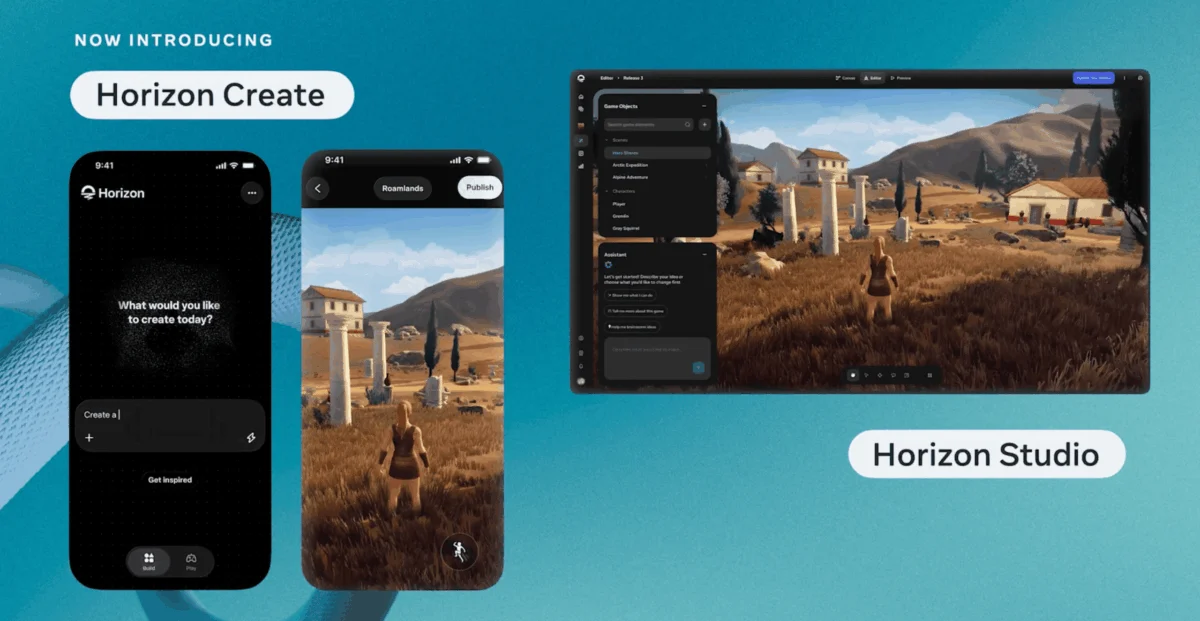
Meta has unveiled Horizon Create, an ambitious tool designed to democratize game development within its ecosystem. The app allows users to generate games using simple prompts and publish them directly to Instagram, Facebook, and the Horizon VR platform.

This move places Meta in direct competition with platforms like Roblox and Fortnite Creative. By integrating creation tools directly into social media feeds, Meta is betting on the "instant play" and "instant creation" trends. The implications for the industry are profound; if successful, Horizon Create could lower the barrier to entry for game design to nearly zero, potentially flooding social platforms with user-generated mini-games and fundamentally changing how content is consumed on Facebook and Instagram.
Sanrio Kawaii Me Live: IP Power and Rhythm Gaming
Sanrio Games has announced its first internal mobile title, Sanrio Kawaii Me Live, a free-to-play dance and rhythm game. Featuring global icons such as Hello Kitty, Cinnamoroll, and My Melody, the game is scheduled for a January 2027 global launch, with pre-registrations currently active.
The rhythm game market has seen steady growth, particularly in Asian territories, where character-driven music games perform exceptionally well. For Sanrio, this title represents a shift toward direct publishing, allowing the company to exert greater control over its brand and monetization strategies compared to previous licensing deals.
Niche and Indie Highlights: People Tower, Athelan, and Zooyale
The mid-to-lower tiers of the market also show vibrant activity with several notable releases:
- People Tower (Popcore): Currently in early testing on iOS, this "hybridcasual" puzzle game combines sorting and stacking mechanics. Popcore, a master of the hypercasual-to-hybridcasual transition, is looking to replicate the success of its previous hits by adding layers of progression to simple, satisfying mechanics.
- Athelan Battlegrounds (Athelan): Developed by a two-person Canadian team, this turn-based tactical PvP game is set to launch on November 25. Its development serves as a testament to the continued viability of small-scale indie projects in the mobile space, provided they offer unique tactical depth.
- Zooyale (Playfinity Games): A top-down battle royale featuring 50-player matches and mutant transformations, Zooyale is now available globally. The inclusion of mid-match transformations adds a layer of unpredictability to the standard battle royale formula, aiming to carve out a space in a market currently dominated by PUBG Mobile and Free Fire.
Industry Implications and Market Analysis
The current wave of releases and strategic shifts points toward a maturing mobile market. The trend of bringing console-quality ports (Epic Mickey) alongside AI-driven creation tools (Horizon Create) shows an industry that is simultaneously looking backward at proven hits and forward at revolutionary technology.
The "hybridcasual" movement, represented here by People Tower, continues to be the primary strategy for developers seeking to mitigate the rising costs of user acquisition. By combining the low-friction entry of hypercasual games with the monetization depth of mid-core titles, developers are finding a more sustainable path to profitability.
Furthermore, the decision by Supercell to pull Mo.co back into beta highlights the increasing difficulty of launching a new "hit" in 2024 and 2025. With player attention divided across a handful of "forever games" (like Roblox, Genshin Impact, and Monopoly Go), new entries must offer flawless execution from day one or risk immediate irrelevance.
As we look toward the end of the year and into 2027, the mobile gaming sector remains a high-stakes environment where IP strength, technical innovation, and strategic patience are the primary drivers of success. The diversity of this week’s releases—from Disney classics to Meta’s AI experiments—suggests that the definition of a "mobile game" is continuing to expand, encompassing everything from simple puzzles to complex, multi-platform ecosystems.
About the Author