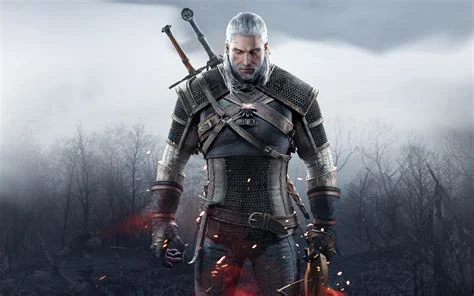
The Witcher 3: Wild Hunt, developed by CD Projekt Red, stands as one of the most critically acclaimed and commercially successful video games of the 21st century. Since its release in May 2015, the action role-playing game has garnered hundreds of Game of the Year awards and sold over 50 million copies globally as of 2023, cementing its status as a benchmark for open-world narrative experiences. Despite its widespread adoration and technical prowess, the title continues to be a subject of varied player experiences and critical discussions, particularly concerning its narrative choices, thematic representations, and core gameplay mechanics. These ongoing conversations highlight the complex relationship between artistic intent, player reception, and the evolving standards within the video game industry.
Development and Release Context
The genesis of The Witcher 3 can be traced back to the rich literary world created by Polish author Andrzej Sapkowski, whose fantasy novels and short stories introduced Geralt of Rivia, a monster hunter known as a Witcher. CD Projekt Red, a Polish developer, first adapted Sapkowski’s work into a video game in 2007 with The Witcher, followed by The Witcher 2: Assassins of Kings in 2011. Each successive title expanded upon the intricate lore, complex characters, and morally ambiguous choices that defined the series.
The Witcher 3: Wild Hunt represented the culmination of CD Projekt Red’s ambitions, promising an expansive open world, a branching narrative driven by player choices, and a refined combat system. Development began shortly after the release of The Witcher 2, utilizing the studio’s proprietary REDengine 3 to render a vast, detailed fantasy realm. The game’s production was a monumental undertaking, involving hundreds of developers and a budget estimated at over $81 million (USD), making it one of the most expensive video games ever made at the time. Anticipation for the title was immense, fueled by extensive marketing campaigns and a dedicated fanbase eager to conclude Geralt’s saga. Upon its global release on May 19, 2015, for Microsoft Windows, PlayStation 4, and Xbox One, The Witcher 3 was met with immediate and overwhelmingly positive reviews, consistently achieving high scores across major gaming publications.
Critical Acclaim and Commercial Success
The critical reception for The Witcher 3 was almost universally laudatory. Review aggregators like Metacritic reflect an average score of 93-94 out of 100 across various platforms, indicating "universal acclaim." Critics lauded the game’s sprawling open world, which felt alive and brimming with detail, populated by memorable characters and a myriad of side quests that often rivaled main story arcs in their depth and emotional impact. The narrative, particularly its emphasis on moral greys rather than clear-cut good and evil, was frequently cited as a standout feature, pushing the boundaries of storytelling in the RPG genre. Technical achievements, including stunning graphics, atmospheric sound design, and robust voice acting, also received significant praise.
Beyond critical accolades, The Witcher 3 achieved unprecedented commercial success for CD Projekt Red. Within its first two weeks, the game sold over four million copies. By its eighth anniversary in 2023, total sales had surpassed 50 million units, making it one of the best-selling video games of all time. This financial triumph allowed CD Projekt Red to invest further in its intellectual properties and cemented its reputation as a leading developer of high-quality, narrative-driven RPGs. The success was further bolstered by two critically acclaimed expansion packs, Hearts of Stone (2015) and Blood and Wine (2016), which added dozens of hours of new content, characters, and storylines, earning their own accolades. A free next-generation update for PlayStation 5, Xbox Series X/S, and PC was released in December 2022, introducing graphical enhancements and quality-of-life improvements, further extending the game’s longevity and appeal.
Exploring Diverse Player Experiences and Critical Perspectives
Despite its overwhelming success, the experience of playing The Witcher 3 is not monolithic, and certain aspects of the game have prompted ongoing discussions and varied perspectives among players and critics. While the game’s technical polish and immersive world-building are widely acknowledged, individual preferences regarding gameplay mechanics and narrative themes occasionally lead to divergent opinions.
One area of particular note is the game’s combat system. While often described as fluid and strategic by many, requiring players to utilize a combination of swordplay, magical signs, alchemy, and dodging, some players have expressed dissatisfaction. Critics of the combat system sometimes describe it as feeling "laborious" or less engaging compared to other titles in the action-RPG genre. Comparisons are sometimes drawn to the precision-based challenge of games like Elden Ring or the dynamic satisfaction of titles such as The Legend of Zelda: Breath of the Wild, highlighting different philosophies in combat design. While The Witcher 3‘s combat is generally considered competent and functional, it occasionally falls short for those seeking a more visceral or constantly evolving combat experience akin to character action games or dungeon crawlers with frequent loot drops and new abilities.
The narrative and thematic choices within The Witcher 3 have also been a point of extensive analysis and, at times, contention. The game is celebrated for its mature storytelling and willingness to explore complex moral quandaries. However, certain narrative arcs have drawn scrutiny. For instance, a prominent early questline involving the "Bloody Baron" character, a figure with a history of domestic abuse, has been cited as a narrative choice that seeks to humanize a deeply flawed individual. While some critics view this as an example of the game’s commitment to moral ambiguity and challenging player perceptions, others have questioned the decision to dedicate significant narrative resources to exploring the backstory of an abuser, suggesting it reflects specific storytelling values that may not resonate universally. These discussions underscore the importance of narrative focus and the implications of choosing which stories to tell and how to frame them.
Furthermore, aspects of the world-building and character representation have fueled broader cultural conversations. The game’s dark fantasy setting, often characterized as a "Hobbesian fantasy" by some, depicts a harsh, war-torn continent filled with prejudice and suffering. While this grim atmosphere is integral to the Witcher universe’s identity, the portrayal of its inhabitants, predominantly of European descent, has been noted. The use of terms like "the black ones" to refer to an invading army (the Nilfgaardian Empire, whose soldiers wear black armor, not a racial descriptor) has occasionally been highlighted in discussions about the subtle and overt ways fantasy narratives can intersect with real-world sociopolitical commentary. The scarcity of non-white characters in the game, despite its fantastical nature, has also been a point of discussion in the broader conversation about diversity and representation in video games.
Even seemingly minor details have sparked debate. The inclusion of certain flavor text on collectible Gwent cards, the popular in-game card game, has drawn specific criticism. One instance, referencing a soldier as a "rapist," was highlighted as an unnecessary and potentially distasteful narrative choice, questioning the intent and impact of such details on player experience. This micro-level scrutiny points to a larger discussion about artistic license versus responsible content creation within interactive media, particularly in games aiming for mature ratings.
CD Projekt Red’s Stance and Broader Impact
CD Projekt Red has consistently stated its commitment to creating mature, consequence-driven narratives that allow players to navigate complex moral landscapes. Their design philosophy often leans into shades of grey, avoiding simplistic portrayals of good and evil. The studio has, at various times, engaged with player feedback regarding technical issues and gameplay balance through patches and updates. While specific responses to every nuanced critique are rare for a game of this scale, the overall approach suggests a developer focused on delivering expansive, story-rich experiences, even if those experiences occasionally challenge player comfort zones or spark debate.
The Witcher 3: Wild Hunt‘s influence extends far beyond its direct sales and awards. It set new standards for open-world design, demonstrating how side quests could be as compelling and narratively rich as main storylines. Its success popularized the "choice and consequence" model of storytelling, influencing countless RPGs that followed. The game also significantly elevated the profile of its source material, leading to renewed interest in Andrzej Sapkowski’s novels and the production of a highly successful Netflix series.
Looking forward, the anticipation for The Witcher 4 (currently codenamed "Project Polaris") remains high. CD Projekt Red has confirmed that this new installment will mark the beginning of a new saga, moving beyond Geralt’s direct story. Early indications suggest that the character of Ciri, Geralt’s adoptive daughter and a powerful Witcher in her own right, could play a central role, potentially even serving as the main protagonist. This shift is anticipated by many players who found Ciri’s character compelling and her potential for new narrative directions exciting, offering a fresh perspective on the established Witcher universe.
In conclusion, The Witcher 3: Wild Hunt is undeniably a landmark achievement in video game history, lauded for its technical excellence, narrative depth, and immersive world. Its enduring legacy is not only defined by its widespread acclaim and commercial success but also by its capacity to provoke meaningful discussions about game design, narrative ethics, and cultural representation. These varied perspectives underscore that even the most celebrated works can offer diverse experiences and continue to stimulate critical dialogue long after their initial release, reflecting the complex and evolving nature of interactive entertainment.
About the Author