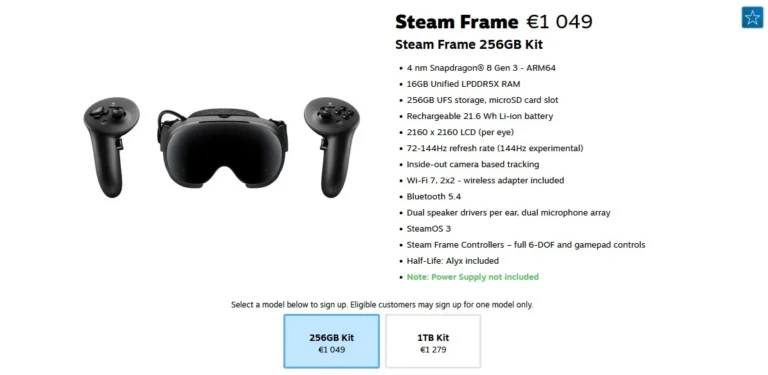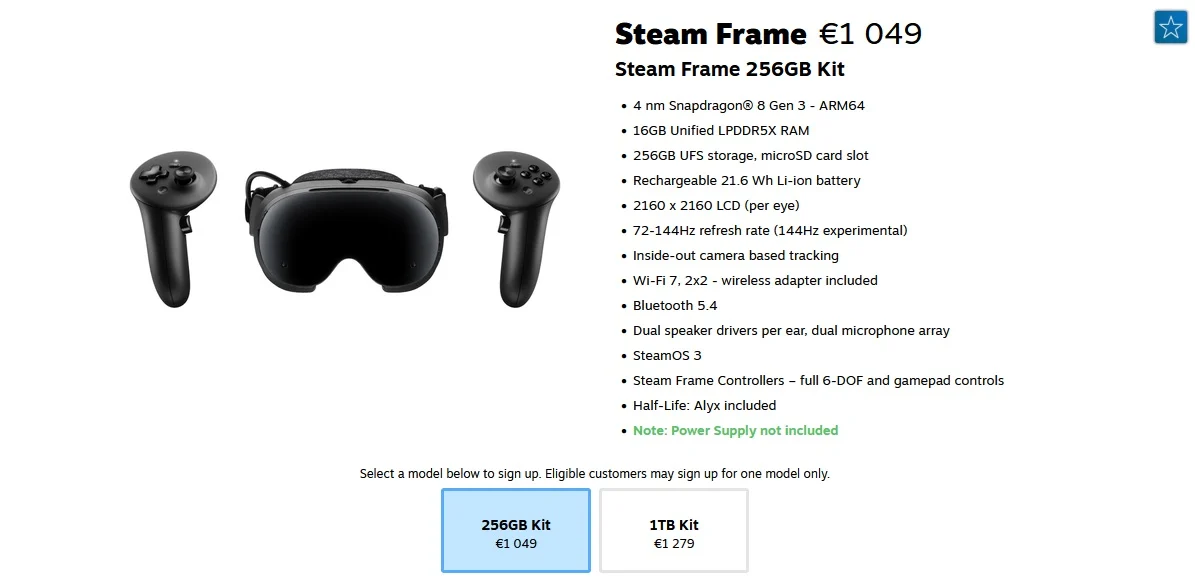
Valve Corporation has officially announced the retail pricing and hardware configurations for its highly anticipated virtual reality headset, the Steam Frame. Positioned as a high-end standalone device, the Steam Frame enters the market with two primary storage tiers: a standard 256GB model priced at $1,059 (approximately €1,049) and an expanded 1TB version retailing for $1,299 (approximately €1,279). Aside from the internal storage capacity, the two hardware iterations are technically identical, signaling Valve’s commitment to a unified performance standard across its ecosystem. This announcement marks a significant pivot for the company, moving from the PC-tethered architecture of the Valve Index toward a versatile, standalone ARM-based infrastructure.
Hardware Specifications and Technical Architecture
The Steam Frame represents a significant technological leap in the XR (Extended Reality) space. While the device maintains the ergonomic standards established by its predecessor, the internal components have been entirely redesigned for mobile efficiency. The headset utilizes a custom-engineered 64-bit ARM-based chipset, optimized to handle high-fidelity graphics without the need for a constant connection to a high-end gaming PC. This transition to ARM architecture allows for a more efficient thermal envelope and improved battery life while maintaining the computational overhead required for complex VR environments.

A cornerstone of the Steam Frame’s launch is the inclusion of a native standalone port of Half-Life: Alyx. Previously a flagship title exclusive to PCVR, Valve has confirmed that the version bundled with the Steam Frame is a "native 64-bit ARM build," specifically optimized for the headset’s hardware. Industry analysts suggest that porting a title as graphically intensive as Alyx to a mobile chipset indicates a breakthrough in Valve’s optimization protocols. This move is seen as a direct challenge to the perception that standalone VR hardware is incapable of delivering "AAA" gaming experiences.
Modular Ecosystem and Mixed Reality Enhancements
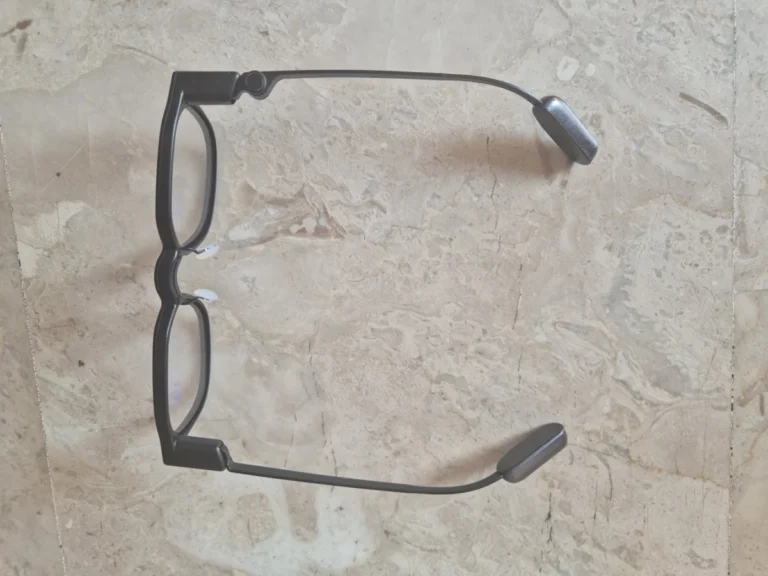
In a departure from the "closed-loop" design philosophy seen in many competing headsets, the Steam Frame emphasizes modularity. Valve has unveiled a suite of first-party and third-party accessories designed to extend the functionality of the base unit. Among the most notable additions is a specialized passthrough camera module developed by Arcturus Vision.
Retailing for approximately €157, the Arcturus Vision camera is an optional add-on that enables high-quality color passthrough, effectively transforming the Steam Frame from a dedicated VR headset into a Mixed Reality (MR) device. The module utilizes a "hotplug" interface, allowing users to switch between pure VR and MR modes seamlessly. Several prominent titles, including the spatial puzzlers Cubism and Puzzling Places, as well as the utility application Table Space, have already been updated to support the Arcturus module. This modular approach allows Valve to offer a competitive base price for pure VR enthusiasts while providing an upgrade path for users interested in the burgeoning mixed reality market.

Historical Context and Development Timeline
The road to the Steam Frame has been marked by years of speculation and internal development under various codenames, most notably "Deckard." Since the release of the Valve Index in 2019, the VR industry has shifted dramatically toward standalone units, led largely by Meta’s Quest series. Valve’s development timeline reflects a cautious but deliberate strategy to address the limitations of mobile VR:
- 2019: Launch of the Valve Index, setting a benchmark for PCVR audio and tracking but remaining limited by its tethered nature.
- 2021–2023: Increasing patent filings and software leaks suggesting Valve was working on a standalone "Deckard" prototype featuring Wi-Fi 6E and internal tracking.
- 2024–2025: Strategic silence from Valve as the industry faced a "VR Winter," characterized by slowing consumer adoption and reduced investment in the XR sector.
- Late 2026: Official unveiling of the Steam Frame, positioning it as a premium alternative to existing standalone hardware.
Market Positioning and Industry Response
With a starting price exceeding $1,000, the Steam Frame is clearly targeted at the "prosumer" and enthusiast demographic. This pricing strategy places it significantly higher than the consumer-focused Meta Quest 3, yet well below the enterprise-level Apple Vision Pro. Valve appears to be carving out a niche for dedicated gamers who demand the fidelity of the Steam ecosystem without the friction of cables.
Early reactions from industry experts suggest that while the Steam Frame may not achieve the mass-market volume of lower-cost competitors, its impact on the development community could be profound. By providing a high-performance ARM-based target for developers, Valve is encouraging the creation of more sophisticated mobile VR software. The inclusion of a native Half-Life: Alyx port serves as a technical "north star," proving that the gap between PCVR and standalone performance is narrowing.

However, some market analysts remain cautious. The high entry cost may limit the device’s ability to attract new users outside of the existing Valve and Steam Deck enthusiast base. The "VR Winter"—a term used to describe the cooling of the initial hype surrounding the metaverse and spatial computing—remains a factor. Whether the Steam Frame can generate enough momentum to reinvigorate the broader market is a subject of ongoing debate.
Broader Implications for the VR Industry
The launch of the Steam Frame is expected to have several long-term implications for the XR landscape:
- Standardization of ARM in High-End VR: Valve’s shift to ARM for its flagship hardware suggests that x86-based VR may eventually become a niche legacy format, with mobile architectures becoming the primary focus for both hardware and software innovation.
- Open Modular Hardware: By supporting third-party modules like the Arcturus Vision camera, Valve is promoting an open-hardware philosophy. This could lead to a diverse marketplace of specialized sensors and peripherals, allowing users to customize their headsets for specific tasks like eye-tracking, haptics, or advanced MR.
- SteamOS Expansion: The Steam Frame likely runs a specialized version of SteamOS, further consolidating Valve’s software platform. This ecosystem synergy between the Steam Deck and the Steam Frame provides a cohesive experience for users, potentially allowing for cross-platform features and a unified library of titles.
As reservations for the Steam Frame open, the industry will be watching closely to see if Valve’s premium, modular approach can successfully bridge the gap between high-end enthusiast hardware and the convenience of standalone portability. While the price point remains a barrier for the average consumer, for the dedicated VR community, the Steam Frame represents the next evolution of immersive technology.
About the Author