

The landscape of video game storytelling in the early 2000s often favored straightforward narratives, particularly within the first-person shooter (FPS) genre. Crafting a compelling, singular plot was a challenge many developers grappled with, let alone attempting an intricate, interweaving story arc. Yet, in 2004, Bungie achieved precisely this with Halo 2, delivering a narrative experience that not only succeeded but resonated profoundly with players and critics alike, establishing a new benchmark for depth in a blockbuster title. Its intricate plot, robust character development, and memorable dialogue have cemented its status as one of the most critically acclaimed and quoted campaigns in video game history, continually celebrated by communities such as those found on Reddit for its storytelling prowess.
The Context of Innovation: Gaming in 2004 and Halo’s Predecessor
Released on November 9, 2004, for the Xbox, Halo 2 arrived at a pivotal moment for console gaming. Its predecessor, Halo: Combat Evolved (2001), had already revolutionized the FPS genre on consoles, introducing fluid controls, innovative vehicle combat, and a compelling sci-fi universe. It set a high bar, establishing Master Chief as an iconic figure and the Covenant as a formidable, if somewhat monolithic, alien threat. The challenge for Bungie was immense: how to evolve the franchise without sacrificing the core appeal that had captivated millions. The industry, still grappling with the transition from the PlayStation 2/Xbox/GameCube generation to the impending Xbox 360/PlayStation 3 era, was ripe for a title that could push both technical and narrative boundaries. Halo 2 was not just expected to be bigger; it was expected to be smarter.
A Bold Narrative Leap: The Dual Protagonist Approach
Bungie’s response was audacious: to introduce a dual-protagonist narrative. While Master Chief continued his fight to defend humanity, particularly during the Covenant’s unprecedented assault on Earth following the victory at Installation 04, players were also thrust into the perspective of The Arbiter, a disgraced Elite commander within the Covenant. This decision was revolutionary for an FPS of its time, forcing players to inhabit the very "enemy" they had spent the first game fighting. This narrative choice immediately broadened the scope of the Halo universe, transforming the seemingly united Covenant into a complex society fraught with internal politics, competing beliefs, and religious zealotry.
The story picks up directly after the events of Halo: Combat Evolved. Master Chief, the Spartan-II super-soldier, is celebrated as a hero even as the Covenant launches a devastating invasion of Earth. Concurrently, Thel ‘Vadam, a Sangheili commander, is branded a heretic and forced to become the Arbiter, a historical rank of penance, tasked with suicide missions for the High Prophets. His journey of forced redemption intertwines with Master Chief’s defense, leading both characters to uncover long-buried secrets that expose the Covenant’s foundational lies and ultimately forge an unlikely, tactical alliance against a greater threat. This parallel storytelling not only deepened the lore but also provided an unprecedented exploration of the conflict from both sides, laying the groundwork for significant shifts in the Halo saga.
Character Depth and Development: Beyond Good vs. Evil
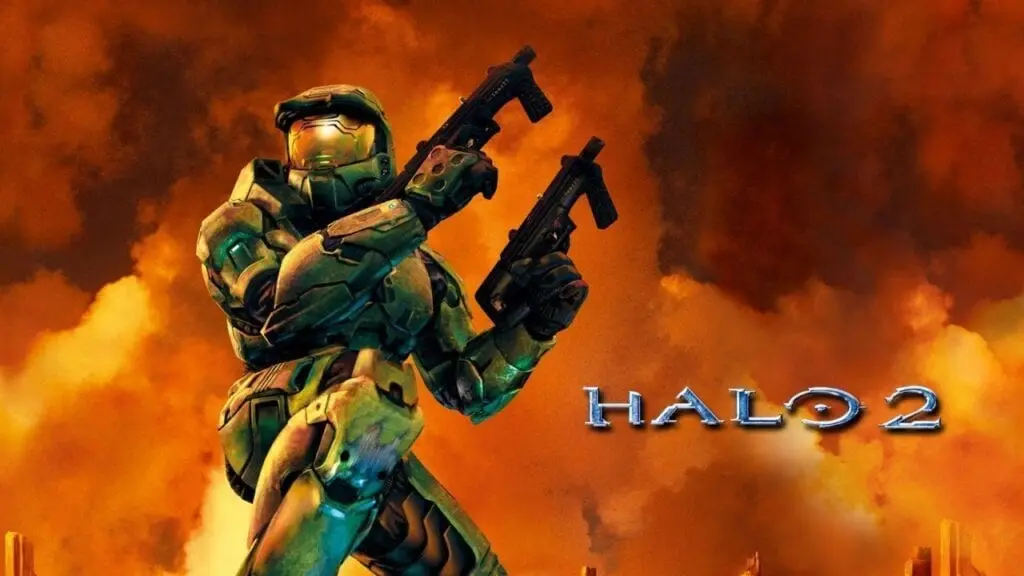
The richness of Halo 2‘s narrative is intrinsically linked to its character writing. Bungie meticulously crafted personalities that transcended typical video game archetypes, imbuing them with distinct beliefs, loyalties, and, crucially, doubts.
Master Chief: While often perceived as a stoic, silent protagonist, Master Chief’s few lines in Halo 2 are delivered with profound impact. His unwavering resolve, focus on the mission, and quiet leadership establish him as humanity’s unyielding shield. His interactions, particularly with Cortana, reveal glimpses of his humanity beneath the armor, making his moments of dialogue incredibly effective. He embodies the singular purpose of protecting Earth, yet his journey also begins to hint at the larger, more cosmic truths unfolding around him.
The Arbiter (Thel ‘Vadam): The Arbiter’s arc is arguably the most compelling in Halo 2. Initially driven by fierce honor and blind religious devotion to the Covenant, his experiences as the Arbiter force him to confront the hypocrisy and corruption at the heart of his faith. His journey from an instrument of the Prophets to a truth-seeker, culminating in his eventual alliance with humanity, is a masterful exploration of redemption and moral awakening. Players experience firsthand the internal struggles of the Covenant, witnessing their hierarchical structure, their fervent beliefs in the "Great Journey," and the devastating consequences of unquestioning obedience. This humanization of the "enemy" was a significant narrative risk that paid off handsomely.
Cortana: The AI companion, Cortana, serves as Master Chief’s intelligent and often sarcastic foil. Her bond with the Chief is a cornerstone of the series, showcasing a partnership built on trust and mutual respect, where she is unafraid to challenge orders or offer strategic counsel. In Halo 2, her intelligence and quick wit are on full display, providing exposition, tactical advice, and much-needed moments of levity. Her critical role in uncovering the Covenant’s deceptions and her eventual sacrifice (or rather, containment) on High Charity underscore her importance beyond being a mere sidekick.
Supporting Cast: Even the secondary characters contribute significantly to the narrative tapestry. Lord Hood’s steadfast leadership and grim determination in defending Earth, the manipulative machinations of the High Prophets, the chilling intelligence of the Gravemind, and the tragic loyalty of characters like Sergeant Johnson all add layers of complexity and emotional weight. Their back-and-forth dialogue is not merely exposition; it’s character-driven storytelling that brings the world alive.
Themes and Implications: A War Fought Over a Lie
Beyond the high-stakes battles and new weaponry, Halo 2 earns its narrative reputation by challenging players to reconsider their understanding of conflict. The game immerses players in a predetermined story that becomes increasingly uncomfortable, revealing that the war between humanity and the Covenant is fought over a fundamental lie – a lie that neither side initially comprehends.
This central theme—how blind obedience, particularly in the context of religious fanaticism, can destroy civilizations and perpetuate endless conflict—is explored with remarkable nuance. The "Great Journey," the Covenant’s core religious tenet, is slowly revealed to be a catastrophic misunderstanding of the Forerunner legacy. The Prophets, aware of this truth, manipulate their followers to maintain power, leading to devastating consequences for both their own species and humanity. Halo 2 posits that shared truth, however painful, offers the only path through crisis, suggesting that understanding and empathy can bridge even the most profound divides. This thematic depth elevated Halo 2 beyond a mere shooter, transforming it into a poignant commentary on war, religion, and political manipulation.

Development Challenges and Critical Acclaim
The ambitious scope of Halo 2‘s narrative was mirrored by its challenging development cycle. Bungie pushed the Xbox hardware to its limits, striving for unprecedented visual fidelity and complex level design. The development was famously intense, marked by significant "crunch" periods and the eventual decision to cut certain content to meet the release deadline. Despite these pressures, the final product was a technical marvel for its time, lauded for its graphics, sound design, and robust online multiplayer, which famously popularized Xbox Live.
Upon its release, Halo 2 was met with widespread critical acclaim, scoring an average of 95/100 on Metacritic. Reviewers consistently praised its groundbreaking multiplayer, stunning visuals, and, crucially, its sophisticated storytelling. The dual narrative was highlighted as a bold and successful innovation, praised for adding depth and moral ambiguity to the Halo universe. The cliffhanger ending, while initially divisive, ultimately served to amplify anticipation for future installments, proving Bungie’s commitment to a grand, unfolding saga.
Legacy and Enduring Influence
Halo 2‘s influence extended far beyond its immediate success. It demonstrated that FPS games could deliver narratives with the complexity and emotional resonance typically found in other media. It set a precedent for character-driven storytelling in action games, inspiring subsequent titles to explore more intricate plots and develop multi-faceted antagonists. The game’s narrative choices profoundly shaped the entire Halo franchise, expanding its lore, introducing new factions, and establishing the groundwork for future conflicts and alliances. The Arbiter’s character, in particular, became an indispensable part of the Halo universe, a testament to the success of Bungie’s bold narrative experiment.
Years later, Halo 2 continues to be a subject of intense discussion and analysis among fans. Its quotes, ranging from Master Chief’s terse commands to Cortana’s witty retorts and the Arbiter’s profound reflections, are deeply ingrained in gaming culture. These memorable lines are not merely cool dialogue; they are distillations of character, theme, and plot that underscore the brilliant writing behind the spectacle.
In conclusion, Halo 2 stands as a monumental achievement in video game narrative. It defied conventional expectations for an FPS, delivering an intricate, character-driven story that explored complex themes of war, faith, and deception. By daring to introduce a dual perspective and humanize its antagonists, Bungie not only enriched the Halo universe but also left an indelible mark on the gaming industry, proving that even the most action-packed experiences could be imbued with profound storytelling depth. Its legacy is a testament to the power of ambitious vision and masterful execution in pushing the boundaries of interactive entertainment.
About the Author







