The independent game development landscape has recently witnessed a significant advancement in efficiency and accessibility, as itch.io, a prominent open marketplace for indie games, has rolled out a major update to its desktop application. This update introduces a fully integrated graphical user interface (GUI) for Butler, the platform’s powerful command-line interface (CLI) tool for uploading game builds. Previously a domain exclusively for developers comfortable with terminal commands, Butler’s core functionality is now seamlessly accessible within the itch.io app, promising to democratize the game update process and significantly enhance the developer experience. This strategic enhancement, found in app version 26.12.0 and later, marks a pivotal moment in itch.io’s ongoing commitment to empowering creators and streamlining the publishing pipeline for its vast community.
A Deep Dive into the Enhanced Upload Experience
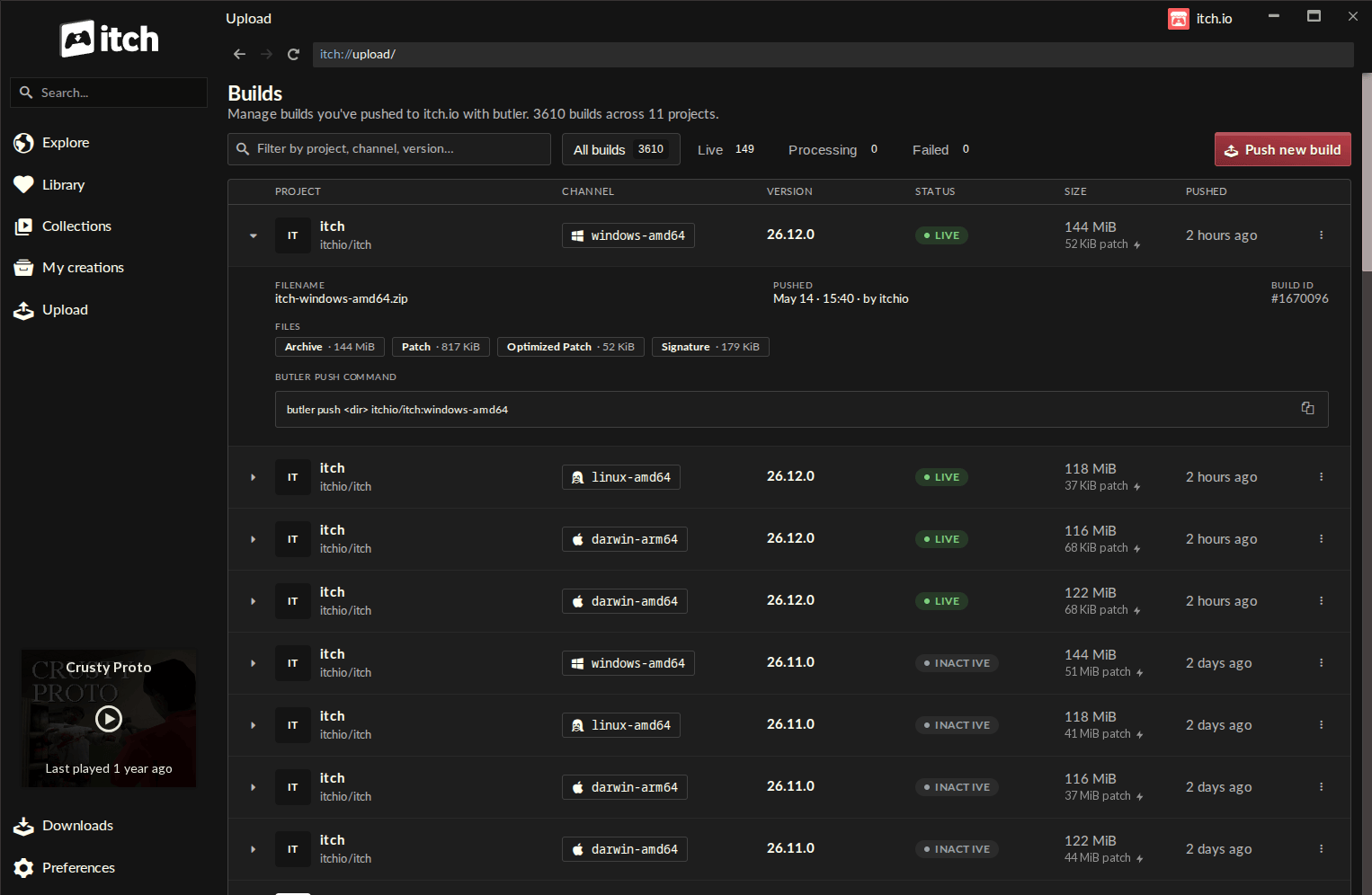
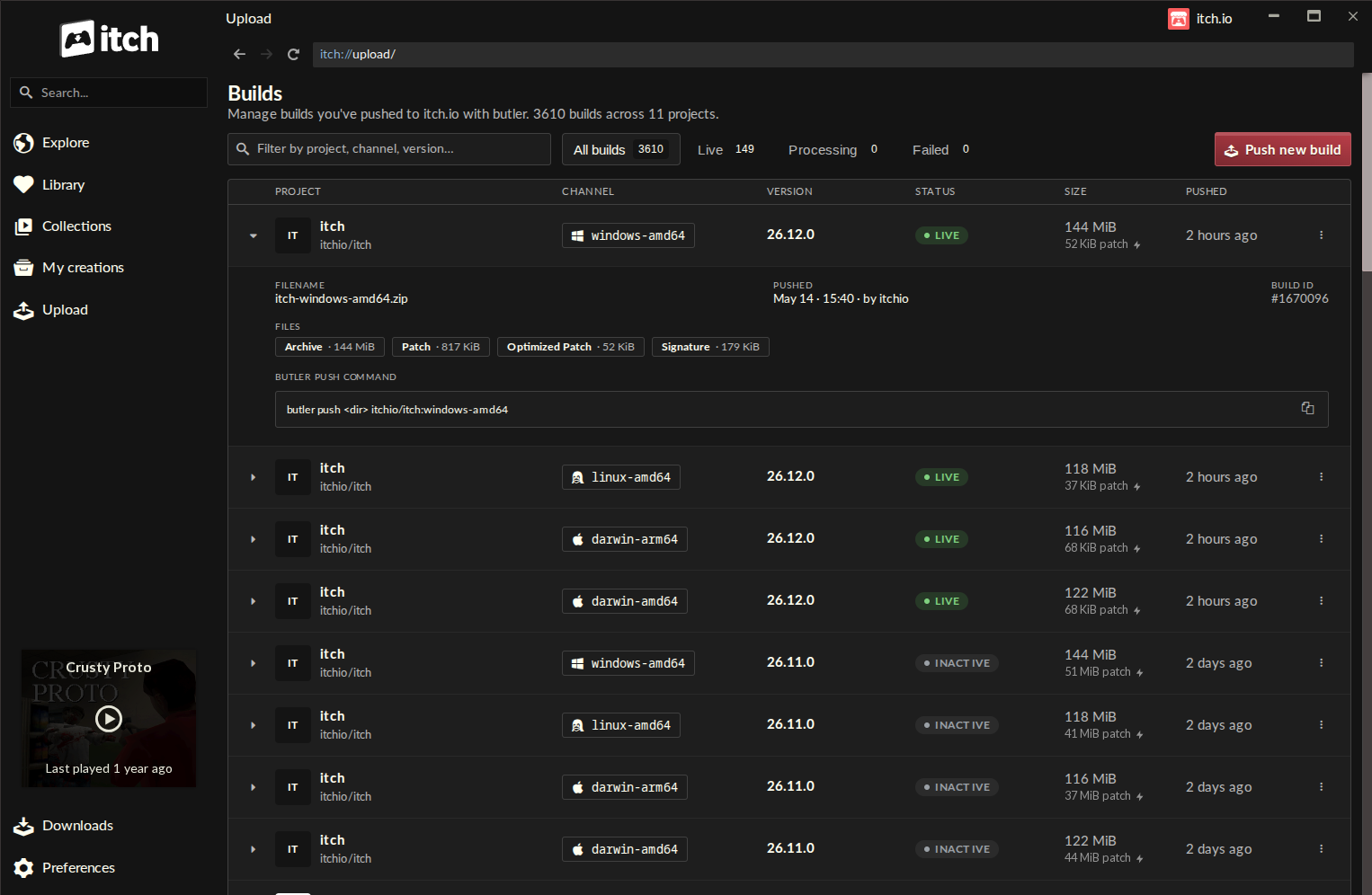
The central feature of this update is the brand-new "Upload" section, prominently displayed in the itch.io app’s sidebar. Navigating to this section reveals the "Builds" page, a comprehensive dashboard designed to provide developers with an organized overview of their projects’ build history. Each entry on this page meticulously details the project name, the specific channel (e.g., windows-beta, linux-arm64, macos-preview), the associated version number, current status, file size, and the exact timestamp of its last push. This centralized hub eliminates the need for manual tracking and provides a transparent, real-time snapshot of all active builds across a developer’s portfolio.
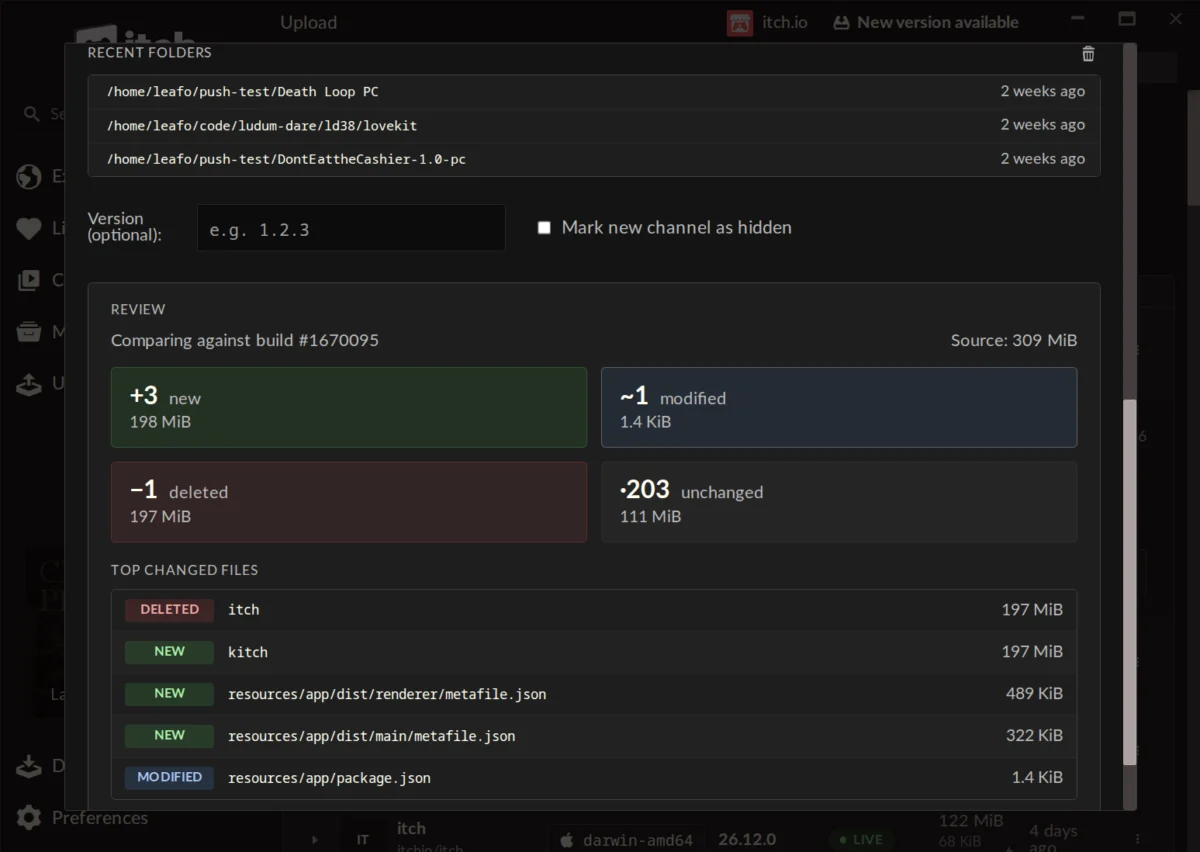
The cornerstone of the new functionality is the "Push new build" button, which initiates an intuitive dialog guiding developers through the upload process. The dialog prompts users to select a specific project from their editable accounts, followed by the choice of an existing channel or the creation of a new one simply by typing a desired name. An optional version number field allows for precise build identification. The actual upload mechanism is simplified to a drag-and-drop interface, accommodating either a project folder or a .zip archive. For added convenience, a "recent folders" list intelligently remembers previously used locations, accelerating subsequent uploads and reducing repetitive navigation.
One of the most valuable additions is the pre-upload preview functionality. Before committing to an upload, developers can generate a detailed report outlining the changes between the current build and the last version pushed to the selected channel. This preview categorizes changes into new, modified, deleted, or unchanged files, providing aggregated sizes for each group and highlighting the largest altered files. This transparent overview is critical for identifying potential errors, verifying intended changes, and gaining a deeper understanding of the incremental updates being deployed. Such a feature is invaluable for quality assurance and maintaining version control with greater confidence.
Butler: The Engine Behind Efficient Updates
To fully appreciate the significance of this GUI integration, it’s essential to understand the underlying technology: Butler. Butler is not merely an uploader; it is itch.io’s sophisticated command-line utility engineered for efficient build management. Unlike conventional file uploads that transfer entire game packages with every update, Butler operates on a patch-based system. The initial upload to a new channel transmits the complete build. However, subsequent pushes to the same channel leverage a delta compression algorithm, comparing the new build against the previously uploaded version. Only the differential data—the changes—is then transmitted.
This intelligent patching mechanism yields substantial benefits for both developers and players. For developers, it dramatically reduces upload times, especially for projects with frequent minor updates, as only a fraction of the data needs to be sent. For players utilizing the itch.io app, this translates directly into significantly faster and smaller game updates. Instead of re-downloading entire multi-gigabyte titles, users receive only the necessary patch files, conserving bandwidth and minimizing wait times. After a patch is uploaded, itch.io’s servers perform additional background re-compression and optimization, further refining the patch size for optimal distribution. This innovative approach to content delivery has been a hallmark of itch.io’s technical prowess, distinguishing it from platforms that rely solely on full-file replacement for updates.
Historical Context and Itch.io’s Evolution
Itch.io, founded in 2013 by Leaf Corcoran, emerged as a distinct alternative to established digital storefronts, quickly carving a niche by prioritizing developer autonomy, fair revenue splits, and an open, experimental platform. From its inception, itch.io championed independent creators, offering unparalleled flexibility in pricing models, page customization, and direct interaction with players. The platform’s ethos has always revolved around empowering developers with tools that simplify the publishing process while maintaining creative control.
Butler was introduced as a core component of this vision, designed to address the challenges of distributing and maintaining game builds efficiently. Initially, its command-line nature catered primarily to developers with technical proficiency and those accustomed to integrating build pipelines into their development workflows. While highly effective, this CLI-only approach inherently created a barrier for a segment of the indie developer community – particularly hobbyists, newcomers, or those without extensive experience in terminal environments. This demographic, often comprising talented artists and designers without a strong coding background, found the technical overhead of Butler daunting, sometimes resorting to less efficient browser-based full-file uploads.
The integration of Butler into the itch.io app represents a natural evolution of the platform’s commitment to accessibility. It reflects a broader industry trend towards democratizing game development tools, making powerful features available through user-friendly interfaces. This move acknowledges the diverse skill sets within the developer community and ensures that the advantages of Butler’s patch-based updates are no longer exclusive to a technically adept subset.
Streamlined Workflow and Advanced Features
Beyond merely providing a GUI for uploads, the new system offers several layers of convenience and sophistication. The version of Butler embedded within the itch.io app is self-updating, eliminating the need for developers to manually manage or verify their Butler installation. This ensures that developers are always using the most current and optimized version of the tool without any additional effort.
Furthermore, the integration leverages the existing account management features of the itch.io app. Uploads are automatically authenticated using the credentials of the logged-in user, simplifying the process and removing the need for separate API keys or token management during uploads. For developers managing multiple projects or working across different developer accounts, the app’s ability to quickly switch between profiles makes managing build pushes across various entities exceptionally straightforward. This multi-account flexibility is a significant advantage for studios or individuals juggling diverse creative endeavors.
Broader Implications for the Itch.io Ecosystem
This update carries substantial implications across the entire itch.io ecosystem:
- For Developers: The most immediate impact is a dramatically lowered barrier to entry for utilizing Butler’s advanced features. This accessibility encourages more frequent updates, fostering a healthier lifecycle for games and software on the platform. Developers can now push minor bug fixes, content additions, or performance improvements with minimal friction, ensuring their games remain polished and engaging. This increased efficiency translates directly into more time for creative work and less time spent on technical distribution hurdles. Anecdotal evidence from the community, such as developer "warpzone" noting it’s "a lot faster than manually updating the webpage," underscores the practical benefits.
- For Players: While not directly interacting with the upload process, players stand to benefit immensely. Faster, smaller updates mean less data consumption, quicker access to new content, and a more seamless gaming experience. This improved update mechanism contributes to higher player satisfaction and retention, as the friction associated with keeping games current is significantly reduced. This aligns with modern expectations for digital content delivery, where seamless updates are a standard.
- For the Itch.io Platform: This enhancement strengthens itch.io’s position as a developer-centric platform. By investing in tools that directly address developer pain points, itch.io reinforces its commitment to its community, attracting new creators and retaining existing ones. The widespread adoption of Butler’s efficient patching system will also lead to optimized bandwidth usage across the platform, contributing to lower operational costs and a more robust infrastructure. In a competitive digital distribution landscape, such user-experience-focused innovations are crucial for maintaining relevance and growth. The update solidifies itch.io’s unique value proposition, distinguishing it through its blend of developer freedom and sophisticated tooling.
Community Reception and Future Outlook
Initial reactions from the developer community have been overwhelmingly positive, reflecting a strong demand for such a feature. Comments from users like "augustopolonio" praising the "easy and organized" update process and "hopelessdecoy" considering moving their software to itch.io highlight the tangible benefits and potential for attracting new developers. The update addresses a long-standing request from many developers who admired Butler’s capabilities but found its command-line interface intimidating.
One common query raised by developers, notably "traxiss," concerned the possibility of converting existing games not originally uploaded with Butler to the new patch-based system. A spokesperson from itch.io, "leafo," clarified that this is currently not possible due to the specific metadata required during a Butler push, which is computed at the time of upload. While not immediately planned, the possibility remains open for future development, indicating a responsive approach to community feedback and potential for further enhancements. This transparent communication about limitations and future considerations further builds trust within the developer community.
Accessing the Update
For existing users of the itch.io app, the update process is largely automatic. The application is designed to self-update in the background, ensuring users always have access to the latest features. Developers can manually check for updates via the Preferences screen if they wish to accelerate the process. New users can easily download the itch.io app directly from the official website. It is imperative that users ensure their app version is at least v26.12.0 to access the new "Upload" tab and its associated functionalities. For developers who still prefer or require the full power of the command line, comprehensive documentation for Butler remains available, detailing its advanced features and capabilities.
In conclusion, the integration of a graphical user interface for Butler within the itch.io app represents a significant leap forward in developer empowerment. It aligns with itch.io’s founding principles of accessibility and efficiency, offering a robust, user-friendly solution for game distribution. This strategic enhancement is poised to foster greater creative output, improve player experiences, and further solidify itch.io’s position as a vibrant and indispensable platform for independent game developers worldwide. The future of indie game publishing on itch.io is now more streamlined, more efficient, and more inclusive than ever before.
About the Author