
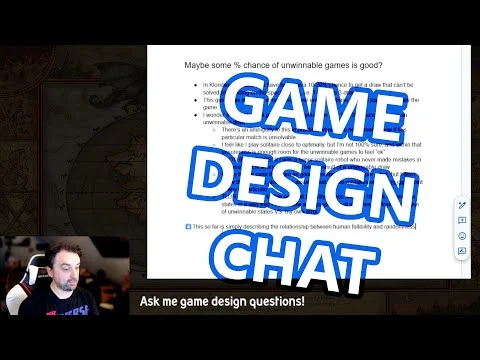
A recent live stream featuring a prominent content creator has sparked a significant discussion within the gaming community and among industry professionals, exploring the controversial notion of integrating "plausibly deniable guaranteed losses" as a deliberate design element within video games. The creator, whose identity is kept anonymous in this report but whose insights are widely followed, engaged viewers in a thought-provoking analysis, positing that a carefully calibrated percentage—estimated at 10-20%—of such unavoidable setbacks might, counterintuitively, serve as a beneficial mechanism for player engagement and long-term retention. This nuanced perspective, initially shared in a live broadcast and subsequently documented in supplementary notes, has opened a broader discourse on the psychology of player interaction, the ethics of game design, and the delicate balance between challenge, frustration, and reward.
The core concept, "plausibly deniable guaranteed losses," refers to game mechanics where a player experiences a setback or failure that, while ultimately predetermined by the game’s system, appears to be the result of their own misjudgment, bad luck, or an unidentifiable variable. Unlike overtly unfair mechanics or unavoidable plot points, these losses are designed to feel just within the realm of player agency, making it difficult for the player to definitively attribute the failure to an external, programmed design choice. The streamer elaborated on this during the broadcast, suggesting that such elements are not about punishing players unfairly, but rather about subtly manipulating the emotional landscape of the game to enhance perceived challenge and eventual triumph. The discussion highlighted a YouTube video further detailing these points and a Google Docs link providing written notes for deeper exploration, indicating a well-considered argument rather than a fleeting observation.
The Psychology of Loss and Engagement
The proposition directly challenges conventional wisdom in game design, which often prioritizes player satisfaction through clear feedback loops, transparent mechanics, and a sense of progression. However, the streamer’s argument taps into deeper psychological principles concerning human motivation and reward. Research in behavioral psychology, particularly studies on variable ratio reinforcement schedules, suggests that unpredictable rewards can be far more compelling and addictive than predictable ones. While "guaranteed losses" are not rewards, their "plausibly deniable" nature introduces an element of uncertainty and perceived fairness that can prevent outright player abandonment. When a player experiences a loss that they could have theoretically avoided, it often triggers a desire to understand what went wrong and to improve, rather than to blame the game and disengage. This phenomenon is closely related to the concept of "losing is fun," a mantra often cited in the rogue-like and survival genres, where repeated failure is an integral part of the learning curve and eventual mastery.
The human brain is wired to seek patterns and understand causality. When a loss occurs, and the cause is ambiguous, players are more likely to internalize the failure and seek ways to overcome it, believing that success is achievable through skill or different tactics. If the loss were clearly arbitrary or system-imposed, it would more likely lead to frustration, resentment, and a feeling of being cheated, ultimately driving players away. The 10-20% figure proposed by the streamer is crucial here, suggesting a careful calibration. Too high a percentage, and the illusion of agency breaks; too low, and the intended psychological effect might not manifest. This optimal range aims to provide just enough friction to make success feel earned, without crossing the threshold into perceived unfairness.
Historical Context and Precedents in Game Design
While the term "plausibly deniable guaranteed losses" might be new, the underlying principles have implicitly existed in game design for decades. Early arcade games, for instance, were notorious for their unforgiving difficulty spikes and seemingly random enemy behaviors, often designed to encourage players to insert more coins. While not always "plausibly deniable" in the modern sense, they certainly created an environment where players attributed failures to their own lack of skill rather than systemic unfairness, thus fueling continued attempts.
More contemporary examples can be observed in various genres:
- Roguelikes and Roguelites: Games like Hades, Slay the Spire, or Dead Cells thrive on runs where players might feel they had a good build, only to be overwhelmed by a combination of enemy spawns, environmental hazards, or an unlucky sequence of card draws. While these are often procedurally generated, the player’s perception is that they could have played better or made different choices, rather than being explicitly cheated by the game.
- Competitive Multiplayer Games: In titles like League of Legends or Dota 2, players often experience "losing streaks" where they feel an inexplicable run of bad luck, poor teammate performance, or unforeseen enemy actions. While skill is paramount, the confluence of variables can create scenarios where a loss feels almost predetermined, yet players rarely blame the game’s core mechanics but rather their own or their team’s execution.
- Gacha Games and Loot Boxes: These monetization models often incorporate "pity timers" or "bad luck protection," which guarantee a rare item after a certain number of attempts. However, the intervening failures are often "plausibly deniable"—players attribute them to statistical probability or their own poor timing, rather than a system explicitly designed to withhold rewards for a set period. The stream’s discussion extends this concept to general gameplay, not just monetization.
These examples illustrate how designers have long leveraged the ambiguity of outcomes to maintain engagement. The streamer’s contribution is in explicitly naming and quantifying this phenomenon, bringing it into the forefront of design discourse.
Developer Perspectives and Implementation Challenges
Implementing such a system presents significant challenges for game developers. The line between "plausibly deniable" and "blatantly unfair" is incredibly fine and highly subjective. What one player perceives as a challenging but fair setback, another might see as a deliberate attempt to frustrate them. Developers would need sophisticated analytics and extensive playtesting to fine-tune the frequency, severity, and context of these losses.
Key considerations would include:
- Player Skill Level: A mechanic that feels "plausibly deniable" to an experienced player might feel crushingly unfair to a novice. Dynamic difficulty adjustments could be one approach, but they too carry their own set of ethical and design complexities.
- Transparency vs. Opacity: Modern game design often advocates for transparency in mechanics. Deliberately obfuscating the true nature of a loss could be seen as deceptive by players who value clear rules and predictable outcomes.
- Genre and Player Expectations: What is acceptable in a roguelike might be wholly unacceptable in a narrative-driven RPG or a competitive shooter. Player communities within different genres have varying tolerances for perceived randomness and difficulty.
- Feedback Loops: Even with plausibly deniable losses, the game still needs to provide sufficient feedback for players to learn and adapt. If players cannot discern any pattern or actionable information from their failures, even "plausibly deniable" ones, they will eventually disengage.
Game development veterans, often operating under tight deadlines and budget constraints, constantly grapple with these design paradoxes. The streamer’s proposal forces a re-evaluation of whether the psychological benefits outweigh the potential risks of player backlash or accusations of manipulative design.
Ethical Implications and Player Perception
The ethical dimension of "plausibly deniable guaranteed losses" is perhaps the most contentious aspect of the debate. Critics might argue that intentionally programming setbacks that appear to be player-induced but are, in fact, predetermined, borders on psychological manipulation. It raises questions about player agency, trust, and the fundamental contract between player and game designer. Should games be entirely transparent about their internal workings, or is a degree of controlled illusion acceptable for the sake of entertainment?
Industry analysts suggest that the perception of fairness is paramount for long-term player retention. A 2023 study by the Entertainment Software Association (ESA) indicated that over 70% of gamers cited "fairness" and "challenge" as key factors in their enjoyment of a game. If players eventually uncover the underlying deterministic nature of these "plausibly deniable" losses, the resulting breach of trust could be far more damaging than any short-term engagement boost.
However, proponents might counter that all game design is, in a sense, a form of controlled experience. Designers craft challenges, curate narratives, and dictate outcomes within a predefined rule set. The "plausibly deniable" aspect merely adds another layer of sophistication to this curated experience, akin to a magician’s trick – the audience knows it’s an illusion, but enjoys the mystery. The key, they would argue, is that the ultimate goal is not to exploit but to enhance the player’s journey, making victories sweeter and challenges more meaningful.
Broader Impact on Player Retention and Monetization
The implications of such a design philosophy extend to critical business metrics like player retention and, indirectly, monetization. In a highly competitive market where thousands of games vie for player attention, retaining users is crucial. If "plausibly deniable guaranteed losses" genuinely lead to deeper engagement and a stronger desire for mastery, they could contribute to higher retention rates. Players who feel challenged and constantly on the verge of overcoming an obstacle are less likely to abandon a game for an easier alternative.
From a monetization perspective, particularly in games with in-app purchases or subscription models, sustained engagement is directly linked to revenue. A player who is consistently re-engaging with the game, even after setbacks, is more likely to invest further time and potentially money into their progression. This is not to suggest that "plausibly deniable losses" are designed to force monetization, but rather that by fostering deeper engagement, they create a more fertile ground for organic investment.
However, the risk of miscalibration remains. If the "plausibly deniable" aspect wears thin, and players begin to feel genuinely manipulated, the negative impact on retention and public perception could be severe. Negative reviews, social media backlash, and a loss of community trust can cripple a game’s longevity and reputation, far outweighing any short-term gains.
Conclusion: An Ongoing Dialogue for Game Design
The streamer’s detailed discussion on "plausibly deniable guaranteed losses" has effectively reignited a complex and often understated debate within the game development community. It highlights the intricate interplay between psychology, design mechanics, and player perception that shapes the modern gaming experience. While the concept might appear controversial at first glance, its examination forces designers to confront the deeper motivations behind player engagement and the ethical responsibilities inherent in crafting interactive worlds.
As the industry continues to evolve, pushing boundaries in technology and narrative, discussions like these are vital. They encourage a critical assessment of established norms and invite innovative approaches to perennial challenges like player retention and satisfaction. The precise percentage of 10-20% may be a starting point, but the underlying question remains: how much controlled adversity can enhance a player’s journey, and at what point does it become counterproductive? The answers will likely continue to shape the future of interactive entertainment, requiring ongoing dialogue, rigorous testing, and a deep understanding of the human element at the heart of every game.
About the Author






