
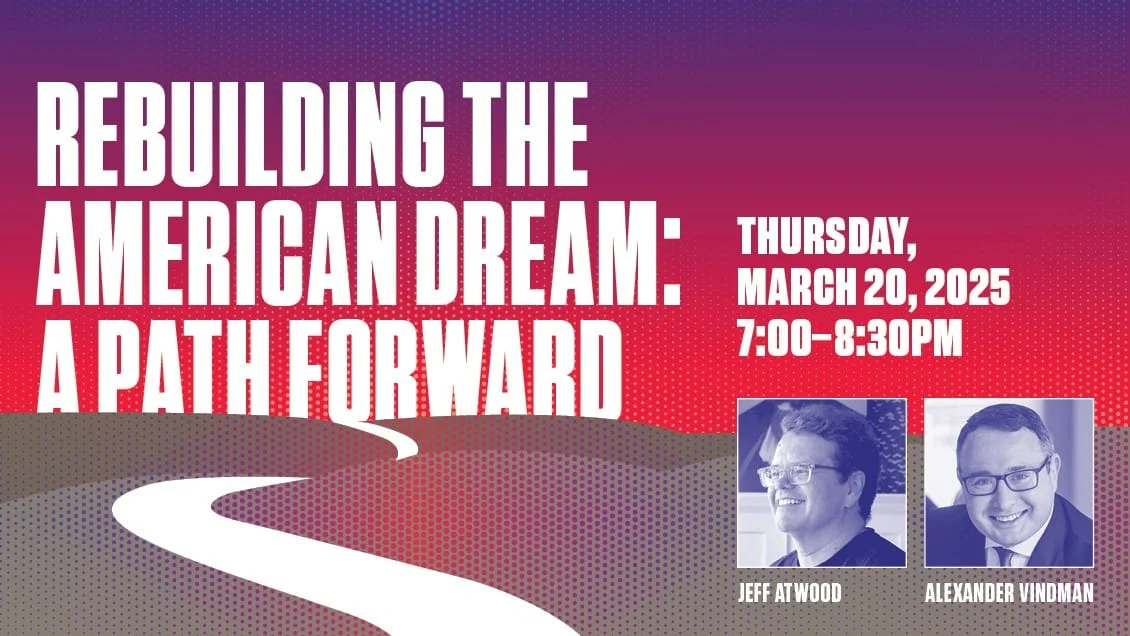
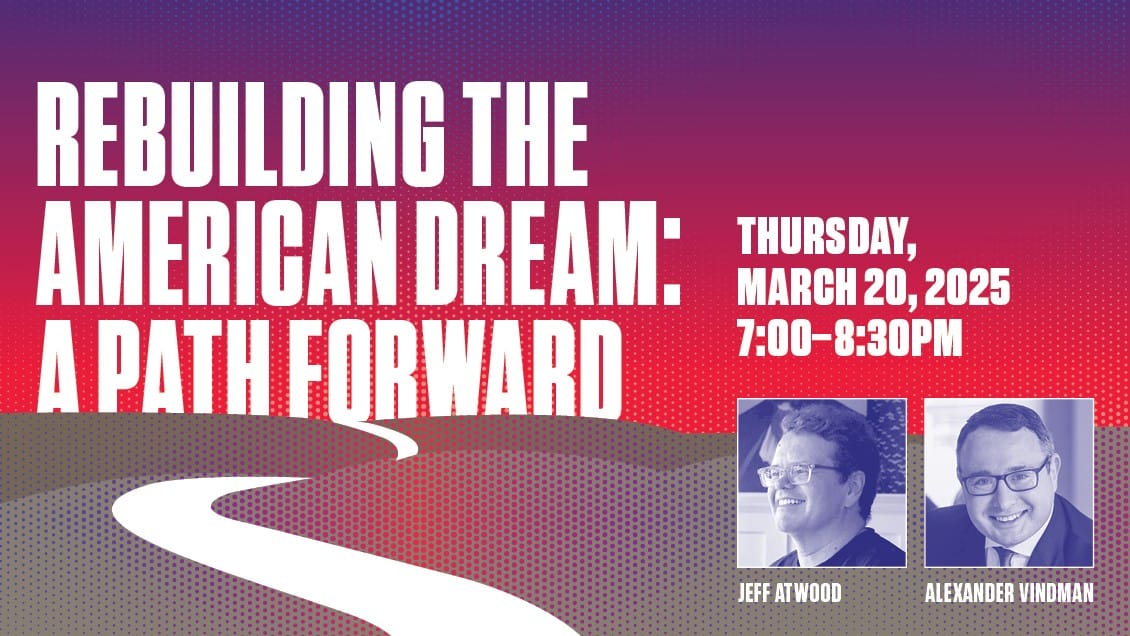
In a landmark event at the historic Cooper Union Great Hall, internet pioneer Jeff Atwood and decorated military officer Colonel Alexander Vindman recently joined forces to address a pressing question facing the United States in 2025: "How can we build on our dream so that it works for everyone?" The highly anticipated discussion, titled "Rebuilding The American Dream: A Path Forward," brought together two figures from vastly different professional realms – one a titan of the digital world, the other a paragon of civic duty and national security – to explore the intricate connections between democracy, community, and economic mobility. Their collaborative effort sought to move beyond individual acts of generosity towards proposing systemic changes designed to foster security, dignity, and possibility for all Americans. The event, streamed globally, aimed to ignite a national conversation about the active work required to uphold and redefine the American Dream for future generations.
The Nexus of Tech and Principle: A Historic Convergence
The pairing of Jeff Atwood, co-founder of seminal online platforms Stack Overflow and Discourse, with Colonel Alexander Vindman, a retired U.S. Army officer and former Director for European Affairs for the National Security Council, represented a unique convergence of perspectives. Atwood, known for his incisive commentary on technology, human interaction, and the architecture of online communities, brings a builder’s ethos to the challenges of societal organization. Vindman, whose distinguished military career culminated in a principled stand during a pivotal moment in American political history, embodies the unwavering defense of democratic ideals. Their collaboration underscored the belief that foundational solutions to national challenges require insights from diverse experiences, from the intricate dynamics of digital ecosystems to the high-stakes arena of geopolitical strategy. This event was not merely a discussion but a deliberate act of public discourse, seeking to bridge divides and foster a shared understanding of the collective effort needed to secure a prosperous and equitable future.
Defining the American Dream in the 21st Century
At the core of the discussion was a re-evaluation of the American Dream itself. Traditionally understood as the promise that hard work, fairness, and opportunity can lead to a better future, the speakers acknowledged that for many, this promise feels increasingly elusive. Data consistently points to significant challenges impacting the accessibility of this dream for a growing segment of the population.
Economic Stagnation and the Widening Gap
Economic mobility, a cornerstone of the American Dream, has shown concerning trends. Studies by institutions like the Pew Research Center indicate that intergenerational economic mobility has remained relatively stagnant for decades, challenging the notion that each generation will inherently do better than the last. The wealth gap continues to widen, with the top 1% of earners holding a disproportionate share of national wealth, while many working families struggle with stagnant wages, rising costs of living, and limited access to upward mobility. For instance, data from the Federal Reserve shows that median family wealth for the wealthiest 10% was 11 times higher than for the next 40% in 2022, a disparity that has grown over time. Factors such as globalization, automation, and shifts in labor markets have contributed to a sense of economic insecurity for many, pushing the "dream" further out of reach. The speakers emphasized that addressing these systemic economic disparities is paramount to ensuring the American Dream remains a viable aspiration for all, not just a privileged few.
Erosion of Trust and Civic Disengagement
Beyond economic concerns, the American Dream is also threatened by an erosion of trust in institutions and a decline in civic engagement. Polling data from Gallup consistently reveals historically low levels of public confidence in government, media, and even some educational institutions. This pervasive distrust can lead to apathy, political polarization, and a reluctance to participate in the collective efforts necessary for societal progress. The rise of misinformation and disinformation campaigns, particularly within digital spaces, further complicates the ability of citizens to engage constructively and make informed decisions. Both Atwood and Vindman highlighted that a healthy democracy relies on an informed and engaged citizenry, and rebuilding trust is a critical prerequisite for any meaningful societal advancement. They argued that fostering robust community ties, both online and offline, is essential to counter this trend of disengagement and restore a sense of shared purpose.
Colonel Alexander Vindman: A Beacon of Integrity
Colonel Alexander Vindman’s presence on the Cooper Union stage resonated deeply with the theme of upholding democratic ideals. Born in the Soviet Union and immigrating to the U.S. as a child, Vindman’s personal journey embodies the promise of America. He grew up in Brooklyn, enlisted in the U.S. Army, and served with distinction for 21 years, earning a Purple Heart for injuries sustained in Iraq. His career culminated as the Director for European Affairs for the National Security Council, a position of immense responsibility. However, it was his principled testimony during the 2019 impeachment inquiry that brought him national prominence. When faced with a choice between personal career advancement and upholding the values he swore to protect, Vindman chose the latter, providing truthful testimony that ultimately cost him his military career. His unwavering commitment to integrity and the rule of law, even in the face of significant personal sacrifice, has made him a powerful symbol of civic duty. His insights into the fragility and resilience of democratic institutions, informed by both his family’s experience with authoritarianism and his own service to a democratic nation, provided a crucial framework for the discussion on the American Dream. His narrative underscored that "staying gold" — maintaining one’s core values and principles — is an active, often difficult, endeavor.
Jeff Atwood: Architect of Digital Communities
Jeff Atwood’s journey from software developer to influential thought leader in online community building offered a complementary yet equally vital perspective. As the co-founder of Stack Overflow, a widely used Q&A platform for programmers, and Discourse, an open-source forum software, Atwood has spent decades designing and nurturing digital spaces where millions interact daily. His work has provided him with unique insights into how communities function, or malfunction, online.
From Code to Community: Lessons in Digital Governance
Atwood’s experience in building self-governing digital communities translates directly to the challenges of broader societal governance. He argues that whether one is running a country or managing an online forum, the underlying principles for success are remarkably similar: clear expectations, fair systems, strong boundaries, and a shared sense of purpose. Stack Overflow, for instance, thrives on a system of peer moderation, reputation, and clear guidelines that incentivize constructive engagement and penalize disruptive behavior. Discourse aims to foster healthy conversations through structured interfaces and moderation tools that promote civility and depth. These platforms demonstrate that well-designed systems can encourage participation, facilitate fair resolution of disputes, and ultimately lead to the creation of "artifacts for the common good," much like public parks or shared infrastructure in the physical world. Atwood’s contribution emphasized that the lessons learned from scaling digital communities – managing diverse opinions, establishing norms, and building consensus – are profoundly relevant to strengthening democratic processes and community cohesion in an increasingly interconnected world.
The "Stay Gold" Philosophy: Active Engagement for a Better Future
Atwood’s initial exploration of the "Stay Gold" philosophy, inspired by S.E. Hinton’s "The Outsiders," posits that holding onto the best parts of ourselves and our society isn’t a passive state but an active, continuous effort. This concept formed the philosophical bedrock for the Cooper Union talk. He articulated that achieving a revitalized American Dream requires proactive engagement, confronting difficult truths, and being willing to have hard conversations about where society has been, where it stands, and where it aspires to go. This involves moving beyond individual acts of kindness to focus on structural change. His work in building systems that promote fairness and participation in digital spaces provided a tangible model for how such structural changes might be conceived and implemented within the larger societal fabric.
The Cooper Union Great Hall: A Stage for Critical Dialogue
The choice of the Cooper Union Great Hall as the venue for this significant discussion was deliberate and steeped in historical resonance. Since its opening in 1859, the Great Hall has served as a crucible for American public discourse, hosting pivotal speeches by figures such as Abraham Lincoln, Susan B. Anthony, Frederick Douglass, and Mark Twain. Lincoln’s "Right Makes Might" speech delivered there in 1860 is widely credited with helping secure his presidential nomination. The hall has historically been a platform for advocating for social reform, civil rights, and intellectual exchange, making it an exceptionally fitting location for a conversation centered on the future of the American Dream and the principles of democracy. Its legacy underscores the power of open dialogue and the importance of informed public debate in shaping the nation’s trajectory. The atmosphere of such a venerable institution undoubtedly amplified the gravity and significance of Atwood and Vindman’s message, positioning their discussion within a grand tradition of American thought leadership.
Key Themes Explored: Democracy, Community, and Economic Mobility
The joint talk delved into three interconnected pillars crucial for reimagining the American Dream: democracy, community, and economic mobility. The speakers, despite their disparate professional backgrounds, found common ground in their shared commitment to the nation’s foundational ideals.
Reinforcing Democratic Foundations
Both Atwood and Vindman stressed the importance of robust democratic institutions and an active, informed citizenry. Vindman’s experience provided firsthand accounts of the pressures on democratic norms and the vital role of individual integrity in upholding the rule of law. Atwood, from his perspective, highlighted how digital platforms can either strengthen democratic discourse through structured engagement or undermine it through unchecked misinformation and polarization. They discussed strategies for improving civic literacy, fostering critical thinking, and designing systems that encourage constructive political engagement rather than tribalism. This included a focus on accountability, transparency, and the need for leaders who prioritize national interest over partisan gain.
Fostering Robust Communities
The conversation extended to the critical role of community in a thriving society. Atwood’s expertise in online community building offered blueprints for creating inclusive, fair, and productive spaces, both digital and physical. The speakers lamented the decline in social capital, as documented by sociologists like Robert Putnam, and explored ways to rebuild local and national communities. This involves investing in shared public spaces, both physical and digital, that facilitate interaction, mutual support, and a shared sense of belonging. They argued that strong communities are the bedrock of a resilient society, capable of addressing challenges collectively and fostering a sense of shared responsibility for the common good.
Pathways to Economic Opportunity
Central to the revitalized American Dream is the promise of economic opportunity for all. The speakers acknowledged the current challenges to economic mobility and advocated for systemic solutions. This segment of the discussion moved beyond individual acts of charity, proposing structural reforms in areas such as education, workforce development, and equitable access to capital. They explored ideas for fostering innovation that creates widespread opportunity, rather than concentrating wealth, and for ensuring that technological advancements benefit all segments of society, not just a select few. The goal was to articulate a vision where hard work genuinely translates into upward mobility, and where every individual has a fair shot at achieving their economic aspirations, irrespective of their background or starting point.
Beyond Individual Generosity: Towards Systemic Solutions
A core tenet of the discussion was the imperative to shift focus from individual generosity to systemic solutions. While individual acts of kindness are commendable, the speakers argued that they are insufficient to address the deep-seated structural inequalities and challenges facing the nation. Instead, they called for a concerted effort to design and implement systems that inherently create security, dignity, and possibility for all. This includes policy reforms, institutional redesigns, and a cultural shift towards prioritizing collective well-being. Atwood’s experience in building scalable digital systems that ensure fairness and participation provided a practical framework for thinking about how such societal systems could be constructed. Vindman’s emphasis on the rule of law and the protection of fundamental rights reinforced the necessity of a strong, impartial framework to underpin these systemic changes. The goal is to create a society where opportunity is not dependent on individual good fortune or charity, but is an inherent feature of the social and economic architecture.
Reactions and Broader Implications
The "Rebuilding The American Dream" event at Cooper Union sparked significant interest and discussion across various sectors. The live stream garnered thousands of views, with subsequent discussions proliferating on social media and specialized forums.
A Call to Action for Cross-Sector Collaboration
Observers from the tech community lauded Atwood’s initiative to apply his insights into digital governance to broader societal challenges, seeing it as a model for how technologists can contribute to civic life. Policy analysts and civic organizations welcomed the emphasis on systemic change, noting the increasing recognition that piecemeal solutions are inadequate for complex national problems. There was a strong sense that the unique pairing of Atwood and Vindman underscored the need for interdisciplinary and cross-sector collaboration to tackle issues as multifaceted as the American Dream. The event served as a powerful call to action for individuals from all walks of life – whether in public service, technology, education, or local communities – to actively engage in the work of societal improvement.
Shaping the National Discourse
The Cooper Union talk has the potential to significantly shape the national discourse around the future of the United States. By clearly articulating the challenges to the American Dream and proposing concrete, systemic approaches, Atwood and Vindman have provided a framework for further dialogue and action. Their message resonated with many who feel that the nation is at a critical juncture, requiring bold thinking and collective effort. The emphasis on "hard conversations" and a commitment to "specifics" signaled a move beyond abstract rhetoric towards actionable strategies. The event reinforced the idea that defending and enhancing democracy is not a passive inheritance but an ongoing, active responsibility that demands vigilance, integrity, and a willingness to adapt and innovate.
Looking Ahead: The Path Forward
The "Rebuilding The American Dream: A Path Forward" event was not presented as an endpoint but as a crucial step in an ongoing journey. The speakers explicitly stated that they could not promise easy answers, but rather an honest, unfiltered conversation about how to move forward with specifics. Their call for collective action – "Imagine what we could do if we all worked together" – serves as a powerful concluding thought, emphasizing that the future of the American Dream rests on the shared commitment and collaborative efforts of its citizens. The availability of the full talk via the Cooper Union Great Hall YouTube channel ensures that this important dialogue can reach a wider audience, continuing to inspire reflection, discussion, and ultimately, action towards a more secure, dignified, and opportunity-rich future for all Americans. The conversation initiated at Cooper Union represents a vital contribution to the ongoing national effort to define and achieve a truly inclusive American Dream in the 21st century.
About the Author







