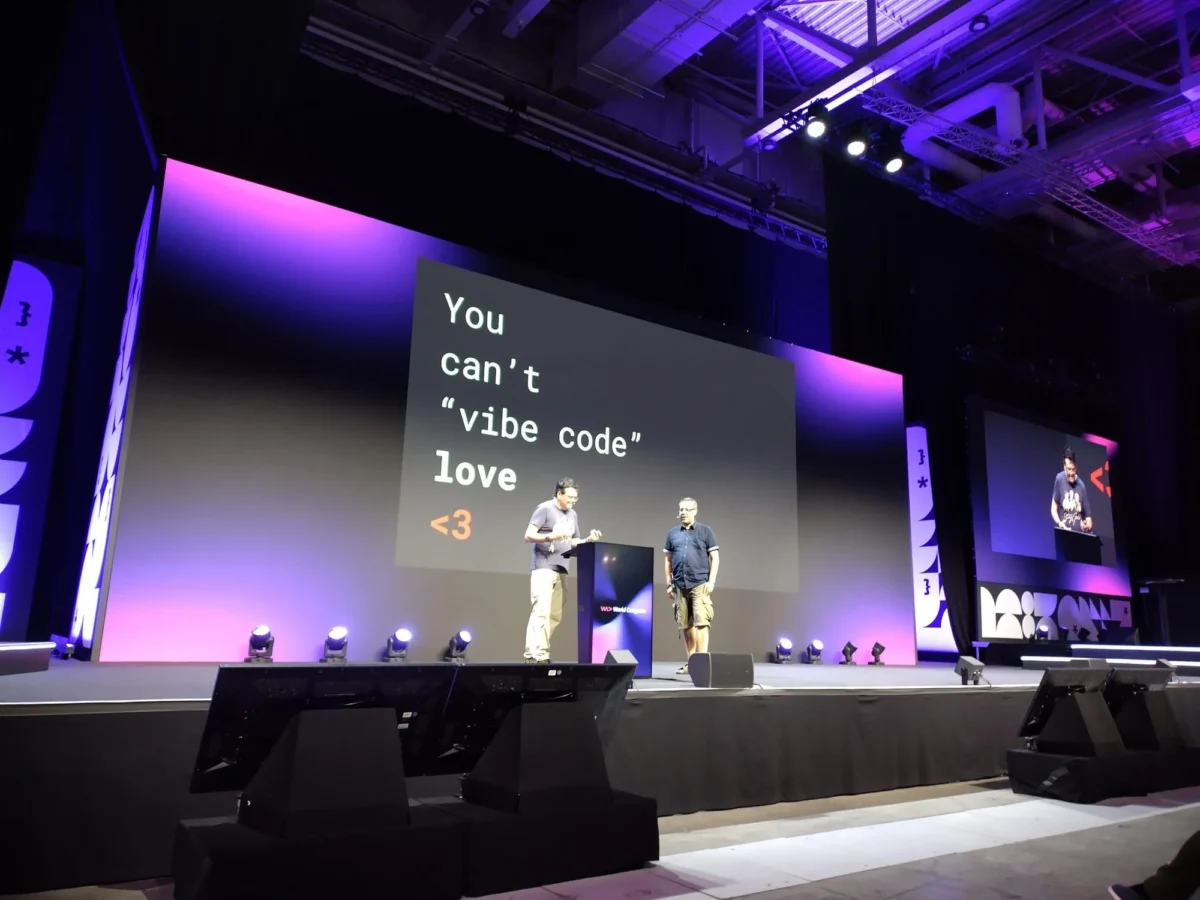
Berlin, Germany – The 2026 WeAreDevelopers World Congress in Berlin recently hosted a pivotal discussion on the evolving landscape of knowledge sharing in the digital age, particularly within the developer community, featuring Stack Overflow co-founder Jeff Atwood and early community hire Ben Dumke-von der Ehe. Their joint presentation, titled "None of Us Is As Dumb As All of Us: Community And Knowledge Go Hand In Hand," delivered on Friday, July 10th, at the CityCube, delved into the profound impact of Large Language Models (LLMs) on collaborative learning and the future of the "digital commons." The talk underscored the indispensable value of human interaction and community-driven knowledge platforms, even as AI transforms how developers access information.
The WeAreDevelopers World Congress: A Nexus for Innovation
The WeAreDevelopers World Congress, renowned as one of Europe’s largest annual gatherings for developers, consistently draws tens of thousands of attendees from across the globe. Held in the vibrant tech hub of Berlin, the event serves as a critical platform for exploring cutting-edge technologies, fostering professional networks, and debating the industry’s most pressing challenges. Its 2026 iteration was particularly significant given the accelerating integration of AI into software development workflows. The inclusion of Jeff Atwood, a highly influential figure in the programming community through his work on Coding Horror and Stack Overflow, alongside Ben Dumke-von der Ehe, an original architect of Stack Overflow’s community ethos, highlighted the event’s commitment to addressing both technological advancements and their societal implications. The decision to feature their collaborative presentation was a strategic move by organizers to stimulate a nuanced dialogue about the balance between AI efficiency and human collaboration.
A Partnership Forged in the Digital Commons
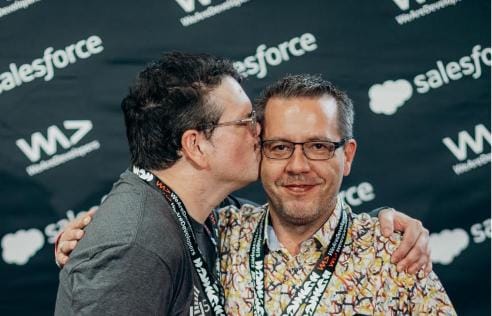
The presentation itself was a unique narrative of professional collaboration and personal impact. Jeff Atwood revealed that his acceptance of the speaking engagement—a rare occurrence for him, especially internationally—was contingent on Ben Dumke-von der Ehe joining him on stage. Ben, an early and influential community manager for Stack Overflow, resides in Berlin, making the pairing geographically and thematically ideal. Atwood emphasized the deep personal and professional connection, stating, "I’m mostly doing this presentation because I owe you so much," a sentiment extended to "everyone who participated on Stack Overflow." This acknowledgment served as a powerful reminder of the human effort underpinning the vast knowledge repository.
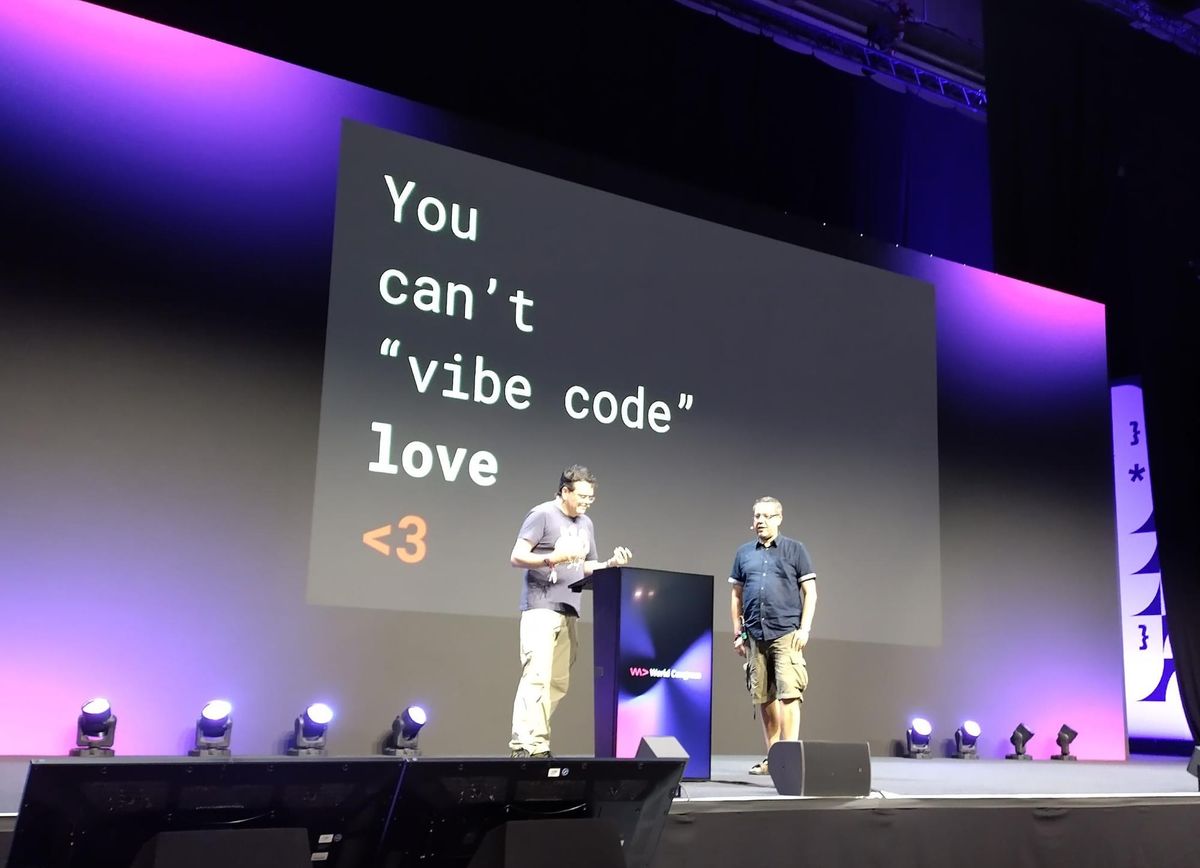
Their joint appearance was notable for its exploration of shared yet distinct perspectives on the challenges facing the developer community. Atwood, known for his incisive commentary on software development culture and technology, and Dumke-von der Ehe, with his intimate understanding of community dynamics and user engagement, provided a comprehensive view. The heart of their presentation, as Atwood noted, was "the human story of how Ben and I met," encapsulated by the intriguing phrase: "The long version of this story is that we changed each others’ lives. The short version is: unicorns." This anecdote, while whimsical, underscored the serendipitous and often profound connections fostered within online communities, leading to real-world impact and career opportunities, as evidenced by Ben’s journey as an early Stack Overflow hire.
Stack Overflow’s Enduring Legacy: Building the Knowledge Commons
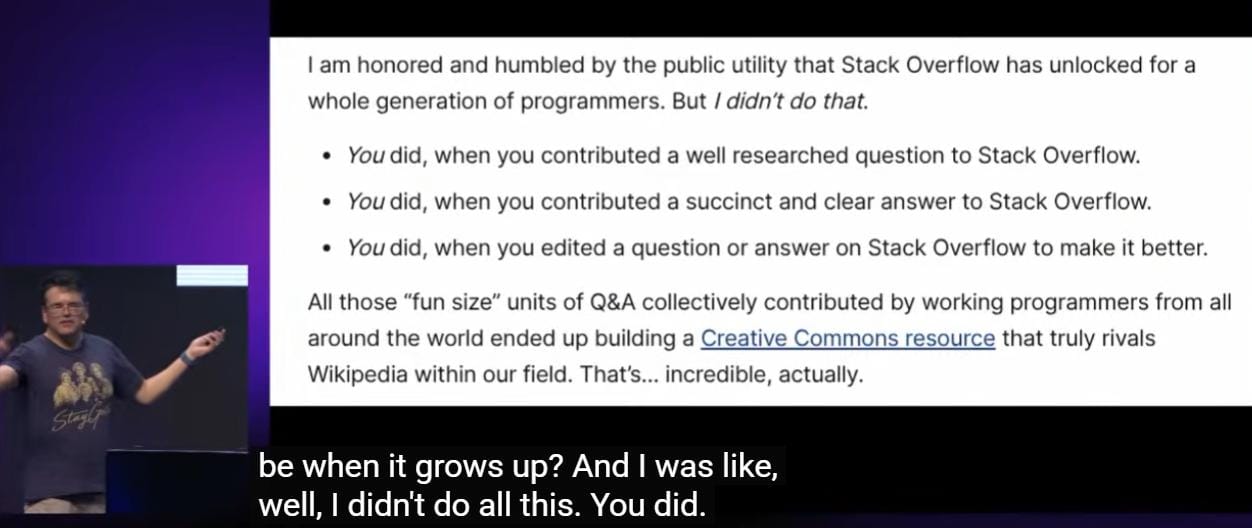
Stack Overflow, co-founded by Jeff Atwood and Joel Spolsky in 2008, rapidly became an indispensable resource for programmers worldwide. Its success was built on a simple yet revolutionary premise: a question-and-answer platform where developers could collaboratively contribute and curate technical knowledge. This model fostered a vibrant ecosystem of learning and problem-solving, quickly eclipsing traditional forums and documentation. At the core of its foundational philosophy was the commitment to open knowledge, encapsulated by its use of a Creative Commons license. This license ensured that the collective effort of millions of contributors, who invested countless hours crafting questions and answers, would form a shared, accessible "commons" of programming wisdom.
The magnitude of Stack Overflow’s dataset is staggering. With billions of page views annually and millions of questions and answers covering virtually every programming language, framework, and concept, it has become the de facto encyclopedia for software development. This vast repository, built entirely by its community, has not only accelerated learning for individual developers but has also fundamentally shaped the industry by democratizing access to specialized knowledge. Ben Dumke-von der Ehe’s personal journey—his initial engagement with Stack Overflow, subsequent employment as an early community hire, his departure, return, and eventual second departure—serves as a compelling microcosm of the platform’s enduring appeal and the evolving nature of community participation. His story highlights the deep sense of ownership and personal investment that contributors felt, demonstrating how a digital platform could genuinely change lives and careers.
The AI Revolution and the Challenge to Traditional Knowledge Bases
The advent of Large Language Models (LLMs) has introduced a new paradigm in how developers seek and obtain information. Tools like GitHub Copilot, ChatGPT, and other AI-powered assistants are increasingly capable of providing instant, context-aware answers to complex programming queries, generating code snippets, and even debugging issues. Atwood acknowledged this transformative power, stating that it "aligns with the higher-level goals of Stack Overflow" – specifically, the efficient delivery of answers. He reiterated a long-held vision: "If Stack Overflow is working like it’s supposed to, 98% of programmers should get all the answers they need from reading search result pages and wouldn’t need to ask or answer a single question in their entire careers."

One of the most significant benefits of LLMs, as highlighted by Atwood, is their ability to address the "gordian knot" of duplicate questions. For years, Stack Overflow grappled with the challenge of managing an ever-growing volume of similar questions, often phrased differently, which made it increasingly difficult for users to contribute unique content. "Asking a single unique question goes from mildly difficult to mission almost impossible," Atwood explained, describing the daunting task of navigating a "vast, enormous field of prior art questions without stepping on any of the vaguely similar looking landmines." LLMs possess an unparalleled capacity to identify semantic similarity across varied phrasings, effectively mapping new, seemingly unique questions to existing, high-quality answers. This capability promises to drastically reduce redundancy, streamline information retrieval, and enhance the overall efficiency of knowledge platforms. Initial industry reports suggest that AI tools are already handling a substantial portion of routine coding queries, with some developers reporting up to a 30-40% reduction in time spent searching for solutions. This efficiency gain is undeniably a "huge net positive," leading to "less duplication. More answers, faster. That’s the point."
The Erosion of the Commons: A Critical Concern
Despite the undeniable efficiencies offered by LLMs, Atwood and Dumke-von der Ehe raised a profound and urgent question: "But what happens to the commons when everyone is privately whispering to LLMs?" This query strikes at the heart of a looming challenge for collaborative knowledge ecosystems. While LLMs excel at information retrieval, their private, conversational interface fundamentally alters the public nature of knowledge exchange. When developers increasingly turn to proprietary AI tools for answers, the public forums where questions are asked, debated, refined, and ultimately answered by a community begin to see reduced engagement.
This shift threatens the very foundation upon which platforms like Stack Overflow were built: the collective, public act of learning and sharing. Ben Dumke-von der Ehe’s experience, "where programmers learn from each other, the very communities like Stack Overflow where Ben had so much fun becoming a programmer, and got hired for doing things he loved," exemplifies the holistic value of community beyond mere information delivery. These communities foster mentorship, professional networking, and a shared culture of curiosity and problem-solving – aspects that a solitary interaction with an AI cannot replicate. As Atwood succinctly put it, "You can’t ‘vibe code’ love." This evocative phrase captures the intangible yet essential human element of collaborative learning and shared passion that is at risk.
Moreover, a critical dependency emerges: "Where exactly will the LLMs get their next set of training data from, if we don’t build for and protect the commons together?" Current LLMs are trained on vast datasets, much of which is scraped from the open web, including platforms like Stack Overflow. If the incentive for human contribution to these public commons diminishes due to widespread LLM adoption, the wellspring of fresh, high-quality, human-validated knowledge could dry up. This raises existential questions about the sustainability of AI innovation itself, as the quality and relevance of future LLM outputs are directly tied to the continuous generation and public sharing of new human insights. The presentation served as a powerful call to action, urging the developer community to consider not just the immediate benefits of AI, but its long-term implications for how we "continue to share knowledge – and love – with each other," invoking the spirit of a "philomath," a lover of learning and study.
Industry Reactions and Broader Implications
The presentation resonated deeply within the WeAreDevelopers community, sparking lively discussions both during and after the session. Event organizers, while enthusiastic about AI’s potential, acknowledged the gravity of the questions raised. "Atwood and Dumke-von der Ehe have articulated a concern that many in the industry are quietly pondering," stated Dr. Elena Petrova, a program director for the Congress. "Their emphasis on the human element and the future of open knowledge is vital as we navigate this technological shift."
Reactions from developers were varied but consistently engaged. Many expressed excitement for the efficiency gains provided by LLMs, citing reductions in boilerplate code and faster problem-solving. "AI has made my daily tasks significantly easier," commented Sarah Chen, a senior software engineer from Munich. "I can prototype faster and spend less time on routine searches." However, a significant number also voiced concerns echoing those of Atwood and Dumke-von der Ehe. "I worry about the loss of the communal aspect," said David Lee, a junior developer attending his first congress. "I learned so much just by reading other people’s questions and the discussions around them. If everyone just asks ChatGPT, where does that learning happen?" Industry analysts have begun to forecast potential shifts in developer community engagement. A recent report by Tech Insights predicted a possible 20-30% decline in new public contributions to traditional Q&A platforms over the next five years if current trends continue without intervention. This decline could lead to a stagnation of public knowledge, disproportionately affecting junior developers who rely on these platforms for foundational learning and mentorship.
The implications extend beyond just technical platforms. The very culture of open-source development, which thrives on collaboration and shared problem-solving, could be impacted. Companies that have historically benefited from the "free" labor of the open-source community, and now from AI models trained on that data, face increasing pressure to contribute back, either through direct funding, licensing agreements, or by fostering new models of public contribution. The debate around data licensing and fair compensation for content creators whose work fuels LLMs is intensifying, with legal and ethical frameworks still in their nascent stages.
The Path Forward: Sustaining Collaborative Learning
The critical challenge highlighted by Atwood and Dumke-von der Ehe is not to resist AI, but to strategically integrate it in a way that preserves and even enhances the human elements of collaboration and knowledge creation. Several pathways are being explored to address this:
Firstly, platforms like Stack Overflow are actively researching and developing hybrid models. This involves using AI to enhance search, summarize complex answers, or even help users formulate better questions, thereby leveraging AI’s strengths without replacing human interaction. The goal is to make the community more efficient and accessible, not redundant. For instance, AI could act as a filter for duplicate questions, directing users to existing, high-quality answers while freeing human moderators to focus on more complex, novel problems that require nuanced human judgment.
Secondly, there is a growing recognition that certain aspects of learning and problem-solving are uniquely human. Debugging highly complex, context-dependent issues, engaging in ethical discussions about technology, mentoring new developers, and the sheer joy of collaborative discovery—these are experiences that AI, in its current form, cannot replicate. Protecting and promoting spaces where these interactions can flourish becomes paramount. Educational institutions and developer bootcamps are also adapting, emphasizing critical thinking, collaboration, and the responsible use of AI tools, rather than solely focusing on rote problem-solving.
Finally, the discussion underscores the imperative for a robust dialogue about the governance of digital commons. As AI increasingly relies on human-generated data, frameworks for ensuring fair attribution, compensation, and continued incentivization for public contribution will be crucial. This includes exploring new economic models for content creators and advocating for policies that support open-source initiatives and community-driven knowledge platforms.
The presentation by Jeff Atwood and Ben Dumke-von der Ehe at the WeAreDevelopers World Congress served as a vital call to action. It reminded the global developer community that while technology can enhance efficiency, the essence of progress lies in human connection, shared learning, and the collective commitment to building and protecting the digital commons. The future of knowledge, they argued, depends not merely on what machines can compute, but on how effectively humans continue to "vibe code love" and collaborate.
About the Author